







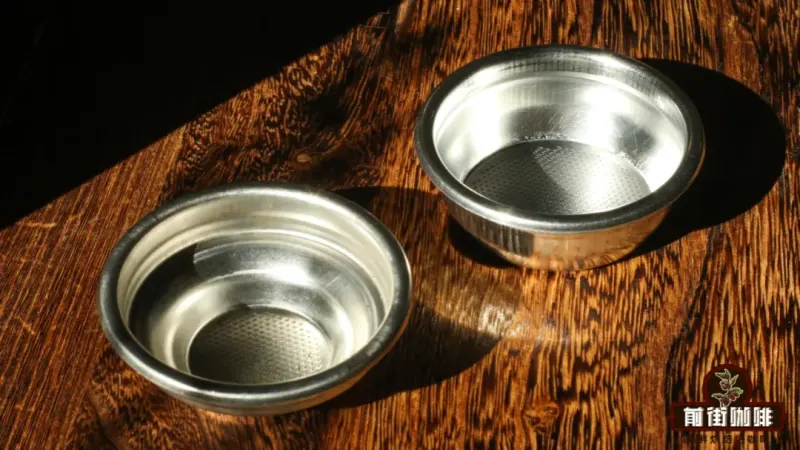
Which basket should you use to pull coffee as a single shot?
A single portafilter basket holds 9 to 11 grams of grounds and makes one espresso; a double basket holds 18 to 22 grams and yields a double shot. Most cafes still use double baskets for daily output, dosing 18 to 20 grams for 36 to 40 milliliters of liquid, because a single basket shot is harder to keep consistent in flavor and stability.
The two baskets differ in shape. A double basket is a straight cylinder, so the puck knocks out as a neat column. A single basket narrows into an inverted cone with an upper and lower section, which changes how water moves through the coffee bed. That geometry, plus the small dose and the size of coffee bean particles relative to the basket, makes even extraction harder to control.
When ordering at a coffee shop, have you ever noticed the portafilter basket the barista uses? A single basket typically holds 9–11g of coffee grounds and is used to extract a single espresso; a double basket holds 18–22g and yields a double espresso. But in reality, most cafés would rather use a double basket to pull an extra shot—or even pour half of it down the drain—than switch to a single basket. Why is that? Starting from Front Street's comparative experiments, this article takes a deep dive into the structural differences, extraction performance, and stability issues of the two baskets, helping you fully understand which basket a single espresso should actually use.
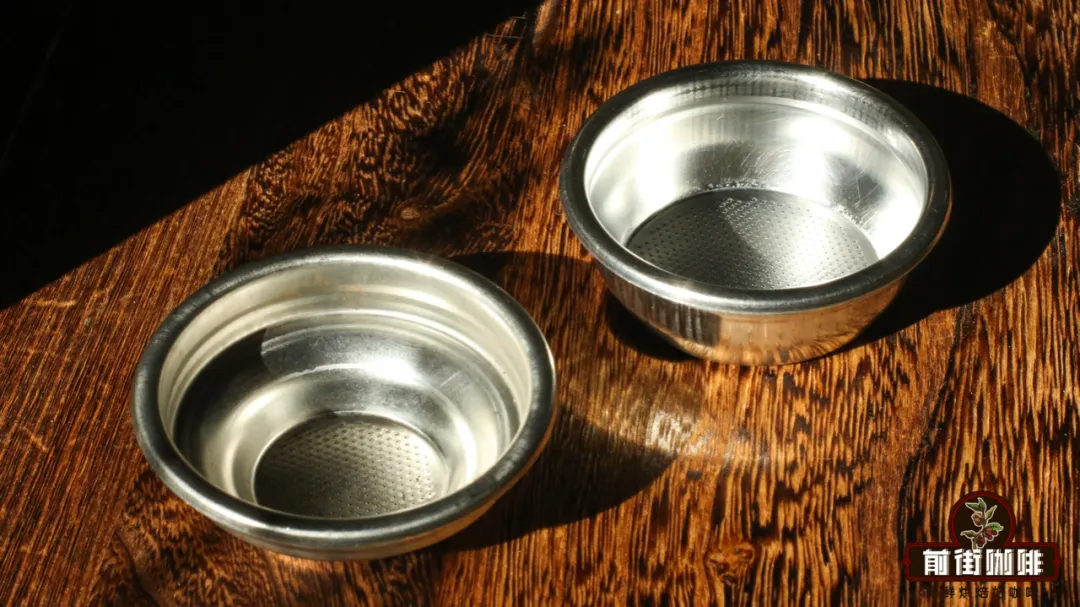
The single basket is designed for a dose range of 9–11g, specifically for making a single espresso; the double basket corresponds to 18–22g and is used to extract a double espresso. At present, most cafés in China use double baskets for their daily output—that is, 18–20g of coffee grounds yielding 36–40ml of coffee liquid. If a customer finds the drink not strong enough and asks the barista to "add a shot," they mean pulling an additional espresso on top of the original.
Logically, at this point the barista should simply switch to a single basket to extract that one espresso. But in practice, very few coffee shops do this. There are two common approaches: either serve the double espresso directly as a single, or pull a double shot with the double basket and pour out half to serve, with the remaining half either discarded or ending up in the barista's cup. The former is understandable since the extraction parameters have changed, but the latter leaves many friends puzzled, so they come to Front Street and ask: "Why would everyone rather pour half an espresso down the drain than use a single basket to serve it?"
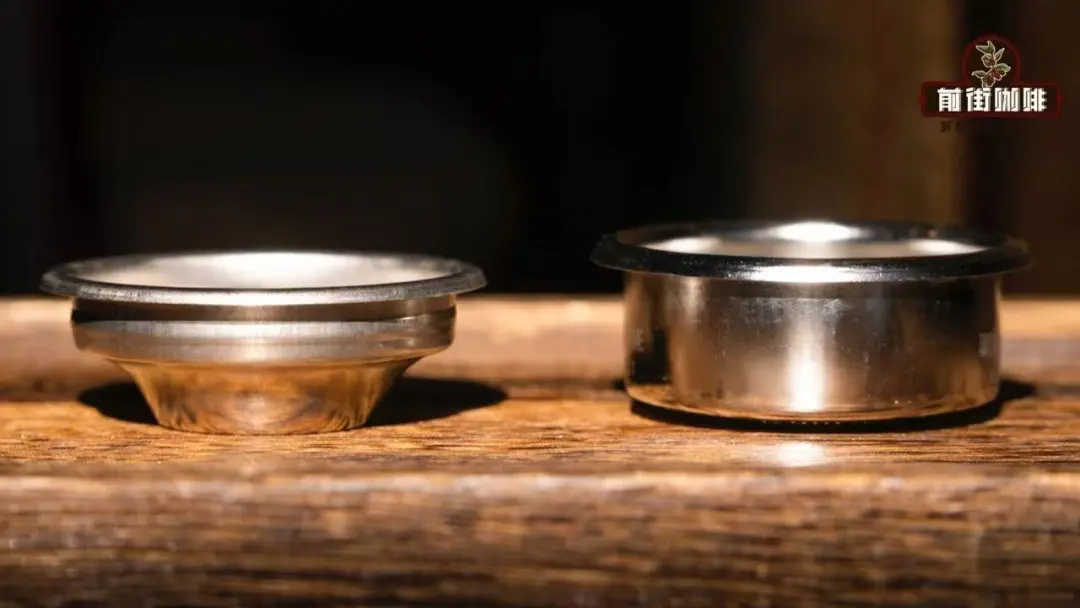
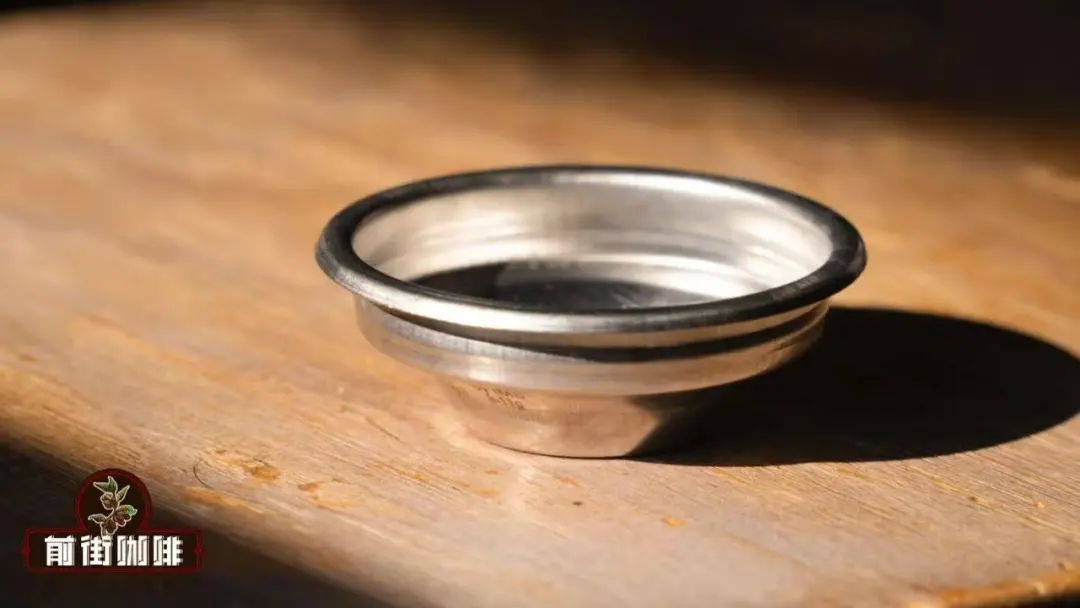
The answer is actually not complicated—the espresso extracted from a single basket, whether in flavor or stability, struggles to meet the standards we now expect from our output. What's the difference between a single basket and a double basket? From the pictures you can see intuitively that the biggest difference between the two lies in their shape. The double basket is a vertical cylindrical structure, with the same diameter from top to bottom, and the puck knocked out after extraction is a neat cylinder.
The single basket, by contrast, is an inverted cone divided into an upper and a lower section, with the upper section having a wider diameter and the lower section narrowing. This design is not arbitrary—its purpose is to allow a small amount of coffee grounds to still be fully extracted.

The upper section is made wide in order to match the size of the group head, ensuring the basket can be locked in smoothly. The lower section is narrowed because the amount of coffee a single basket can hold is inherently small—roughly only half that of a double. If it copied the straight-walled structure of the double basket, the coffee bed would become very thin, and when hot water flowed through, it would contact less coffee, naturally dealing a severe blow to extraction efficiency. That is why the single basket uses this narrowed design to increase the depth of the coffee bed, allowing the limited hot water to fully contact enough coffee grounds.
In other words, the original intent of the single basket was to extract less liquid from less coffee while keeping the cup consistent with double-basket output in strength and extraction yield. However, many coffee professionals, including Front Street, have found through experiments that extraction with a single basket is far from as simple as imagined. Below, Front Street shares a set of comparative tests for your reference.
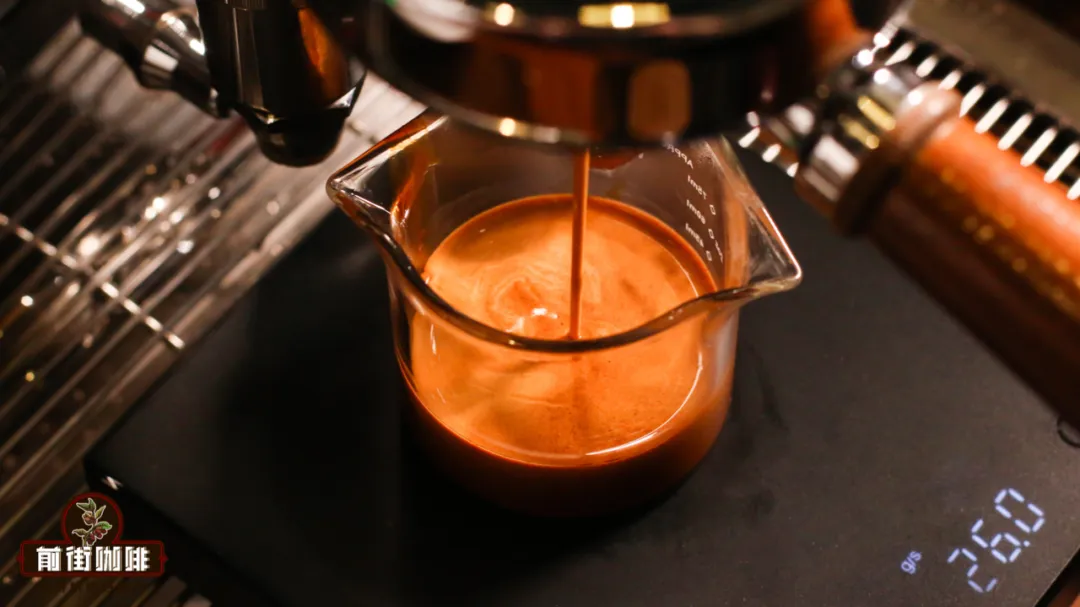
Front Street extracted one espresso with each of the two baskets, using beans from Front Street's menu—Front Street's Classic Espresso Blend—then compared whether the flavor and strength of the two truly matched expectations through measurement and tasting. For the double basket, Front Street used 20g of grounds to extract 40ml of espresso liquid, taking 30 seconds. The measured strength was 10.52%, and the extraction yield 21.80%. The flavor showed chocolate, butter, nuts, and caramel, overall balanced, with a solid mouthfeel and a lasting finish.
Now look at the single basket's performance. The dose used was 10g, yielding 20ml of coffee liquid, and the extraction time was considerably shorter than the double basket's—only 21 seconds. The measurements came out at 8.21% strength and 17.02% extraction yield. The flavor performance was less than satisfactory: the layers were not distinct enough, the mouthfeel was thin, and the finish was short. These are clearly the typical symptoms of under-extraction. Comparing the two sets of data, the gap is obvious at a glance. If you want to extract the same flavor and strength from a single basket as from a double, the only options are to grind finer or increase the dose. But for a coffee shop, the former is not realistic—you can't keep fiddling with the grinder for a single shot for one customer.
The latter, while simpler to operate, comes with a corresponding rise in cost. Front Street also ran relevant tests, and the results showed that, with the grind setting unchanged, a single basket needs a dose of over 12.5g to extract strength and flavor comparable to a double basket. However, the cost increase Front Street is talking about is not just about using more grounds—it also involves the issue of extraction stability. The stability of extraction with a single basket is extremely poor, and this is the fundamental reason cafés would rather use a double basket to pull an extra shot than switch to a single basket—single-basket extraction is not stable enough.
Why is single-basket extraction not stable enough? Front Street spent all that space earlier detailing the structure of the two baskets precisely in order to explain this here. Yes, the root cause of the single basket's unstable extraction lies in its structural design. As mentioned earlier, the double basket is a straight cylindrical structure, so during distribution, tamping, and the machine's pressurized extraction, the forces on each part are relatively even, and the extraction is naturally more uniform as well.
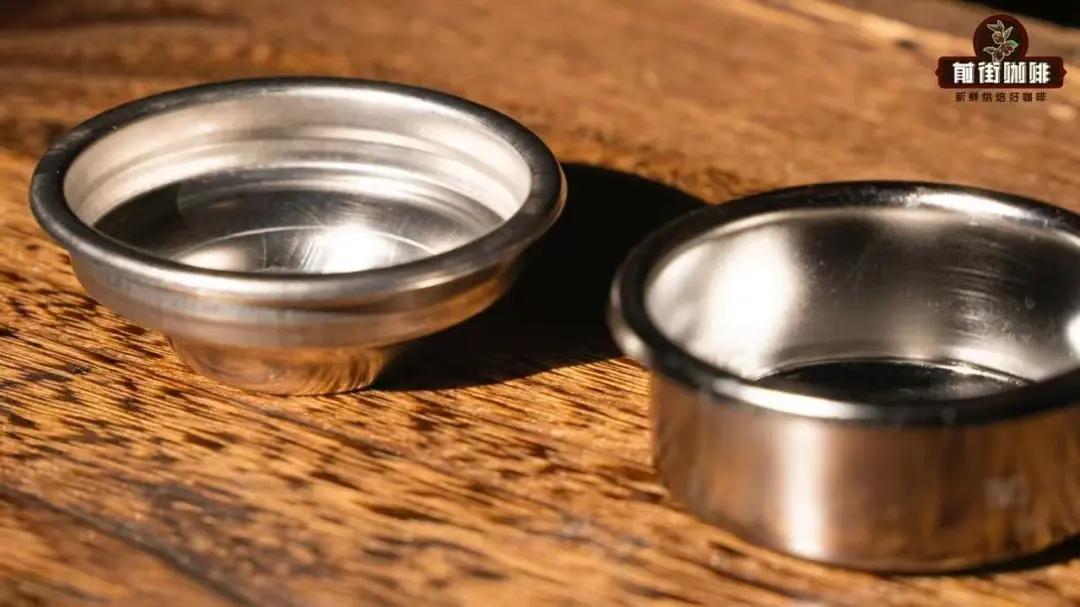
The single basket, however, must both maintain a uniform diameter and give the coffee bed enough depth, so it adopts a two-tier structure. It is precisely this structure that makes it hard for the forces on each part to be consistent during tamping and extraction. Especially when the dose is larger, the pressure borne by the surrounding areas is always higher than that of the central region at the same level.
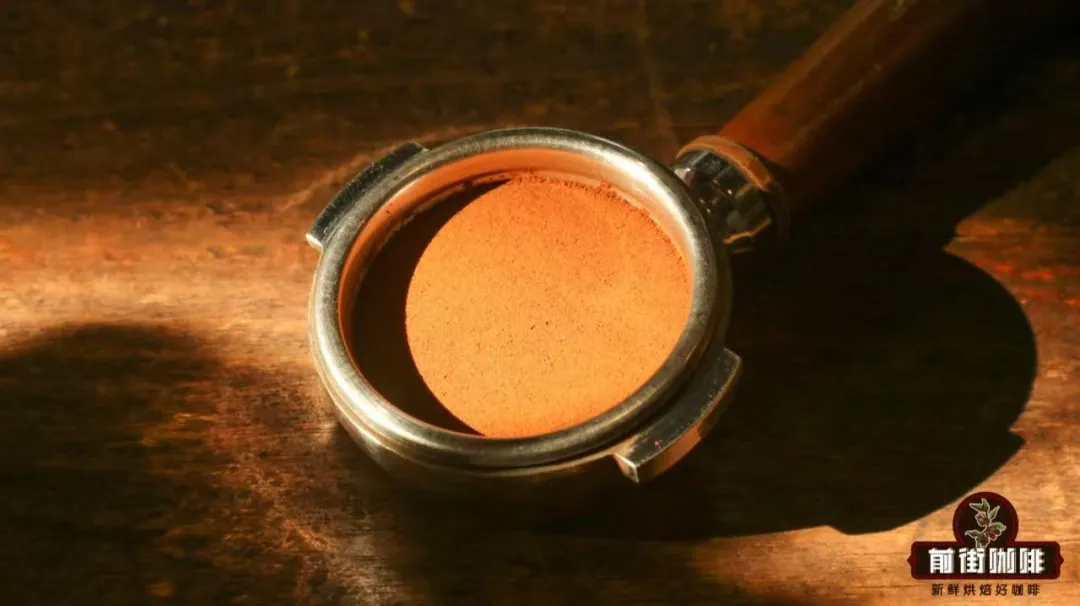
Specifically, when tamping the coffee grounds, the grounds around the edges get compressed more tightly than those in the center. During extraction, the hot water then preferentially channels through the coffee grounds in the central region, causing uneven extraction—what is commonly known as channeling. So when using a single basket, it is basically very hard to knock out a complete puck. The differences in force across the parts are too great, the puck struggles to hold its shape, and it comes out wet and soggy.
Based on the above analysis, you should now understand why coffee shops would rather use a double basket to pull an extra shot than use a single basket—its extraction stability is too low to guarantee serving an ideal cup of coffee. Of course, in China today there is an increasing tendency to treat the coffee extracted from a double basket as a single espresso, so the single basket naturally gets fewer and fewer chances to appear.
- END -
The above content is compiled by CoffeeHunters, a coffee news website.


