







Can Coffee Make You Feel Drunk? What the Brewing Water Changes
Coffee does not contain alcohol, so a cup cannot make a person drunk in the literal sense. The fuzzy, heavy, off-balance feeling some people report after strong coffee comes from caffeine, not ethanol. Caffeine blocks adenosine, the compound that builds up through the day and promotes sleepiness, and at high doses it can bring jitteriness, a racing pulse, and a lightheaded sensation that gets described as drunk.
Brewing method and water choice shift how fast that caffeine arrives and how the cup tastes. A recent home test used coconut water in place of plain water for both a hot pour-over and an iced pour-over with Sidamo Alo beans, keeping every parameter on record. Coconut water brings its own sugars, amino acids, and minerals, so it changes extraction and flavor rather than adding any alcohol. The same logic applies to brewing coffee with milk.
The combination of coconut and coffee is nothing new in the coffee world—from coconut water Americano to raw coconut latte, there's no shortage of variations. But Front Street recently came across a more "unorthodox" idea—using coconut water instead of plain water to brew freshly ground coffee. To verify whether this coconut water pour-over is actually drinkable, Front Street used fresh young coconuts and Sidamo Alo beans to make one hot pour-over and one iced pour-over, keeping a complete record from parameter settings to actual flavor. If you're also curious about how to make coconut water pour-over coffee, you might want to check out this hands-on report before deciding whether to give it a try.
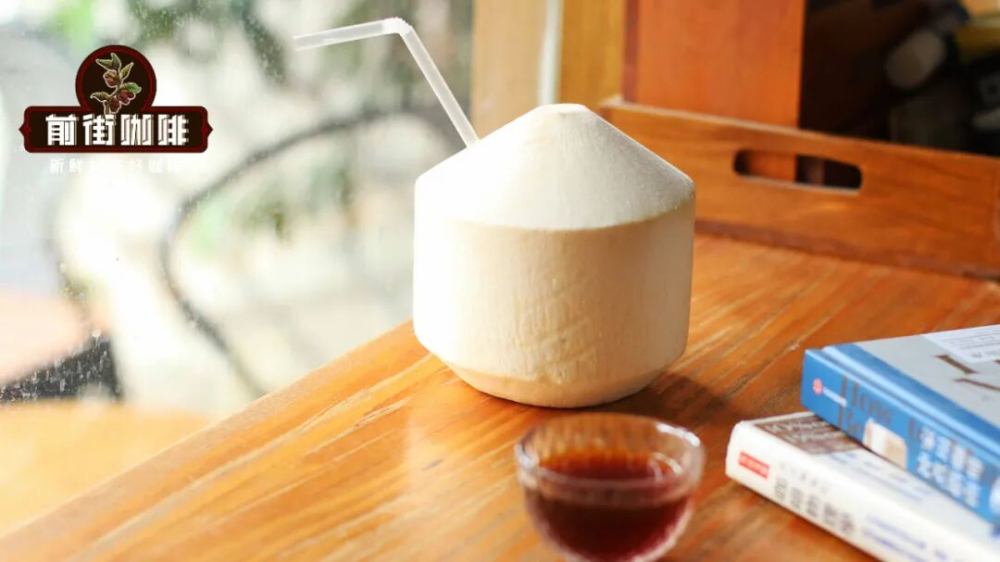
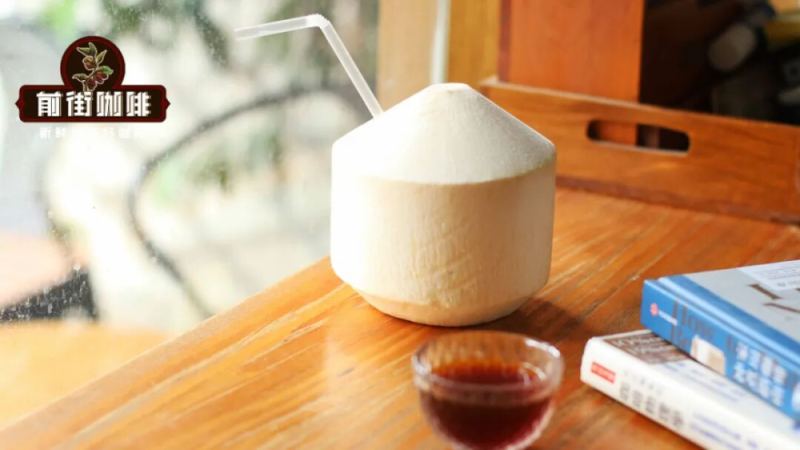
The coffee world has never lacked for new tricks, and the same ingredient paired with coffee can often be broken down into multiple forms. Take coconut, for example—coconut water plus espresso makes a coconut water Americano, thick coconut milk with espresso makes a raw coconut latte, and there's also coconut combined with cold brew as an iced specialty. Ultimately, it's all about recombining ordinary ingredients to create a different taste experience.
Yesterday Front Street discovered yet another "unorthodox" approach that also involves the two working together—using coconut water to brew coffee. To be clear, this is neither adding coconut water to already-brewed black coffee, nor using it to dissolve instant or freeze-dried powder, but rather using coconut water directly as the brewing water to extract freshly ground coffee.
When Front Street first heard about this method, it felt a bit hard to accept, but on second thought, coconut chicken soup is itself drunk together with the broth after boiling, so heating coconut water to brew coffee seems to make sense too—and besides, some pioneers have already given positive feedback. To get to the bottom of it, Front Street decided to try it personally.
Materials Preparation
More than ninety-eight percent of a cup of pour-over coffee is water, so the choice of brewing water essentially determines the final flavor direction of the coffee—coconut water is no exception. This time Front Street used fresh young coconuts because they are full of juice and also contain amino acids, vitamins, and minerals, with a rather appealing aroma and sweetness. If you want to save effort, you can also just buy boxed coconut water—pick whatever brand you like.
Coconut water has a naturally sweet and fragrant character, and Front Street thinks the coffee beans paired with it should be neither too dark nor too light. Beans roasted too dark tend to suppress the coconut's fresh aroma, while beans roasted too light often have pronounced acidity that's hard to harmonize with the taste of coconut water.
Taking Front Street's bean list as an example, you could choose Sidamo Alo, Huakui, Strawberry Candy, Tarrazu, Hacienda La Esmeralda Diamond Mountain, Gesha Village Chaka, and so on. Here Front Street uses Sidamo Alo as a demonstration—it undergoes traditional natural processing, is a medium-light roast, and brews with flavors of magnolia, mango, orange, and strawberry.
Materials: 3 coconuts, a heating stove, 15 grams of Sidamo Alo coffee beans. Drawing on Front Street's past experience, if you want the juice and coffee to complement each other, the concentration must be well controlled so the coffee flavor isn't too concentrated, so the coffee-to-water ratio is set at 1:16; at the same time, to increase the extraction rate of flavor compounds, Front Street plans to divide the total water into 4 pours. The specific parameters are as follows:
Coffee beans: 15 grams
Coffee-to-water ratio: 1:16
Water temperature: 91–92°C
Grind size: EK43s-10 setting / C40-24 clicks (80% passing through a No. 20 sieve)
Dripper: V60
Brewing method: four-pour
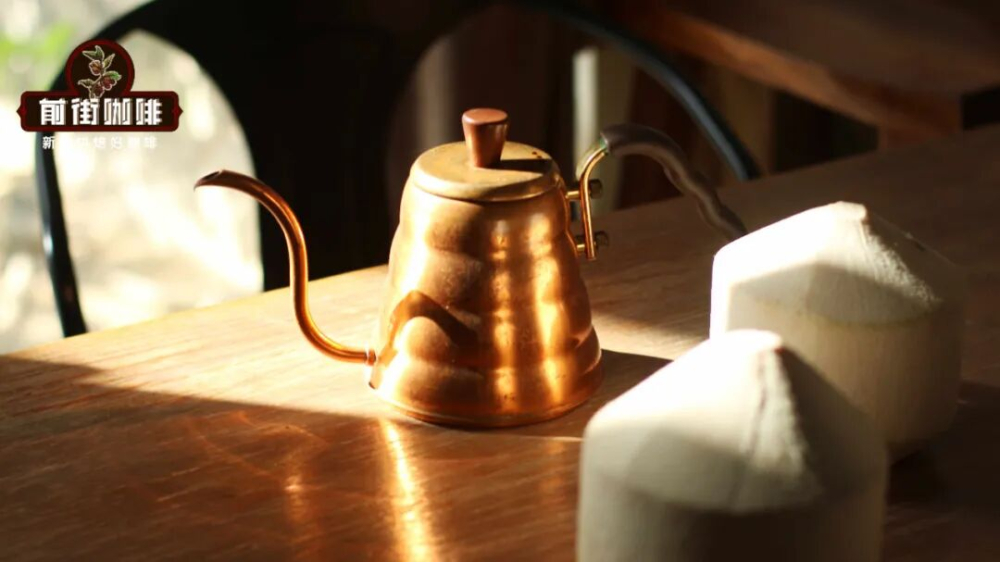
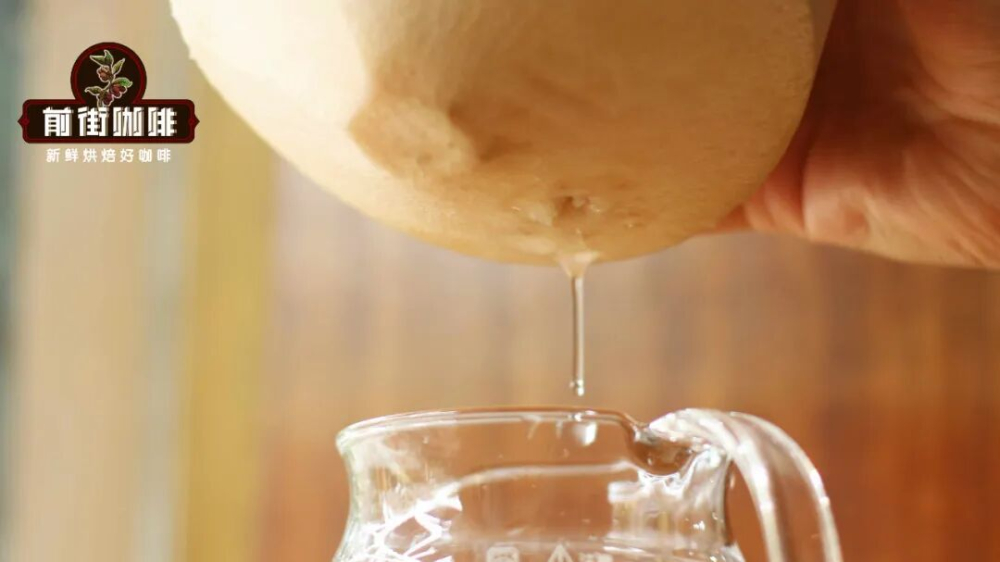
Open the 3 coconuts with a specialized tool, pour all the juice into a pour-over kettle, heat until nearly boiling, then wait for the temperature to drop back to 91–92°C;
Weigh 15g of coffee beans and grind to a fine sugar consistency, pour into a pre-rinsed filter paper and gently tap flat;
First do the bloom—pour 30g in a circular motion and wait 30 seconds, at which point you can smell a faint fresh coconut aroma; for the second pour, use a larger stream to pour 90g in circular motions from the inside out (the timer scale reads 120g), and the pouring point can be raised appropriately;
When the coconut water is nearly finished draining and the coffee bed is about to be exposed—roughly between 55 seconds and 1 minute 5 seconds—switch to a small stream and pour the third 60g in small circular motions, then wait for the coconut water to drain, and finally pour the fourth 60g at a fixed point in the center. Total time: 2 minutes 10 seconds.
Front Street noticed that the coffee liquid brewed with coconut water looks somewhat cloudy, and smells like a mix of coconut sugar and coffee's roasted aroma, but the first thing you taste on the palate isn't the coffee flavor—it's the saltiness of the coconut water, which should come from the heating. After the first sip, Alo's flavors begin to emerge, with notes of orange, pineapple, and peach, but under the influence of the coconut water they all become less prominent, overall tasting more like a cup of coffee with coconut flavor.
Coconut Water Iced Pour-Over
Since we've already tried it, might as well strike while the iron is hot and continue using coconut water to brew an iced coffee. Parameters follow the shop's standard output:
Coffee beans: 15g Sidamo·Alo
Coffee-to-water ratio: 1:10
Ice cubes: 75g
Water temperature: 91–92°C
Grind size: EK43s-9.5 setting / C40-22 clicks (82% passing through a No. 20 sieve)
Dripper: V60
Brewing method: three-pour
Put 75g of ice cubes into the server, and pour the ground coffee into the dripper. For the first pour, use a small stream to pour 30g of coconut water in small circles from the center outward, and wait 30 seconds; after 30 seconds, pour the second 60g using the same technique—don't make the stream too fast or it may break through the coffee bed; when the coffee liquid is nearly drained, pour in all the remaining 60g of coconut water, ensuring the total time falls between 1 minute 50 seconds and 2 minutes.
To be honest, the iced coffee brewed with fresh coconut water doesn't have much of an advantage in terms of flavor—on the palate there's the taste of young coconut, the sweet-tartness of citrus, and a fairly pronounced black tea note, but fortunately the ice cubes help make it quite refreshing, suitable for Cantonese people still wearing short sleeves.
After two rounds of testing, whether in flavor or mouthfeel, coconut water coffee overall can only be considered passable—occasionally trying it once or twice for novelty is fine, but if it's to pursue coffee flavor by specifically buying coconuts or coconut water, heating it up for pour-over, and using up precious beans on top of that, Front Street thinks it's really unnecessary. Not only is it hard to achieve the ideal result, but the used pour-over kettle also has to be washed repeatedly—it's genuinely a bit of a hassle.
- END -
The above content is compiled by CoffeeHunters, a coffee news website.


