







How Oil Washing Changes Coffee Flavor
Oil washing is a technique that uses the different solidification points of fats to pull flavors from oils into a liquid. It started in cocktails and has become popular in specialty coffee. Coffee enthusiasts use it to give coffee a softer mouthfeel and more complex flavor. You can try it at home with butter and Golden Mandheling or coconut oil and cold brew. This guide covers materials, steps, and tips.
The method is flexible about materials, as long as they are edible and non-toxic. You can choose many oils, like butter or coconut oil, to create unique flavors. This article explains the process step by step and shows how to make oil-washed coffee at home. It also helps you understand the oil-washed drinks you might see in cafes, so you can enjoy specialty coffee in new ways.
Oil washing originated in the cocktail world and has now been introduced into the specialty coffee scene, becoming a new favorite among many coffee enthusiasts. It exploits differences in the solidification points of fats to extract aromas from oils into the coffee liquid, thereby giving the coffee a softer mouthfeel and richer flavor layers. In this article, Front Street Coffee will walk through the origins of the oil washing method, material selection, step-by-step instructions, and precautions, and will demonstrate the specific process in detail using butter oil-washed Golden Mandheling and coconut oil-washed cold brew as examples. Whether you want to DIY at home or understand the logic behind those oil-washed specialty drinks in cafés, this article offers practical reference.
Beyond milk washing, there are many similar techniques that can add distinctive flavors to coffee. What Front Street Coffee is introducing this time is precisely a technique that is quite close in approach to milk washing—oil washing.
If you've been browsing online recently, you've probably come across the term "oil-washed coffee" more or less. This kind of drink, as its name suggests, is made with the involvement of oils.
Front Street Coffee actually tried this approach quite a while ago, and both the process and the final cup were quite distinctive. Recently, many friends who came across related content have been asking Front Street Coffee about it. That being the case, let Front Street Coffee now talk about what yoxi (typo) "oil washing" is, and how to make oil-washed coffee.
What is oil washing?
Oil washing, fully called the "oil washing method," is a technique in the culinary industry that uses differences in the solidification points of different substances to extract flavors from oils into a target liquid. Like many techniques, the one that first brought this method into the culinary field was still the cocktail industry.
In 2007, a bar in New York used the oil washing method to extract aromatic compounds from fats into spirits, and afterward this technique became popular in the cocktail world. Most ideas for specialty coffee are inspired by cocktails, so it was only natural that oil washing would intersect with coffee as well.
(The predecessor of oil washing was the "fat isolation method" that appeared in the 18th century, initially used in perfumery to extract floral scents.)
Oil washing is actually very lenient about materials. If one must name limits, there are only two: "edible" and "non-toxic."

The choice of oils is very broad. Whether it's edible oils such as vegetable oil or animal fat, or oily nut butters, all can do the job.
The objects involved in oil washing are equally unrestricted: liquid coffee, spirits... solid spices, flowers, fruits, peels, and so on—any substance that can provide aroma can be used for extraction. The goal is only one—to transfer the aroma or flavor into the target substance, as straightforward as that.
The operation of oil washing is not complicated and can be roughly divided into three steps: ① stir the materials evenly; ② refrigerate for several hours; ③ filter out the clarified liquid. The principle is that oils generally have a higher solidification point than other liquids and substances, so when the temperature drops, the oil solidifies first. As long as it is separated—that is, filtered out—before the other components solidify, you can obtain a clarified liquid that is low in oil content but rich in aroma.
When making oil-washed coffee, the ratio of oil to coffee depends on the materials used and the desired flavor intensity, so everyone needs to gradually figure it out according to their own taste and goals. So is Front Street Coffee going to explain how to make oil-washed coffee next?
Not yet! There are several key points before and after production that need to be clarified first, so that your efforts aren't wasted due to a wrong approach.
Precautions for oil-washed coffee
Although what Front Street Coffee shares here is the method for oil-washed coffee, everyone should first understand one thing: those "oil-washed coffees" seen in cafés are not necessarily made by oil-washing the coffee itself; they may instead oil-wash spirits first and then mix them with coffee. So it's better to broaden your thinking and not be limited to a single method.
In actual practice, there are also several details worth noting. First, the temperature of the coffee used should not be too low. Many oil-washed coffees people see online are things like "coconut oil-washed cold brew," but if you directly use cold brew to do this, you will most likely end up with a pot of mixture that doesn't look very appealing...
Because cold brew coffee is too cold, the oil will directly solidify into chunks when chilled. Although extraction can still be completed, the final result will be compromised. So the temperature of the coffee needs extra attention.
(When making it with cold coffee, it's best to heat it first, or heat it during the process.)
Second, not all oils are liquid from the start. Take butter, for example: as long as the ambient temperature is not high enough, it will remain solid.

When using this kind of oil to make oil-washed coffee, it's best to heat it in advance to melt it into a liquid before proceeding. Or, as Front Street Coffee mentioned earlier, heating it during the process or using hot coffee to help it melt will also work. Only in this way can the aromatic substances in the oil be better extracted.
How should coffee be oil-washed?
So next, Front Street Coffee will share the specific process of oil washing. This time, the coffee beans Front Street Coffee selected are the dark roast bean on the menu—Front Street Sumatra · Front Street PWN Golden Mandheling. For the oil, butter was used, because Front Street Coffee wanted to make a dark roast coffee with a creamy aroma.
Since this cup of oil-washed coffee aims for balanced aroma, the ratio of butter to coffee is set at 1:6, so that the aroma brought by the butter will not be too strong and overpower the coffee itself. The coffee extraction parameters are as follows: 15g dose, 1:15 coffee-to-water ratio, grind size like fine granulated sugar with 75% passing through a No. 20 sieve, water temperature 89°C, brewing time two minutes.
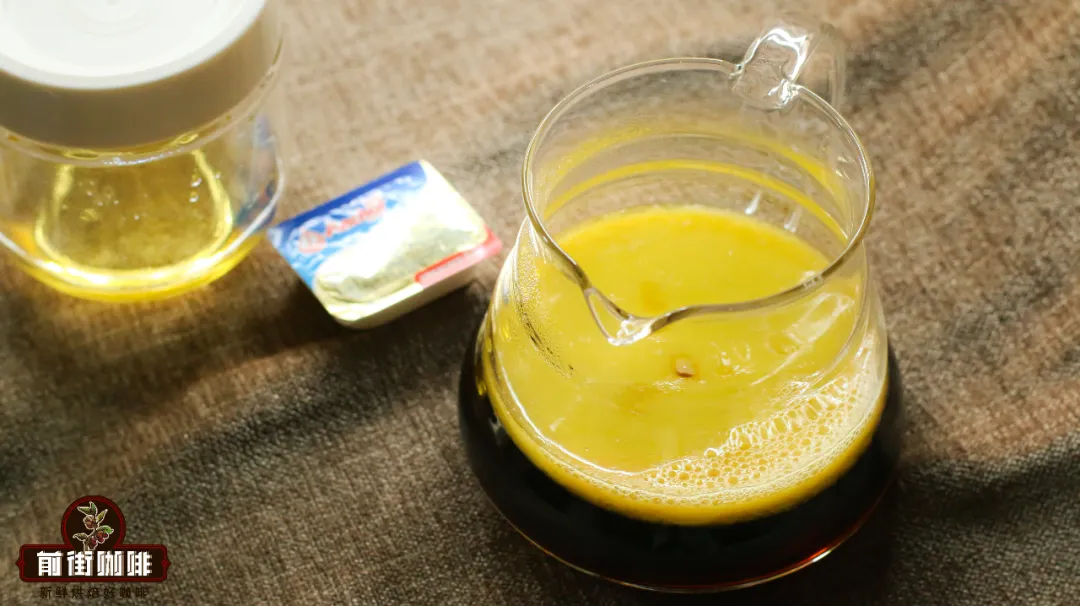
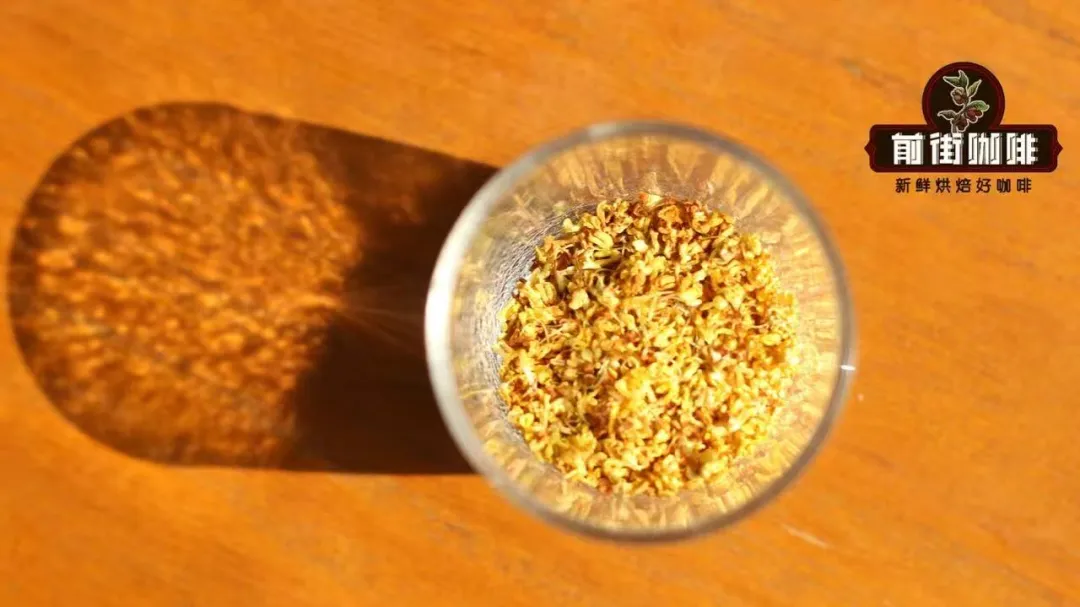
As shown in the picture, if making it with hot coffee, you can directly put the butter into the server, so that during brewing it will come into contact with the hot coffee and melt. Skipping the brewing process!
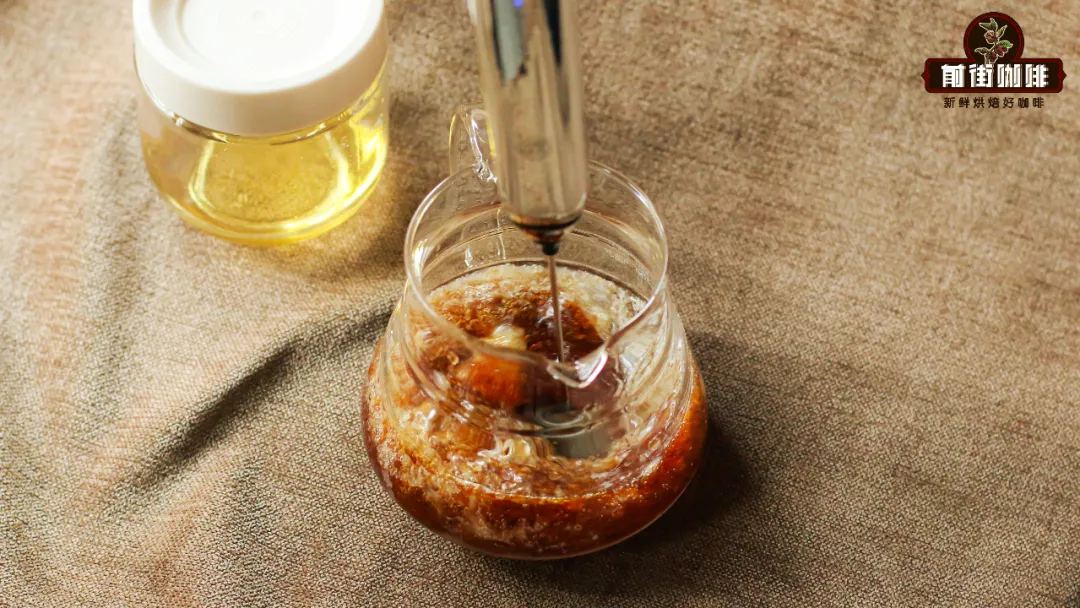
After brewing is complete, the next step is to let the coffee and oil mix thoroughly. Those with an electric mixer can, like Front Street Coffee, directly use the mixer to whip and blend. If not, you can also pour this "oil-coffee" mixture into a sealed bottle, tighten the seal, and shake hard to mix. The longer the mixing time, the faster the aroma extraction.
(Note: This method is not suitable for hot coffee. Please wait until the coffee drops to room temperature before proceeding.)
After mixing, transfer the mixture into a sealed bottle and refrigerate. Refrigerate for more than 2 hours, until the oil has completely solidified. Here at Front Street Coffee, it was left for a whole night.
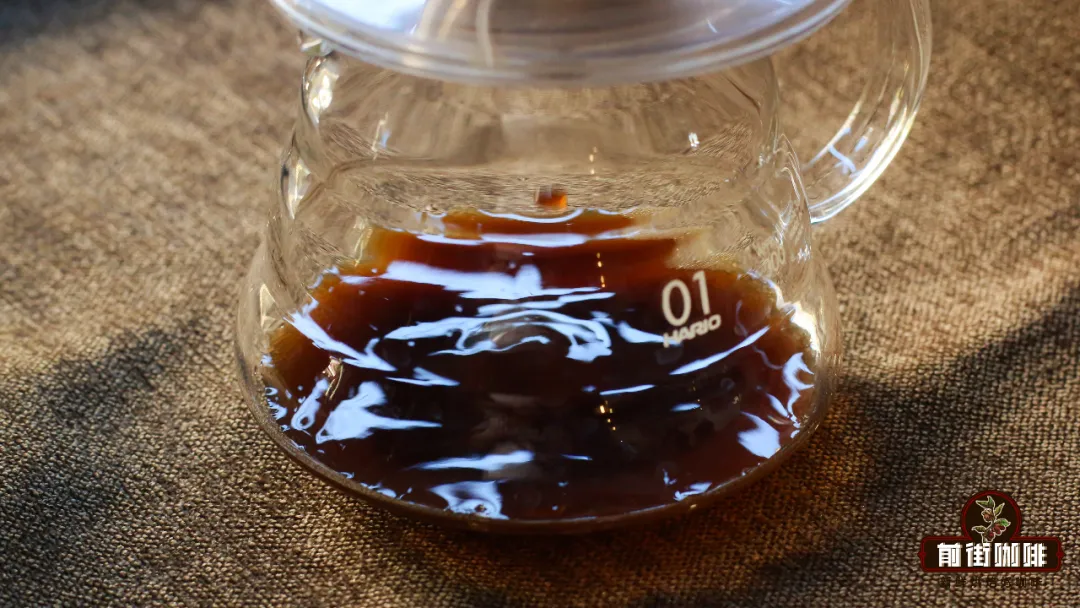
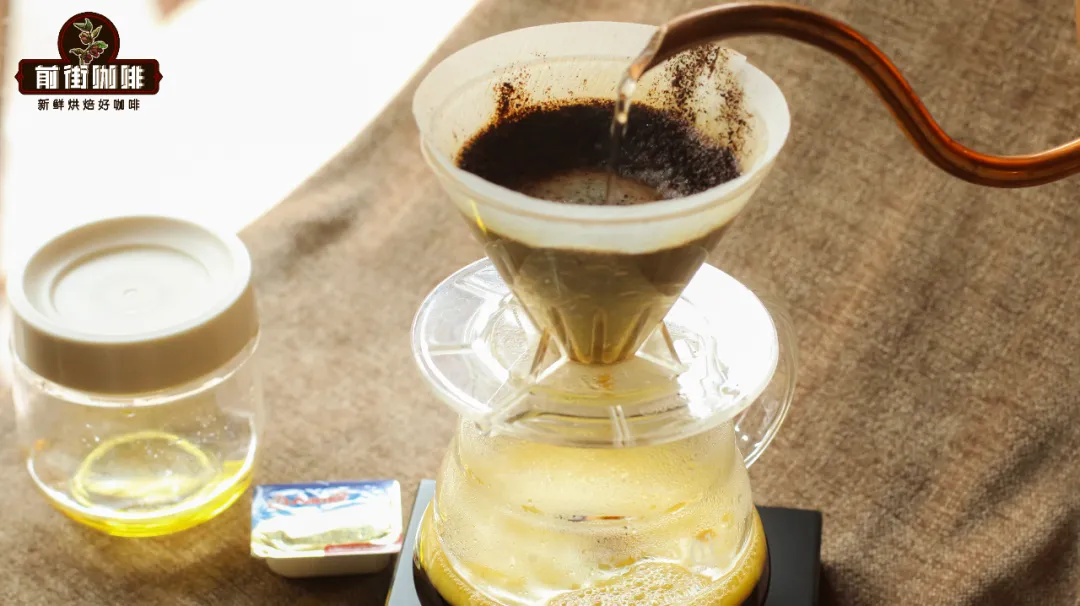
Afterward, take it out and filter the clarified liquid through a paper filter and dripper, and a serving of oil-washed coffee is complete!
(Filtering takes a long time, so it's best to use multiple drippers and filters at the same time.)
Although it looks not much different from ordinary coffee, the taste on the palate is completely different from what you'd expect. The addition of butter makes the whole cup's taste and mouthfeel very soft. Even though it is a dark roast coffee, it drinks with no bitterness at all. On the palate you can feel the spice, chocolate, and other coffee aromas of Golden Mandheling, along with a faint creamy note brought by the butter.
After that, Front Street Coffee also made a pot of coconut oil-washed cold brew , where the ratio of oil to coffee was 1:4, because the aim was to amplify the coconut aroma, and cold brew itself is higher in strength, so a larger ratio was used. The steps are the same, except that the temperature of the cold brew needs to be raised appropriately.
The oil-washed coffee made with this ratio has a more prominent flavor and mouthfeel than the former. The cold brew's own flavors叠加 with the coconut aroma, giving an even richer layering, a soft and mellow mouthfeel—quite excellent.
It is worth mentioning that, besides the filtered coffee liquid, the oil blocked "outside" by the filter paper also carries coffee aroma because it has been in contact with the coffee for a long time. Using it for cooking might also be a good choice!
That's all for this sharing from Front Street Coffee. You can use it as a reference and DIY oil-washed coffee at home; the process is very simple. Just be careful not to make a mess everywhere when stirring~
- END -
The above content is compiled by CoffeeHunters, a coffee news website.


