







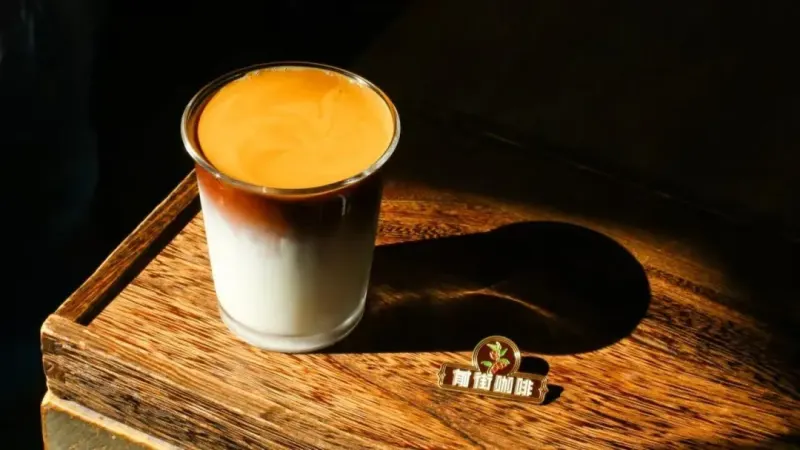
How Do You Make a Layered Dirty in a Coffee Machine?
A layered Dirty depends on two details: the fall distance of the espresso and the density of the milk. Place the cup of milk as close as possible to the espresso outlet, raising it with a support or by hand, so the liquid lands gently and sits on the surface instead of punching through and mixing into an iced latte.
Beyond height, purified milk of higher viscosity, chilled cups and freshly pulled shots all hold the layers longer. Roast level of the beans also plays a role in how the two liquids separate. Keep the milk and coffee ratio in mind, since more milk volume gives the espresso a deeper layer to rest on.
Want to make a Dirty with distinct layers, but always run into the problem of coffee and milk merging too early, resulting in unclear layers? The key actually lies in two details: the distance from which the espresso falls, and the viscosity and density of the milk itself. This article takes a practical approach, sharing how to adjust the receiving height, use purified milk, chill the cups, and other methods to bring the visual effect and taste of Dirty closer to the ideal state. It will also answer the question of whether the roast level of coffee beans affects layering, and share Front Street Coffee's test conclusions, helping you easily make a cup of "Dirty" with pure pedigree.
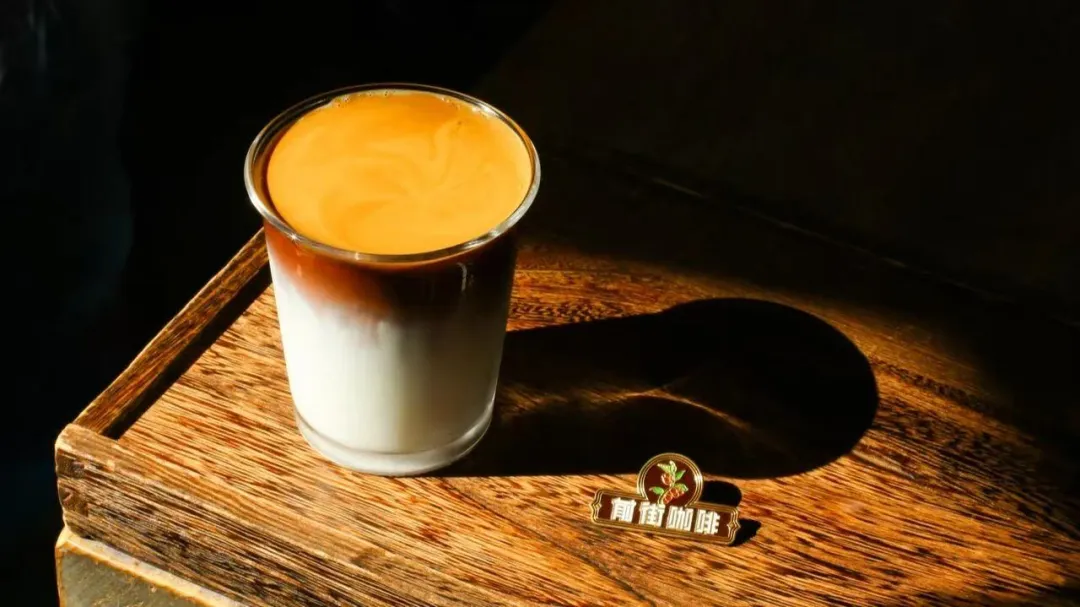
"It's super simple! Just pour milk into a prepared cup, place it under the espresso outlet to catch the extracted liquid, and a cup of Dirty with clear layers is done!" Whether it's Front Street Coffee or other coffee bloggers, this is basically how everyone teaches you to make Dirty. However, after many people try it themselves, the "Dirty" they make is always not "dirty" enough. Either the layering effect is less than satisfactory, or the espresso plunges straight into the milk and completely mixes with it, turning into a glass of iced latte without ice.
These failures are mostly caused by improper operation techniques or wrong material choices. So today Front Street Coffee will chat with everyone about a few small tips to make Dirty layering more prominent, hoping to help you make a cup of pure-pedigree Dir~~~ty. 1. Find the right drop distance First, we can check the height from which the coffee liquid falls when catching the espresso. Although many friends follow the bloggers' method to make Dirty—placing the cup with milk under the espresso outlet to catch the liquid—they overlook one detail: the height from which the coffee falls. If the espresso outlet is too far from the milk, the coffee liquid will carry a relatively strong impact force when falling down. This force will make the coffee directly penetrate the milk surface, and the result is that it completely mixes with the milk, making a cup of Dirty that is not "dirty" enough.
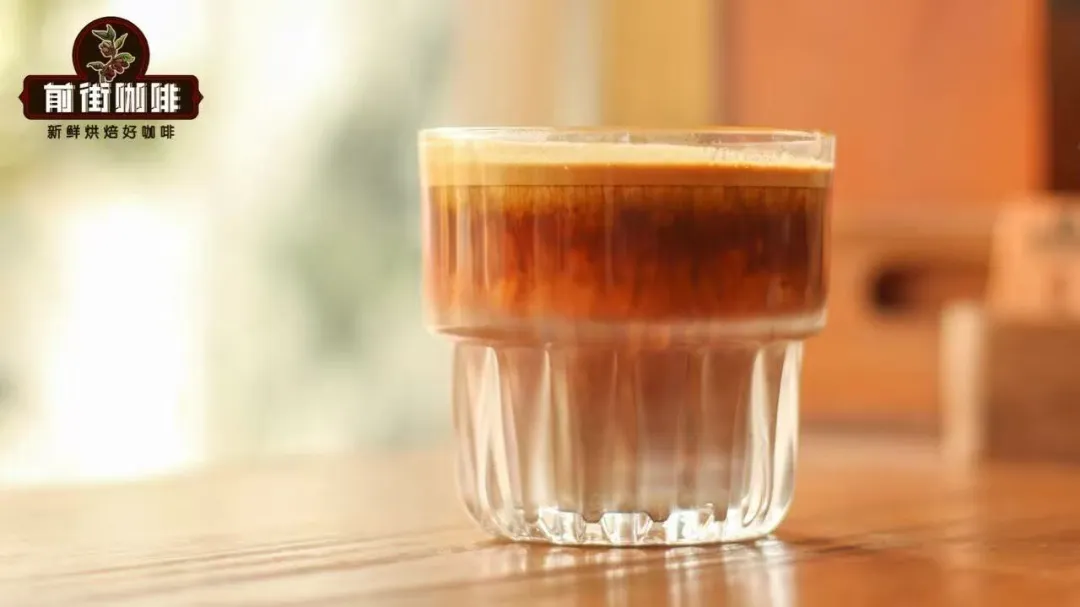
Therefore, when catching the espresso, it is best to bring the milk as close as possible to the espresso outlet. For example, put something under the cup to raise it, or directly lift the cup with your hand so that the milk surface is close to the outlet. These methods all work. Of course, you can also do what Front Street Coffee does: place a spoon right in the center of the milk surface to catch the espresso. In this way, when the coffee falls, it will be blocked by the spoon, and the impact force will be dissipated. The coffee can naturally float better on the milk and form layers. The only downside is that this method is relatively troublesome, especially for those using the coffee machine by hand, as one hand must hold the spoon while the other controls the extraction switch.
2. Increase the viscosity and density of milk The second method is to increase the viscosity and density of milk! The reason milk can hold up espresso and form layers with coffee is that milk itself has sufficiently high viscosity/density. The higher the viscosity/density of the milk, the better it can "separate" from the coffee. In other words, the layering will be more obvious and will last longer. So if you want to make a Dirty with clearer layers, try increasing the viscosity/density of the milk. The method to improve these two indicators is simple: one is to increase the concentration of the milk, and the other is to lower the temperature of the milk.

Fresh milk is the most commonly used ingredient when we make Dirty. If you want to further increase the milk concentration on this basis, you can choose to use purified milk. Front Street Coffee often mentions that some coffee shops often use purified milk to make Dirty. Purified milk is richer than ordinary fresh milk because it is refined milk with a higher concentration. Higher concentration gives the milk greater density and viscosity, which allows it to better catch the espresso and form obvious and lasting layers. (By the same principle, the concentration of the coffee is also important.)
In addition, low-temperature milk can also create a better layering effect. This is because when the temperature of milk decreases, both its density and viscosity increase. The principle is simply thermal expansion and contraction, which is easy to understand. So before making Dirty, we can refrigerate the milk first. Of course, if conditions permit, you can also put the cup in the refrigerator together. In this way, when making Dirty, the cup will not transfer too much heat to the milk, and the milk can maintain a low temperature well, thereby forming layers with the coffee more effectively.

Some friends may also wonder whether the roast level of coffee beans affects layering performance. Front Street Coffee also specifically conducted an experiment for this, using the medium-dark roasted Front Street Classic Espresso Blend and the medium roasted Front Street Strawberry Candy Espresso from the bean list to make a cup of Dirty each, with completely identical dose, time, and liquid weight. The result showed that the roast level does not have much effect on the degree of layering. Both made Dirty with obvious layers, and both had the characteristics mentioned by Front Street Coffee at the beginning in terms of taste. The only difference was in the flavor. Because the former is medium-dark roasted, its coffee flavor presents butter cookies, chocolate, and nuts, while the latter is roses, strawberries, and raisins.
The above are the key points for making a Dirty with more obvious layers. As long as everyone pays attention to these two key points when making Dirty, you can easily make a cup of "Dir~~~ty" with obvious layers~ - END -
The above content is compiled by CoffeeHunters, a coffee news website.


