








How to Choose a Coffee Grinder by Power Source and Budget
A coffee grinder comes down to three choices: hand or electric, what you can spend, and the burr type inside. Hand grinders run on human power, pack small, need no outlet, and cost less, which suits students and frequent travelers. Electric grinders use a motor, so they grind faster and more consistently, which fits home users who make coffee daily.
Budget decides how far each option goes. Entry hand grinders start at a few dozen yuan, while electric models and their burrs climb into the thousands. Burr type is the next factor: flat, conical, and ghost tooth burrs crush beans differently, and the particle shape they produce changes how the coffee extracts. A coffee enthusiast upgrading gear should weigh all three.
Faced with the dazzling array of coffee grinders on the market—ranging from a few dozen yuan to tens of thousands, from hand grinders to electric ones, from flat burrs to ghost teeth—beginners often don't know where to start. Drawing on years of experience running a shop, Front Street systematically sorts out the approach to choosing a grinder from three angles: power source, price tier, and burr type. The article will explain the scenarios each suited to hand grinders and electric grinders, analyze which type to prioritize at different budgets, and explain the differences between flat burrs, conical burrs, and ghost teeth in terms of grinding method and particle shape, as well as how these differences affect extraction flavor. Whether you're a student just getting started, a traveling coffee enthusiast, or a home user preparing to upgrade your equipment, you'll be able to find a direction that suits you.
There are simply too many types of coffee grinders! Casually open any shopping site and type in "coffee grinder," and all kinds of designs, prices ranging from a few dozen yuan to tens of thousands, and different grinding effects will come flooding out, making your head spin. This is also why many friends often reach out to Front Street in the background, hoping for some coffee grinder recommendations.
Although Front Street isn't exactly a gear enthusiast, nor skilled at professional side-by-side grinder reviews, after all these years running a shop, we've basically gotten hands-on experience with the common electric and hand grinders on the market, so we can still offer some reference opinions. Today, let's talk from Front Street's perspective about the directions a beginner should start from when choosing a coffee grinder. 1. The Power Source of the Grinder Today's coffee grinders on the market roughly fall into two categories: hand grinders and electric grinders. The most fundamental difference between the two is where the power comes from. Hand grinders rely entirely on human power to drive the burrs! By turning the handle on top by hand, the internal burrs rotate along with it, crushing the coffee beans.

Since they don't need a built-in motor, hand grinders are usually made very compact and are easy to carry around. If you're just getting into coffee and want to explore slowly, or you're a student, or you travel often and can't do without coffee, then a hand grinder—which needs no electricity and is friendly on the wallet—is well worth considering. Electric grinders, on the other hand, rely on a motor to drive the burrs and need to be plugged in for the motor and burrs to run. Their advantage is fast grinding and convenience, without spending too much effort or time.
However, because of the built-in motor, most electric grinders tend to be larger in size. Plus, they must be plugged in to work, so their usage scenarios are relatively fixed and they're not easy to move around casually. If your budget is relatively ample, your coffee-making spot is fairly fixed, and you don't want to spend too much time and energy on grinding, then an electric grinder would be a suitable choice. 2. The Price of the Grinder As Front Street mentioned at the start, coffee grinders on the market range from a few dozen yuan to tens of thousands. Setting aside the few-dozen-yuan chopper grinders and the tens-of-thousands-yuan commercial machines, the budget for ordinary home users buying a grinder mostly falls in the range of a few hundred to around a thousand yuan. We can also choose based on our own budget. If your budget is relatively ample, an electric grinder is well worth considering! Because whether in grinding precision or durability, electric grinders can be said to comprehensively outperform hand grinders.
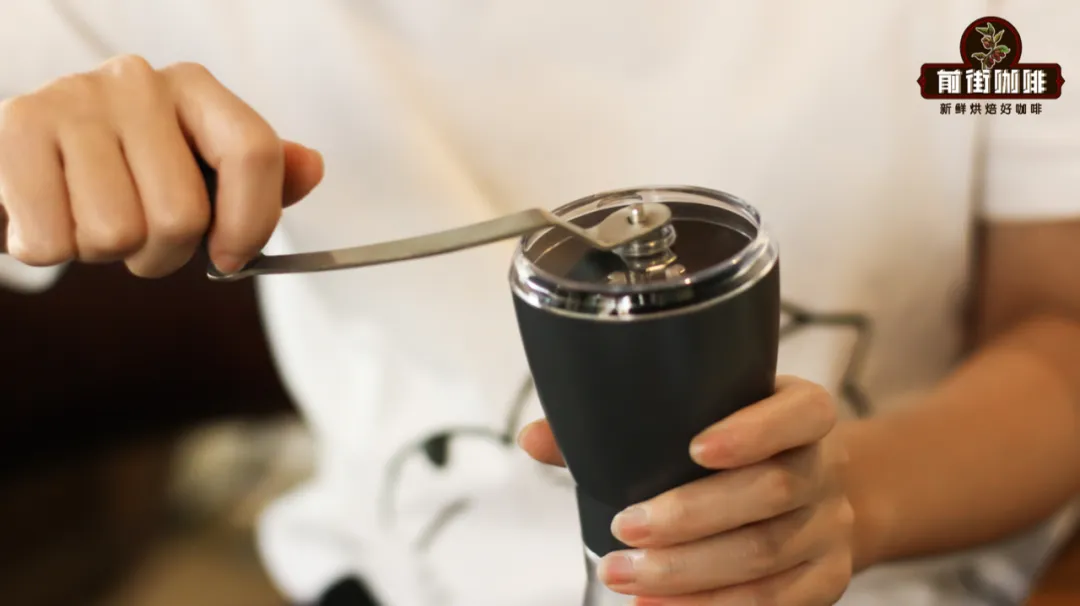
But this "outperforming" comes with a premise—namely, that the price must reach a certain level for it to show. Typically, only electric grinders costing over a thousand yuan can guarantee higher grinding quality. Below a thousand yuan, hand grinders actually have the advantage. This is because hand grinders don't need a motor, so the cost can be heavily invested in grinding quality. Electric grinders, on the other hand, must allocate part of the cost to the motor, so lower-priced electric grinders may not perform as well in grinding as hand grinders at the same price. If you plan to choose a hand grinder, you can pick from the following four tiers based on budget: the 200–499 yuan tier, the 500–799 yuan tier, the 800–999 yuan tier, and the over-a-thousand-yuan tier. The 200–499 yuan range can be seen as entry-level hand grinders; this price point is very suitable for beginners—not expensive but already decent in grinding quality, capable of producing a considered grind particle size; the 500–799 yuan range counts as advanced hand grinders, with improvements in both burr and bearing quality, and grinding quality and durability naturally rising along with it; the 800–999 yuan range belongs to high-end hand grinders, though from Front Street's actual use, we don't feel much difference from the previous tier.
As for the over-a-thousand-yuan tier, Front Street doesn't have much to introduce, because their quality and experience show visible improvements compared to those under a thousand yuan. Basically, hand grinders that reach this price point won't be bad, so if you set your budget above a thousand yuan, just pick and buy whichever hand grinder you like within this range. If you want to play it safe, you can also choose that fairly well-known German brand hand grinder. But if your budget runs into several thousand yuan, you can actually consider getting an electric grinder—basically, within four thousand yuan you can buy a very good electric grinder! So what are the options?
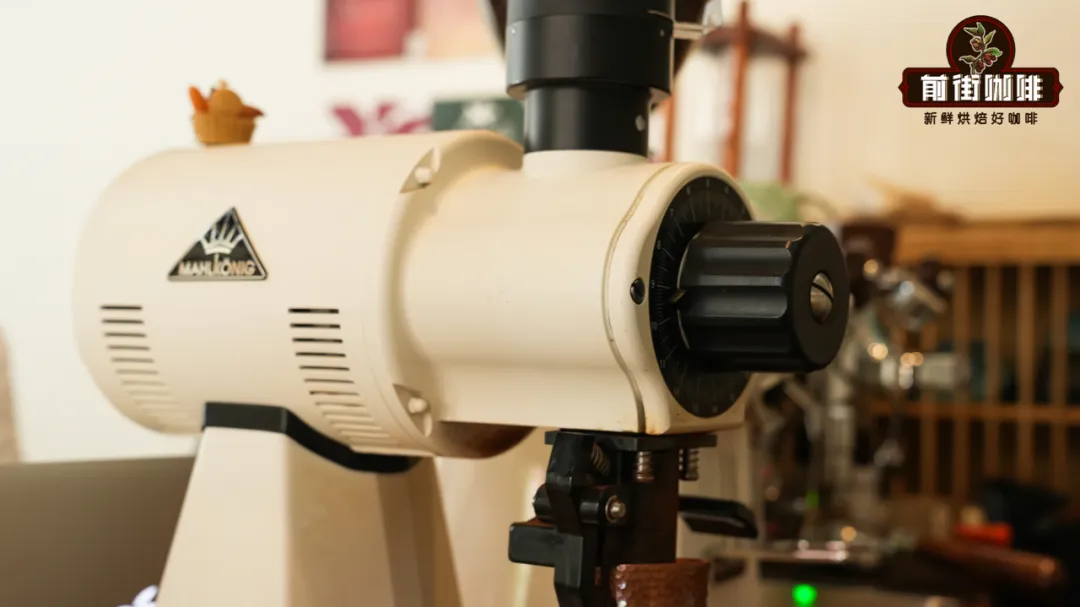
The Royal Fuji, Fellow ODE, Timemore Sculptor, and others are choices Front Street considers fairly good, with a certain guarantee of grinding precision and quality and relatively high cost-effectiveness. Just note when buying an electric grinder that electric grinders come in two different types: espresso and single-origin. Since the grind levels required by the two extraction methods differ greatly, the vast majority of grinders on the market can't do both. Before buying, it's best to confirm clearly to avoid troubles like needing to return or exchange.
3. The Burrs of the Grinder Actually, the above two approaches are already enough for everyone to pick a suitable grinder, but if you want to go a step further, we can even consider comprehensively based on the particle shape and particle size distribution produced by grinding (mainly particle shape) . And what determines these is mainly the grinder's burrs (secondly the RPM) . Grinder burrs mainly come in three types: flat burrs, conical burrs, and ghost teeth. Because their grinding methods differ, they cause changes in the shape and size distribution of coffee particles. Flat burrs are a fairly common type of burr; their grinding method is mainly "shaving"—after coffee beans are fed in, they're shaved by the flat burr's sharp ridges into flakes or chunks (with more fines) . Coffee grounds of this shape have a larger surface area in contact with water, so substances dissolve faster during extraction, making the coffee taste richer (but also more prone to leaching out negative flavors) , with relatively rich layers.
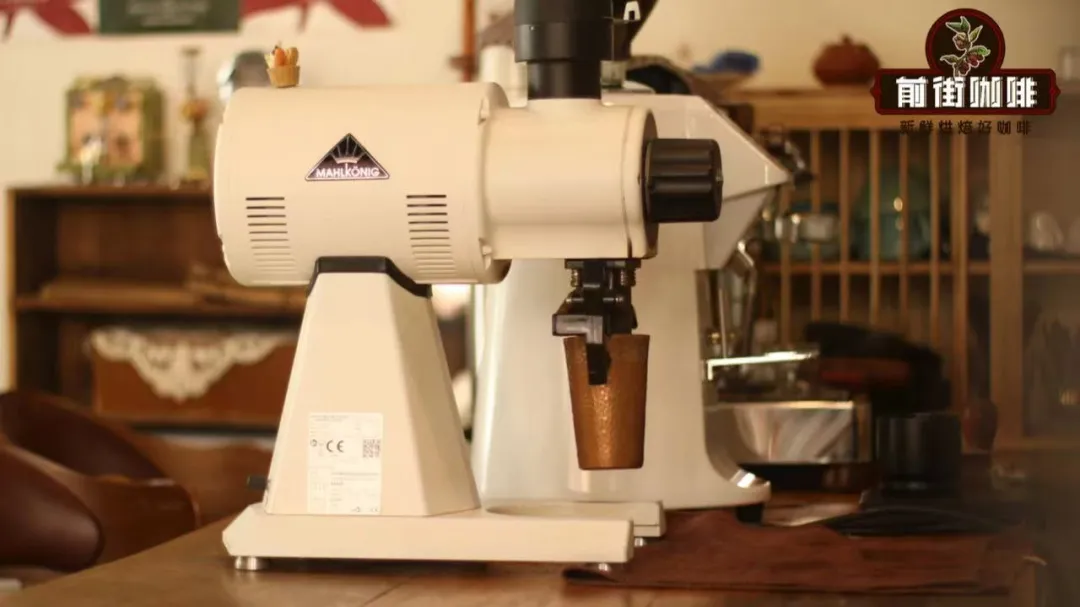
Likewise, conical burrs are also very common; their grinding method is mainly "crushing," so the coffee particles they produce are mainly irregular chunks, with relatively fewer fines. Because such particles are larger in volume and relatively thick, water takes longer to penetrate into the interior of the coffee grounds. This slows the dissolution of substances, making the brewed coffee less prone to over-extraction.
Ghost teeth burrs, strictly speaking, count as an improved version of flat burrs, because their structure is the same as flat burrs—both composed of two burrs—only the blades have been changed into a gear shape. This change can effectively reduce the squeezing phenomenon during grinding, making particles more uniform while reducing fines. Ghost teeth's grinding method is mainly "rubbing," so the particles they produce are more like spherical polyhedral particles. Combined with a relatively uniform distribution of coarse and fine particles, the brewed coffee will have relatively high consistency and body. The above are the three approaches to choosing a grinder that Front Street shares. Everyone can find a grinder that suits them based on their own budget and needs, and then place an order~ - END -
The above content is compiled by CoffeeHunters, a coffee news website.


