








Why Is Cappuccino a Morning Drink, and What Blend Coffee Works Best?
In Italy, cappuccino is treated as a breakfast drink, and ordering one after noon draws sideways looks. The custom is unwritten rather than official, tied to the idea that milk sits heavy later in the day. The drink itself is a milk coffee with three defining traits: thick milk foam, an intense coffee base, and a pour that fills the cup to the rim.
Making a cappuccino in that style depends first on the beans and only second on the milk. Dark-roasted blend coffee that yields rich crema and a bittersweet, mellow mouthfeel is the usual choice, and a starting parameter of 20g of grounds keeps the shot concentrated enough to stand up to steamed milk. The name itself traces back to the drink's origin, and the local habit of drinking it early.
Cappuccino is a milk coffee that many coffee lovers enjoy daily, but in Italy, this drink comes with an unwritten rule—ordering it in the afternoon may earn you sidelong glances. Why do Italians regard cappuccino as a "breakfast drink"? What are the local customs regarding its thick milk foam, intense coffee flavor, and filling it to eleven-tenths? What coffee beans should be chosen to make an authentic cappuccino? This article, from Front Street's perspective, traces the origins of Italian coffee customs, analyzes the flavor characteristics and extraction parameters of cappuccino, and recommends Front Street's classic Italian blend coffee beans, helping you understand the cultural logic and brewing details behind this milk coffee.
Coffee holds an almost sacred status in the hearts of Italians. As a daily pick-me-up, it is deeply valued by locals, and many unwritten rules and customs have formed around drinking coffee.
A while ago, Front Street noticed a rather interesting claim: "In Italy, cappuccino is only suitable for drinking in the morning. If you order it in the afternoon or evening, you're likely to get criticized." In our view, cappuccino is nothing more than an ordinary milk coffee that can be enjoyed whenever you like. But in this European country with its rich coffee culture, why has it been given a time restriction?
What are the characteristics of cappuccino?
Compared with other milk coffees, the three core elements in making a cappuccino are: thick milk foam, intense coffee flavor, and filling it to eleven-tenths. To make a cup of coffee possess all these characteristics at once, you first need to steam fresh milk into a rich and dense foam layer, then let it fully merge with the espresso until the foam rises above the rim of the cup, making the whole thing look like a puffed-up "little burger"—round and plump.
In terms of taste, cappuccino depends first on the coffee beans used, and only second on the milk. For Italians, dark-roasted coffee beans that can extract rich crema, have a solid mouthfeel, and deliver a bittersweet, mellow aroma are undoubtedly the best choice. Cappuccinos made with such beans are usually more fragrant and rich.

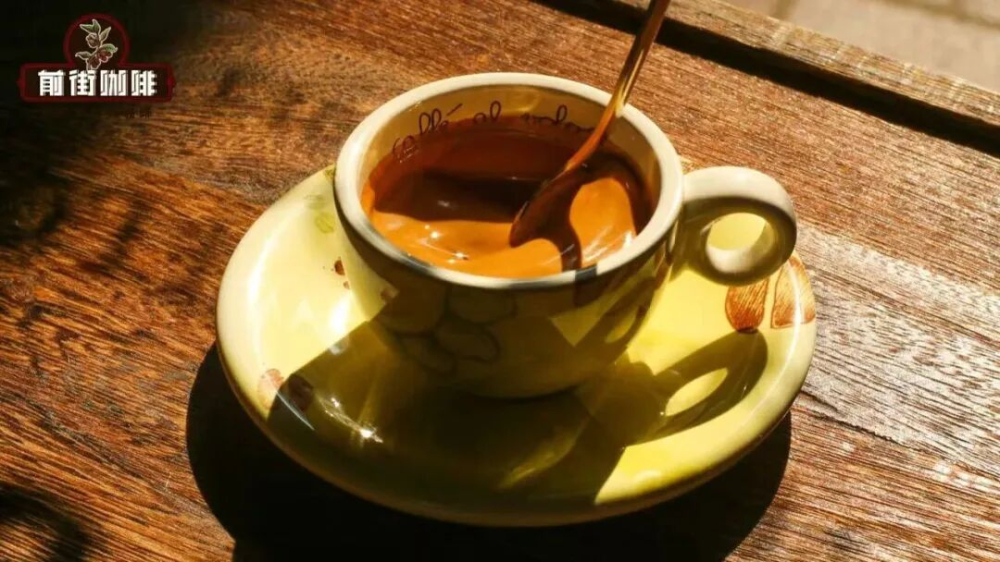
Therefore, to get closer to the flavor of the local version of cappuccino, Front Street's classic Italian blend coffee beans are used here for extraction. The adjusted parameters are 20g of coffee grounds, extracting 39g of coffee liquid in 28 seconds; then 150g of fresh milk is steamed to a 1.5cm-thick milk foam, and the two are fully mixed (locally, little attention is paid to latte art or a standard golden ring—just make sure all the foam floats on top of the coffee).
The cappuccino made this way tastes much richer than a latte. Especially in the first two sips, it is almost entirely the roasted aroma and bitterness of Crema, along with the fluffy sensation brought by the thick foam layer, as if eating a coffee-scented marshmallow. By the third sip, you truly feel the blended taste of milk and coffee in the cup—very concentrated, with a hint of sweetness, leaving a lingering fragrance in your mouth after drinking.
Why do Italians only drink cappuccino in the morning?
Unlike other coffee-making methods, the characteristics of Italian coffee are concentrated in its English name "espresso," emphasizing one word: "fast"—made quickly, drunk quickly. Customers stand at the bar and can finish a small cup of espresso in just two or three sips, then leave immediately. The whole process is efficient and crisp, making it suitable for drinking at any time of day.
But as one of the most common milk coffees locally, cappuccino is regarded by many Italians as a "breakfast drink." Although no law stipulates that it can only be drunk in the morning, after noon, this kind of hot coffee with thick foam is indeed rarely seen, and some shops even take it off the menu by default.

It is said that some tourists have tried ordering a cappuccino from a waiter at night in Italy, only to quickly receive a "side-eye" and then be firmly refused. So why are Italians so insistent on this "rule"?
After looking into it, Front Street found that the "rumor" that Italians only drink cappuccino in the morning is inseparable from local breakfast habits. In this European country, breakfast is generally small in portion and sweet in taste, so milk drinks are often paired with it. At this time, a cup of rich cappuccino perfectly balances those sweet foods, quickly waking people up, and the larger amount of milk also helps fill the stomach—a perfect combination.
But once lunchtime arrives, or more precisely after 11 o'clock, most "old-school Italians" will actively avoid this milk coffee. Because Italian lunches are often very large, drinking another cappuccino would burden the stomach and affect digestion. So after a full meal, they rarely order milk-based drinks, preferring instead that small cup of intense and stimulating espresso.
Besides this more common explanation, Front Street also found another reason: it is said that in an era of scarce resources, milk in many parts of Italy was delivered fresh in the morning, and there was simply no refrigeration equipment. To ensure the milk did not spoil in warm seasons, locals used milk for breakfast and used the rest for cooking or cheese-making. Without the raw ingredient, cappuccino naturally could not be made after noon, and this gradually became a daily habit for Italians.

However, today, with the development of the times, locals have begun to see some changes in coffee culture. The stereotype that "cappuccino can only be drunk in the morning" is gradually fading in Italy, and in many local cafés or bars, cappuccino can now be ordered at any time.
Many Italians, especially the younger generation, do not follow this tradition at all. They believe that a rich, foam-topped milk coffee can be enjoyed at any time of day, and they would certainly not "roll their eyes" at tourists who order cappuccino in the afternoon.
The above content is compiled by CoffeeHunters, a coffee news website.


