








Do blended coffee beans improve with more varieties?
A blend with more bean varieties is not automatically higher in quality. What matters is how the beans complement each other and how their ratios are adjusted, not the number of origins piled in. Most roasters today keep blends to roughly two to five varieties for that reason.
Coffee bean blending is a technical job. Mixing beans lets a roaster reach goals that single-origin lots at the same price cannot, such as an all-around cup with balanced body and acidity. A brewing test using more than thirty kinds of coffee beans showed that adding varieties past a point muddies the flavor instead of improving it.
Many friends who are just getting into coffee have a question: which is better, a blend or a single-origin coffee? Does using more types of beans in a blend make it more impressive? Because some merchants heavily promote blends with four or even more types of beans, many beginners mistakenly believe that the number of bean varieties in a blend is directly tied to its quality. In fact, the core of a blend lies in the complementary characteristics between beans and the adjustment of their ratios, not simply piling up varieties. In this article, Front Street Coffee will systematically explain what a blend is, what problems it can solve that single-origin beans struggle to achieve, and through a brewing experiment using more than thirty kinds of coffee beans, intuitively demonstrate why more beans in a blend is not necessarily better, and why merchants currently generally keep blends to 2~5 varieties.

This is not the first time Front Street Coffee has encountered this kind of question. As many merchants begin to heavily push blends with four or even more kinds of beans, many coffee enthusiasts who are just starting out easily get the impression that the more varieties of coffee beans used in a blend, the better the result.
The reality is not like that. The quality of a blend cannot be equated with the number of coffee bean varieties used. The reason everyone develops this misunderstanding is partly due to the influence of merchant promotion, and partly because they still lack a complete understanding of the concept of blending itself.
Therefore, today Front Street Coffee will first talk about what a blend actually is, and then, with the help of a coffee blended from more than thirty kinds of coffee beans, explain to everyone why the varieties of beans in a blend are not better the more there are.

What is a blend?
A blend, also called a mixed coffee, refers to a coffee category made by mixing two or more different coffee beans together. Although from an operational point of view, as long as different beans are mixed together, you can get a blend, this matter is far from as simple as imagined, because blending is actually a technical job.
Through blending, many goals that single-origin beans at the same price struggle to achieve can be realized. In this way, we can make the blended beans show the desired effect, including but not limited to: creating an "all-around warrior" that performs excellently in every aspect, with both flavor and mouthfeel standing out; or blending a cost-effective coffee with very low cost yet good flavor; or giving the finished coffee greater stability.
As everyone knows, coffee is an agricultural product, and its taste is affected by many factors. Therefore, even for the same kind of coffee bean produced in the same field, the quality and taste of each batch will differ from the previous batch. If only a single coffee bean is used to make coffee, then every time the batch is changed, the stability of the output will be affected by changes in taste. Blending happens to be able to solve the problem of unstable taste.
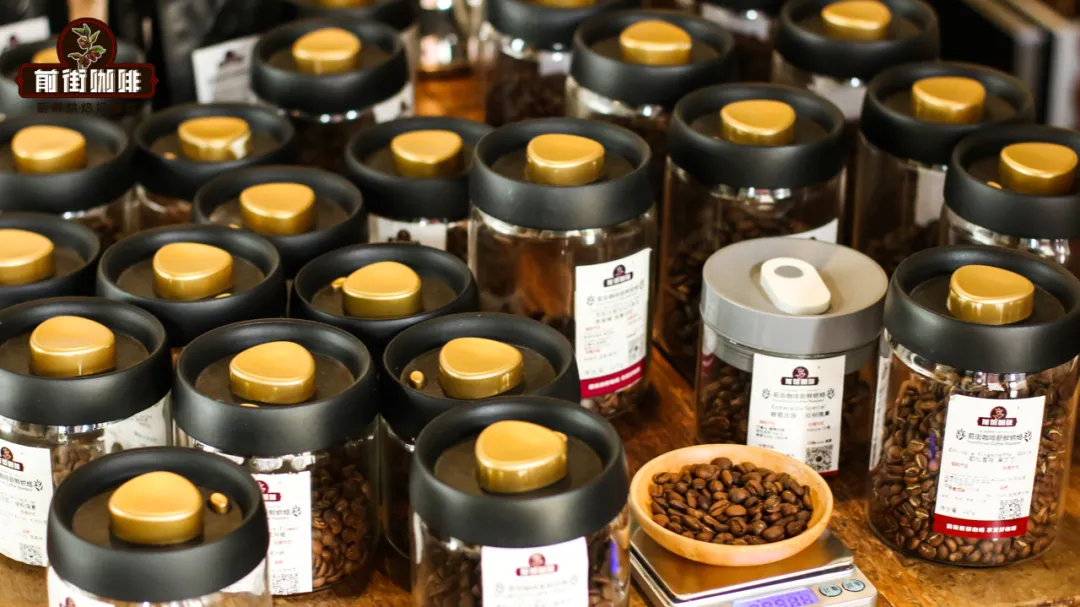
After several different coffee beans are blended together, the flavor of the coffee no longer comes from a single source, but is jointly formed by multiple beans. This is equivalent to diluting the importance of each bean. When a certain bean in the blend is not as good as expected in a new crop season, or when it is out of stock and unavailable, other similar beans can be used to replace it, thereby maintaining a stable taste.
(There will be changes, but the extent will not be too large)
In addition, we can also create a highly cost-effective coffee bean through blending. So-called high cost-effectiveness means that the performance of this bean will clearly exceed that of single-origin beans at the same price. Because blending can make up for shortcomings by drawing on strengths, we can use the advantage of one bean to compensate for the weakness of another bean, while the other bean happens to have the strength that the former lacks. Combining the two creates an "all-around warrior" that is excellent in every aspect but not too expensive.
( For example, the Front Street Warm Sun Blend in Front Street Coffee's bean list is exactly like this! )
It can also create entirely new flavors through the integration of flavors...
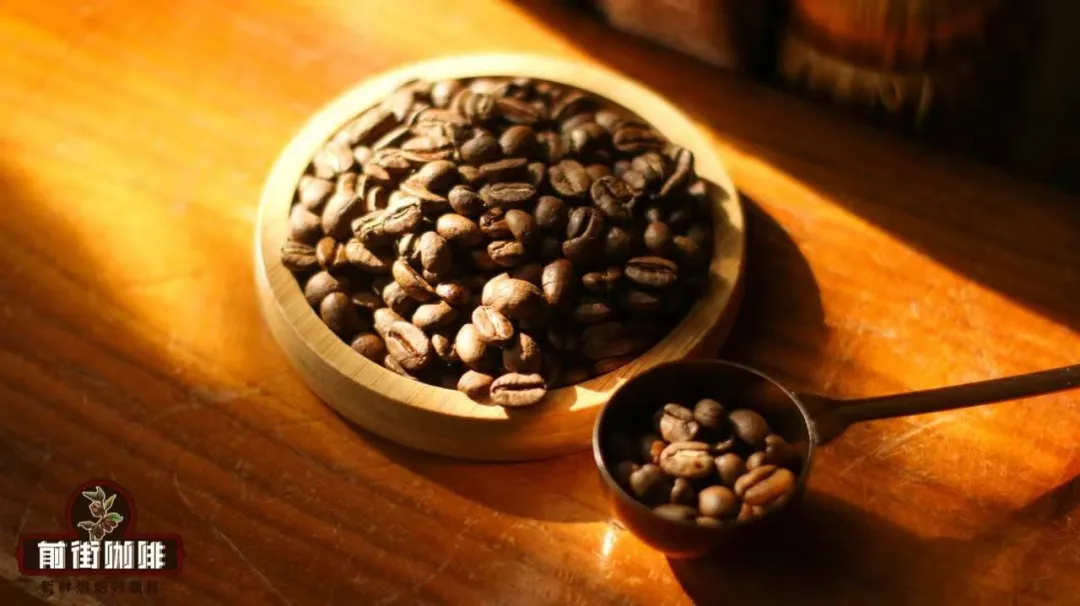
From the above, it can be seen that blending is a way to avoid the defects of a single bean variety by combining the characteristics of different beans, rather than simply stacking up the number of varieties. So, if the number of varieties is blindly piled up, what will happen? Next, Front Street Coffee will do an experiment.
Brewing experiment
Front Street Coffee took 3 beans from each of more than 30 different coffees sold in the store, combining them into a 15g blend, and then "cooked" it by pour-over. The extraction parameters followed the usual formula for brewing light-roasted coffee, but since the purpose of this experiment was not the brewing itself, the parameters and process will be omitted.
When this special blend of coffee beans was ground into powder, a slight aroma of berries and spices could still be smelled, but once it was brewed into coffee, almost no flavor could be tasted. Although it had a good mouthfeel and a long aftertaste, no particular flavor stood out. The overall impression was messy and vague, and the taste was the same.
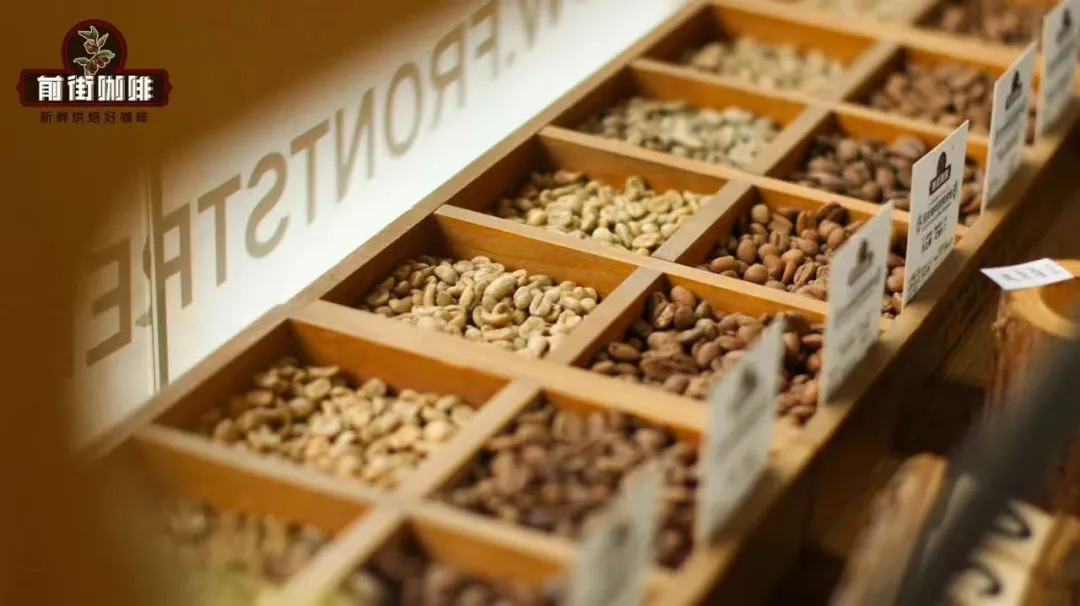
The reason this happens is that too many coffee beans were used, and in equal amounts, so no single bean could serve as the core to support the taste of the whole cup. As a result, the various flavors canceled each other out, and the flavor became vague. If this is hard to understand, think back to the modeling clay you played with as a child.
Everyone should have played with modeling clay! After kneading modeling clay of various colors together, the imagined colorful clay did not appear. Instead, it turned into a single grayish-brown color. Although the principles are different, the reasoning is the same, and blended coffee is also like this.
When more coffee beans are used in a blend, the more attention must be paid to the ratio between the beans and how well their characteristics match. Otherwise, it will instead weaken the distinctive features of the beans and produce the exact opposite effect.
And this greatly tests the blender's understanding of each kind of coffee bean.
Furthermore, the more beans used, the more complex the blending process becomes. This is not only because the characteristics and amounts of each bean must be adjusted, but also because the sizes and densities of the beans differ, requiring different roasting curves.
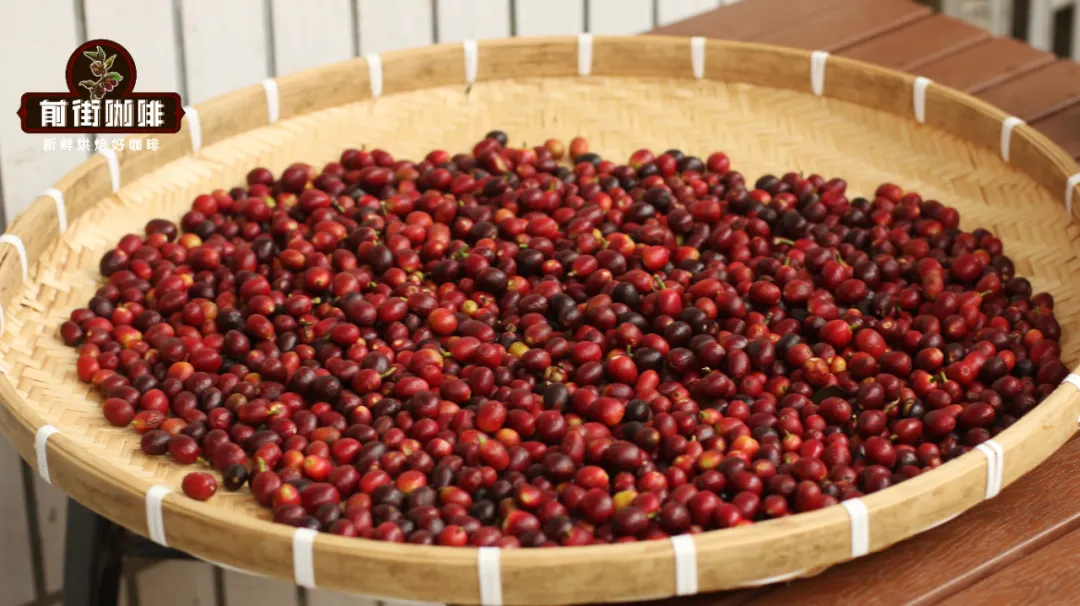
Simply put, if you want to obtain the ultimate experience, even if the beans cannot achieve the same degree of roasting, they should at least be similar. For this reason, a post-roast blending method is needed. So-called post-roast blending means blending after each kind of bean has been roasted separately. The more varieties of beans used in the blend, the more roasting batches are required.
Although the blending process is more complex, when there are too many types of beans, the actual result is not proportional to the effort. Therefore, in blended coffee, it is not better the more varieties of coffee beans are used. Among the blends seen on the market today, merchants mostly keep the beans to 2~5 kinds. This is the result after weighing the pros and cons.
- END -
The above content is compiled by CoffeeHunters, a coffee news website.


