







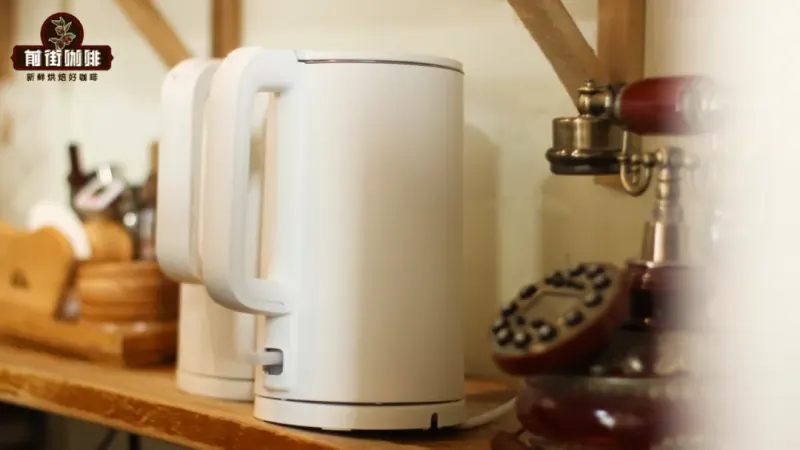
Can an ordinary kettle handle pour-over coffee brewing?
An ordinary electric kettle can brew pour-over coffee, but it is harder to control. A long, slender spout and a low center of gravity let a pour-over kettle deliver a steady, narrow stream exactly where it is aimed. A standard kettle is designed to boil water, not to guide flow, so the pour tends to be uneven and the extraction less consistent.
Front Street Coffee tested two workable approaches with a regular kettle, using set extraction parameters and step-by-step pouring. Both rely on slow, small pours and careful timing rather than on the kettle itself. The same limits apply to any bean, whether an easy everyday lot or a panama geisha coffee, since flow control matters more than the vessel when the grind and ratio are fixed.
Friends who have just gotten a new kettle often ask: can this kettle be used directly to brew pour-over coffee? The answer is yes, but brewing a delicious cup is not that simple. A professional pour-over kettle's slender neck, narrow spout, and low center of gravity are all designed for stable pouring; an ordinary kettle is built around boiling water and lacks flow-guiding structures, so controlling the pour is naturally harder. Front Street Coffee, through hands-on testing, shares two feasible ways to brew good coffee with an ordinary kettle, along with complete extraction parameters and brewing steps, proving that a kettle can also brew coffee with excellent flavor.
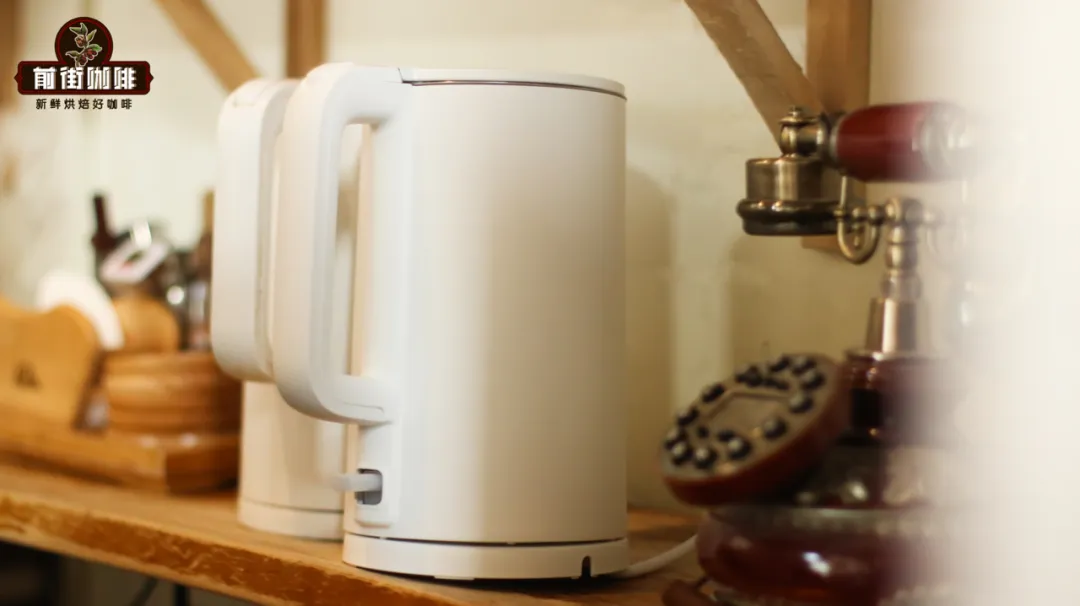
As soon as the newly bought kettle arrived at the shop, a customer asked Front Street a question: Can it replace a professional pour-over kettle for brewing coffee?
This question needs no hesitation—the answer is of course it can! It can boil water and pour water just the same. If the only goal is to get a cup of coffee, an ordinary kettle is perfectly up to the task. But then again, once you start getting into pour-over, your pursuit is definitely not just "having a cup of coffee." Brewing coffee that tastes good is the ultimate goal. And for a kettle, that goal is a bit tricky. Why? Because a kettle struggles to pour water as steadily as a professional pour-over kettle.

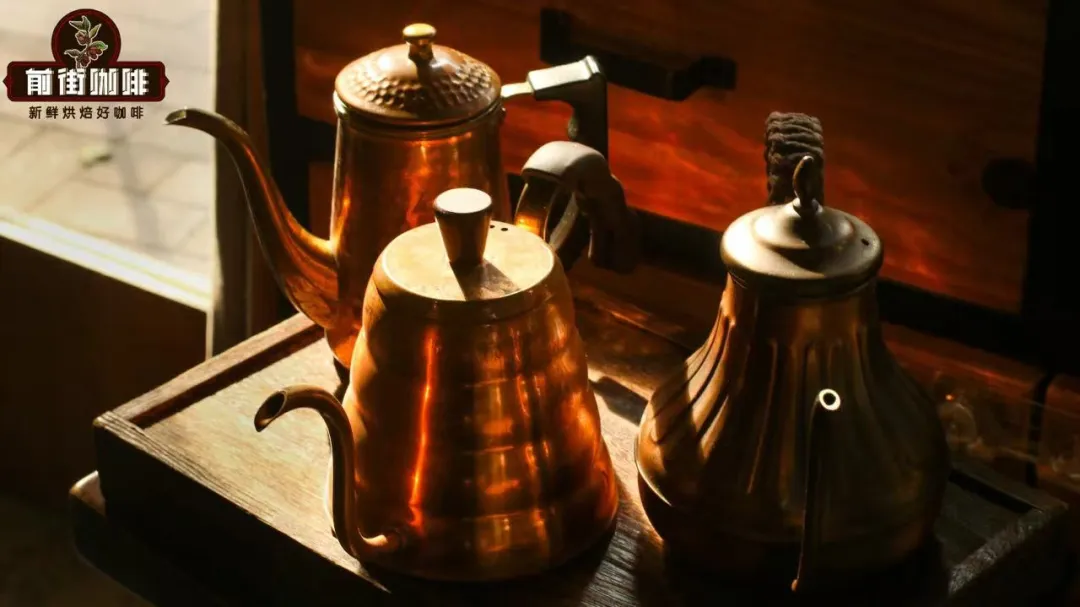
The reason a professional coffee pouring kettle deserves the name "professional" is that every design detail revolves around the core goal of "brewing a better cup more steadily." For example, to control the flow more precisely, pour-over kettles are equipped with a slender neck and a narrow spout, which makes it easy to adjust the thickness of the stream and pour with precision— pour exactly where you aim;
Another example: to reduce the interference of body movement on the water flow, most professional pour-over kettles use a low center of gravity design with a wide base and a spout connected to the base. This acts like a stabilizer—even if your hand shakes like a cafeteria lady serving food, the low-center-of-gravity body helps you pour a steady stream.
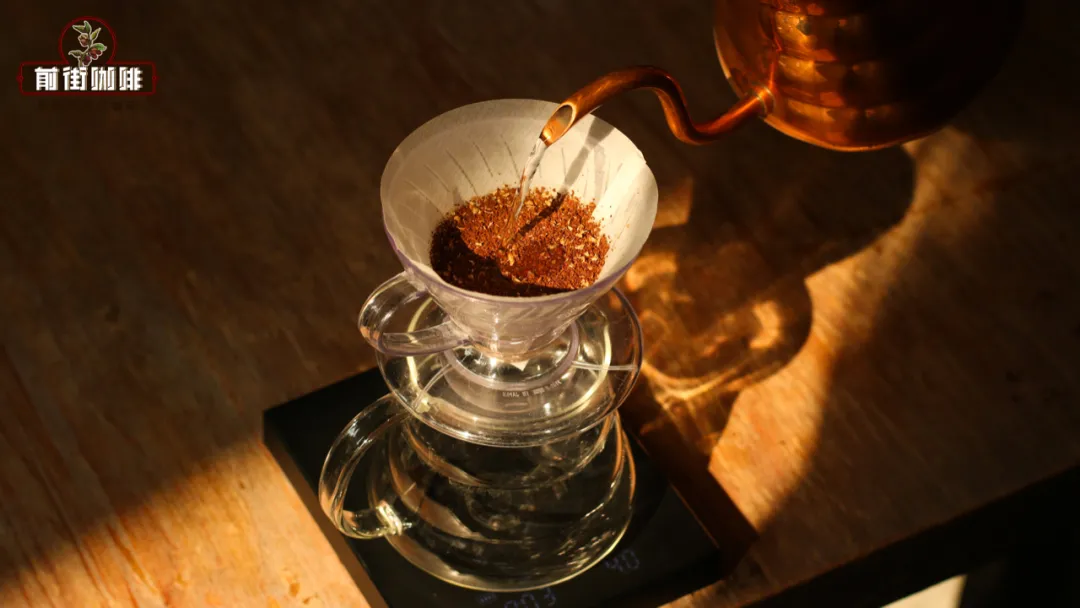
There are also designs like the handle, but since their impact is relatively limited, Front Street won't go into detail here. Those interested can search our past articles to learn more. In short, these advantages that help pour better and brew good coffee more easily are basically absent from ordinary kettles! This is also reasonable—after all, a kettle's job is to boil water, and it doesn't need any flow-guiding design at all. As long as it can boil water and pour it out, that's enough. Because of this, asking a hundred-yuan kettle to do the job of a thousand-yuan pour-over kettle (meaning brewing a good cup of coffee) is indeed quite a challenge, but not impossible! (leans back tactically)
How to brew a good cup of coffee with a kettle? Just like the kettle Front Street newly bought, the vast majority of kettles on the market have a straight cylindrical body. This shape raises the center of gravity and makes it easy to wobble during brewing; in addition, the spouts of kettles are almost all high-position wide openings designed to quickly pour out a large amount of hot water. This not only makes the flow harder to control, but also requires tilting the kettle at a larger angle when pouring, greatly increasing the difficulty of controlling the pour.
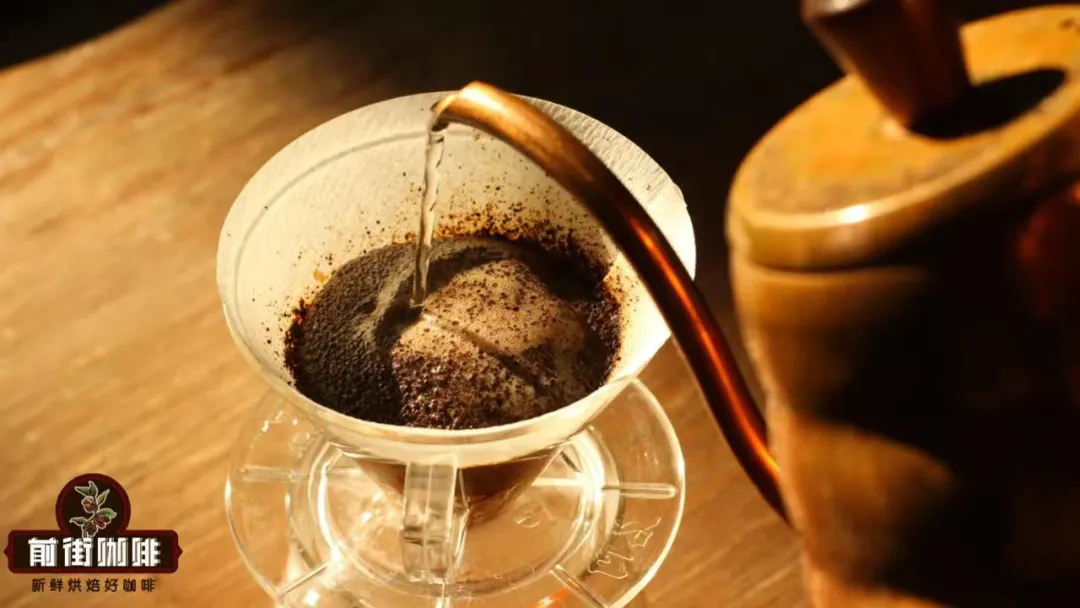
If you must use this kind of kettle to pour and brew, there are two methods that can help you brew good coffee. The first is more demanding on grip strength, because you have to use the kettle as a pouring kettle and perform a regular multi-pour sequence, so you need some means to stabilize the kettle—for example, filling it to the top. If the kettle isn't full, tilting it too much will cause an unstable center of gravity. And as the water decreases, to pour a steady vertical stream you have to keep increasing the tilt angle, which maxes out the difficulty of brewing a cup of coffee.
But after filling it with hot water, even if the center of gravity is in the upper layer, the kettle's overall center of gravity can still remain concentrated, making pouring more stable and greatly reducing the tilt needed, so controlling the pour becomes somewhat easier. But the downside is also very obvious! When the kettle is too heavy, holding it for two minutes is quite tiring (excluding waiting time, the actual hold is about 1 minute) . So if you're using a large-capacity kettle, Front Street usually recommends the second method for brewing. But before introducing it, Front Street will first share how to brew coffee with a full kettle, and then explain the second method.
The coffee beans used in this Front Street demonstration are Front Street Panama Boquete Geisha. They are relatively dense and place stricter demands on extraction, which helps us better verify whether the pouring is reasonable. The extraction parameters are as follows: Dose: 15g Grind setting: EK43 setting 10, 75% passing through a No. 20 sieve, caster sugar coarseness Coffee-to-water ratio: 1:15 Water temperature: 92°C Brewing method: three-pour method Dripper: V60 Since the kettle has no temperature control function, stop heating when the water temperature reaches 92°C to avoid the temperature climbing to 100°C after boiling; otherwise, the waiting time in a full state would be too long. When the kettle shows 93°C–94°C, you can start brewing (usually the kettle's displayed water temperature is about 2°C higher than the actual water temperature inside) .
Step one: bloom with twice the coffee dose in water for 30 seconds.

After the bloom, use both hands to tilt the kettle slightly, pour a small stream, and circle around. The target pour for this stage is 120ml.
After pouring, wait until the hot water in the dripper drains through to the bottom before pouring the next stage! The third stage requires pouring 75ml. In the same way, control the kettle to pour a small stream and circle in a small loop until all of it is poured.
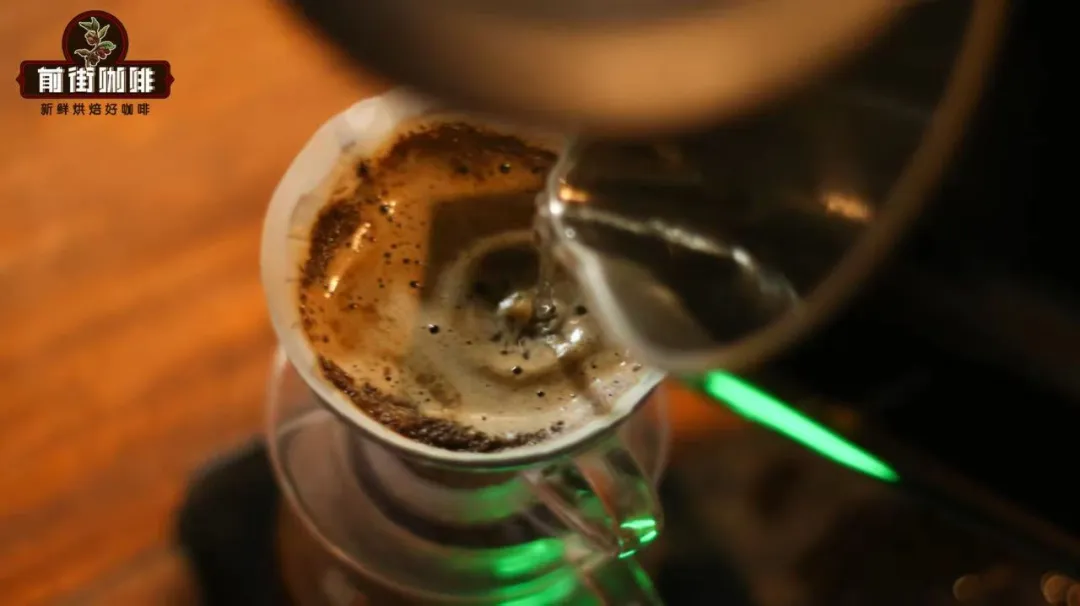
When all the coffee liquid has dripped through the dripper, the extraction is finished. The total extraction time this time is 2 minutes 10 seconds!
Tasting leads to the conclusion: there is no difference from the result brewed with a pouring kettle. Not only is the flavor outstanding and the taste balanced, but the mouthfeel is also quite rich—exactly the Geisha flavor brewed on ordinary days. The second method is much simpler. Although it also requires pouring in three stages, each stage is poured all at once, so there are no requirements for the kettle's load or your grip strength. That's right! The second method is pouring combined with stirring, the approach Front Street used in the article "How to Brew Coffee with 100°C Boiling Water" .
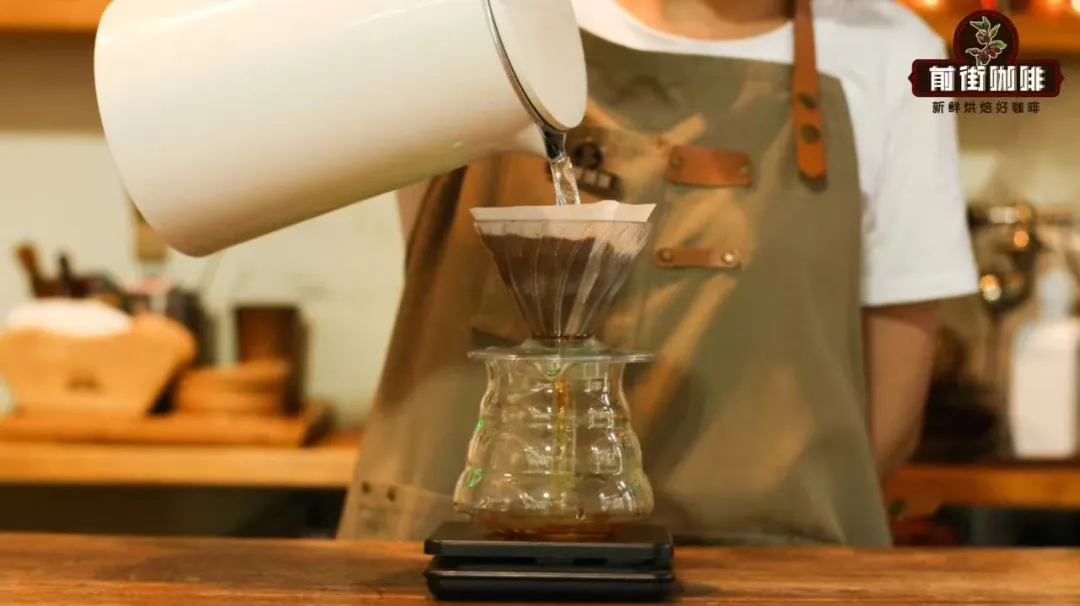
Since we use a tool to stir instead of the water flow during brewing, there is no need for any flow control. Just pour the hot water into the dripper all at once, then stir with a tool. The method is very simple; as long as the parameters are right, you can brew a delicious cup of coffee. Front Street has already shared the detailed brewing steps in the article, so we won't repeat them here. You can click the link above to learn more~
The above content is compiled by CoffeeHunters, a coffee news website.


