







Where Does Coffee Come From and Why Cold Brew Leaves Oil
Cold brew coffee oil and fine sediment come from the beans, not from spoilage or dirty gear. Coffee beans hold water-soluble fats and plant fibers. During a long, cold steep, these fats release slowly into the water instead of rising with heat, so a thin oil layer forms on the surface. Fine particles pass through the filter and settle at the bottom of the cup.
Pore size decides how much gets through. A paper filter traps most fines and much of the oil, while a metal or cloth filter lets more pass, giving a fuller body. Many coffee enthusiasts steep 12 to 24 hours, then strain twice and chill the brew overnight so the oil and sediment separate and can be poured off.
When making cold brew coffee at home, a layer of oil often floats on the surface, and fine sediment may appear at the bottom of the cup, which confuses many coffee enthusiasts. What exactly are these floating substances? Is the coffee spoiled or the equipment unclean? In fact, this is closely related to the slow release of water-soluble fats in coffee beans at low temperatures. This article will start from Front Street's practical experience, analyze the causes of cold brew oil, explain the impact of different filter pore sizes on coffee taste, and share how to use secondary filtration with filter paper and refrigerator standing to make cold brew's juice feel fuller and acidity more transparent. At the same time, regular deep cleaning of equipment is also key to avoid the accumulation of condensed oil residue that produces a rancid oil smell.
Friends who have experience making cold brew know that there are quite a few variables that determine the flavor of cold brew coffee. The most critical ones are coffee bean variety, grind size, coffee-to-water ratio, and steeping time, followed by operational details such as whether stirring is sufficient, whether the container is clean, and water quality, all of which will more or less affect the final taste.
Frankly speaking, like other extraction methods, any coffee beans can be used to make cold brew, but to achieve a satisfying flavor, Front Street believes some thought is still needed.
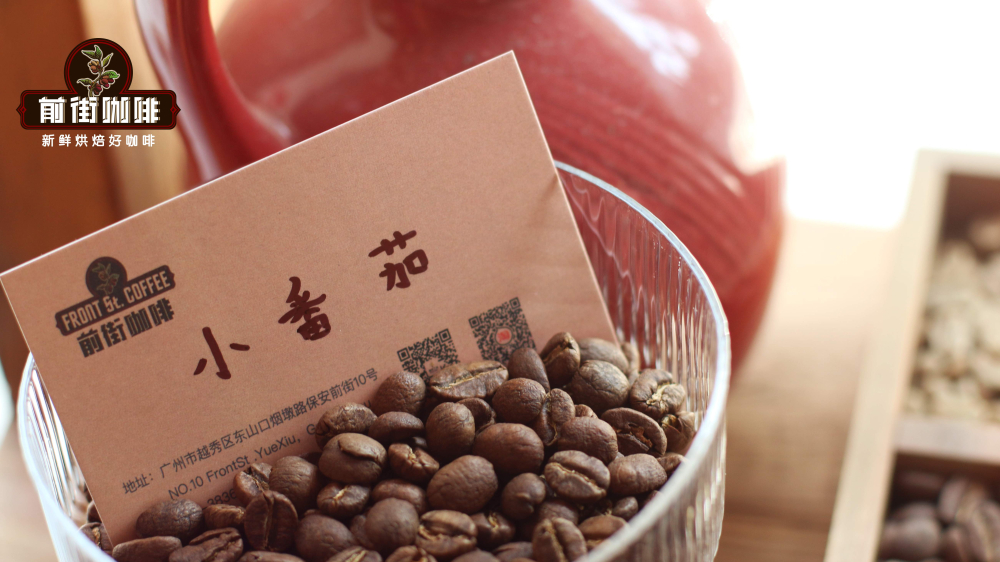
When making cold brew, Front Street tends to choose beans with floral and fruity sweet-acid notes, mostly light to medium roast. Recommended are Front Street Huakui Coffee, Front Street Red Cherry Coffee, and Front Street Fruit Dingding Coffee; if you prefer a more pronounced juice feel, you might try fruit-forward beans such as Front Street Strawberry Candy Coffee, Front Street Little Tomato Coffee, and Front Street Mozart Coffee;
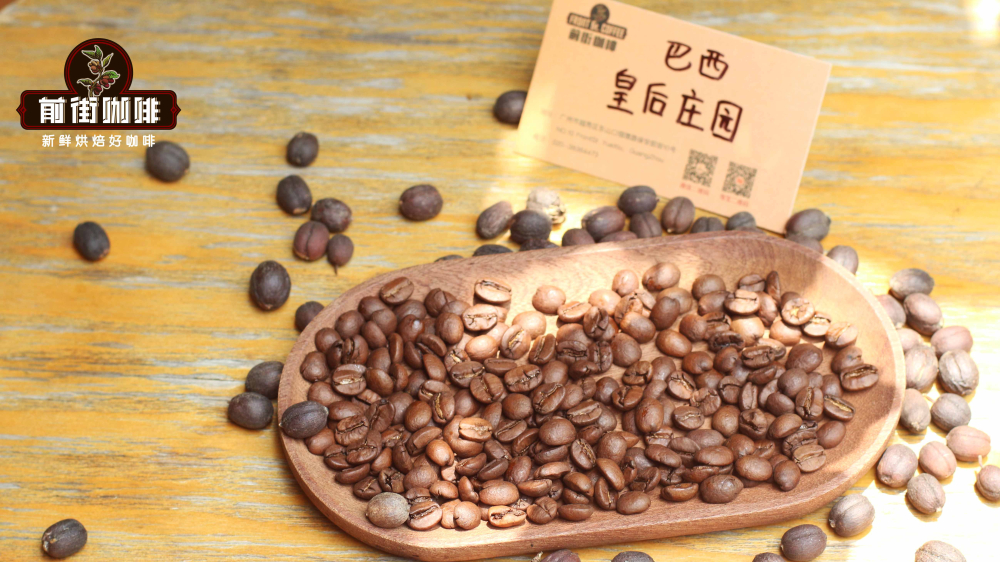
For those who prefer a mellow mouthfeel, you can choose Front Street Queen's Estate Coffee and Front Street PNG Bird of Paradise Coffee. All the above products can be purchased at Front Street Tmall flagship store or Front Street Taobao store.
However, one detail has also attracted much attention: even when operating according to the parameters given in Front Street tutorials, the finished cold brew always has a layer of oil floating on the surface, so people suspect whether the coffee has spoiled or the equipment has not been cleaned properly.
Before investigating the cause, Front Street thinks it is necessary to first clarify what the essence of this "oil" layer on the coffee surface is.
Anyone familiar with espresso knows that freshly extracted espresso is covered with a dense layer of Crema, which is both a carrier of aroma and a sign of bean freshness. In terms of composition, Crema is formed by oil wrapping carbon dioxide, mainly derived from water-soluble fats inside the coffee beans. After the foam completely dissipates, a floating layer appears on the surface of the coffee liquid, and that is coffee oil in the true sense.
In fact, the presence of coffee oil can also be observed in other atmospheric extraction methods. For example, when using a French press to extract medium-dark roasted beans, because the metal filter mesh has a relatively large pore size, the oil seeps out accordingly, giving the coffee liquid surface a layer of "oil sheen," while some very fine grounds also mix in, making the mouthfeel especially "muddy."
Although cold brew is steeped at low temperature throughout, the water-soluble fats in coffee are still released into the liquid just as in hot extraction, only more slowly. Those scattered bright spots are the form of coffee oil after condensation.
Compared with other extraction methods, cold brew actually has very low requirements for the container. A dedicated cold brew pot works, a clean sealed jar at home also works, and even a washed beverage bottle after drinking can do the job. In short, as long as the container is hygienic, has no off-odor, and can be sealed to isolate outside air, it can be used as a "cold brew pot."
Similarly, there are many options for tools used to intercept coffee grounds, such as the built-in filter core of a cold brew pot, metal filter cups, pour-over filter paper, flannel, and the mesh surface of drip bag inner bags. These are all common filtration materials. Different materials have different pore structures and sizes, so the particles they can effectively intercept naturally differ. If you want to remove the condensed oil on the coffee surface, you need to choose equipment with higher filtration precision.
Front Street has noticed that some friends find filtering too troublesome and directly pour out the upper half of the liquid to drink after the cold brew is ready. This practice makes the coffee carry a large amount of condensed oil, and not only is the taste dull, but the mouthfeel also has a sandy texture and is mixed with many dust-like suspended particles, so it usually does not taste good.
The cold brew pot commonly used in Front Street stores has a built-in filter mesh of 300 mesh, which is a relatively fine pore size. When making cold brew with fruit-forward beans such as Front Street Little Tomato, because the roast is on the lighter side, Front Street uses a finer grind (80% passing through a Chinese No. 20 powder sieve), corresponding to 9.5 on an EK43s grinder / 22 on a C40 grinder.
After 10 hours of extraction, when the filter core is removed, the poured coffee liquid still contains quite a lot of very fine grounds. If it is not filtered again, the surface will not only have an oil sheen, but the mouthfeel will also be noticeably rough, and after drinking, visible sediment will remain at the bottom of the cup.
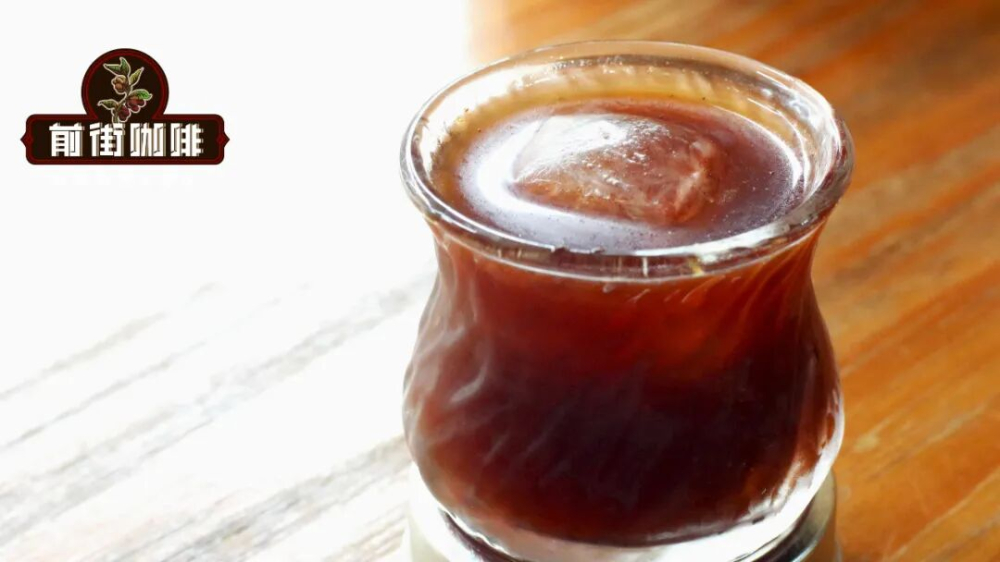
Therefore, in order to take the cold brew taste to the next level, Front Street uses filter paper with the best filtration performance to "sift" the coffee once more, removing most of the condensed oil and very fine ground particles; afterward, the filtered cold brew liquid is put back into the refrigerator sealed and chilled for 3–4 hours, waiting for flavor substances to further settle and ferment. In this way, the juice feel of Little Tomato cold brew becomes fuller, and the acidity is more transparent.
In addition to filtration, cleaning the equipment cannot be ignored either. Many friends do not spend much time taking care of the cold brew pot after use and simply rinse it with tap water. Over time, condensed coffee oil attaches to the filter mesh and gives off a "rancid oil smell." If it is used frequently, Front Street suggests disassembling it regularly and scrubbing it carefully with detergent, which can both remove residual oil and prevent the filter mesh from aging.
The above content is compiled by CoffeeHunters, a coffee news website.


