







Does Cup Temperature Change Coffee Aroma?
Cup temperature mainly changes the temperature of the coffee when it enters the mouth, not the amount of coffee aroma released, according to a Front Street Coffee comparison of a heated cup, a room-temperature cup, and a frozen cup. The test used Kenya Asalia beans with identical brewing parameters, and the flavor perception differed noticeably even though aroma levels stayed close.
Aromatic compounds in coffee are volatile, and higher temperatures speed up how fast they escape into the air. Front Street Coffee tested whether chilling the cup slows that loss, as the Paragon sphere does by cooling the first liquid out of the brewer. Earlier tests with a refrigerated cup showed little difference from a room-temperature cup.
Coffee aroma is volatile, and the higher the temperature, the faster it dissipates. This has led some to propose using low-temperature containers to lock in the aroma. Front Street Coffee compared three types of pour-over coffee containers—a heated cup, a room-temperature cup, and a frozen cup—to test whether cup temperature truly affects coffee's aroma and taste. The experiment used Kenya Asalia coffee beans with consistent brewing parameters, and the results showed that cup temperature mainly changes the temperature of the coffee when it enters the mouth, rather than the amount of aroma—but temperature differences do indeed cause noticeable changes in flavor perception. This article will present the experimental process and conclusions in detail, and offer cup selection recommendations for different weather conditions.

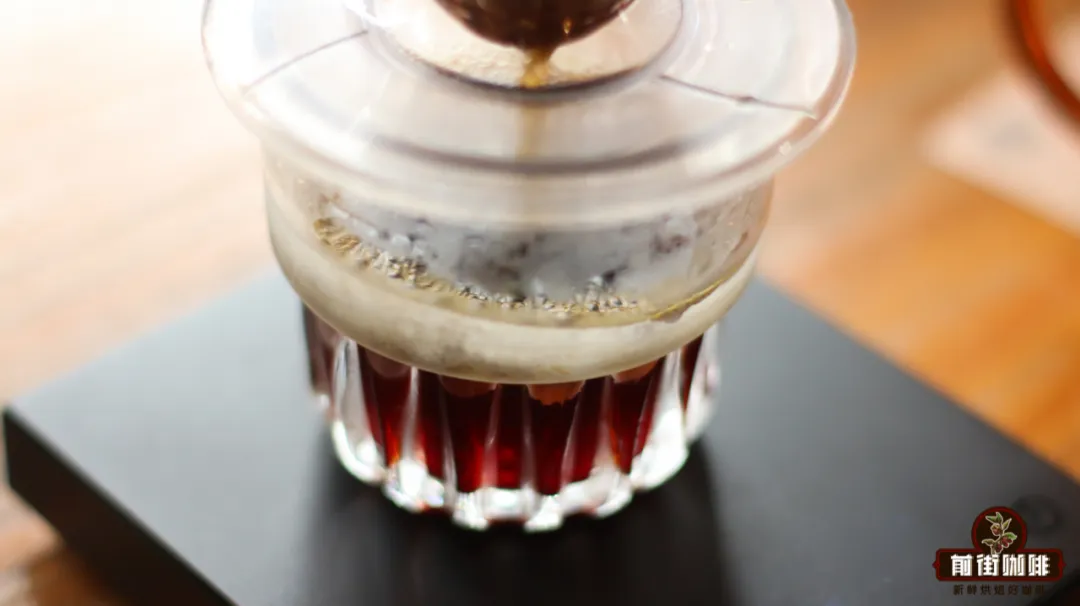
Most of coffee's aromatic compounds are volatile, and the rate of volatilization is closely related to temperature. The higher the temperature, the faster aroma molecules escape; the lower the temperature, the slower the escape rate. During the early stages of extraction, a large amount of aromatic substances is dissolved out and then continuously volatilizes into the air. If you want to capture a richer aroma in a cup of coffee, besides increasing the extraction rate, there is another approach: rapidly cool the first coffee liquid that dissolves out, thereby slowing the rate of aroma loss.
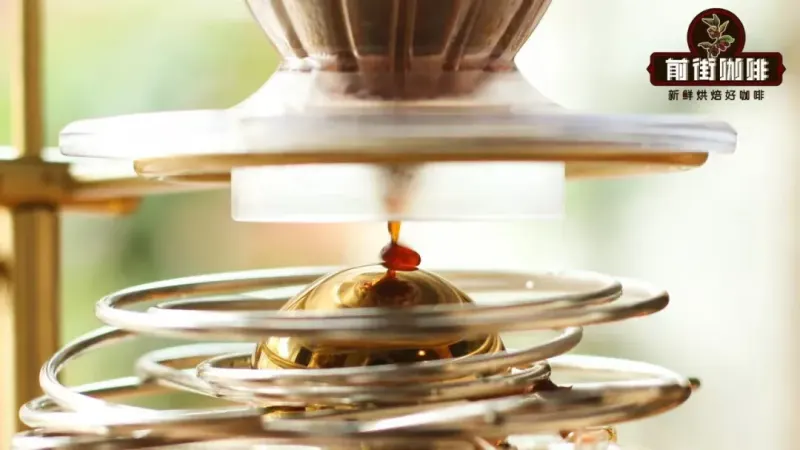
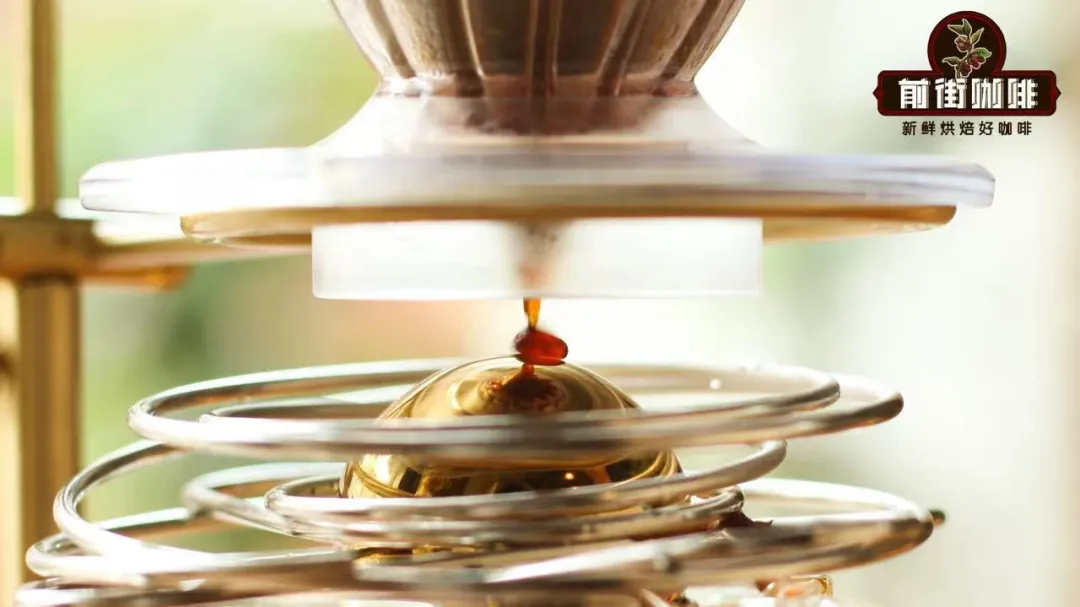
The Paragon sphere, which has gained much attention in the past two years, is designed based on this principle. Placing this stainless steel ice ball during brewing releases low temperatures that quickly cool the first coffee liquid to flow out, thereby "locking in" the aroma (that is, reducing the rate of aroma volatilization) and allowing us to experience fuller aromatic layers in the cup.
So a friend followed up with the question: "By this logic, can a frozen cup also achieve the same effect? Or rather, the lower the temperature of the container used when brewing coffee, the more coffee aroma is retained?"
This question is quite interesting. Today, Front Street will conduct a comparative experiment using three types of cups—heated, room-temperature, and low-temperature—to see whether cup temperature can really influence coffee's aroma performance.
Brewing Experiment
Actually, Front Street has done a similar test before, but at that time a refrigerated cup was used. Perhaps because the temperature wasn't low enough, the final results were not much different from the room-temperature cup. So this time, Front Street decided to go further and directly use a frozen cup for comparison.
(Good kids, don't try this at home)
The coffee beans selected for this experiment are Kenya Asalia. Its flavors and taste are both prominent, so if cup temperature can indeed affect coffee, the changes should be relatively obvious and differences easier to reveal. Also, to reduce interference from manual brewing, a showerhead drip filter was again used as an aid. The extraction parameters were kept consistent, as follows:
Dose: 15g, Grind size: EK43 setting 9.5, 75% pass-through rate on a No. 20 sieve, fine granulated sugar grind, Coffee-to-water ratio: 1:15, Brewing water temperature: 92°C, Brewing method: three-pour, Filter: V60, Extraction time: 2 minutes.
(Process skipped)
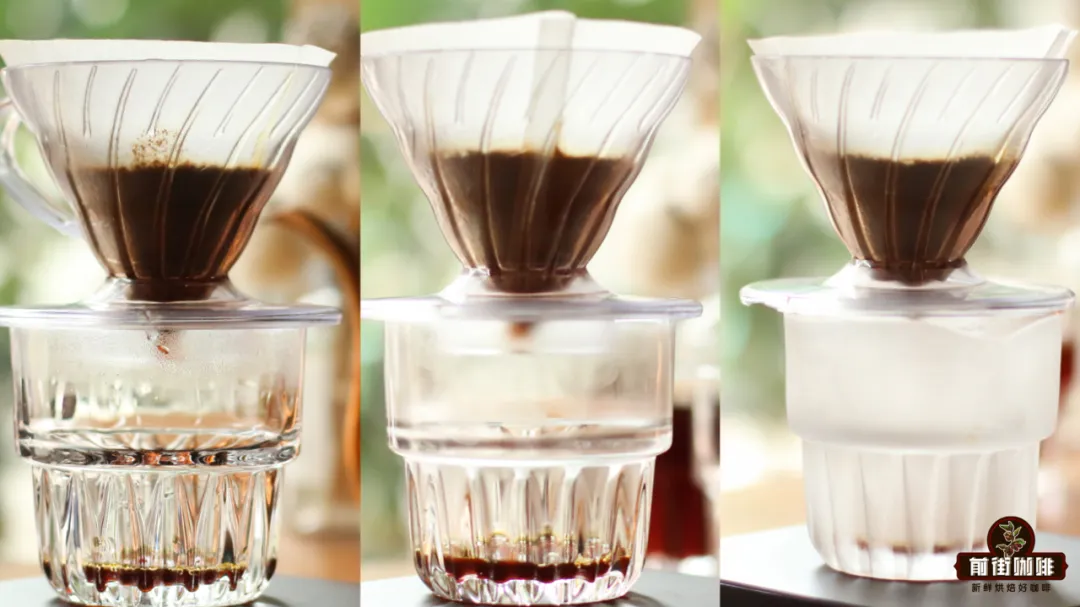
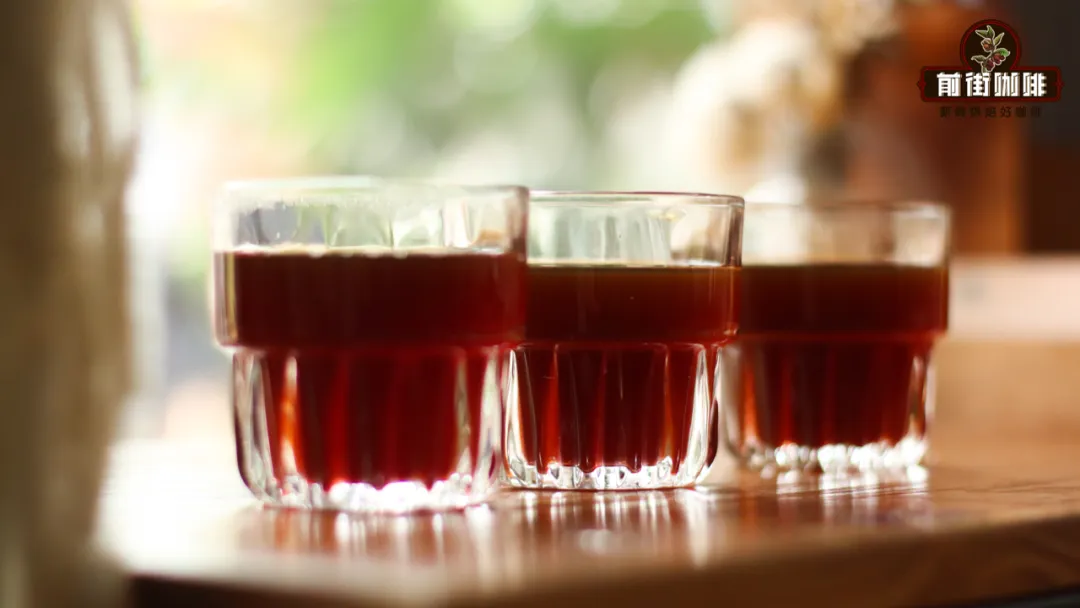
(From left to right: heated cup, room-temperature cup, low-temperature cup/frozen cup)
Heated cup coffee:
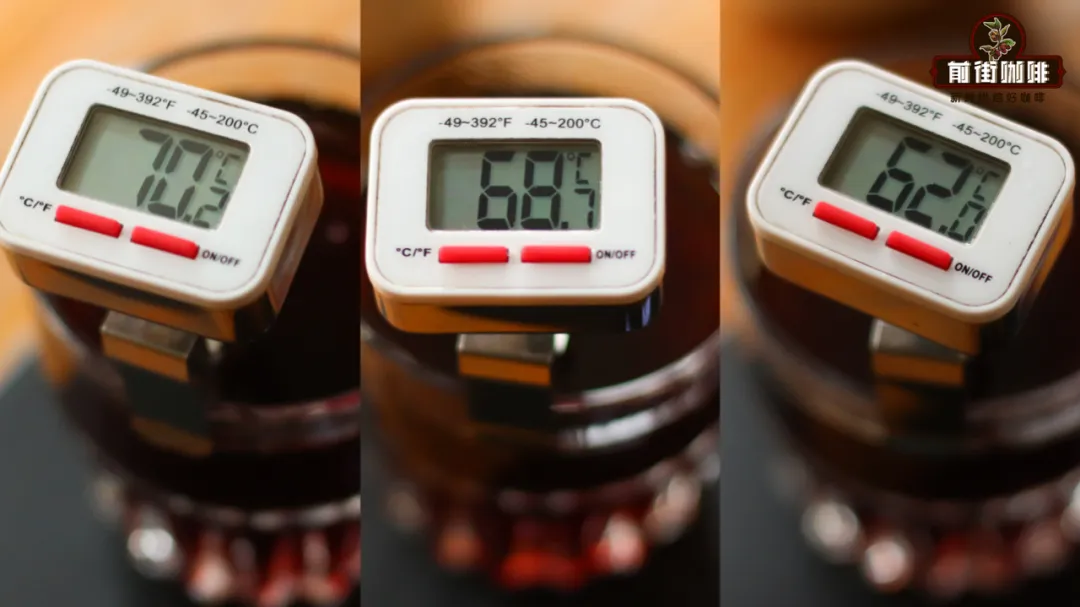
A heated cup refers to a cup preheated with hot water before brewing. Using it to catch the coffee, the final coffee temperature was about 71°C. The aroma was very strong, but it was a bit too hot to drink, and the taste and flavors were not very pronounced due to the high temperature—only a hint of caramel sweetness and faint sour plum acidity could be tasted. After the temperature dropped, the flavors and taste immediately became clear.
Room-temperature cup coffee:
A room-temperature cup is simply a cup left at room temperature. Using it to catch the coffee, the final temperature was about 68°C. The aroma was equally rich, but it wasn't as hot to drink as the previous cup. Therefore, this cup offered relatively obvious flavors—sour plum and cherry tomato. As with the previous cup, after the temperature dropped, the flavors and taste began to stand out.
Low-temperature cup coffee:
The low-temperature cup here is an ice cup that has been frozen in the freezer. Using it to catch the coffee, the final temperature was about 62°C. The aroma of this cup was not as rich as the previous two, but because it wasn't too hot to drink and was very comfortable to sip, the taste and flavors perceived on the first sip were actually more prominent compared to the previous two cups. Sour plum, cherry tomato, fragrant pear, caramel—sweet and tangy, delicious!
Objectively speaking, the three cups of coffee did differ in flavor and taste on the first sip: the heated cup showed the weakest flavor expression, the room-temperature cup was in the middle, and the ice cup was the most outstanding. But! The main reason for the difference was not the amount of aroma, but rather that the coffee temperature changed our perception of taste.
After the coffee in the heated cup and room-temperature cup cooled down, they also displayed the same taste performance as the low-temperature cup. This is because high temperatures reduce the tongue's sensitivity, making it difficult to fully perceive the coffee's taste and flavors. Once the temperature drops, a more complete expression can naturally be captured.
The effect of temperature on taste has been shared many times before by Front Street, so the specific theory won't be repeated here. Those interested can search past content. As for whether there is a big difference in aroma... Front Street feels it's about the same—just like with the Paragon sphere, it's more about the effect of temperature.
In summary, cup temperature can indeed affect coffee, but the effect is more about temperature itself. Although the results differed somewhat from expectations, that's not a bad thing. Now that we know cup temperature can affect coffee temperature, we can flexibly choose containers of different temperatures based on weather or environment.
For example, in cold weather, you can follow the usual practice of preheating the container that catches the coffee, keeping the brewed coffee at a higher temperature and preventing it from cooling too quickly. When the ambient temperature is pleasant and you want guests to experience a full-bodied flavor on the first sip, you can choose a room-temperature cup or add the Paragon sphere (the ice cup is not recommended), cooling the coffee down so guests can quickly experience the coffee's flavors and taste.
(In short, do whatever makes you happy)
- END -
The above content is compiled by CoffeeHunters, a coffee news website.


