







Can coffee make you drunk, and does the 1:2 brew ratio matter?
Espresso's so-called golden ratio of 1:2, such as 18 grams of grounds yielding 36 milliliters of liquid, is a common reference value rather than a fixed rule. The brew ratio mainly sets the concentration of the shot, which shapes how the espresso tastes on its own or when paired with milk. Ratios like 1:1.5 or 1:2.5 work just as well when other parameters are matched.
People searching can coffee make you drunk are usually asking how strong a shot should be, and the answer lies in concentration, not in any intoxicating effect. More water during extraction yields more liquid at a lower concentration, while less water concentrates it. Any ratio and any final liquid weight can produce a drinkable espresso if grind, dose, and time are adjusted together, and why does coffee make me feel drunk is a separate question from brew strength.
Many friends who are just getting into espresso have heard the saying: the brew ratio for espresso should be controlled at 1:2, for example, 18 grams of grounds extracting 36 milliliters of coffee liquid. This ratio is often called the "golden ratio," but is it really the only standard? Actually, it's not. The brew ratio determines the concentration of the coffee, and the concentration directly affects how the espresso performs when drunk on its own or paired with milk. This article revolves around the relationship between brew ratio and actual extraction, explaining why 1:2 has become a commonly used reference value, and why ratios like 1:1.5 and 1:2.5 are equally viable, helping coffee enthusiasts understand espresso extraction parameters more flexibly.
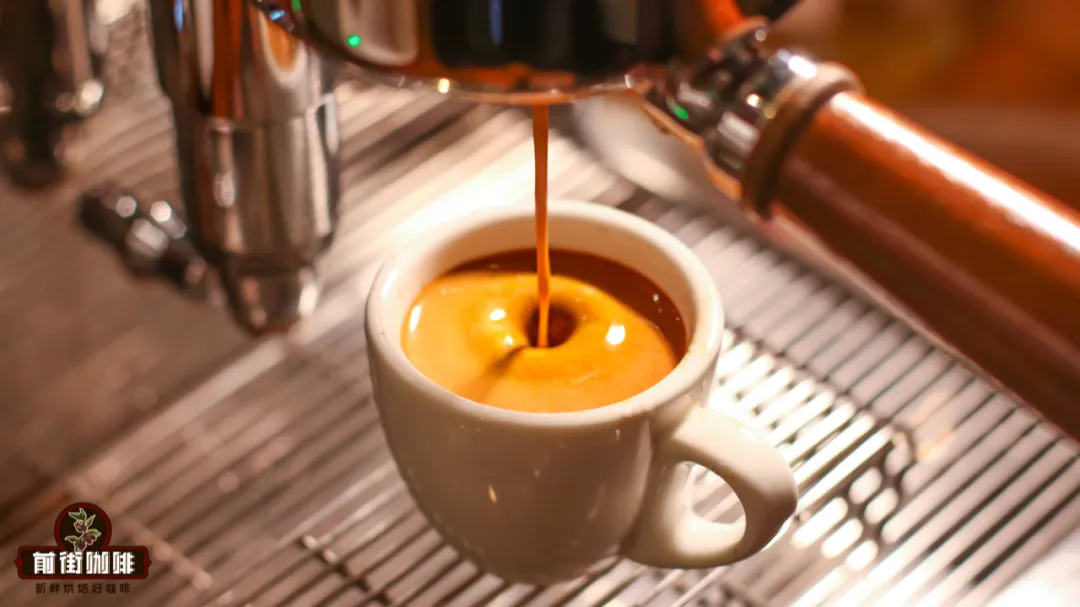
The brew ratio refers to the correspondence between the weight of coffee grounds and the volume of coffee liquid obtained. Taking 1:2 as an example, it means that for every 1 gram of coffee grounds, 2 milliliters of coffee liquid should ultimately be extracted. Suppose we weigh out 18 grams of grounds; following this ratio, the espresso in the cup should reach 36 milliliters.
Many people who share this ratio habitually call it the "golden ratio" for espresso (roughly understandable as meaning "good"), so some friends wonder: why must espresso extraction use 1:2? Would ratios like 1:4, 1:5, or 1:6 not work?
Must espresso always use 18 grams of grounds to extract 36 milliliters?
Of! Course! Not! No matter which ratio you choose, or whether you use 18 grams of grounds to extract 50, 60, 70 milliliters or even more liquid, it's all allowed. It's not that espresso made at 1:2 is necessarily the best-tasting; as long as the parameters are reasonably matched, any ratio and any liquid weight can produce a delicious espresso.
However, the reason 1:2 is called the "golden ratio" by everyone is not entirely unfounded. This ratio can extract espresso that better meets most people's usage needs. You can first think about it: what exactly does the size of the brew ratio determine?

Exactly! It determines the concentration of the coffee. Front Street often mentions that coffee concentration is mainly affected by the amount of water. Under otherwise unchanged conditions, the more water used during extraction, the more coffee liquid is obtained, and the concentration is naturally lower; conversely, less water means higher concentration.
The following two cups of coffee were extracted by Front Street using the same amount of grounds, with coffee beans from the specialty blend in Front Street's espresso bean lineup, and both extraction times controlled at thirty seconds. The only difference is the ratio. One cup was made at 1:2, with 18 grams of grounds extracting 36 milliliters of coffee liquid; the other was made at 1:4, with 18 grams of grounds extracting 72 milliliters of coffee liquid.
Measuring with a refractometer, the concentrations of the two cups are 10.83% and 5.36% respectively, about a twofold difference. In flavor, both present rich nutty and chocolate notes; the difference is that the higher-concentration cup tastes more intense and concentrated, while the lower-concentration cup has clearer layers and higher flavor distinctiveness. It can be said that each has its own characteristics.
Why is 1:2 hailed as the golden ratio?
The reason is simple: coffee extracted at this ratio is sufficiently high in concentration. In daily life, not many people actually drink espresso straight; most people use espresso as a base for making other fancy coffees. For example, adding milk to make a latte or cappuccino, or pouring espresso over milk to make a Dirty, and so on.
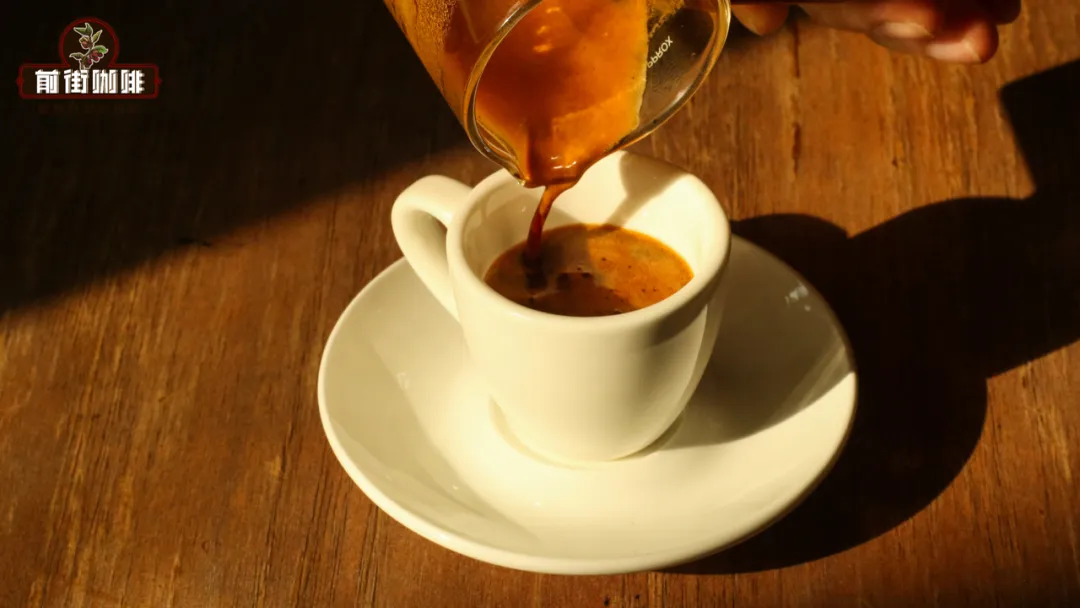
And the requirement of the vast majority of fancy coffees for espresso is that it must have a certain concentration, especially those with milk added. Only when the espresso itself is high enough in concentration will the resulting latte, cappuccino, or flat white have enough body when drunk. If the espresso concentration is too low, the finished coffee will carry a relatively obvious watery feel; the taste may still be passable, but the mouthfeel won't be as outstanding.
(For Americano, any ratio works)
So "1:2" has become the most commonly used brew ratio when everyone extracts espresso. Coffee obtained at this ratio has both a complete flavor presentation and a sufficiently high concentration; even when a large amount of milk is added, it can still perform excellently.
But what everyone needs to know is that in actual extraction, the ratio does not need to be rigidly fixed at 1:2. Fluctuating above and below 1:2 is fine, such as 1:1.5 or 1:2.5, both are no problem.
The ratio 1:2 is merely an indicator; it tells us that within this range, one can extract an espresso with sufficiently high concentration that is suitable for making delicious fancy coffees.
- END -
The above content is compiled by CoffeeHunters, a coffee news website.


