







What does the free milk tea waste reveal about street coffee culture?
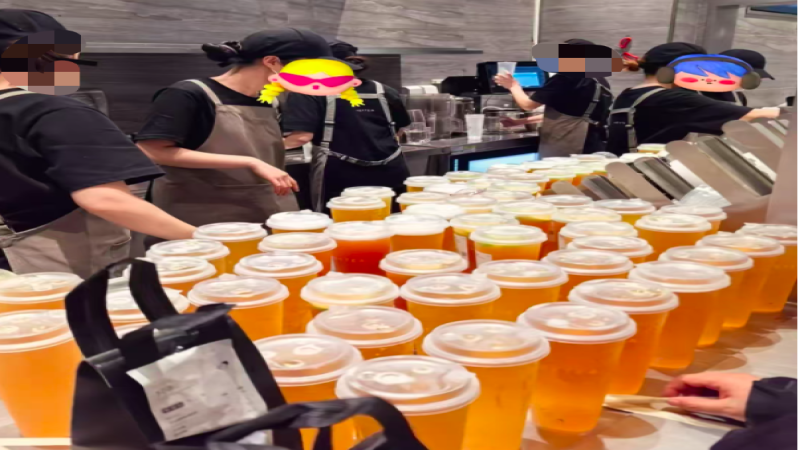
Free redemption campaigns run by delivery platforms left chain tea shops with sealed drinks nobody collected. Some stores poured out close to a hundred cups in a single night, and staff reported orders sitting for four or five hours after closing. The waste comes from zero-yuan purchases that customers order but never pick up, and it repeats every few days across national brands.
Store rules normally require overnight milk tea to be destroyed, but with unclaimed cups piling up, some employees quietly gave drinks away instead. The pattern mirrors ongoing questions in street coffee and tea consumption about who absorbs the cost of platform subsidies, and whether consumers, merchants and platforms can find a workable balance between promotion and waste.
The "Crazy Saturday" that just passed once again saw major chain tea beverage brands overwhelmed by free redemption orders. Yet after the carnival ended, store counters were piled high with sealed drinks that no one came to collect—some stores had to pour out nearly a hundred cups in a single night. Staff members felt both distressed and helpless, while onlookers bluntly commented, "If you're not going to drink it, don't order it." What problems does this waste phenomenon, driven by platform subsidies, actually reflect? How should consumers, merchants, and platforms find a balance? This article takes you through the full picture of the incident, and you're also welcome to follow Front Street Coffee to chat about what lies behind beverage consumption.
▲
Click to follow | Daily specialty coffee culture magazine Coffee Works
"Zero-yuan purchases, all abandoned tea"
"There are still over two hundred cups no one has picked up"
"Orders placed four or five hours ago, still no one has come to get them"
"Even after closing, there are still so many orders not picked up"
Yesterday's "Crazy Saturday" came around again, and milk tea lovers and coffee fans alike were cheering. Stores of national chain brands such as Luckin, Heytea, Goodme, Auntea Jenny, and Mixue Bingcheng were flooded with massive free orders. Staff members busied themselves from morning till night, constantly shaking milk tea and making drinks.
By eleven or twelve at night, this tea beverage carnival gradually wound down, and in the stores exhausted by the platform campaign, customers slowly dwindled. But some customers coming to pick up their orders and delivery riders noticed that on the floors, shelves, and counters inside the stores, there were still dozens of cups of milk tea already sealed.
Facing these drinks "abandoned" in the stores, the milk tea workers who had been busy all day had mostly grown used to it. They said that ever since delivery platforms started running zero-yuan purchases every few days, at every closing time they could always see quite a few freshly made drinks on the counter that no one had come to claim.
Some staff mentioned that originally, according to brand regulations, milk tea left overnight had to be all poured out and destroyed. But seeing unclaimed drinks pile up more and more, some employees couldn't bear it and, risking violating the rules, quietly gave the drinks to delivery riders coming to pick up orders, sanitation workers, security guards, and others, or hinted that customers coming to the store could conveniently take a few extra cups, thereby reducing some waste.
However, most stores close in the early morning hours, when there are already few pedestrians on the street. Some employees working the late shift said that even if they wanted to give the drinks away, they couldn't find suitable recipients. So before getting off work, most of these unclaimed tea drinks still ended up in the trash. Some stores even had to scrap nearly a hundred cups in one night, and employees joked that the milk tea they worked so hard to shake ultimately benefited the little animals in the sewers.
After many onlookers saw photos and videos posted on social media by passersby, delivery workers, and store employees showing discarded drinks, they were quite dissatisfied with users who redeemed free milk tea but didn't come to claim it, feeling that this behavior not only wasted food but also added unnecessary workload for riders and milk tea staff. They directly commented, "If you're not going to drink it, don't order it."
In addition, many people also offered suggestions regarding the phenomenon of large quantities of drinks being discarded after each zero-yuan purchase event, believing that merchants participating in the activity might perhaps be more flexible—for example, waiting until customers arrive at the store before making the drinks on the spot using the order number, or standardizing the sweetness and ice levels of the drinks. They said that these approaches could, on one hand, reduce staff workload to some extent, and on the other hand, might discourage some picky customers.
But ultimately, whether it's the onlookers watching this delivery war or the industry workers deeply caught up in it, everyone sincerely hopes that users who receive platform drink redemption vouchers will think a bit more before placing an order, ordering according to their actual needs, and not waste food.
Image source: Internet
Disclaimer: Some images in this article are from the internet. For some content on the website, such as images, we will respect the original copyright and indicate the source. However, due to the large quantity, there may be a few images and texts that we have not yet been able to attribute. Please forgive us. If the original author has any disputes, they may contact the website for handling. Once verified, we will immediately correct it. Compiled and edited by "Coffee Works." Please indicate the source when reposting. If there is any infringement, please inform us for removal. Thank you~!
The above content is compiled by CoffeeHunters, a coffee news website.


