







How Do You Brew Iced Pour-Over Coffee at Home?
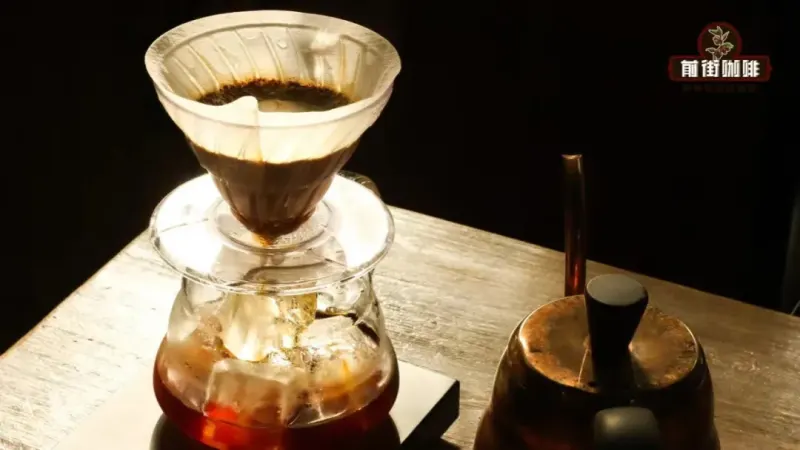
Iced pour-over coffee follows the same framework as hot pour-over, with ice added to chill the brew quickly. The main adjustments are using less water, a finer or coarser grind depending on the roast, and a controlled pouring technique. Front Street Coffee tested two full parameter sets for medium-light and dark roasts, covering dose, coffee-to-water ratio, ice amount, water temperature, and dripper choice.
The method is built around strength and extraction yield. Because ice counts as part of the total liquid, the water poured over the grounds is reduced to keep the cup from tasting weak. A blooming step followed by a three-pour technique, shown with the Sidra bean, helps produce a full-bodied, juicy result. The same logic applies whether making coffee in a coffee pot at home or brewing a single glass in a shop.
On a scorching summer day, a refreshing glass of iced pour-over coffee is undeniably a perfect way to cool down. But many coffee lovers run into the problem of weak flavor and thin body when making iced pour-over at home. Starting from the two core concepts of strength and extraction yield, this article will systematically explain the key differences between iced pour-over and hot pour-over—why you need to reduce the amount of water, why you need to adjust grind size and pouring technique—and provide two complete sets of parameters tested by Front Street Coffee for medium-light roast and dark roast, including dose, coffee-to-water ratio, ice amount, water temperature, and dripper choice. The article also recommends several popular Front Street Coffee beans suitable for iced pour-over, and uses the Sidra bean as an example to walk you through the full brewing process of blooming and three-pour technique, helping you easily brew a pot of full-bodied, juicy coffee.
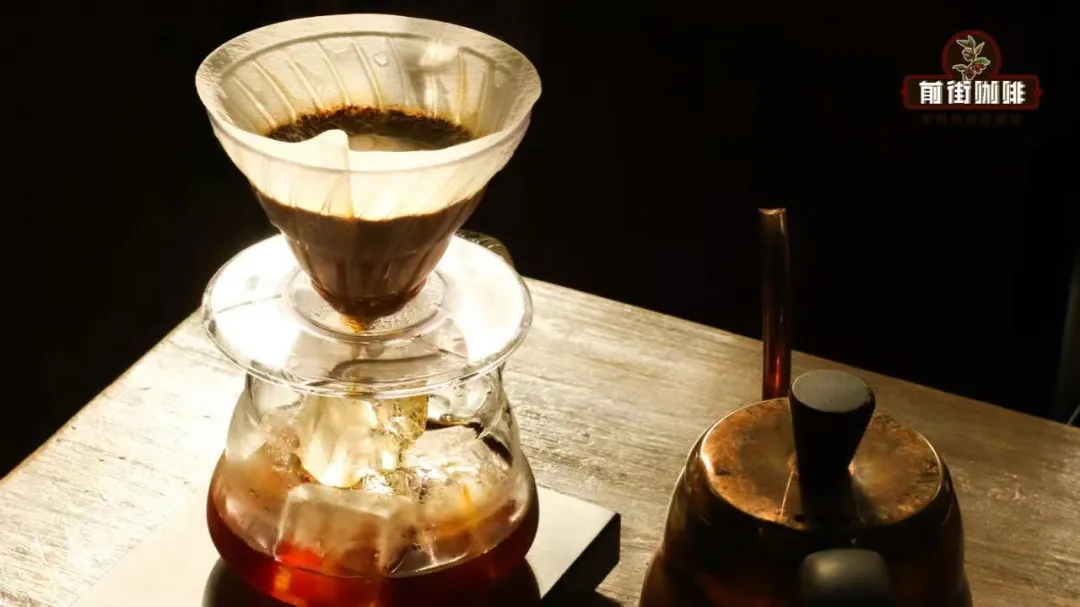
The typhoon has just passed, yet temperatures keep climbing, the air is heavy with moisture, and the muggy feeling grows more pronounced. It is precisely for this reason that iced coffee at Front Street Coffee stores has once again hit peak sales. Iced pour-over in particular, with its wide variety of bean options, has become a star product that nearly every table orders.
Interestingly, many customers who have tried Front Street Coffee's iced pour-over later come asking about the specific method and parameters. After all, the coffee they brew themselves not only lacks strength but also has insufficiently distinct flavors.
Although Front Street Coffee has shared various iced brewing methods before, looking back, it seems there has always been a lack of a systematic explanation of the standard iced pour-over process. So today Front Street Coffee is here to talk about how to easily brew a delicious pot of iced pour-over coffee.
First, let's be clear about one thing…
Front Street Coffee has always emphasized that iced pour-over is essentially an extension of the hot pour-over framework. Hot pour-over focuses on coordinating parameters such as grind size, water temperature, ratio, and time, along with brewing technique and equipment choice, to ultimately achieve a satisfying cup of coffee. Iced pour-over simply adds ice on top of this foundation, using ice to rapidly cool the coffee.
However, once ice is added, new problems arise. If other steps are not adjusted accordingly, the coffee's strength will be diluted by the melting ice, the flavor will become flat, and the mouthfeel will be as thin as water.
So, to offset the negative effects of melting ice, the most direct approach is to increase the coffee's strength. And the most effective way to increase strength is to reduce the amount of hot water poured. Keeping other parameters unchanged, appropriately reducing the water amount yields a higher final strength. This is why iced pour-over typically uses less water than hot pour-over.
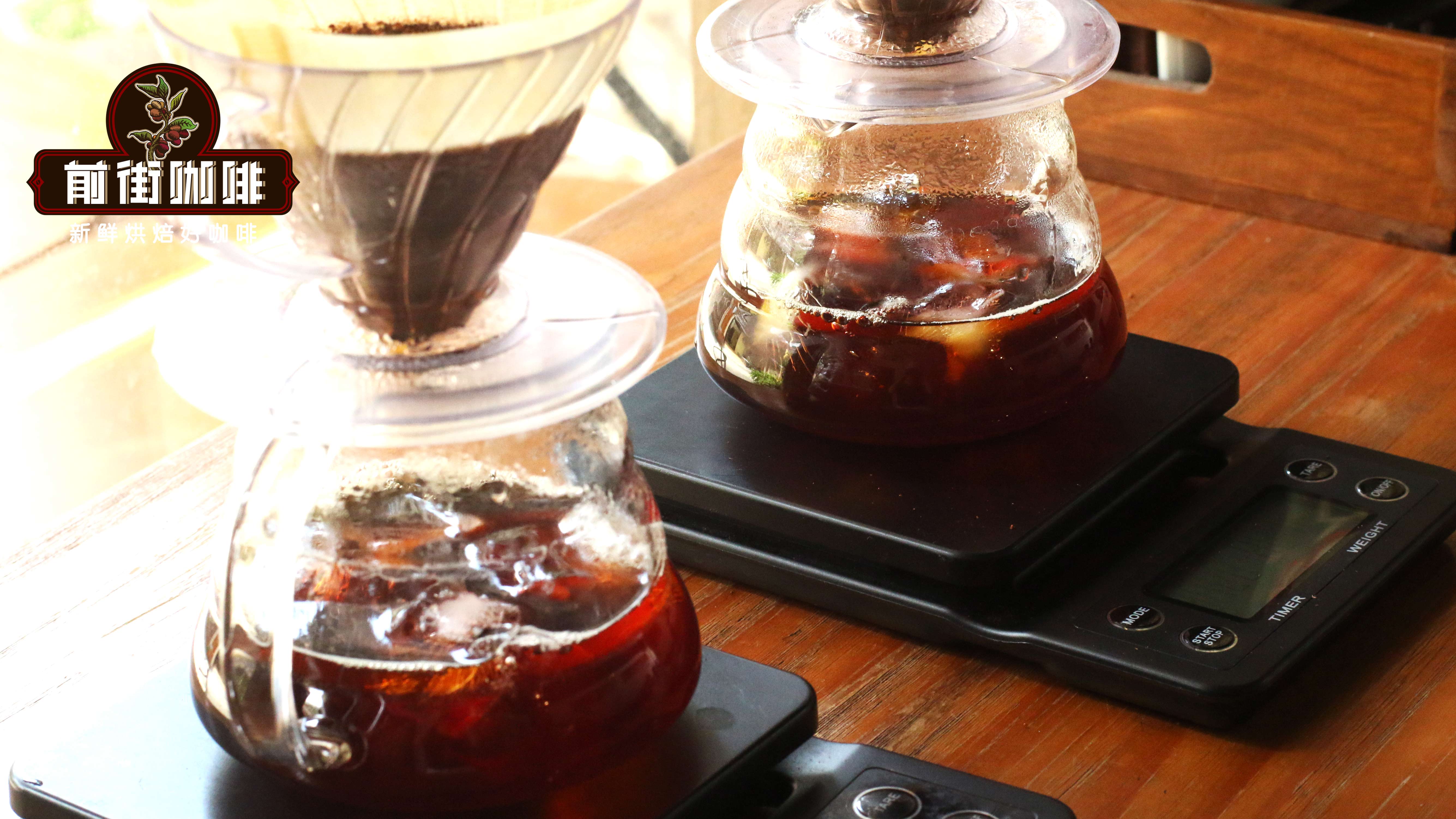
However, many people only notice the change in water amount and rush into making iced pour-over, often with disappointing results. After all, a good cup of coffee requires not only proper strength but also sufficient extraction yield.
To put it simply, extraction yield is the proportion of dissolved substances from the coffee relative to the bean itself. The level of extraction yield directly determines whether a cup of coffee is sour, balanced, or bitter. When insufficient substances are dissolved—under-extraction—the resulting coffee will most likely have a sharp acidity; conversely, if too many substances are dissolved—over-extraction—the coffee will mostly exhibit negative flavors like bitterness, astringency, and muddiness.
Therefore, to brew a delicious cup of coffee, controlling strength alone is not enough—extraction yield must also be taken seriously. Only when coffee falls within the proper extraction yield range will the flavor avoid unacceptable flaws. And to achieve this, as Front Street Coffee has said before, it must be done by coordinating various parameters and pouring techniques.
When making iced pour-over, besides the water amount, Front Street Coffee also adjusts the grind size and pouring technique. It is precisely these two changes that can effectively raise the coffee's extraction yield. The reason is simple: a finer grind gives the coffee a larger surface area for contact with water; and the purpose of adjusting the pouring technique is to extend the extraction time, allowing the limited hot water to dissolve more flavor compounds over a longer contact period.
Alright, without further ado, next Front Street Coffee will share how to easily brew a delicious pot of iced pour-over through adjustments in three areas.
Brewing Guide
It should be noted that this direct ice-cooling pour-over method shared by Front Street Coffee is not suitable for all coffee beans. For some beans with delicate, light flavors, this method makes it difficult to showcase their strengths, so Front Street Coffee recommends prioritizing coffee beans with more prominent aromatics.
If you prefer iced coffee full of juicyness and sweetness, try Front Street Coffee Sidra and Front Street Coffee Strawberry Candy, where you can taste notes of passion fruit, grape, dried fruit, and almond; if you like mellow, substantial coffee with caramel flavors, Front Street Coffee PWN Golden Mandheling is the top recommendation—the classic Asian bean profile is recognizable at first sip; if you want coffee with clear berry notes, Front Street Coffee Huakui and Front Street Coffee Red Cherry are two popular single origins worth trying.

For this demonstration, Front Street Coffee chose Front Street Coffee Fenchline Estate · Sidra, which produces iced coffee with an extremely full grape juice character. The specific parameters are as follows:
Dose: 15g
Coffee-to-water ratio: 1:10
Ice amount: 120g
Grind size: Ek43 setting 9, 80% passing through a No. 20 sieve, caster sugar consistency
Water temperature: 92°C
Dripper: V60
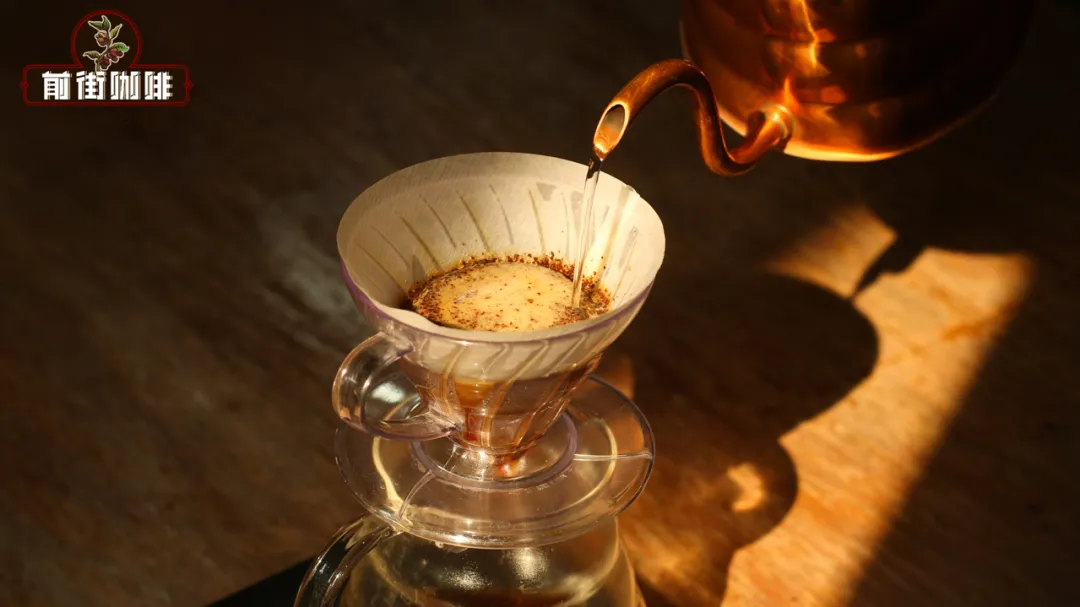
Once everything is ready, you can start brewing. Step one: pour in 30ml of hot water and bloom for 30 seconds. The purpose of this step is to help the coffee beans release carbon dioxide, allowing the subsequent hot water to more smoothly dissolve flavor compounds.
After blooming is complete, divide the remaining hot water evenly into three pours, about 75ml each. During pouring, maintain a slow, small stream and pour in slow, small circles. After each pour, it is best to wait until the liquid in the dripper has completely drained before starting the next pour—this effectively extends the extraction time.
Finally, once all the coffee has finished dripping, remove the dripper and extraction is complete.
The total time should be controlled at 2 minutes, consistent with the extraction time of hot pour-over. Swirl to mix evenly, and it's ready to taste. As Front Street Coffee described, this cup has an extremely full grape juice character on the palate, with flavor layers including grape, passion fruit, apricot, and a hint of floral notes. The mouthfeel is icy and refreshing, the aroma is rich, and it is very pleasant to drink.
The above are the brewing parameters for medium-light roast coffee beans. If switching to dark roast coffee beans, the brewing method stays the same, but the grind size and water temperature need to be slightly lowered, specifically: dose 15g, coffee-to-water ratio 1:10, ice 120g, grind size Ek43 setting 10, 80% passing through a No. 20 sieve, caster sugar consistency, water temperature 90°C, dripper Kono.
That's all for this issue. Overall, the process is actually not complicated. If you have any other questions, feel free to leave a comment in the Front Street Coffee backstage comment section, and Front Street Coffee will look into it further.
The above content is compiled by CoffeeHunters, a coffee news website.


