Regions & Estates · In-Depth Visits
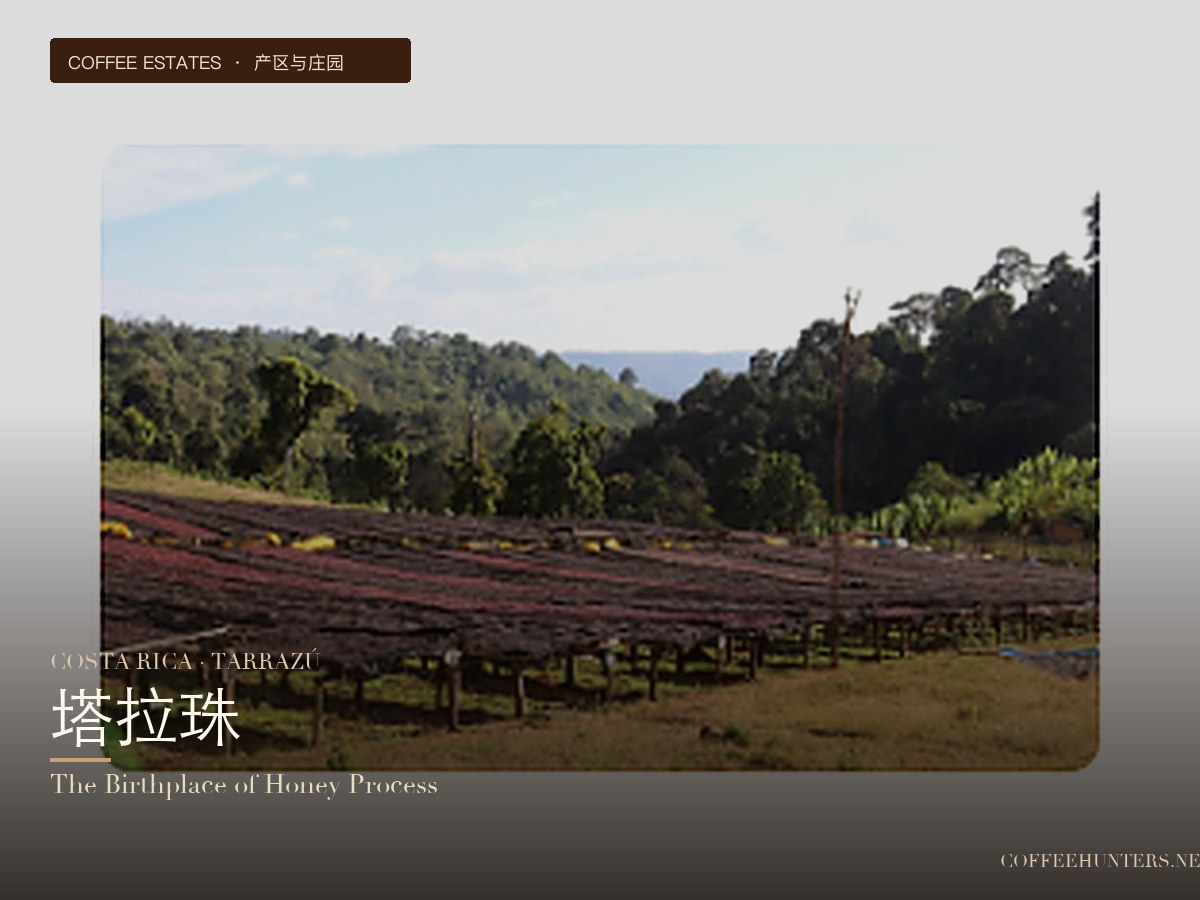
Tarrazú is located in the Tarrazú Mountains, about 70 kilometers southeast of San José, the capital of Costa Rica. This is one of the highest coffee-growing regions in Central America. The core growing area of Tarrazú sits at an altitude of 1,500-1,900 meters, with an average annual temperature of 17-20°C and rainfall concentrated from May to November. The volcanic soil of the Tarrazú Mountains and the moist air currents from the Pacific together create a unique microclimate here.
II. The History of Tarrazú
Coffee was introduced to Costa Rica in the early 19th century, and by the late 19th century it had become Costa Rica's main cash crop. Tarrazú was the last of the high-altitude regions to be developed—it was not until the mid-20th century, when roads were built deep into the Tarrazú Mountains, that coffee from this area began to enter the international market.
III. The Birth of the Honey Process
Costa Rica was the first country in the world to use the "Honey Process." The birth of the honey process can be attributed to an "accident" in the early 2000s—a small processing station in the Tarrazú mountains, in order to save water, tried removing only the skin while keeping the mucilage layer during drying, and discovered that this method greatly enhanced the sweetness of the coffee. From then on, the honey process spread rapidly in Tarrazú and gradually spread throughout the entire specialty coffee world.
IV. Classification of Honey Processing
Depending on how much mucilage is retained, honey processing can be divided into: White Honey (retains the least mucilage, close to washed), Yellow Honey, Red Honey, and Black Honey (retains all mucilage, close to natural). Different amounts of retained mucilage bring different cup profiles—White Honey is clean and transparent, while Black Honey is rich in sweetness and has a strong fermented character.
V. Varieties of Tarrazú
The main varieties in Tarrazú are Caturra and Catuai, accounting for about 80% of the planted area. Rare varieties such as Villa Sarchí, Yellow Bourbon, and Geisha are commonly seen in specialty lots. The Costa Rican government's strict management of coffee varieties has made the coffee quality here generally high.
VI. Typical Flavors
Typical flavors of washed Tarrazú: "clean, sweet-tart, bright"—aromas of citrus, apple, and honey; acidity of lemon and green apple; sweetness of caramel and almond. Typical flavors of honey-processed Tarrazú: "full sweetness, obvious fruity notes"—sweetness of brown sugar and muscovado, fruity notes of dried apricot and peach, and a honey-tea-like finish. Natural-processed Tarrazú has obvious fermented wine aromas and rich berry notes.
VII. Representative Estates and Processing Stations
The most representative processing station in Tarrazú is Las Lajas, located near Poás Volcano. Las Lajas was the world's first processing station to commercially produce honey-processed coffee on a large scale, and its four series—Black Honey, Red Honey, Yellow Honey, and White Honey—all enjoy high reputations in the global specialty market. Other representative estates include Helsar de Zarcero, Coopetarrazú, and others.
VIII. Brewing Suggestions
Washed Tarrazú is suitable for a V60 single-pour, with a water temperature of 90-92°C and a coffee-to-water ratio of 1:15, which maximizes the acidity and floral aromas. For honey-processed Tarrazú, a Kalita Wave is recommended, with a water temperature of 89-91°C, a coffee-to-water ratio of 1:16, and three-stage pouring, which highlights the sweetness and body. For natural-processed Tarrazú, an Origami dripper is recommended, with a water temperature of 90°C and a coffee-to-water ratio of 1:15, allowing the fermented character to fully unfold.
Conclusion: Honey Processing Changed Everything
Before the birth of the honey process, the world of coffee processing had only two methods: washed and natural. The honey processing experiment in Tarrazú opened up a third possibility for the specialty coffee world. Today, honey processing has become a standard in global specialty coffee, and Tarrazú, as the birthplace of this craft, will forever be remembered in the history of specialty coffee.
— CoffeeHunters Editorial Team
The above content is compiled by CoffeeHunters, a coffee news website.