Origins & Estates · In-Depth Visits
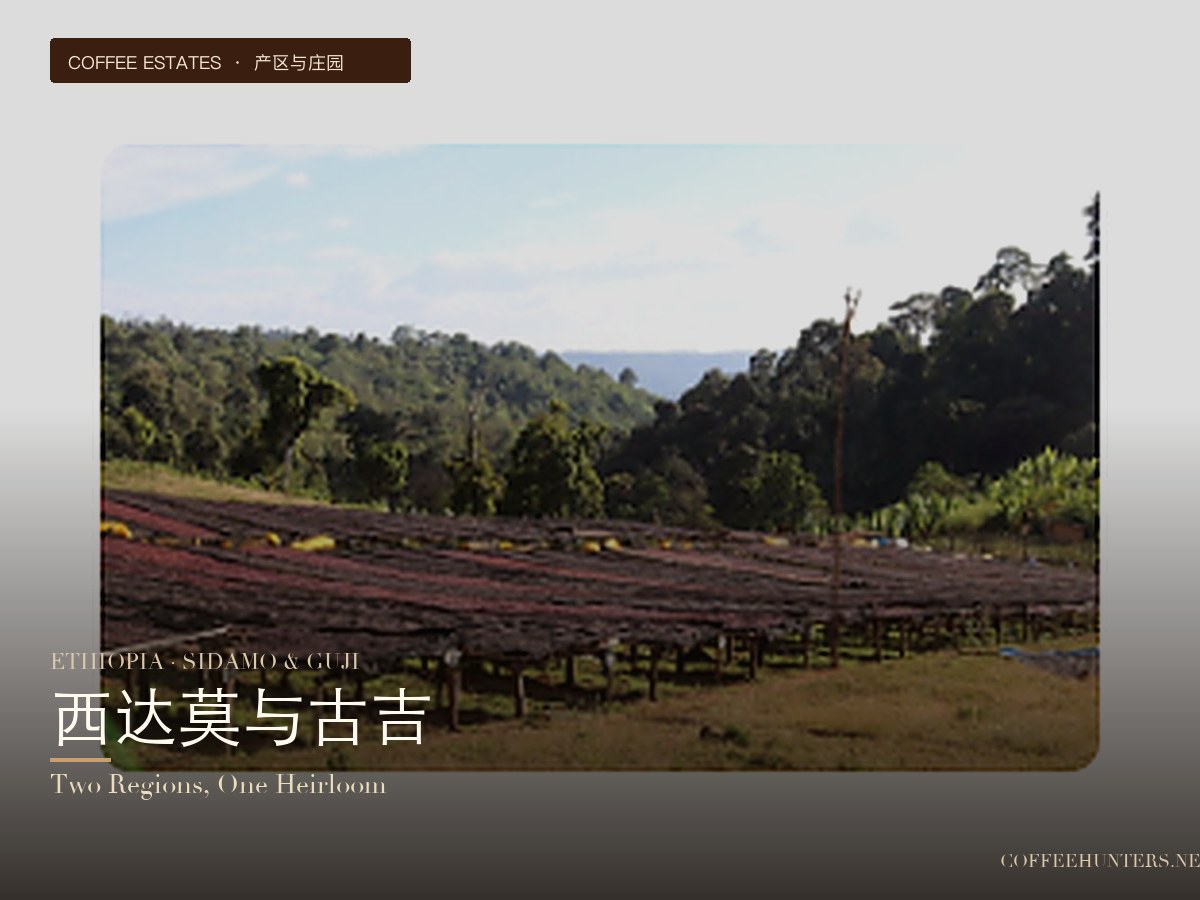
Sidamo takes its name from the Sidama Region where it is located, and is the earliest region in southern Ethiopia to be recognized by the international coffee world. After Ethiopia's regional restructuring in 2019, Sidama was upgraded to an independent Sidama regional state. In the southeast of Sidama, the Gedeo Zone—originally incorporated into Sidama—gradually came to be independently named "Guji" because of its distinctive flavor. In 2020 Guji also gained independent state-level administrative status, and the two regions were formally separated administratively from that point on, with coffee trade labels also splitting from "Sidamo" into "Sidama" and "Guji."
II. Subtle Geographical and Climatic Differences
Sidama and Guji both lie around the East African Rift, at similar latitudes and similar elevations—most growing areas are between 1900 and 2200 meters, with an average annual temperature of 18-21°C. But the two regions differ subtly in microclimate: the Guji region is close to larger primary forests, has a higher proportion of volcanic soil, and some plots have notably higher iron content than Sidama. This soil difference means Guji coffees often show more layered berry notes and a fuller sweetness, while Sidama leans more toward fresh citrus and floral notes.
III. Variety Structure: Both Heirloom, Different Proportions
Both regions grow Ethiopian native Heirloom varieties, but the Guji region has vigorously promoted numbered disease-resistant varieties such as 74110 and 74112 over the past decade, while Sidama retains more ancient, unnumbered variants. As a result, in cupping, Guji lots are usually more stable and easier to standardize, while Sidama is more complex and more dependent on the micro-differences of individual plots.
IV. Processing Methods: A Flagship Region for Specialty Natural Processing
Sidama and Guji are both flagship regions for the refinement of Ethiopian natural processing. The famous "Hambela" series of naturals and "Shakiso" come from the Hambela Wamena and Shakiso areas of Guji. These natural lots use strict selective picking by ripe-cherry sugar content, slow drying over 15-21 days, and a second round of hand sorting, and have become benchmarks for Ethiopian specialty naturals. Sidama's natural lots, by contrast, retain more of the richness of traditional natural processing, with prominent molasses and fermented wine notes.
V. Flavor Comparison: A Cup of Lemon Tea vs. A Cup of Berry Wine
A simple comparison illustrates this: a typical washed Sidama drinks like a cup of chamomile tea with lemon—floral, citrusy, clean and transparent; a typical washed Guji is closer to a combination of white peach and jasmine—with an extra layer of fleshy sweetness. Switch to natural processing and the difference becomes even more obvious: a natural Sidama is an intense blueberry jam flavor with a strong molasses quality; a natural Guji often carries strawberry, mango, and a slight fermented wine note, with richer layers.
VI. Representative Estates and Cooperatives
Guji's Hambela Estate is one of the earliest single estates to enter the specialty market, and its "Hambela" series has appeared for many consecutive years at renowned shops such as Sasa Sestic and Tim Wendelboe. The Buku Sayisa processing station in the town of Shakiso is known for small-batch naturals. Sidama's representative processing stations include Bensa, Bombe, and Daye. On the cooperative side, the Oromia Coffee Farmers Cooperative Union has deep roots in both regions.
VII. Brewing Suggestions
Natural Guji and natural Sidama have a stronger fermented character, so a slightly lower water temperature is recommended (88-90°C), with a 1:15 coffee-to-water ratio; a single-pour V60 can reduce the risk of over-extraction. Washed Sidama and Guji can be brewed with a slightly higher temperature (91-93°C) and a 1:16 ratio, and a three-stage pour allows the floral and fruity notes to unfold fully.
Conclusion: Understanding These Two Regions Is the Key to Understanding Ethiopia
In the world of specialty coffee, the word "Ethiopia" is almost synonymous with "floral and fruity notes," and Sidama and Guji are the two most important cornerstones behind that synonym. Understanding their differences is not just about learning to choose coffee—it is about understanding the full complexity of Africa's specialty coffee regions.
— CoffeeHunters Editorial Team
The above content is compiled by CoffeeHunters, a coffee news website.