Origins & Estates · In-Depth Visits
In 1727, coffee flowed from French Guiana into the northern Brazilian state of Pará, and by the mid-19th century, coffee had become Brazil's pillar industry. After the abolition of slavery in 1888, the Brazilian coffee industry began transitioning to a wage-labor system, and in the early 20th century it stabilized global prices through the "coffee valorization policy." Today, Brazil is the world's largest coffee producer, accounting for roughly one-third of global output annually, and Brazilian beans can be found in virtually every espresso blend.
II. The Cerrado Region
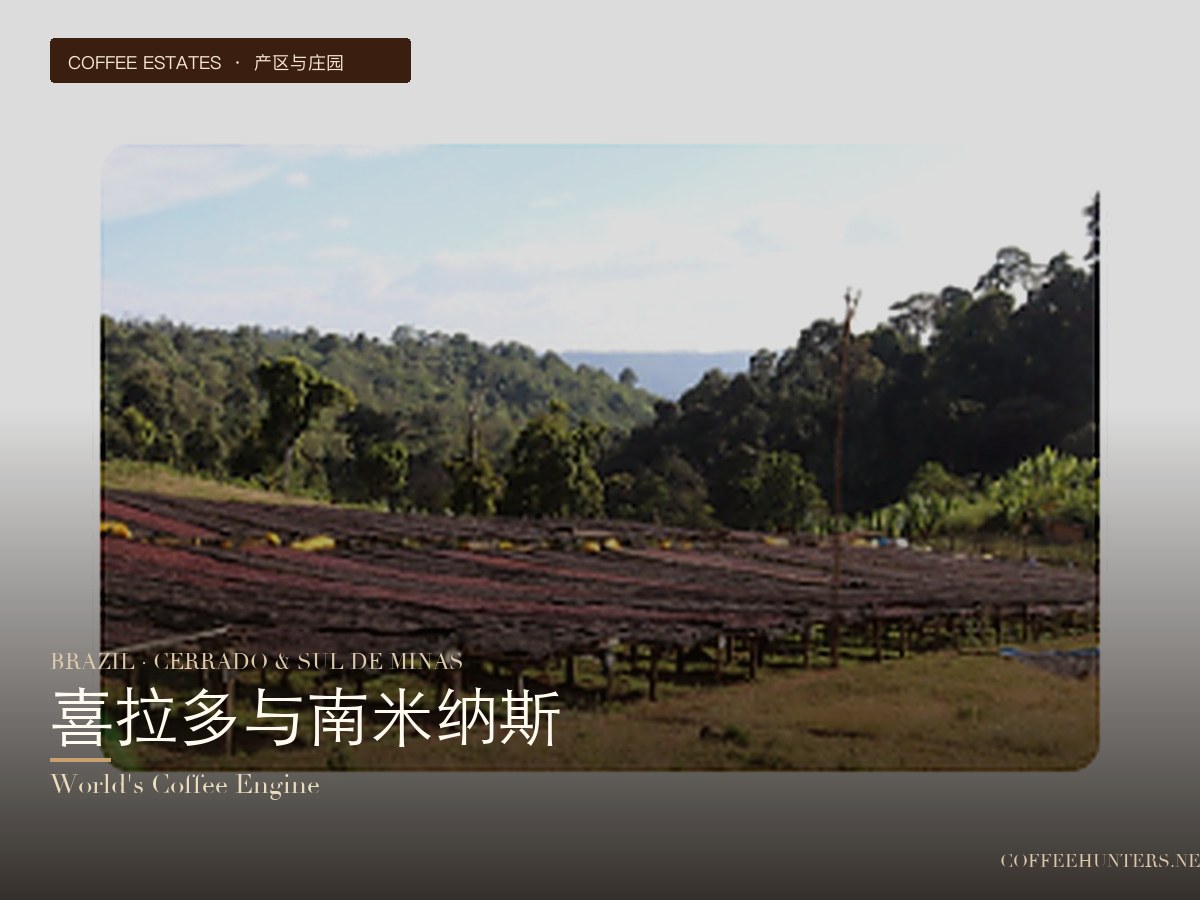
Cerrado Mineiro is located in the western part of Brazil's Minas Gerais state. It is one of the largest coffee-producing regions in the world and the first coffee region in Brazil to receive a Denomination of Origin (D.O.) certification. Cerrado takes its name from the local savanna ecosystem, with an average elevation of 800–1,300 meters and annual rainfall of 1,500 mm, with distinct dry and rainy seasons. Cerrado's core characteristics are its flat plateaus, regular rainfall, and large-scale mechanized cultivation.
III. The Sul de Minas Region
Sul de Minas is located in the southern part of Minas Gerais state, near the border with São Paulo state, and is one of the earliest regions in Brazil to commercially cultivate coffee. Sul de Minas has an elevation similar to Cerrado, but its terrain is more complex, with many mountains and valleys. Coffee farming here is dominated by small and medium-sized family farms, making it more diverse than Cerrado's large mechanized estates.
IV. Varieties: Bourbon, Caturra, Mundo Novo
Brazil's main varieties are Bourbon, Caturra, Mundo Novo, and Catuai. Mundo Novo is a natural hybrid of Bourbon and Typica, with high yield and strong disease resistance; Catuai is a cross between Yellow Caturra and Mundo Novo. In the specialty lots of Cerrado and Sul de Minas, high-quality variants such as Yellow Bourbon and Catuai 88 are appearing more and more frequently.
V. Processing Methods: Natural, Pulped Natural, Honey
Brazil's coffee processing methods are very diverse. The most traditional is the Natural process, where coffee cherries are spread out on drying patios and dried for 15-30 days; this method gives Brazilian beans their typical nutty, chocolatey, slightly fermented character. Pulped Natural (also known as Brazilian-style washed) is a processing method unique to Brazil—only the skin is removed, while part of the mucilage layer is retained during drying, significantly enhancing the sweetness in the cup. The Honey Process falls somewhere between washed and natural, retaining even more mucilage.
6. Typical Flavors: Nutty, Chocolatey, Low Acidity
A typical cup of Cerrado or Sul de Minas coffee usually presents in cupping as follows: roasted almond and chocolate aromas on the nose; low acidity with pronounced peanut and hazelnut sweetness on the palate; a mid-palate of milk chocolate and brown sugar; and a finish with a faint maltiness. The overall mouthfeel is full-bodied, the sweetness solid, and the acidity extremely low—making it the "backbone" of espresso blends.
7. The Specialty Transformation
Over the past decade, the specialty coffee movement in Brazil's Cerrado and Sul de Minas has accelerated. Top estates such as Fazenda Rainha, Sertão Estate, and Capoeirinha Estate have released numerous high-scoring lots of 86+ points using natural, anaerobic, and raisin honey processing methods, winning multiple awards at the Cup of Excellence. Brazil is no longer merely synonymous with "commercial beans"—its specialty lots can hold their own on the international market as well.
8. Brewing Suggestions
Coffees from Cerrado and Sul de Minas are extremely versatile. Adding 40-60% Brazilian beans to an espresso blend can significantly boost the sweetness and crema of the espresso; for pour-over, a water temperature of 88-90°C and a coffee-to-water ratio of 1:15 are recommended, and both a V60 and a French press can bring out their nutty, chocolatey character. For enthusiasts who love a sweet, full-bodied cup, trying a Pulped Natural lot from Cerrado is highly recommended.
Conclusion: To Understand Brazil Is to Understand the Other Side of Specialty Coffee
In the world of specialty coffee, Brazil may lack the floral and fruity notes of Yirgacheffe, the intense acidity of Kenya, or the astronomical prices of Panama Geisha. But it is the cornerstone of the global coffee industry chain—the most important support behind every cup of espresso, every latte, every Americano. To understand Cerrado and Sul de Minas is to understand the greatest common denominator of global coffee consumption.
— CoffeeHunters Editorial Team
The above content is compiled by CoffeeHunters, a coffee news website.