Origins & Estates · In-Depth Visits
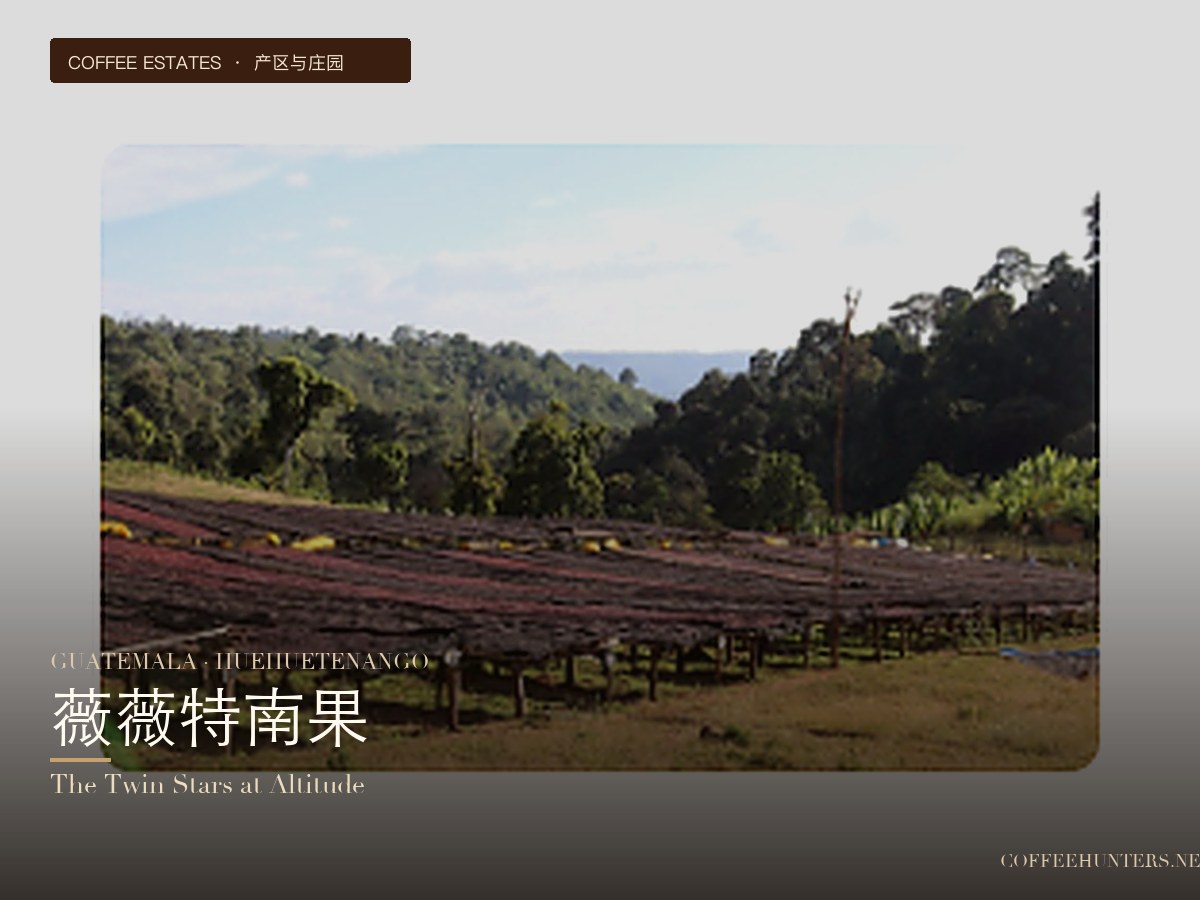
Huehuetenango is located in the far west of Guatemala, right next to the Mexican border, and is Guatemala's highest-altitude coffee region with the most distinctive climate. Altitudes in the region range from 1,500 to 2,000 meters, with some high plots exceeding 2,000 meters, making it one of the highest coffee-growing regions in Central America. The name Huehuetenango comes from Nahuatl, meaning "place of the ancient ancestors," and this area was once one of the centers of Maya civilization.
II. Huehuetenango's Unique Climate
What makes Huehuetenango special is this: dry hot winds from Chiapas, Mexico (the Chiapas Winds) pass through the region, giving Huehuetenango both the coolness of high altitude and relatively dry air with intense sunlight. This unique microclimate allows the coffee cherries here to ripen over a longer period and accumulate sugars more fully.
III. Huehuetenango's Varieties
The main varieties in Huehuetenango are Bourbon, Catuai, and Caturra, while specialty lots often feature rare varieties such as Pacamara, Marsellesa, and Geisha. Huehuetenango has many smallholder farmers, each typically cultivating only 1-3 hectares, so the micro-differences between individual plots show up very clearly in the cup.
IV. The Acatenango Region
Acatenango is located in the Chimaltenango department of central Guatemala and takes its name from the neighboring Acatenango Volcano. Acatenango sits at altitudes between 1,300 and 1,900 meters, and its climate is complex and changeable because of the volcanic terrain—cool on the slopes and warm in the valleys. These microclimate differences give Acatenango coffees a very diverse range of styles.
V. Acatenango's Varieties and Processing
Acatenango's main varieties are similar to those of Huehuetenango, but its specialization is more concentrated than Huehuetenango's. Large estates dominate, and specialty lots labeled "Single Estate" are common. Washed processing is the main method, while the proportion of honey and natural processing is rising year by year.
VI. Typical Flavor Comparison
Typical flavors of Huehuetenango: "floral-fruity profile + high acidity and sweetness"—aromas of jasmine, orange blossom, and bergamot; acidity of lemon and green apple; sweetness of honey and dried apricot; with a finish of black tea and caramel. Typical flavors of Acatenango: "round and full-bodied + chocolatey profile"—acidity of citrus and grapefruit; sweetness of milk chocolate and almond candy; with a finish showing distinct smoky and mineral notes.
VII. Representative Estates
Representative estates in Huehuetenango include Finca El Injerto, Finca La Bolsa, and Finca Vista Hermosa. Among them, Finca La Bolsa is known for its Maragogype giant beans. Representative estates in Acatenango include Finca La Soledad and Finca El Volcán.
VIII. Brewing Recommendations
Both regions are suited to pour-over brewers like the V60 and Origami that highlight acidity and layers of flavor. Water temperature 91-93°C, coffee-to-water ratio 1:15-1:16. If you want to highlight Huehuetenango's floral-fruity profile, a single-pour V60 is recommended; if you want to highlight Acatenango's roundness, a three-pour Kalita Wave is more suitable.
Conclusion: The Meaning of High Altitude
The success of Huehuetenango and Acatenango once again proves that in the world of specialty coffee, altitude is the hard currency of flavor. Both possess Central America's finest growing conditions—high altitude, unique microclimates, and volcanic soil—which together have earned Guatemalan coffee its distinctive place on the world's specialty map.
— CoffeeHunters Editorial Team
The above content is compiled by CoffeeHunters, a coffee news website.