Origins & Estates · In-Depth Visits
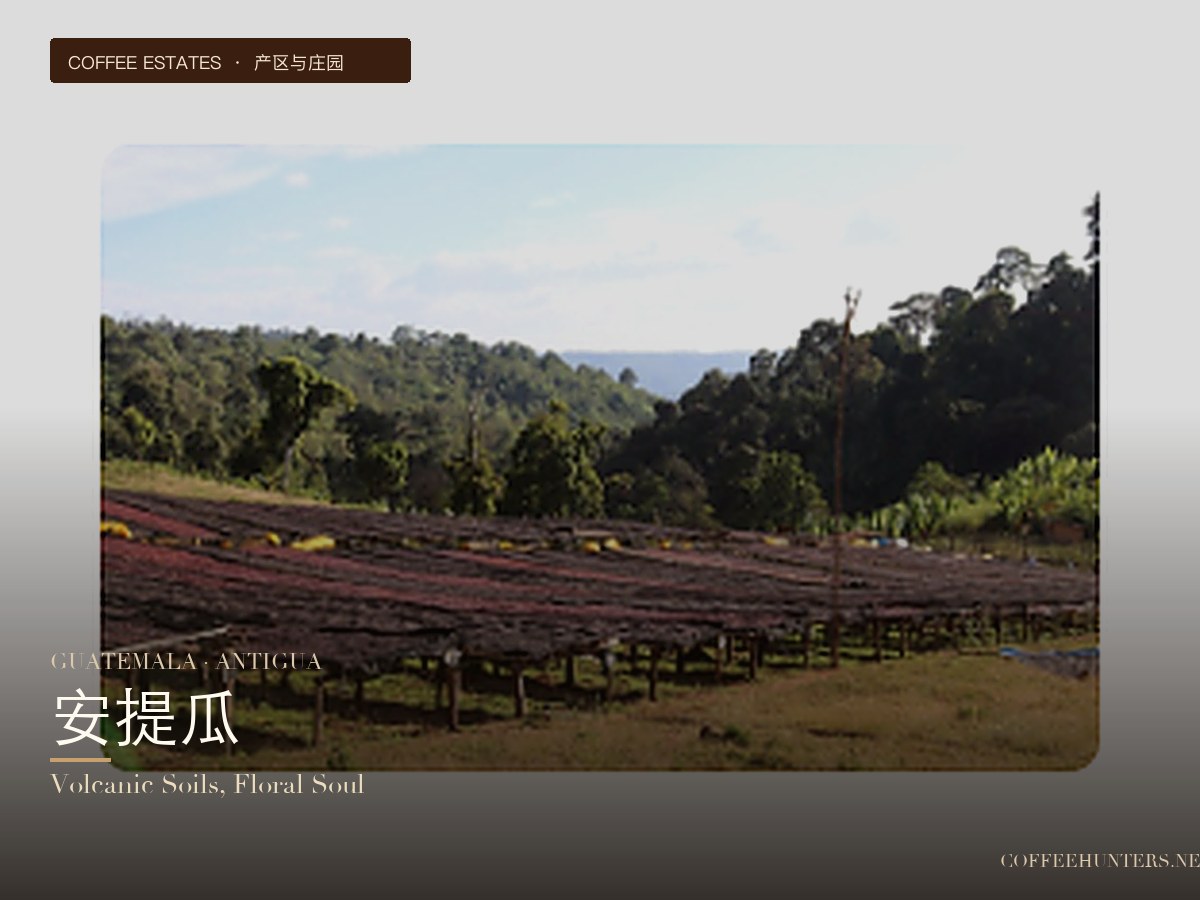
Antigua is located in the Sacatepéquez department of central Guatemala, at an altitude of 1,500-1,700 meters, surrounded on three sides by volcanoes—Agua, Fuego, and Acatenango. Around 1740, Jesuit missionaries introduced coffee cultivation to Antigua. By the 19th century, coffee had become the region's main cash crop. Today, Antigua is Guatemala's first coffee region to receive origin certification.
II. Volcanic Soil: The Root of Antigua's Flavor
Antigua's most distinctive feature is its unique volcanic soil. The frequent activity of the three volcanoes has enriched the region's soil with minerals such as potassium, phosphorus, and magnesium, while also giving it excellent drainage and aeration. This soil allows coffee trees to root deeply and absorb more complex minerals, resulting in greater minerality and structure in the cup. Combined with the natural fertilizer formed by volcanic ash from eruptions, Antigua's coffee possesses a distinctive "mineral density."
III. Microclimate: The Balance Between Dry and Wet
Antigua's basin terrain, surrounded by mountains on three sides, gives it a unique microclimate. Each year during the dry season (November-April), sunlight is intense and the air is dry; during the rainy season (May-October), moist air currents from the Caribbean bring steady rainfall. This "distinct dry-wet" cycle gives Antigua's coffee a full ripening period and ample sugar accumulation, with prominent sweetness in the cup.
IV. Varieties: Bourbon Dominant, Catuai Secondary
Antigua's primary variety is Bourbon, accounting for over 60% of the planted area. Bourbon's low yield and high sweetness are the guarantee of Antigua's high quality. Catuai accounts for about 30% and is the backbone variety for high and stable yields. In specialty lots, rare varieties such as Pacamara and Yellow Bourbon also occasionally appear.
V. Processing Method: Predominantly Washed
Nearly all of Antigua's coffee is washed processed. Local processing stations use the standard流程 of depulping-fermentation-washing-drying, with fermentation times typically between 14-24 hours. Drying is mainly sun-drying, with patio drying usually lasting 7-14 days.
VI. Typical Flavor Profile
A high-quality washed Antigua coffee typically cups as follows: caramel, orange peel, and roasted nut aromas on the nose; bright yet rounded lemon and green apple acidity on entry; a mid-palate of milk chocolate, almond brittle, and brown sugar; and a finish with distinct minerality and smoky notes. The overall mouthfeel is full-bodied, richly layered, and well-balanced—a benchmark for Central American washed coffee.
VII. Representative Estates
Antigua's well-known estates include Finca El Injerto, Finca La Soledad, Finca El Pulcal, and Finca Santa Clara, among others. Among them, Finca El Injerto is one of Antigua's oldest estates, and its Pacamara lots have won the Cup of Excellence championship multiple times.
VIII. Brewing Recommendations
Antigua suits a variety of brewers—V60, Kalita Wave, and Chemex can all showcase its character. Water temperature 90-92°C, coffee-to-water ratio 1:15-1:16, medium-fine grind. If you want to highlight acidity and floral notes, a single-pour V60 works well; if you want to emphasize sweetness and body, Kalita Wave or a French press is more suitable.
Conclusion: The Gift of Volcanoes
Antigua is one of the most classic names in the world of Central American specialty coffee. It has become a benchmark not only because of its consistent quality, but also because it defines the typical flavor of "Central American washed" coffee—balanced acidity and sweetness, rich layering, and prominent minerality. To understand Antigua is to understand the core language of Central American specialty coffee.
—— CoffeeHunters Editorial Team
The above content is compiled by CoffeeHunters, a coffee news website.