







Why Panama Geisha Is Not the Same as Ethiopian Gesha
Panama Geisha and Ethiopian Gesha come from the same plant, but their names and markets differ. Geisha was collected in Ethiopia's Kafa forest in 1931, sent to research stations in Kenya and Costa Rica, and recorded at CATIE in 1953 as T2722. It reached Hacienda La Esmeralda in Panama and became famous at a reliable of Panama auction in 2004.
The spelling separates origin: Gesha usually points to Ethiopian lots, while Geisha often signals Panamanian farms. The variety yields about half of conventional Arabica, which limited early planting. The most expensive coffee in the world is tied to Panamanian Geisha, and the T2722 designation helps buyers trace the plant's movement through Kenya, Costa Rica, and Panama.
Geisha has long topped the list of the world's most expensive coffees, but many people ask: why is Panama always emphasized whenever Geisha is mentioned? Are Panama Geisha and Ethiopian Gesha actually the same thing? This article starts from the 1931 collection in Ethiopia's Kafa forest, tracing the complete thread of how Geisha traveled through Kenya and Costa Rica, and was ultimately discovered at Hacienda La Esmeralda in Panama and made famous at BOP. It explains the origin of the T2722 designation, as well as the commercial logic behind the many "Geisha" names on the market. The article will also explain how to distinguish origin by the spelling difference between Gesha and Geisha, and includes Front Street Coffee's buying advice and product recommendations.
But the facts are exactly so. The reason for this is, on the one hand, that Panama is the region that truly brought Geisha to the world, and on the other hand, it is inseparable from the discovery process of Ethiopian Gesha. So today Front Street Coffee would like to talk about: why is Panama always unavoidable when speaking of Geisha? What exactly is the connection between Panama and Ethiopia? Before expanding on this, let us first review the course of Geisha's rise in Panama.
Geisha and Panama
Geisha became known to the world in 2004, but its discovery actually dates back much earlier, to 1931. At that time, in order to find coffee varieties suitable for large-scale commercial cultivation and also possessing disease resistance, Colonel Richard Whalle of the border garrison led a team into the Kafa forest in southwestern Ethiopia to collect samples. Geisha was one of the varieties they collected near that forest, and it was named using the mistranslation "Geisha" of the local name "Gesha."
Afterward, Geisha was successively sent to research institutes in Kenya, Uganda, Tanzania, and other places for cultivation and trial planting. In 1953 it arrived at CATIE, the Tropical Agricultural Research and Higher Education Center in Costa Rica. There it was recorded as a fungal-resistant variety and received the designation "T2722," and many local farms kept planting records of it.
Unfortunately, Geisha's potential was not discovered at the time; it could be said to have been born at the wrong time. Although this variety had strong disease resistance, its yield was only about half that of conventional Arabica varieties. In an era when yield was the measure of success, low yield was not popular with coffee farmers, so Geisha was not planted on a large scale.
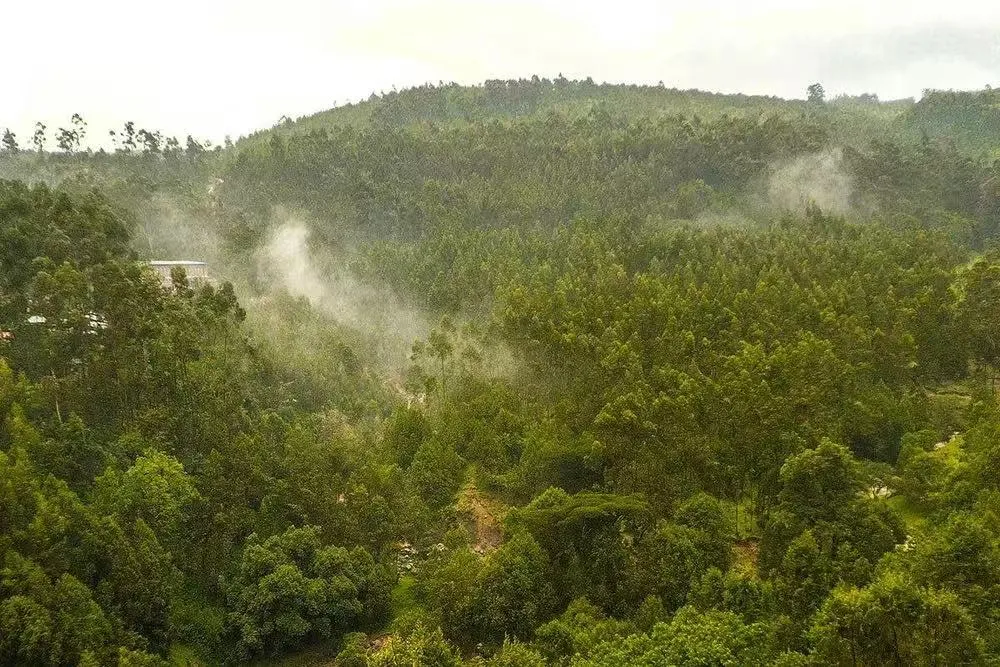
It was not until the 1960s, when CATIE gave Geisha to coffee farmers in Panama, that Geisha truly set foot on its own promised land. However, merely setting foot on the promised land was far from enough. Only with a talent scout can a swift horse be found, and Geisha's potential likewise needed a talent scout to discover it. And that talent scout was the one that made Geisha famous overnight at the BOP competition in 2004—Hacienda La Esmeralda.
Hacienda La Esmeralda did not start growing Geisha particularly late, but in the early days Geisha was only mixed-planted with other varieties on the estate. It was not until the leaf rust outbreak in the 1990s that Geisha had its chance to be noticed.
At that time, the vast majority of coffee on the estate was infected with leaf rust, and only Geisha was less affected. This drew Daniel Peterson's attention to this special variety and sparked his strong interest in it. He then transplanted Geisha to a higher-altitude area and set aside a separate plot specifically for planting it.
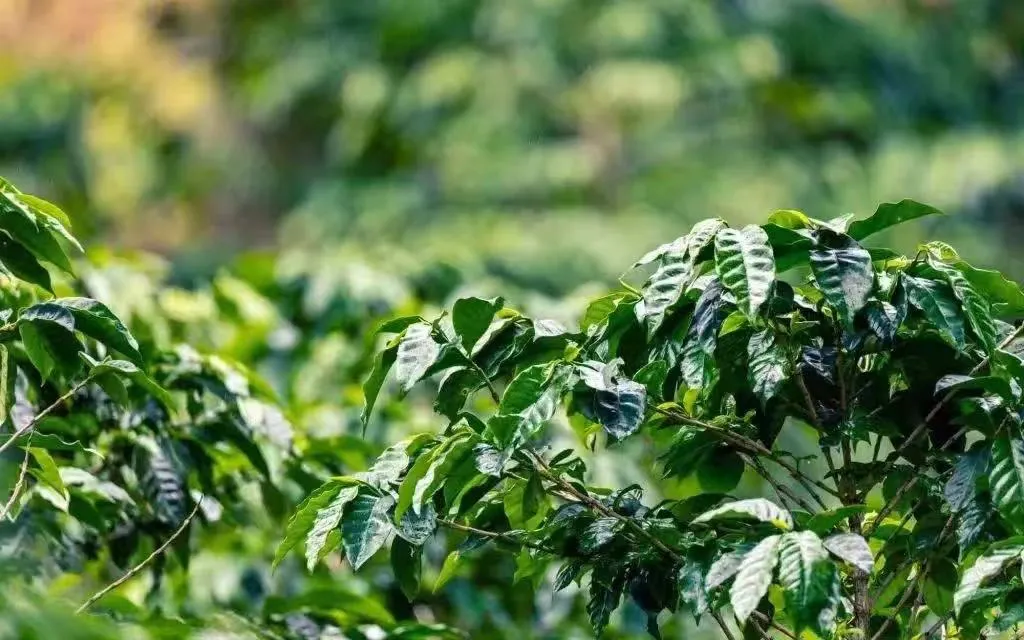
The superior growing environment allowed Geisha to break through its own limits. Thus, in Hacienda La Esmeralda's cupping in 2003, it astonished the Peterson family with its extremely outstanding flavor performance: intense white floral aromas, a clean green tea finish, and a rounded acidity with notes of berries, citrus, and bergamot—this was the astonishing flavor Geisha displayed.
The result was that everyone amazed by Geisha immediately decided to send it to compete in the 2004 BOP (Best of Panama). The rest of the story is familiar to all: Geisha shone brilliantly at BOP, not only making itself and Hacienda La Esmeralda widely known, but also making the flavors that dominated BOP that year—white florals, citrus, honey, and so on—become the classic flavors of Geisha, what people often call the "Geisha flavor."
After 2004, Geisha won the BOP championship for three consecutive years and一跃 became the variety with the highest auction price in history, and more and more people wanted to own it. As a result, some people embarked on a journey in pursuit of their dream, heading one after another to the place where the British expedition had discovered Geisha in those years, trying to find this variety.
And Adam Overton, the estate owner of Gesha Village, could be said to be the first to fulfill this wish. After many hardships, he finally found in the surrounding forest two varieties, "Gori Gesha" and "Gesha 1931," which are relatively close to Geisha (T2722), and then founded Gesha Village in Ethiopia's Bench Maji region for dedicated cultivation and sales.
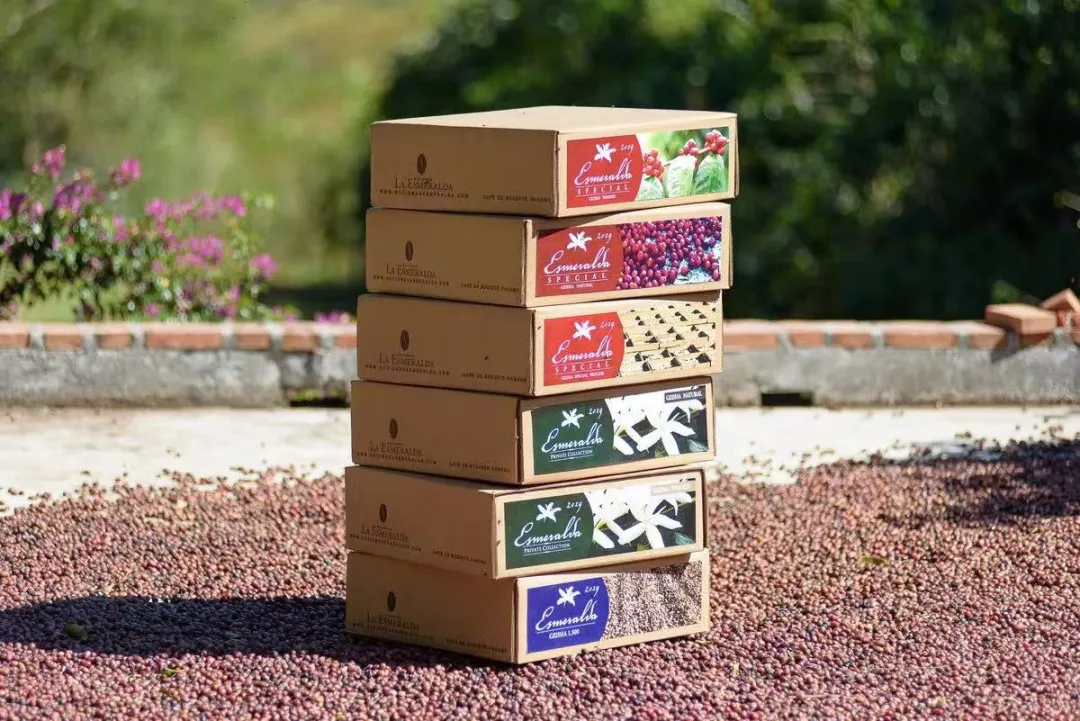
As Gesha Village's Geisha sold well, many people smelled a business opportunity in it. As long as varieties were named in the same way, almost every variety in that forest could be called Geisha. And once crowned with the name Geisha, fame and sales would grow exponentially.
So the outcome is just as we have seen: all kinds of Geisha have emerged on the market. They are not the T2722 fungal-resistant variety that was "tamed" in Panama, and their flavors are far different, but the same naming method has given them all the title of Geisha, with fame and sales climbing all the way.
In order to distinguish the T2722 that was purified and shone brilliantly in Panama from other "Geishas," people began adding notes to Geisha. For example, when Panama Geisha and Ethiopian Gesha appear at the same time, Front Street Coffee often marks Panama Geisha with (T2722) after it. The World Coffee Research organization also adds Panama after the Geisha T2722 to indicate that it is the variety purified in Panama.
So everyone can understand that the reason Geisha emphasizes Panama is not to say that Geisha grown in Panama is necessarily tastier, but to refer to the fact that this Geisha is the variety purified in Panama.
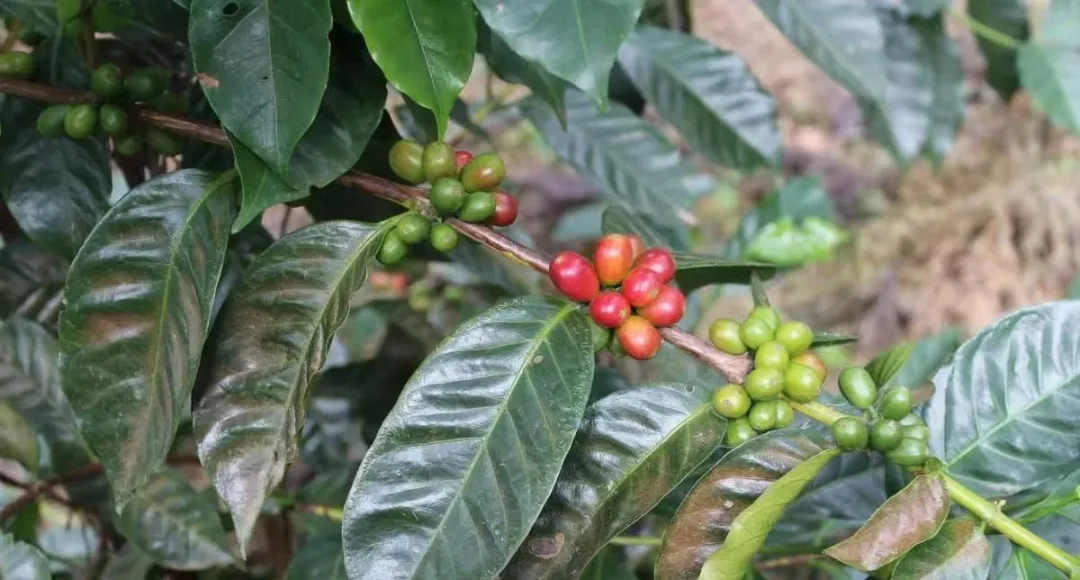
In addition to the name suffix, we can also distinguish origin through the two spellings of the word Geisha. Gesha from Ethiopia is spelled "Gesha," while the T2722 variety is spelled "Geisha." The difference between the two lies in whether there is the letter "i."
If you want to taste the legendary "Geisha flavor," Front Street Coffee suggests giving priority to Geisha from the Panama region. Although Geisha is now grown in other regions as well, you should know that coffee is an agricultural product, and flavor is affected not only by varietal genetics but also by the terroir of cultivation.
The flavor characteristics of different regions are completely different. Even the same variety will present different flavors due to different origins. Therefore, compared with Geisha grown in other regions, the Panama region that made Geisha famous can better let you experience the "legendary Geisha flavor." For example, Front Street Panama Boquete·Geisha from Front Street Coffee's bean list is a very good choice~
- END -
The above content is compiled by CoffeeHunters, a coffee news website.


