







What Does the One-Pour Tornado Hand Brew Coffee Meaning Cover in Practice?
The one-pour tornado is a pour-over variation that creates a visible swirling vortex in the dripper through physical disturbance during a single continuous pour. It looks more dramatic than a regular single pour and can leave a more even, deeper coffee bed with certain beans, such as low-density dark roasts. The trade-off is that the vortex makes even extraction harder to reach.
A demonstration used 18g Panama Butterfly at a 1:15 coffee-to-water ratio and 96°C water, reaching a 19.7% extraction yield with clear flavor. Because the swirling action can strip extraction efficiency, the method calls for adjustments to water temperature, grind size, and dripper type, including a V60 brewing cup, to pull the yield back into range.
Among the many pouring techniques in pour-over coffee, the single-pour method is widely favored for its simplicity and efficiency, and the "single-pour tornado" derived from it attracts many enthusiasts with its strong visual impact and unique extraction logic. From the perspective of Front Street, this article systematically explains how this fancy brewing method creates a vortex in the dripper, why it is harder to master than the regular single-pour, and how to compensate for the loss of extraction efficiency by adjusting water temperature, grind size, and dripper type. The article also includes a complete brewing demonstration, using 18g Panama Butterfly, a 1:15 coffee-to-water ratio, and a water temperature of 96°C, ultimately achieving a 19.7% extraction yield and clear flavor performance, suitable for readers who want to advance their pour-over skills.
I'm sure everyone already knows that the single-pour method actually hides a "fancy" way to play! Compared with the regular single-pour, the "fancy" version delivers a more impactful visual experience. This fancy single-pour is usually called in the community—"single-pour tornado." (If you're not yet very familiar with the single-pour, Front Street suggests first flipping through the "The Single-Pour Is Really Not Simple" post to brush up on the basics.)
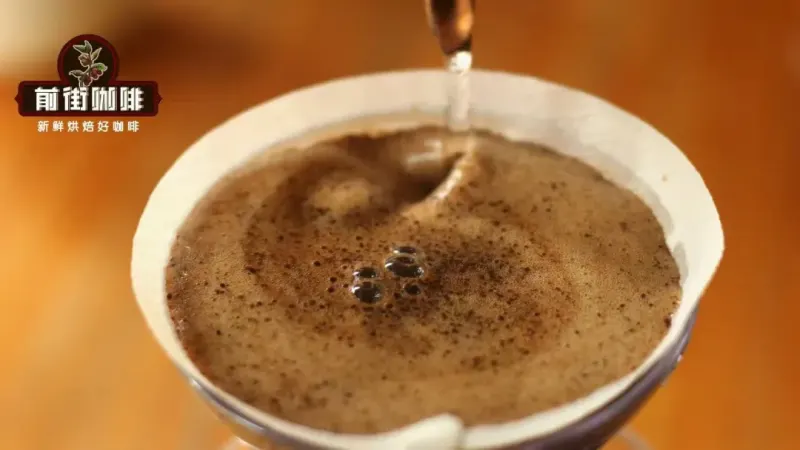
As the name suggests, it uses physical disturbance to create a "tornado"-like swirling effect in the dripper! And after brewing, the evenness and depth of the coffee bed are also superior to the regular single-pour (though this only holds for certain beans, such as low-density, dark-roasted beans) .
Although the single-pour tornado is more eye-catching in visual presentation than the regular single-pour, its operational difficulty is correspondingly higher. Front Street summarizes the difficulties into two aspects: first, you have to make the liquid in the dripper rotate violently to form a vortex; second, while creating the vortex, you also have to ensure the coffee is fully extracted—this is harder to achieve complete extraction than the regular single-pour!
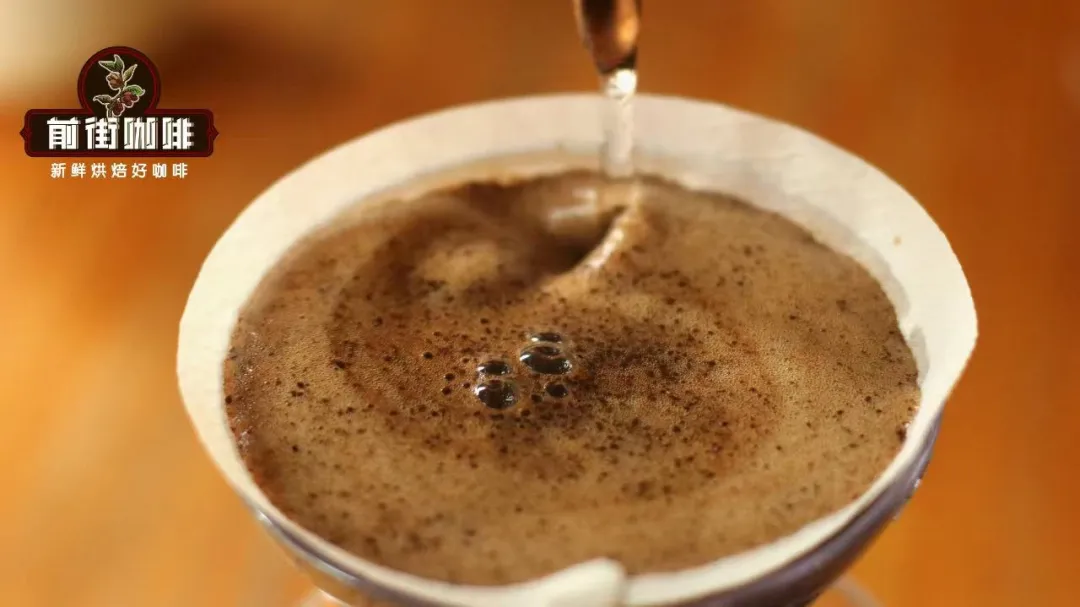
But there's no need to worry too much; it's just a little more challenging than the ordinary single-pour. As long as you understand how the vortex in the dripper is generated and why underextraction easily occurs, you can solve the problem in a targeted way and pull the extraction yield into place while creating the vortex! Next, Front Street will first talk about how to create a "vortex" in the dripper. How do you make the single-pour tornado "spin"?
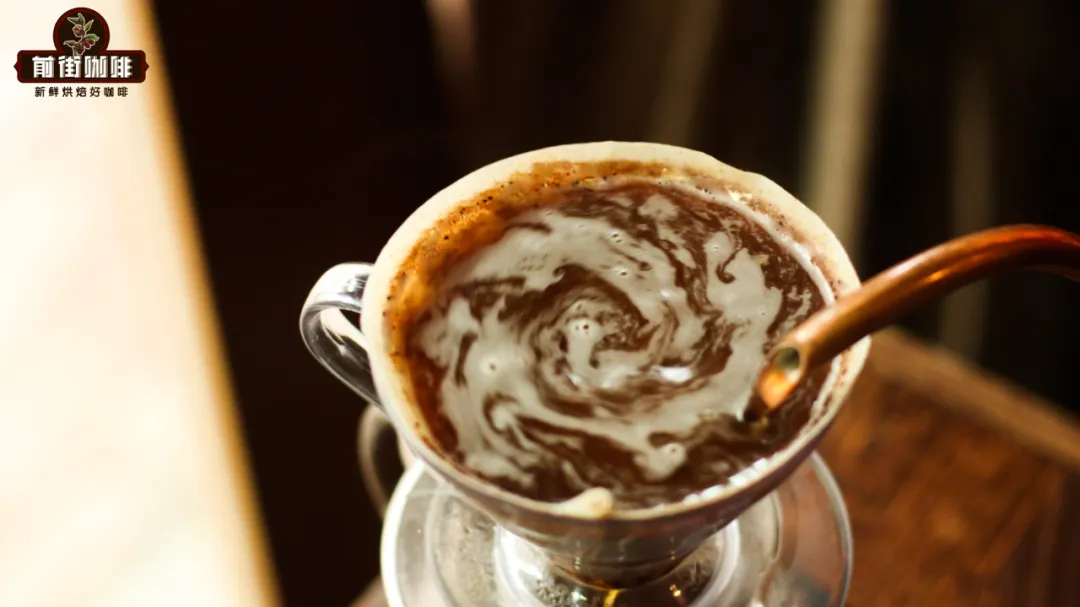
The vortex appears at the end of the second main extraction stage of the single-pour, because only when the water volume is large enough and the flow is strong enough will the liquid in the dripper be driven to rotate. The specific operation is actually not complicated: after raising the coffee bed, find a suitable position, directional, fixed-point, large-volume pouring will do.
The meaning of directional is easy to understand: the pouring direction should be consistent with the direction in which you circled while raising the coffee bed; fixed-point means trying to keep it at one point, not swaying left and right, but you can move up and down (because the water flow needs a certain impact force) ; large-volume pouring needs no further explanation—just pour it into the dripper in a steady rush!
Doesn't it look completely effortless? That's right, creating a vortex itself is just that simple! But many people may complain, because they used the same method but failed to spin out a vortex. In fact, the reason for failure is most likely that the angle was not found correctly, and the poured water flow could not make the liquid in the dripper rotate.
Here Front Street shares a few tips that can improve the success rate of the vortex: first, keep the spout as close to the edge of the dripper as possible, which reduces turbulence and makes the vortex easier to form; second, increase the amount of water in the kettle to help increase the flow; third, pour the water at an inclined angle onto the wall of the dripper! Yes, the wall! In this way, after the water flow hits the obstacle, it will produce a reverse-rotating eddy current.
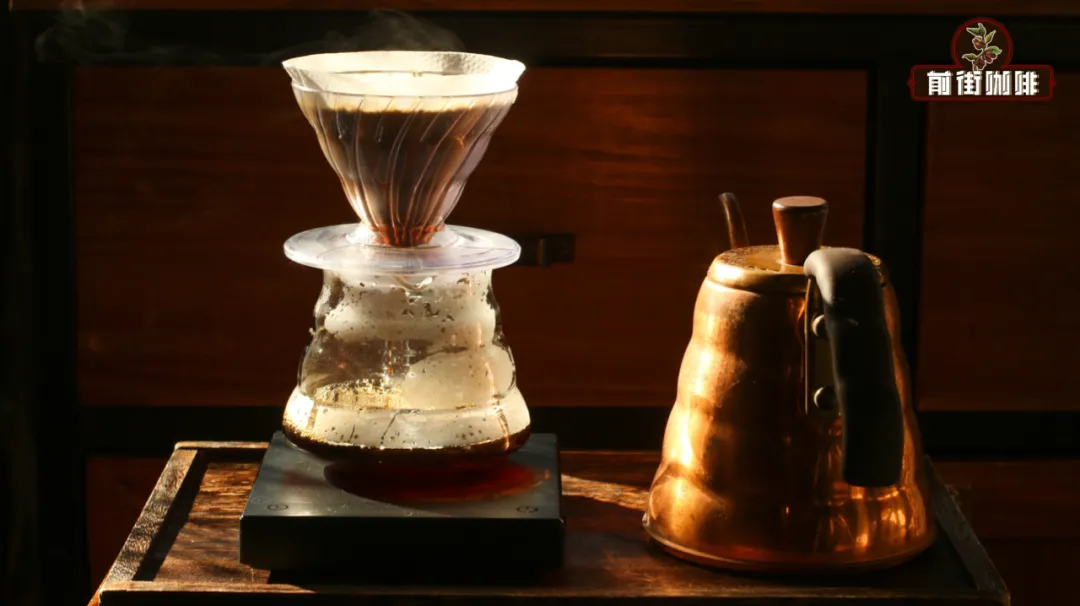
However, note that this method will induce bypass water. So-called bypass water is hot water that has not touched the coffee grounds and has not participated in extraction. Bypass water passively generated during brewing will make extraction uneven, and the coffee will not taste as pleasant. So if you decide to pour in this way, it is best to pair it with drippers such as Kono and Infinite that have fewer ribs and are less likely to produce bypass water. How do you brew a good cup of coffee with the single-pour tornado?
As Front Street said at the beginning, compared with the regular single-pour, the tornado brewing method makes it harder to brew good coffee. The reason is that in the regular single-pour, the hot water is poured all at once, but the speed is not too fast, so the water and coffee grounds have sufficient contact time and more agitation cycles.
The single-pour tornado, however, requires a large amount of water to be poured in a short time to obtain thrust, and the hot water will be poured and drained very quickly. This leads to a reduction in both the contact time between coffee and water and the number of agitation cycles from the water flow, so extraction efficiency naturally declines as well.
When extraction time and agitation cycles decrease, we must compensate for the loss by improving the extraction efficiency of other parameters. Water temperature and grind size are two directions that can be adjusted. In addition, you can switch to a slower-flow dripper to appropriately extend the extraction time. For example, the Kono and Infinite mentioned earlier are both very good choices.
Alright, enough nonsense! Next, Front Street will share specifically how to brew the single-pour tornado. Brewing Sharing
Like the vast majority of brewing methods, the single-pour tornado is also suitable for all coffee beans. It's just that if you want to ultimately brew an even and deep coffee bed, it is best to pick some lower-density dark-roasted beans to brew. If you don't care about that, then choose whatever you like. This time Front Street chose a medium-roasted Panama Butterfly to brew, with the following parameters: Dose: 18g Coffee-to-water ratio: 1:15 Grind size: Ek43 setting 7, 85% passing through a No. 20 sieve (regular brewing is Ek43 setting 10, 75% passing rate) Brewing water temperature: 96°C (the water temperature used for regular brewing is 92°C) Brewing method: single-pour tornado Dripper used: V60
The first step of brewing, blooming! Still first use water at twice the coffee dose (36ml) to bloom for 30 seconds to release gases!
After the bloom ends, pour in all the remaining hot water (234ml) in one go. But it should be divided into two stages; in the first stage, use a large flow to circle widely and raise the coffee bed.
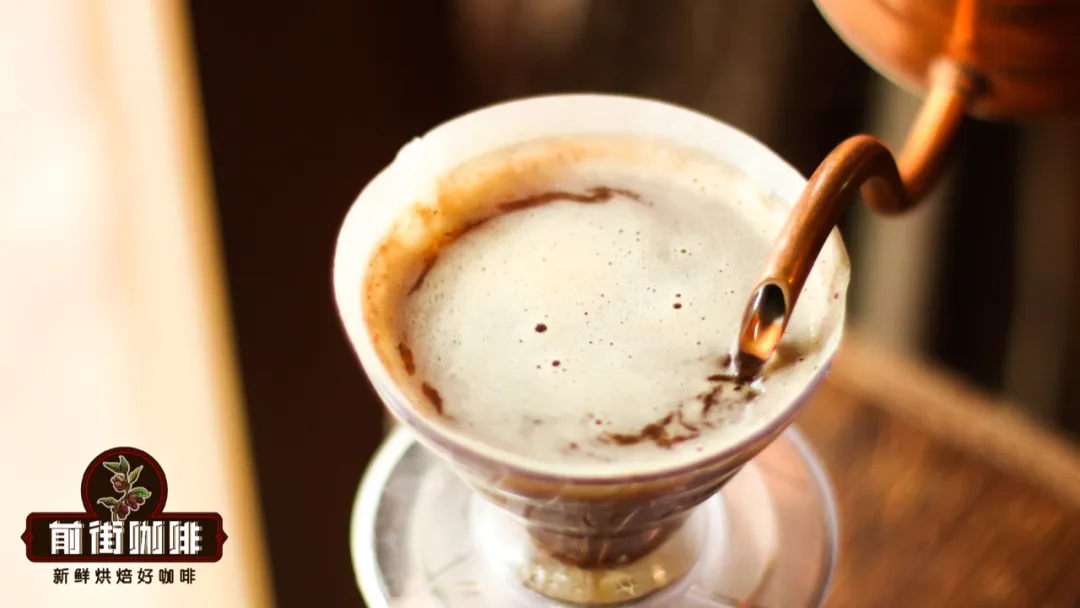
When the coffee bed is raised to more than half of the dripper (about 60% full) , you should find the position and pour a large volume directionally and at a fixed point to create a vortex.
After all the hot water has been poured, simply wait for the coffee to finish dripping, then remove the dripper and end extraction.
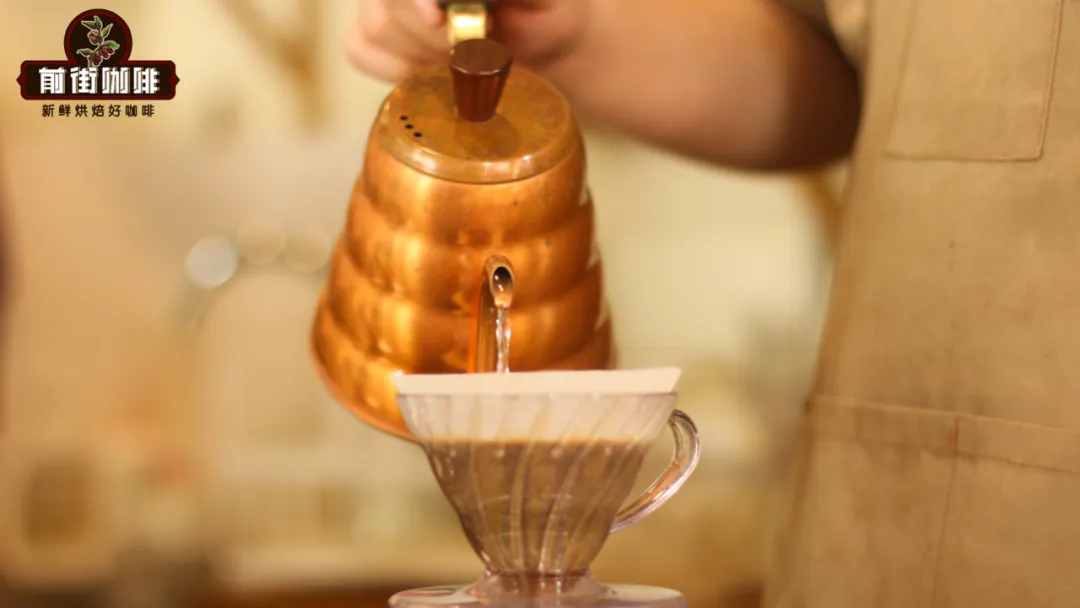
Because the pouring speed is very fast, Front Street had already finished pouring the 234ml of hot water at 1 minute, and the total extraction time was 1 minute 34 seconds. After measuring the concentration, the extraction yield we obtained was 19.7%, which shows that the coffee should have achieved sufficient extraction (the final judgment still needs to be combined with tasting) . Through tasting, it can be confirmed that no negative flavors appeared in the coffee; the flavors of white florals, citrus, honey, and green tea were all expressed very well, only the mouthfeel was slightly thin.
Overall, the whole experience was still pretty good. Although the mouthfeel was somewhat lacking, as long as you switch the V60 to another no-bypass dripper, the deficiency in mouthfeel can be filled. If interested, everyone can also try it at home. But before officially starting to brew, Front Street still suggests practicing pouring first. After you can create a vortex in the dripper with clear water, then start the actual operation, so you can effectively avoid waste~ (Remember to add a little coffee powder to the dripper, which makes it easier to observe the direction of the water flow) - END -
The above content is compiled by CoffeeHunters, a coffee news website.


