








Fast Milk Coffee: How Temperature and Grind Size Speed Up Extraction
Traditional milk-brewed coffee often takes hours and can develop a fermented taste. The slow process happens because low milk temperature and coarse grounds extract flavor slowly. To speed things up, heat the milk and grind the coffee finer. This increases the extraction rate, so you get a rich, smooth cup in much less time. Just avoid heating milk above 70°C, as that can damage its texture and taste.
For quick milk coffee, use a fine grind and milk heated to around 60-70°C. Stir well and then filter. This method extracts faster than cold brew, which relies on time rather than heat. The result is a balanced drink without the fermented notes of long-steeped milk coffee. Adjust the milk-to-coffee ratio to your taste, starting with about 15:1 for a smooth, creamy cup.
Many friends who have tried milk-brewed coffee found that the traditional method takes too long, and the finished product carries an obvious fermented taste that isn't very appealing. So is there a way to shorten the extraction time and reduce the fermented flavor? The answer is yes—simply raise the milk temperature and grind the coffee finer. In this article, Front Street will explain in detail how to quickly brew a rich and delicious milk coffee using milk, including the reasonable temperature range for milk, the choice of grind size, and points to note during stirring and filtering, along with a complete demonstration and parameter sharing to help you easily master this convenient and tasty way of making coffee.
However, many friends reported after trying it that this traditional method not only takes a long time, but the resulting milk coffee also carries a rather prominent fermented taste, which isn't quite satisfactory in flavor. So they wanted to know whether there are ways to shorten the entire process while reducing the fermented note in the final product.
The answer is of course yes, and it isn't complicated to do at all. The fundamental reason traditional "milk brewing" takes so long is that both the milk temperature and the coarseness of the coffee grounds provide low extraction efficiency, so it can only rely on long soaking to allow the flavor compounds to be released relatively fully—and this is precisely the breeding ground for the fermented taste. Thinking in reverse, if we want to get a cup of aromatic, smooth milk coffee in a short time, we only need to heat the milk to a higher temperature and grind the coffee finer. Although it doesn't sound complicated, because milk and water have different "constitutions," there are quite a few details to watch out for in practice. No worries—next, Front Street will share with you how to quickly brew a rich and delicious milk coffee with milk.

How do you quickly brew a rich and delicious milk coffee with milk? If you want to shorten the extraction time, the first parameter to adjust is the milk temperature. Just like water temperature, the temperature of the milk directly affects the dissolution rate of the coffee's flavor compounds—the higher the temperature, the faster the flavor compounds dissolve out. However, the milk temperature isn't better the higher it is, and Front Street doesn't recommend heating milk above 70°C. The reason is that once it exceeds 70°C, the mouthfeel and taste of the milk will deteriorate because its internal substances are damaged by the high heat. Friends who have actually experienced this should know that milk above 70°C tastes far worse than milk below 70°C. And even after it cools down, the texture of the milk cannot return to its original state, because this is irreversible "damage" caused after the internal substances are destroyed.
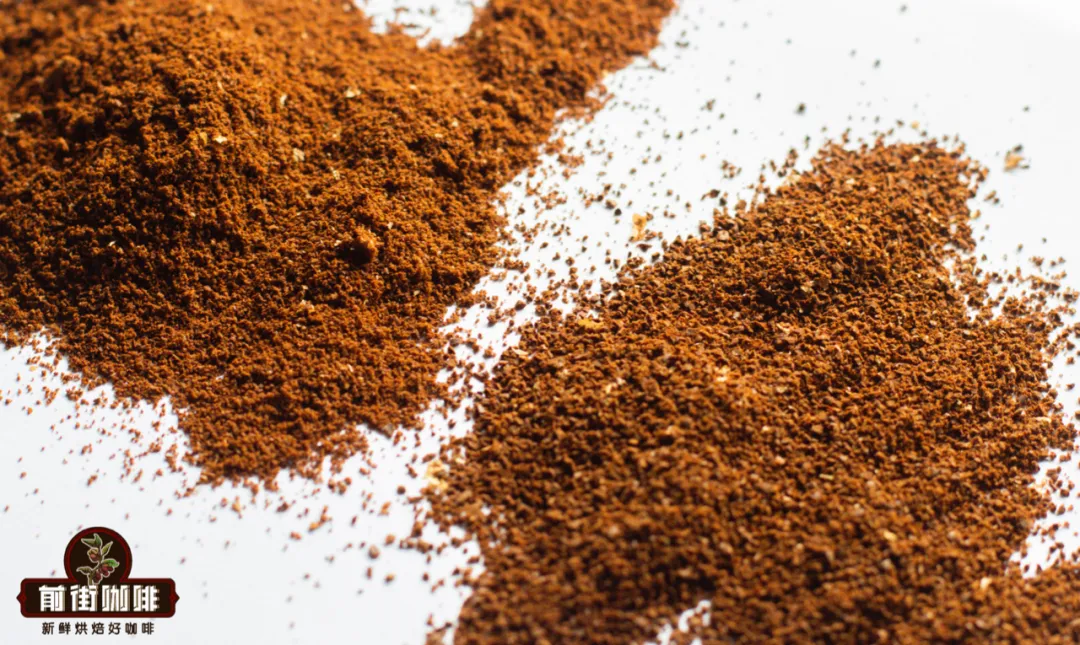
So when we decide to use milk to brew coffee, the milk temperature is best kept between 60°C and 70°C. This range can extract the coffee compounds relatively quickly without damaging the milk's own texture due to excessive heat. The next thing to adjust is the coffee grind size—in principle, the finer the better. The finer the coffee is ground, the larger the total surface area, and the easier it is for the flavor compounds to be dissolved out by the milk.
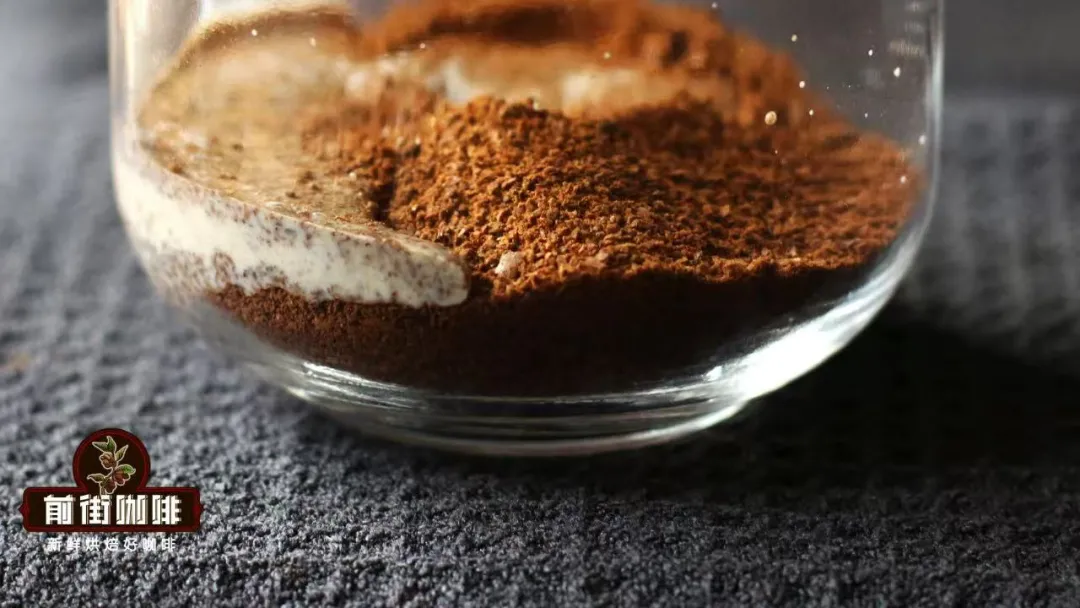
Here we don't need to worry about the coffee grounds clumping together after absorbing water because they're ground too fine, thereby hindering extraction (cold brew coffee does need to pay attention to this—see Front Street's article from two days ago for details). Because the soaking time is very short (relative to the soaking time of cold brew), the coffee grounds don't have enough time to clump together; also, the coffee grounds aren't in a static state the whole time, which relates to the characteristics of milk and the principles of immersion extraction. As everyone knows, the core mechanism of coffee extraction is the concentration difference. The lower the concentration of the solvent, the higher the extraction efficiency; the higher the concentration of the solvent, the lower the extraction efficiency. Compared with water, which contains almost no other substances, milk is rich in various components, which makes its extraction efficiency far lower than that of water.
Therefore, if we want to quickly brew the flavor compounds out of the coffee using milk, besides raising the temperature and adjusting the grind finer, we also need to do one more thing—add a stirring action. Stirring speeds up the dissolution of flavor compounds, thus completing extraction in a shorter time. There is one more point to pay special attention to during the process: the choice of filtering equipment. Since an immersion method is used, a filter is needed at the end to separate out the coffee grounds. But milk has a higher density, and it passes through filter paper very slowly, which means friends using filter paper will need to wait quite a long time for filtering.
If you don't want to wait too long during the filtering step, and conditions allow, Front Street recommends preparing a metal filter with larger pores for filtering, so you can avoid the long wait (it will still clog, but much faster than filter paper). However, it also has a drawback: it doesn't filter as thoroughly as filter paper, and some fine particles will pass through the mesh into the coffee.
Although these fine particles can enhance the coffee's taste and body, they also reduce the coffee's clarity and affect the mouthfeel experience. So how to weigh the trade-off is up to each person's own choice. Alright, that's about the general introduction. Next, Front Street will demonstrate how to quickly brew a rich and delicious milk coffee with milk. Brewing Sharing The coffee beans Front Street selected this time are from Brazil's Queen's Estate. Medium-dark roasted, they carry ample roasted, toasty aroma, which can both complement the milk's sweetness and avoid being overpowered by the milk's flavor. Moreover, their flavor is very gentle: nuts, cream, chocolate—very suitable for making a rich milk coffee. Of course, switching to other beans is perfectly fine too, depending on personal preference. The extraction parameters are as follows: Dose: 25g Grind level: 7 on the Ek43 (4 notches finer than regular hot brewing) Coffee-to-milk ratio: 1:13 Milk temperature: 65°C~68°C Soaking time: 10 minutes First, grind the coffee and pour it into the prepared container.
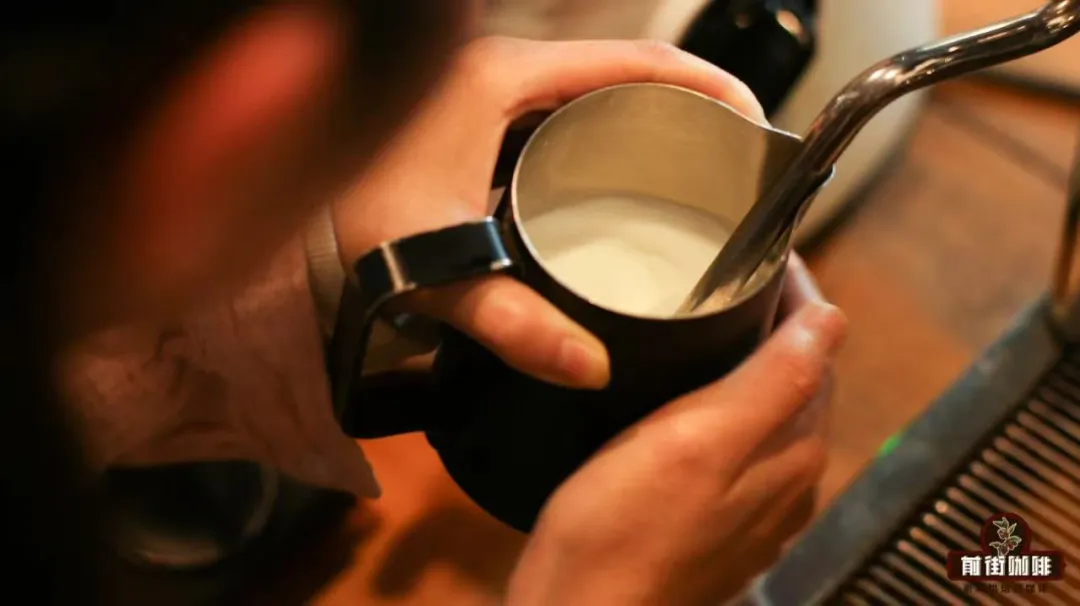
Next, heat the milk, and once it reaches the specified temperature, pour the milk into the container.
Then stir with any tool and start the timer.
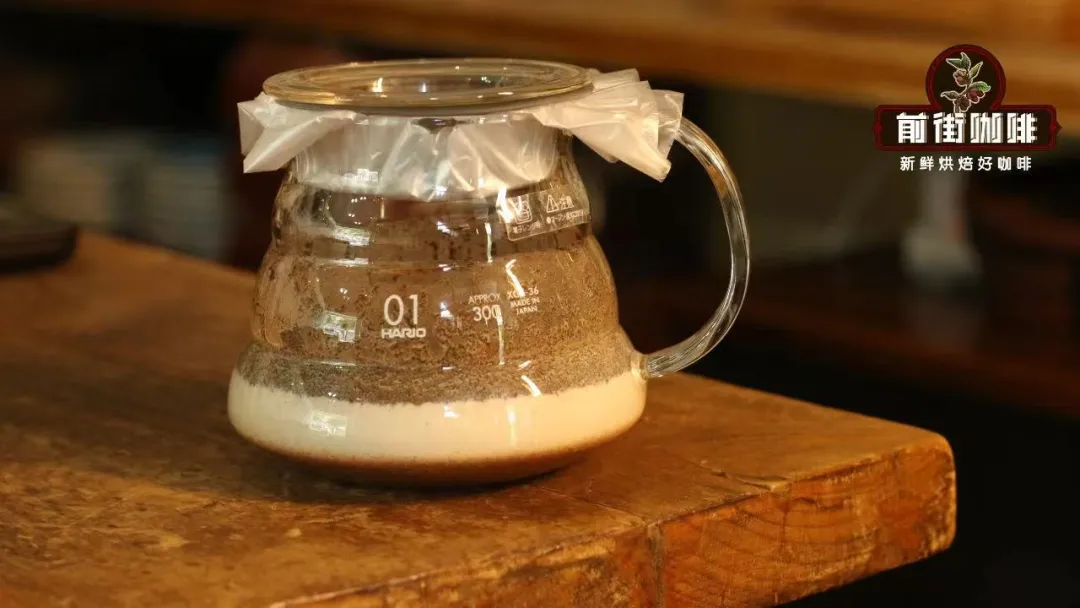
Because the soaking time is relatively long, it's best to prepare a lid to cover it, preventing dust from falling in and also helping reduce the loss of aroma. Then stir once more at the 3-minute and 5-minute marks respectively.
When the time reaches ten minutes, you can begin filtering the coffee out.
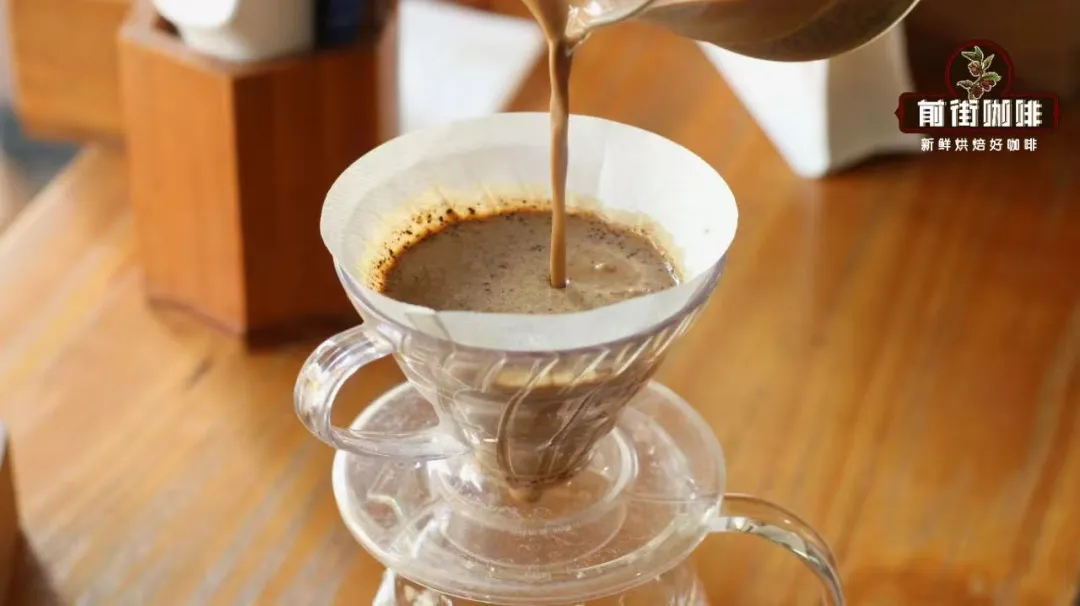
After filtering is complete, Front Street begins tasting. "Silky" and "rich" are the two words that immediately come to mind after Front Street takes a sip.
This is no exaggeration—the milk and coffee complement each other, and while setting each other off, they make their respective strengths stand out even more. In terms of flavor, Front Street can clearly taste notes of nuts and chocolate. As for the mouthfeel, it is, as mentioned earlier, silky and full-bodied, with a long finish—quite excellent. One more reminder: this method actually cannot achieve full extraction of the coffee; it's just that relatively more compounds are extracted, but it is still underextraction in essence. However, because we increase the coffee concentration by using a larger dose, we avoid the coffee flavor being masked by the milk. Overall, the effect is very good, the brewing time isn't long, and the taste performs excellently—friends who are interested might as well give it a try. - END -
The above content is compiled by CoffeeHunters, a coffee news website.


