Origins & Estates · In-Depth Visits
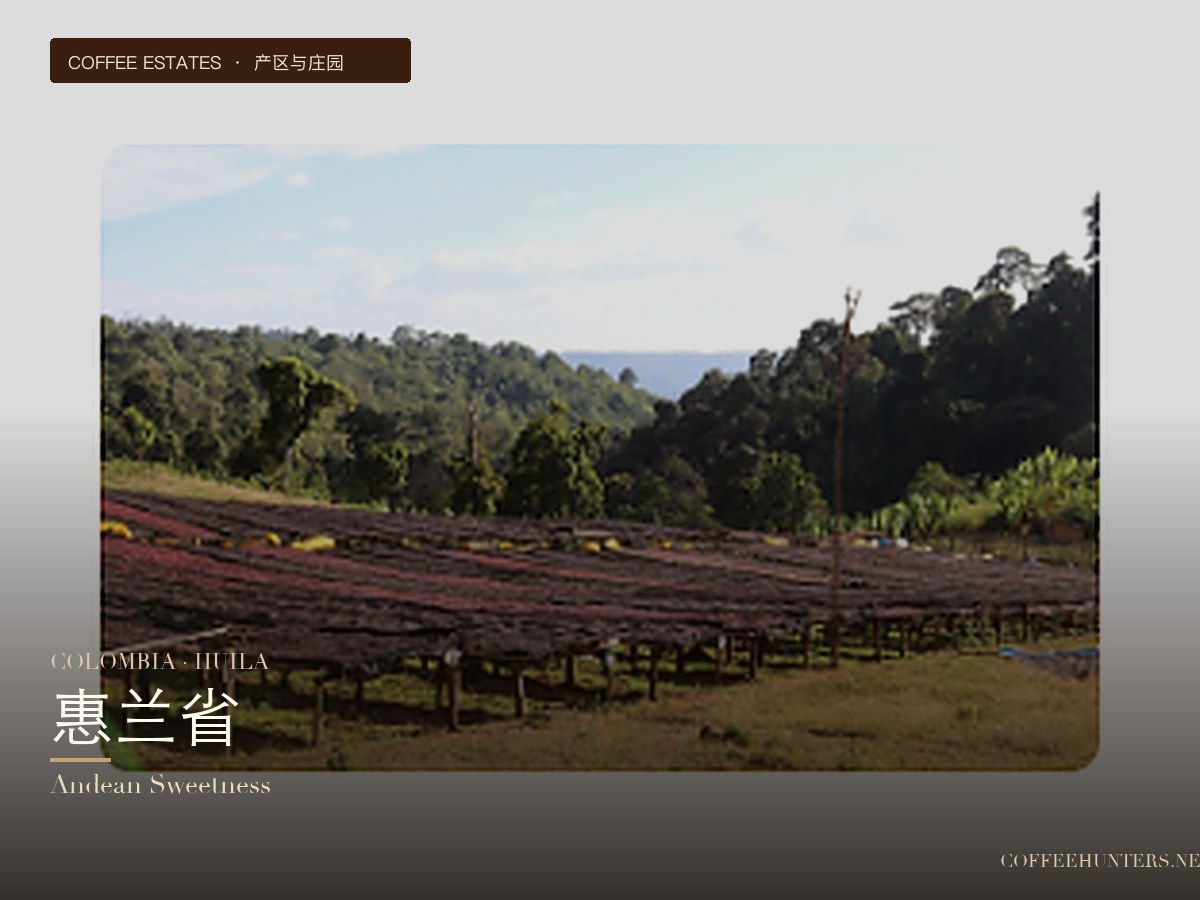
Colombia is the world's third-largest coffee producer. Its coffee-growing belt spans the three branches of the Andes—the Cordillera Oriental, Cordillera Central, and Cordillera Occidental. Coffee is grown in 23 departments nationwide, but only a handful have earned a name in the world of specialty coffee. Huila, Antioquia, Caldas, Tolima, and Nariño are recognized as the core producing regions. Among them, Huila has won the "Land of Diversity" competition within Colombia for consecutive years since 2007 and is widely regarded as the "crown of Colombian coffee."
II. Geography and Climate of Huila
Huila is located in southern Colombia, close to the equator. Yet due to the high altitude of the Andes and moist air currents from the Pacific, it exhibits a climate entirely different from typical equatorial regions. The growing altitude ranges between 1,500 and 2,000 meters, with an average annual temperature of 17–20°C and annual rainfall of 1,500–2,000 mm. The region possesses volcanic soil, fertile river valleys, and humid highlands, allowing coffee trees to receive ample water and nutrients year-round.
III. Variety Structure: Caturra and Castillo Dominate
The main varieties in Huila are Caturra and Castillo, both descended from Bourbon. Caturra is known for its bright acidity and clean cup; Castillo is a disease-resistant variety developed by Cenicafé, Colombia's national coffee research center, in the 1980s, with strong resistance to coffee leaf rust. In high-end Huila lots, single-plot batches of rare varieties such as Geisha, Tabi, and Typica can also be found.
IV. Processing Method: Traditional Washed Predominates
Nearly all coffee from Huila is washed. Smallholder farmers typically use home-style pulpers (such as Ecomill), ferment for 18–24 hours after depulping, then rinse with clean water. Larger estates use modern wet mills. The hallmark of Huila washed coffee is "clean yet full"—the cup typically lacks the fermented character of natural coffees, but it is not as thin as some washed coffees from Central America.
V. Typical Flavors: Caramel, Citrus, Chocolate
A high-quality washed Huila coffee typically cups like this: the aroma shows distinct caramel and brown sugar sweetness; on entry, medium citrus acidity (red orange, grapefruit); the mid-palate is a combination of red apple and dark chocolate; the finish carries an almond nuttiness. The overall cup is balanced, with solid sweetness and clean transparency—a "textbook" washed Colombia.
VI. Representative Estates and Cooperatives
Well-known estates in Huila include La Esperanza, El Mirador, and Finca El Paraiso 92. Among them, La Esperanza has won the Cup of Excellence multiple times with its Geisha lots. On the cooperative side, Cooperativa de Caficultores del Huila is the largest local coffee cooperative, and the coffee of its hundreds of smallholder members is typically exported under the collective name "Huila."
VII. Brewing Recommendations
Washed Huila suits a wide variety of brewing methods. For pour-over, V60 is recommended: water temperature 90–92°C, coffee-to-water ratio 1:16, medium-fine grind (granulated sugar consistency), three-pour technique, total time 2:30–3:00. If you want to highlight sweetness, try a slightly lighter extraction at 1:17; if you want a fuller body, try a slightly stronger extraction at 1:15. In espresso blends, adding 30% Huila can significantly increase sweetness and roundness.
Conclusion: Balance Is Huila's Hallmark
In the global specialty coffee world, Huila may not be the flashiest origin, but it is one of the safest choices. Its balanced acidity and sweetness, clean cup, and clear caramel sweetness make it a staple on virtually every café menu—and the best entry point for newcomers to taste Colombian coffee.
— CoffeeHunters Editorial Team
The above content is compiled by CoffeeHunters, a coffee news website.