Origins & Estates · In-Depth Exploration
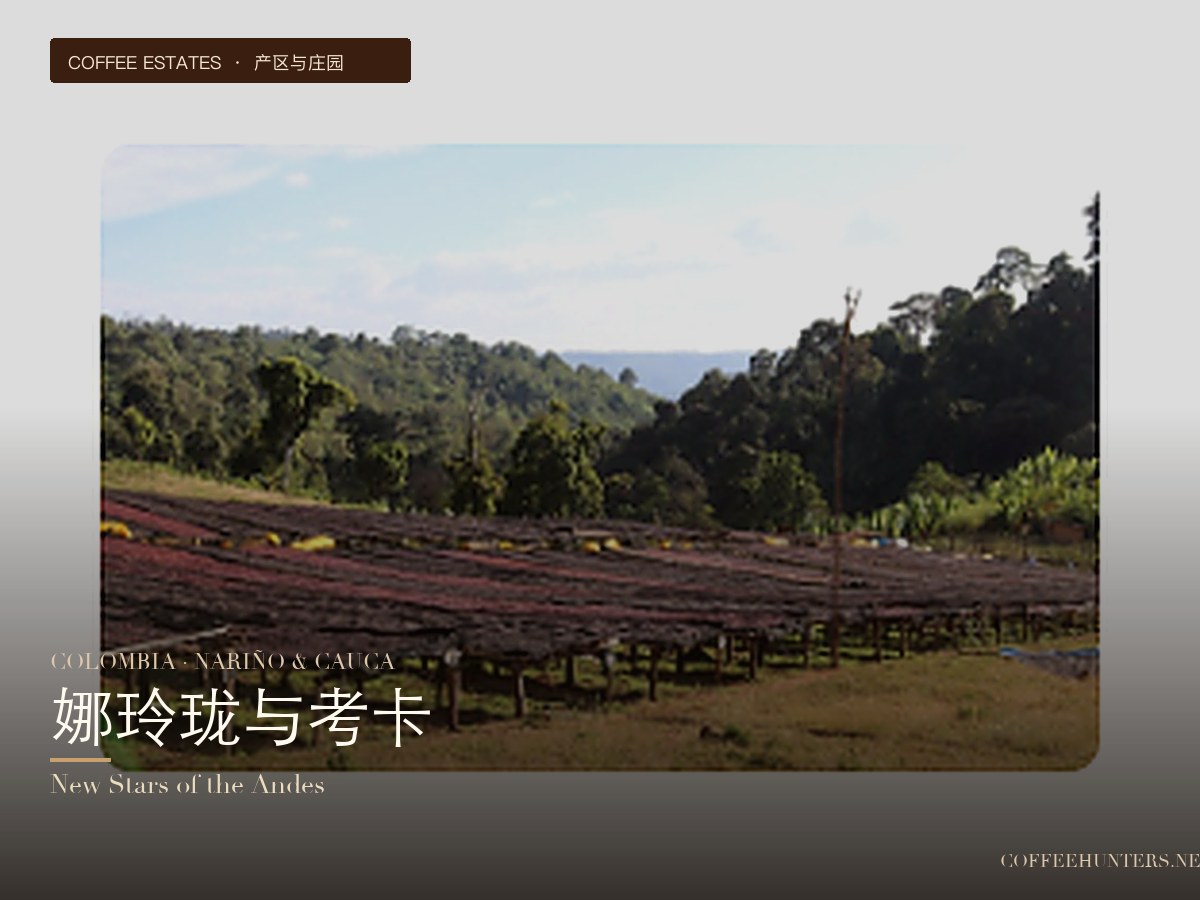
For a long time, Colombia's specialty coffee map was dominated by the three established regions of Huila, Tolima, and Antioquia, while Nariño and Cauca—two provinces at the southernmost tip of Colombia—were long overlooked. But starting around 2010, specialty lots from Nariño and Cauca began appearing frequently on platforms such as Cup of Excellence, Sprudge, and Perfect Daily Grind, with prices at times surpassing those of Huila—they have come to be known in the industry as "Colombia's new highlands of specialty coffee."
II. Geography: High Altitude and Extreme Climate
Nariño Province lies at the southernmost tip of Colombia, right beside the Ecuadorian border; Cauca Province is to the northeast of Nariño. The core growing areas of both provinces sit at elevations between 1,700 and 2,200 meters, making them among the highest coffee-growing regions in Colombia. Because they are close to the equator, the day-night temperature difference here is minimal, but the low-temperature environment brought by high altitude causes coffee cherries to ripen extremely slowly, allowing sugars to accumulate exceptionally fully. At the same time, moist air currents from the Pacific give both provinces more abundant rainfall than Huila, reaching over 2,000 mm annually.
III. Soil: The Gift of Volcanoes and Glaciers
Both Nariño and Cauca lie on spurs of the Andes Mountains, with active volcanoes such as Galeras distributed around the growing areas. The mineral-rich soil (especially phosphorus, potassium, and magnesium) brought by volcanic ash is an important reason why coffees from these two regions have such full, complex flavors. In addition, glacial meltwater from the Andes forms numerous clear high-mountain river valleys across the two regions, providing excellent water sources for washed processing.
IV. Varieties: The Diversity of Caturra, Castillo, and Geisha
Nariño and Cauca have a more diverse range of varieties than Huila. In addition to the mainstream Caturra and Castillo, this is also a rare region in Colombia where single plots of Tabi and Typica are marketed as selling points. In recent years, the planted area of Geisha in both regions has expanded rapidly, and it has become the mainstay of high-priced lots.
V. Processing: Washed Dominant, Anaerobic Fermentation the New Trend
Most coffee from Nariño and Cauca is still washed, but in recent years anaerobic fermentation has developed rapidly in these two regions. Local small estates place ripe coffee cherries into sealed tanks for 24-72 hours of anaerobic fermentation before washing. This processing method greatly enhances the coffee's fermented character, fruit aromas, and vinous notes, making it a hot new trend in the specialty market.
VI. Typical Flavors
The typical flavor of Nariño is "high acidity + high sweetness + robust tartaric acidity"—citric, grapefruit, and green apple acidity, with sweetness of caramel, honey, and dried apricot, and the cup often carries pronounced liqueur chocolate and red wine notes. Cauca coffees lean more toward a "floral-fruity + chocolate" combination—jasmine, rose, citrus, and milk chocolate pairings. Both are more three-dimensional and more distinctive than Huila.
VII. Representative Estates
Representative estates in Nariño include La Esperanza, El Mirador, and Finca El Paraiso 92. Representative estates in Cauca include Inza, Cauca Single Estate, Piendamó, and others. Worth mentioning is Finca El Paraiso 92—this estate is known for its "double anaerobic fermentation" process, and its Diego Bermúdez has used its coffee multiple times in WBC world competitions.
VIII. Brewing Suggestions
The high-acidity, high-sweetness characteristics of Nariño and Cauca make them especially suited to pour-over devices such as the V60, Kalita Wave, and Origami. A water temperature of 90-92°C is recommended, with a coffee-to-water ratio of 1:15-1:16 and a medium-fine grind. If you want to highlight acidity and floral aromas, a single-pour V60 method will do; if you want to emphasize sweetness and body, the flat-bottom design of the Kalita Wave is more suitable.
Conclusion: High Altitude Makes Great Coffee
The success of Nariño and Cauca once again confirms an iron rule in the world of specialty coffee: altitude is the hard currency of flavor. The extreme growing environment, the slow ripening cycle, the minerals of volcanic soil—all of these allow these two lands at the southernmost tip of Colombia to grow stunning coffee.
—— CoffeeHunters Editorial Team
The above content is compiled by CoffeeHunters, a coffee news website.