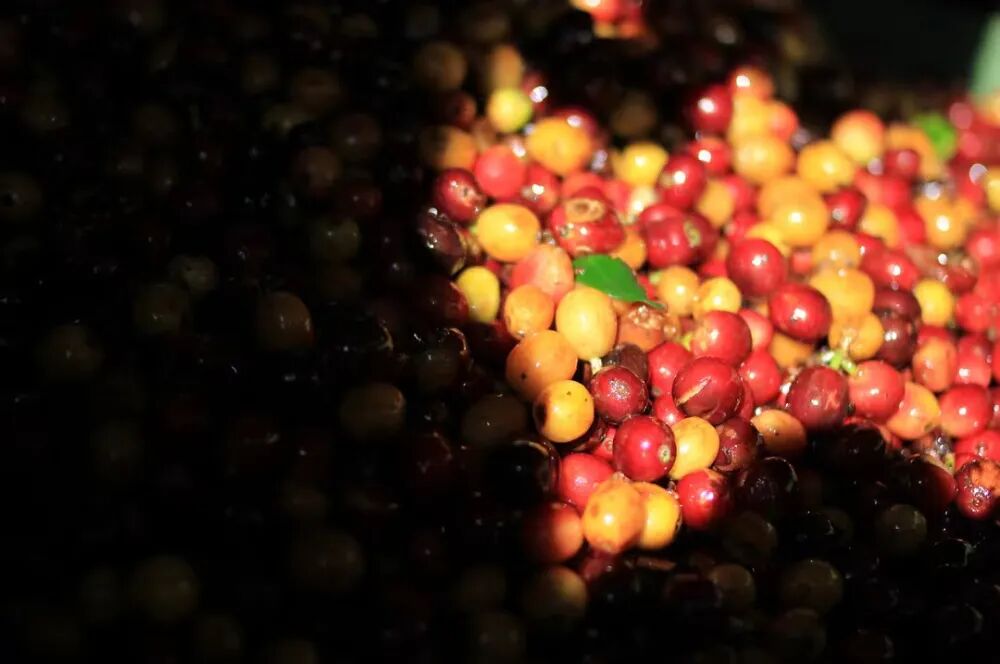
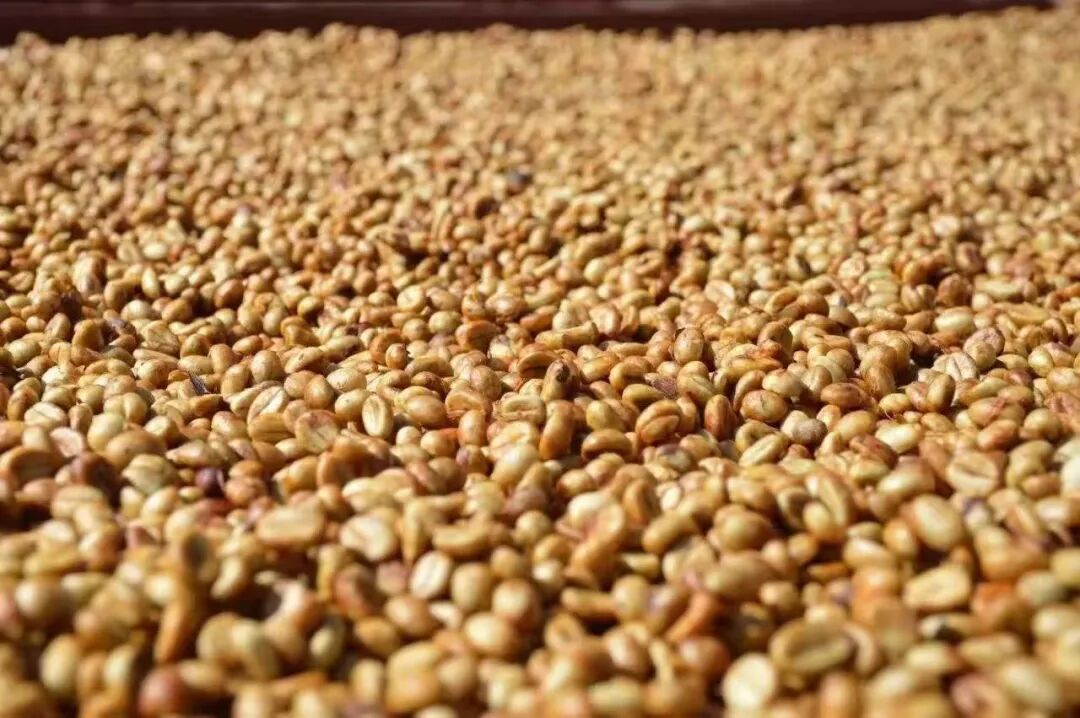
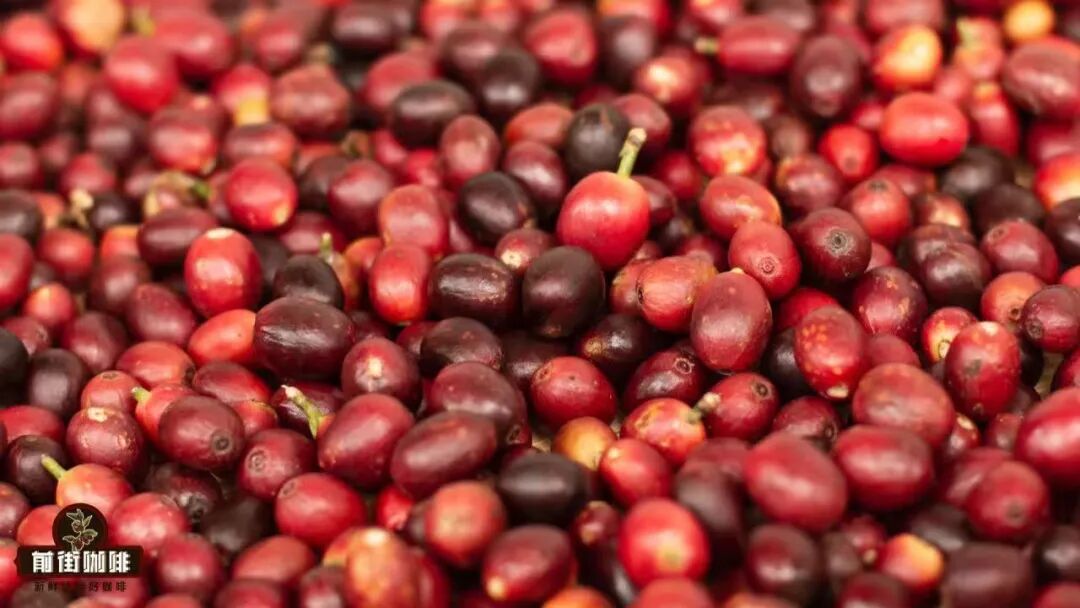
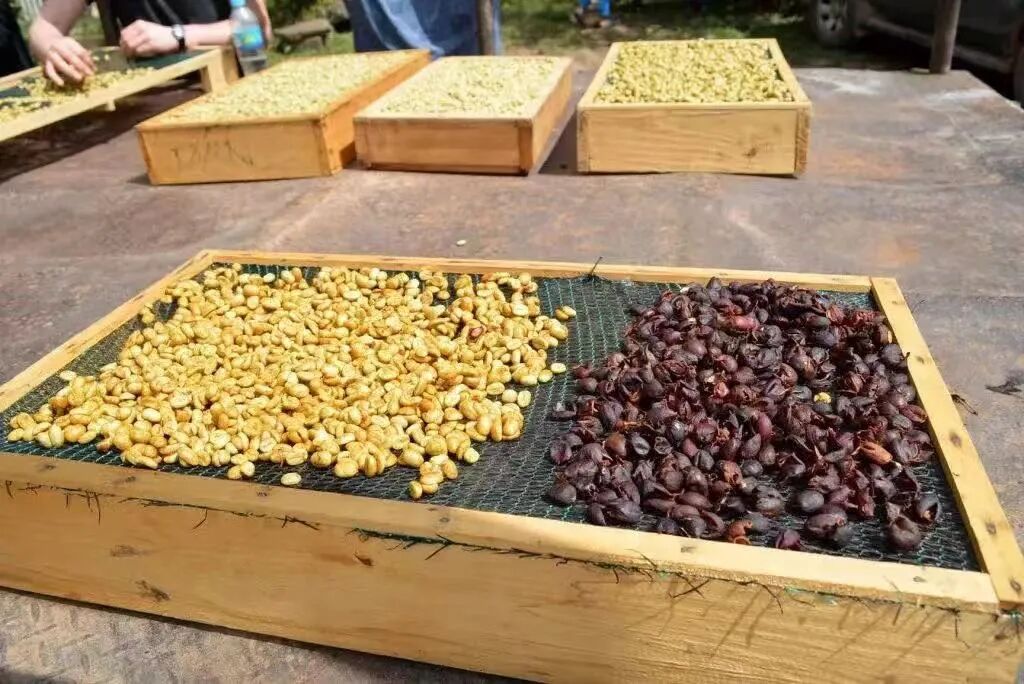
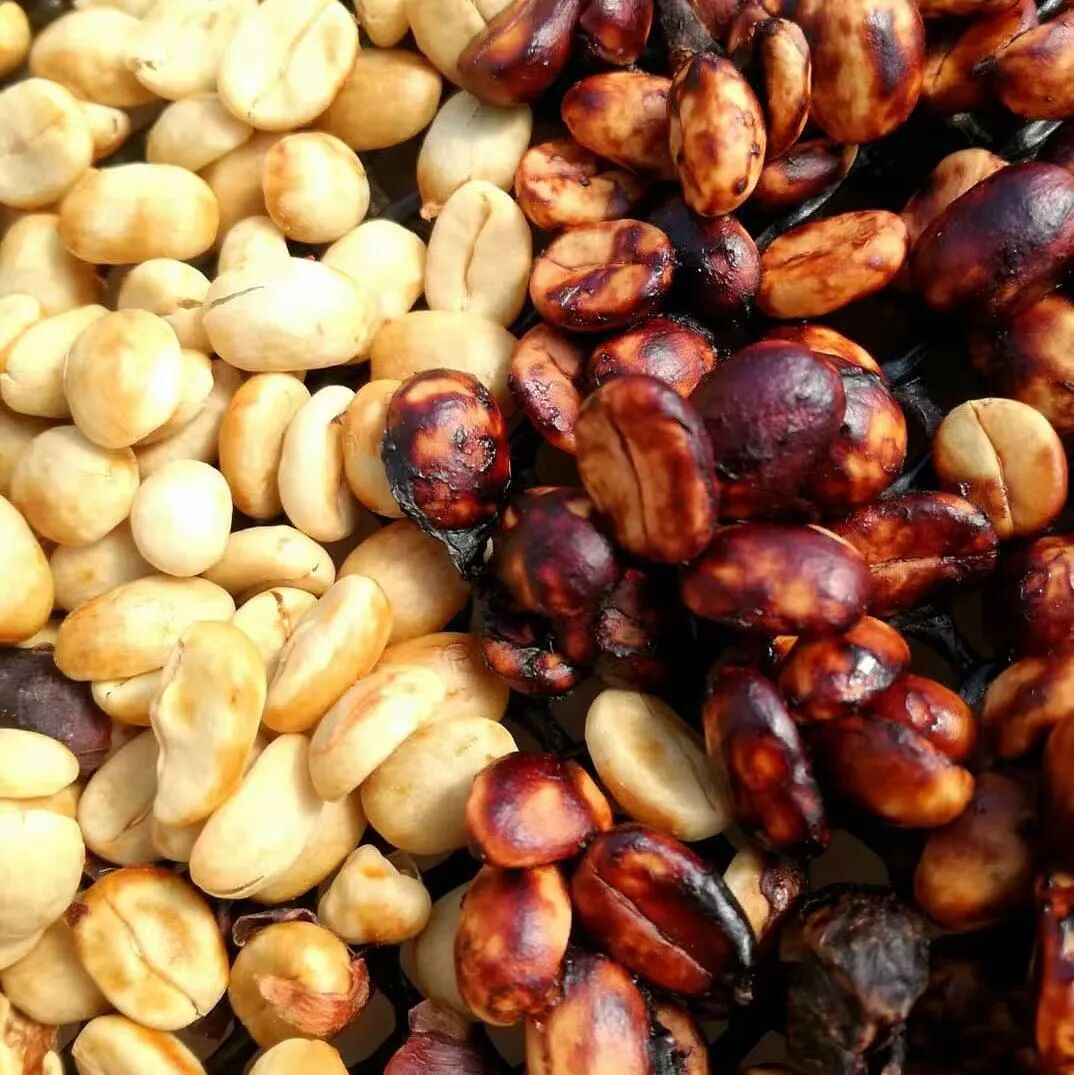
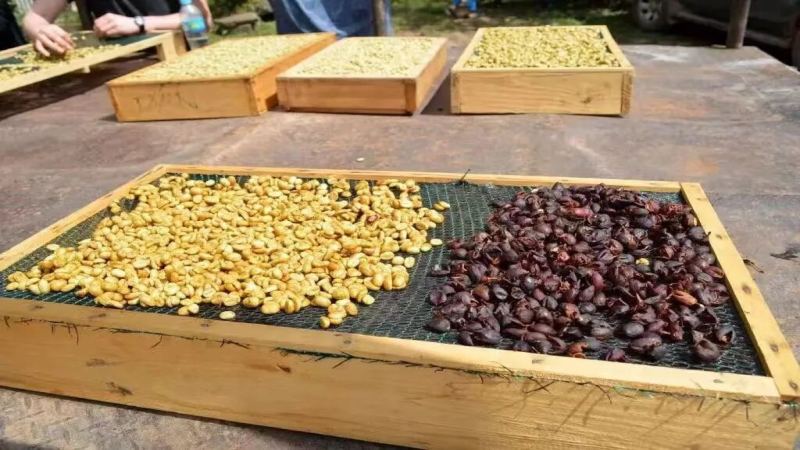
When it comes to which region produces the best honey-processed coffee beans, it is undoubtedly Costa Rica. As the birthplace of the honey processing method, Costa Rica has naturally perfected its honey processing techniques. In this article, Front Street Coffee will explain the flavor characteristics and story of Costa Rican honey-processed coffee beans, as well as the taste characteristics of Costa Rican honey-processed coffee when brewed. Origin of Costa Rican Coffee Honey Processing Method The honey processing method was developed by coffee farmers in Costa Rican coffee-producing regions. The background to its development is that most Costa Rican coffee-producing regions are located on steep mountains with inconvenient transportation. So when coffee cherries from their own farms were sent to the washed processing station at the foot of the mountain, many coffee cherries were found to have been damaged; this also reduced coffee bean production and therefore reduced income, so the honey processing method was developed as a result. Secondly, according to Front Street Coffee's understanding, another reason was that few green bean buyers went up into the Costa Rican mountains to purchase high-quality coffee cherries, so there was a lack of sales channels. These buyers purchased beans at extremely exploitative low prices, so coffee farmers in the mountains also distrusted these buyers. This led to the invention of the honey processing method, selling coffee beans in a self-produced and self-sold format to obtain more income to sustain their livelihoods.At present, because the honey processing method performs well in flavor, it is widely used in coffee-producing regions in Central America, and Costa Rica has also developed many special honey processing methods locally. For example, Front Street Coffee's Costa Rica Musician Series Bach coffee beans and Mozart coffee beans are made by raisin honey processing and anaerobic honey processing respectively. What Is the Honey Processing Method? The honey processing method is called Honey Process or Miel Process. Honey processing is a method in which, after the pulp is removed, coffee beans with mucilage and parchment still attached are dried.As mentioned above by Front Street Coffee, the main coffee bean processing methods are washed processing and natural processing. Natural processing, as the name suggests, is the method of naturally sun-drying coffee beans after harvest; washed processing is the method of removing the pulp and then soaking and washing away the surface gelatinous substance; honey processing is a compromise between these two methods. After hearing the name honey processing, many people think it is a process using honey, or that the processed coffee will carry a honey flavor, but this is not the case. During the drying process, the moisture in the gelatinous substance on the surface of the bean core evaporates, making it as sticky as honey, hence the name. Honey Processing Method Workflow 1. The first step of honey processing is the same as the first step of washed processing: first put all coffee cherries into water and remove floating beans and defective beans, keeping only good coffee cherries. 2. Then take the selected coffee cherries directly to raised beds to dry for at least three days, reducing the moisture content of the coffee cherries to 20%. 3. Then put the dried coffee cherries into a depulper to remove the skin and pulp, leaving the mucilage. This is also why honey-processed coffee beans are sweet, because mucilage is the part of the coffee cherry with the highest sugar content. 4. Then dry the coffee beans that still retain the mucilage until the coffee's moisture content drops to 11%, after which they can be stored in the warehouse.And according to Front Street's understanding, honey processing is also classified according to how much mucilage is retained. Generally, coffee beans with 40% of the mucilage removed are called Yellow Honey; honey-processed coffee beans with 25% of the mucilage removed are classified as Red Honey; and there is also a type of honey-processed green coffee bean that retains 100% of the mucilage, classified as Black Honey. Honey-processed green coffee beans also require great care during the drying process. Because honey-processed coffee beans retain mucilage, there will be a lot of sticky substance, and during drying they must be constantly turned to prevent mold and over-fermentation. Advantages and Disadvantages of the Honey Processing Method Advantages: Because the honey processing method is an improved version of the natural method, and because the pulp is removed at the very beginning, there is no problem with mold. It also does not require large amounts of clean water, so the cost is lower. Disadvantages: The processing steps can be said to be the most complex and labor-intensive of all traditional processing methods. Honey Processing Method Flavor As Front Street mentioned above, the honey processing method can increase coffee's sweetness, and its aroma will also be more delicate. Of course, this is when the honey processing method is executed well; if executed poorly, it will taste of unpleasant acetic acidity, and spicy aromas like onion or garlic. Even when executed quite well, it will still carry a bit of earthy taste, the finish will be less clean, and off-flavors will be heavier than with general washed methods. Therefore, overall, the risks of using the honey processing method are much higher than with general wet processing methods. Secondly, honey processing is also divided by color into three types: Yellow Honey, Red Honey, and Black Honey. So what are the differences between them? Front Street Coffee will now answer this for coffee-loving friends. What Are the Differences Between Yellow Honey, Red Honey, and Black Honey? Black Honey: Almost no mucilage is removed, so drying takes the longest, requiring more than 14 consecutive days. During the process, to prevent drying too quickly, covers are used to block overly strong sunlight so that the sugar conversion is more complete. Red Honey: 25% of the mucilage is removed (specific practices vary by estate), sun-drying lasts about 12 days, and shade nets may also be used during the process. The coffee is turned several times a day, though not as frequently as Yellow Honey. Yellow Honey: 40% of the mucilage is removed, receives the most sunlight for drying, lasts about 8 days, and the coffee is placed on raised beds and turned once per hour. Therefore, from Yellow Honey to Black Honey, the required drying time is longer and the management requirements are more demanding. If one must rank the three, Front Street Coffee believes that Black Honey tastes the best, because it has the greatest amount of parchment, giving it the richest and strongest mouthfeel. The reason Yellow Honey and Red Honey are produced is that coffee farmers also need to consider things from a commercial perspective. Taking cost and price into account, offering consumers multiple choices is also feasible. Why Are Honey-Processed Coffee Beans So Popular? As Front Street Coffee said above, honey-processed coffee beans show excellent sweetness in flavor performance, and this sweetness overturns coffee lovers' previous concept that coffee is bitter. Therefore, it is very popular among coffee lovers who are new to coffee beans. Secondly, many coffee bean processing methods inspired by the honey processing method have also been derived, and their flavor sweetness is even more outstanding.
 In addition, Front Street Coffee also mentioned above that there are three types of honey processing. Among them, Black Honey-processed coffee beans have the highest sweetness, while the corresponding processing conditions are also more demanding. This also means that the coffee beans can have a stable quality guarantee, so naturally there are coffee lovers willing to pay for deliciousness. This is also why honey-processed coffee beans are popular. Next, Front Street Coffee will share some of the more popular Costa Rican honey-processed coffee beans with everyone!Front Street Coffee: Costa Rica · Musician Series Mozart Coffee BeansProcessing Method: Raisin Honey ProcessingFlavor: Raisin acidity, berries, floral aroma, fermented wine aromaThis Mozart coffee bean gives off an elegant floral aroma, similar to the scent of lavender-like purple flowers, which Front Street can clearly sense when brewing. Mozart coffee has more dark berry and raisin flavors, and in the middle and later stages one can also sense some plum acidity and a gummy-bear-like sweetness; after it cools, it still retains floral and sweet notes. The flavor is very unique and the mouthfeel is excellent.Front Street Coffee: Costa Rica Musician Series Bach Coffee BeansProcessing Method: Raisin Honey ProcessingFlavor: Fermented wine aroma, berries, fruit tea noteThe dry aroma of this Bach coffee bean carries fruity aromas such as strawberry, blackberry, and raisin, and when brewing it also releases waves of fruity fragrance. When Front Street had just finished brewing it, obvious floral and fruity aromas wafted out, and after entering the mouth one could also sense rich fruity aroma and sweet-acid notes. In the middle and later stages there is a slight wine aroma, like red wine. After it cools, it carries a preserved-fruit sweetness, and the wine aroma becomes even more obvious, with one even being able to sense a plum wine flavor.
 The above two honey-processed coffee beans come from Canet Estate in the Tarrazú region of Costa Rica. The name comes from the fact that the estate owner loves music very much, so he used musicians' names for the coffee beans, and their flavors each have their own characteristics. Coffee lovers who are interested may also want to try these two honey-processed coffee beans. Next, Front Street Coffee will share the pour-over extraction parameters for these two coffee beans with everyone. Front Street Coffee Costa Rica Coffee Bean Brewing SuggestionsCoffee-to-water ratio: 1:15Grind size: Ek43 setting 10, fine granulated sugar grind, 75% pass-through rate on a No. 20 sieve, C40 24~26 clicksBrewing method: three-stage.First use 30ml of water to fully wet the coffee bed into a "hamburger" shape, let it bloom for 30s, then proceed to the second stage. For the second stage, Front Street used a steady medium-fine stream poured in circles, pouring water to 125ml at 55s on the timer, then stopping and waiting until the water level dropped to almost the bottom before pouring the third stage. For the third stage, Front Street used a small stream in small circles to pour the remaining 70ml, completing the brew at 1 minute 55 seconds. Bach coffee bean brewing flavor: At high temperature it is grape-like sweet acidity and a wine-like fermented feel; after slowly cooling, it becomes red-berry-like juiciness and rose floral aroma, with a caramel-like sweet finish. Mozart coffee bean brewing flavor: Berries, fermented aroma; on the palate there are raisin and sweet orange notes; as the temperature changes, fermented wine aroma and osmanthus aroma become more obvious. The above are the pour-over Costa Rican coffee bean brewing parameters shared by Front Street Coffee. We hope this can help coffee lovers so that in future pour-over brewing they can bring out the correct coffee flavors.
 The above content is compiled by CoffeeHunters, a coffee news website.