Origins & Estates · In-Depth Visits
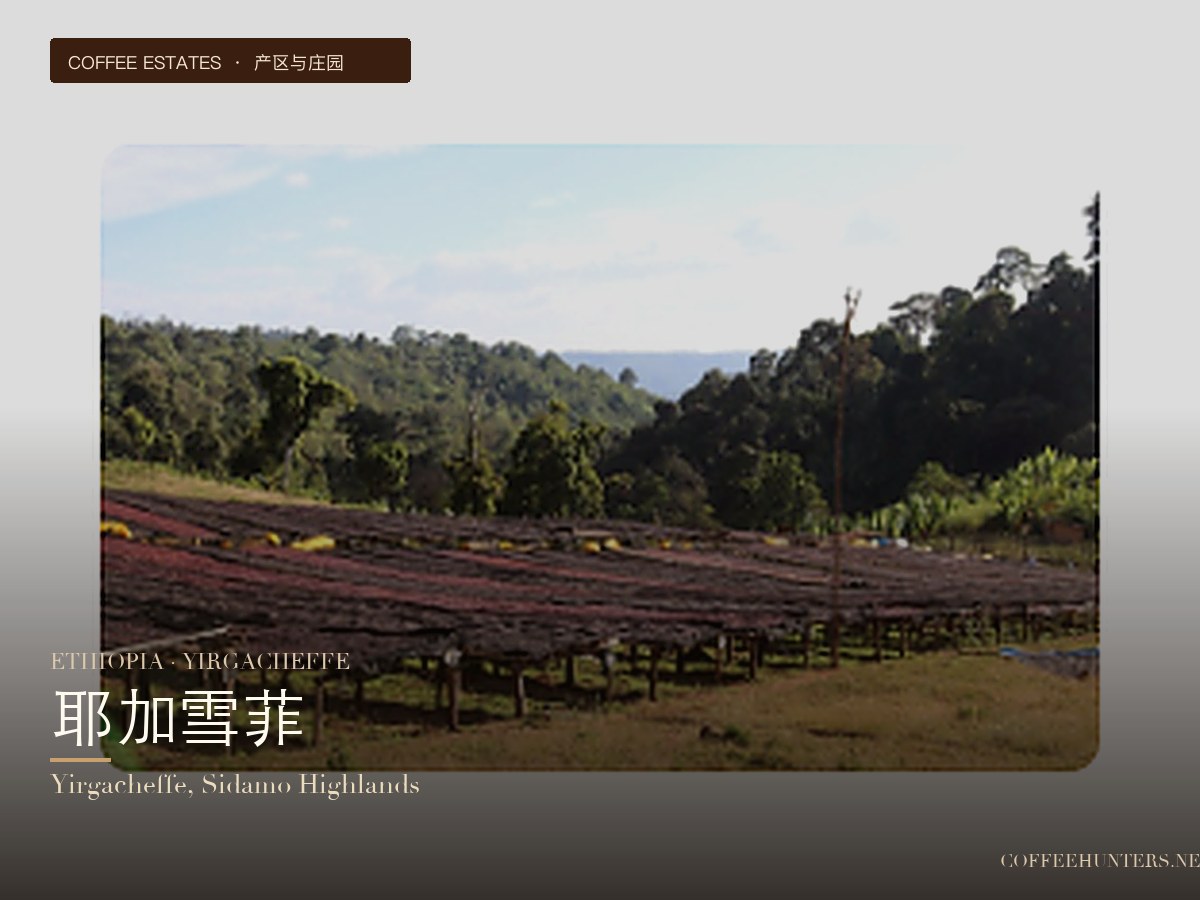
On the Sidamo highlands of Ethiopia's Gedeo Zone in the south, there is a mountain town at an elevation of about 2,000 meters called Yirgacheffe. In Amharic, Ethiopia's official language, the name translates literally to "let us settle here." Before the 1950s, this was just a quiet farming town on the highlands. In 1952, coffee traders began buying green coffee here, and as washed processing stations were built one after another in the 1970s, the name Yirgacheffe began to enter the consciousness of the European and American specialty coffee world. Today, Yirgacheffe is long established as one of the recognized benchmark origins in the global specialty coffee scene, and its name can be found in virtually every coffee shop.
II. Geography and Climate: Why High Altitude?
Yirgacheffe is located in Ethiopia's Southern Nations, Nationalities, and Peoples' Region (SNNP), on the western slopes of the East African Rift. The region's elevation generally ranges from 1,700 to 2,200 meters, making it one of the highest-altitude coffee-growing regions in the world among those with commercial cultivation. The area is mountainous and foggy, with an average annual temperature of 18–22°C and a diurnal temperature variation of more than 10°C. Rainfall is concentrated in two rainy seasons: April–May and September–November. This combination of "high altitude + large temperature swings + dual rainy seasons" allows coffee cherries to ripen slowly and accumulate sufficient sugars—the fundamental reason for Yirgacheffe's pronounced floral notes.
III. Varieties: The Diversity of Heirloom Landraces
Unlike Central American origins, which are dominated by single improved varieties, Ethiopia is a genetic treasure trove of Arabica coffee. The coffee of Yirgacheffe is almost entirely Heirloom landraces (known locally as "heirloom jungle"), including well-known numbered varieties such as 74110 and 74112, as well as ancient unnumbered variants. This varietal diversity means that even coffee from the same processing station but different plots will show subtle differences in the cup—this is precisely the charm of Ethiopian coffee.
IV. Processing Methods: The Two Main Lines of Natural and Washed
Yirgacheffe's processing methods fall into two main categories: traditional washed and natural. Representative washed Yirgacheffes such as Kochere, Aricha, and Idido feature a clean profile dominated by lemon, citrus, and jasmine florals; representative natural Yirgacheffes such as Huakui (natural lots from the Guji region were once also folded into the Yirgacheffe system) present richer fruit notes of strawberry, blueberry, and chocolate liqueur. The two processing methods complement each other, together shaping Yirgacheffe's rich and three-dimensional flavor spectrum.
V. In the Cup: The Concrete Expression of the Floral-Fruity Doctrine
When a high-quality Yirgacheffe hits the palate, the first impression is a clear jasmine and bergamot aroma, followed immediately by the bright acidity of lemon and lime, with a finish carrying honey sweetness and a black tea aftertaste. The acidity is bright but not as sharp as Kenya's; the sweetness is delicate but not as heavy as Brazil's. The whole cup is clean and transparent, like a cup of lemon flower tea with honey added. This is why many coffee lovers call Yirgacheffe the "doctrine of floral-fruity notes"—it defined the specialty coffee world's original imagination of the "floral-fruity" flavor profile.
VI. Representative Processing Stations and Estates
There are many well-known processing stations within the Yirgacheffe region. Coffee from the Kochere processing station in the Kochere area is known for its intense citrus notes; Idido and Anchasa produce washed lots with the most delicate florals. At the small-estate level, Aricha's natural lots once won consecutive Cup of Excellence championships for multiple years. What these processing stations share is strict selection of fresh cherries, fermentation times of 72 hours or more, and the traditional washed process of rinsing with well water.
VII. Brewing Recommendations
Yirgacheffe is best brewed with pour-over devices such as the V60 or Kalita Wave, which can highlight acidity and floral notes. Recommended parameters: water temperature 90–92°C, coffee-to-water ratio 1:15–1:17, medium-fine grind (granulated sugar particle size), total extraction time 2:30–3:00. Pour in three stages: bloom for 30 seconds first, then a steady second pour to half the total volume, and a final pour to finish. If you want to emphasize sweetness and body, try the Kalita Wave cake filter; if you want to experience the floral notes and acidity to the fullest, the V60 is the more direct choice.
Conclusion: Every Cupping Is a Dialogue with the Ethiopian Highlands
The reason Yirgacheffe holds such a position in the specialty coffee world is not only its unique flavor, but also that it represents the original core pursuit of the specialty coffee movement: respect for origin, respect for variety, respect for processing craft. When we lift a cup of Yirgacheffe, what flows in the cup is not just floral and fruity aromas, but a microcosm of Ethiopia's more than two thousand years of coffee-growing history, and the daily life of thousands of farming families on the Sidamo highlands picking cherries in the morning mist.
— CoffeeHunters Editorial Team
The above content is compiled by CoffeeHunters, a coffee news website.