







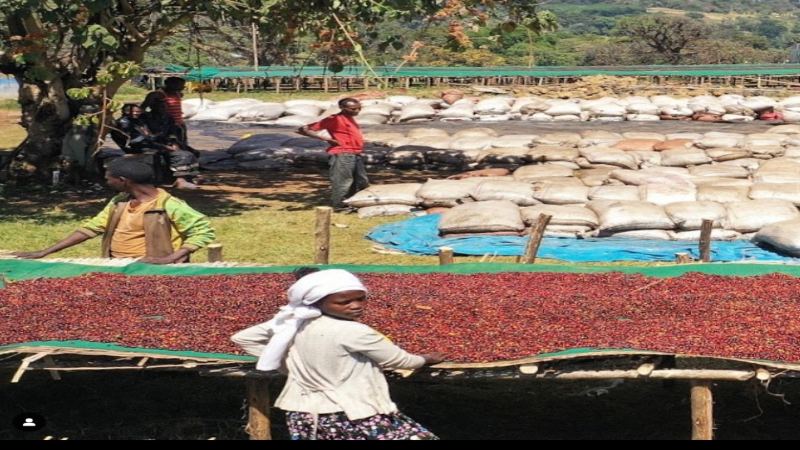
Colombia Huila Birch Estate Wush Wush Coffee: A Rare Variety's Journey
Wush Wush is an heirloom coffee variety from Ethiopia, discovered in the village of Wush Wush near the Kafa Biosphere Reserve. In the 1970s, the Jimma Agricultural Research Center selected disease-resistant varieties to combat coffee anthracnose. Wush Wush was among them, officially released in 2006. Today, it is grown in Colombia, including Finca Betulia in Huila, where Front Street Coffee recently acquired a natural-process lot. This article explores its flavor and brewing recommendations.
Wush Wush belongs to the same heirloom coffee family as Geisha, sharing Ethiopia's genetic diversity. Its journey from Africa to South America reflects the global coffee industry's search for unique flavors. The variety's name comes from its origin village, known for fertile highlands. Despite its rarity, Wush Wush attracts coffee enthusiasts with its distinctive profile. Front Street Coffee's natural-process lot from Finca Betulia showcases how this Ethiopian variety adapts to Colombian terroir, offering a complex cup.
In Ethiopia, besides the widely known native heirloom varieties, recent years have seen the emergence of varieties like the 74 series, Wush Wush, and Dega. Among them, Wush Wush, with its adorable name and unique flavor, though not common, always manages to catch the eye of coffee enthusiasts. Today, Front Street Coffee will take you on a deep dive into this variety: it originates from Wush Wush village in Gimbo town, Ethiopia, and belongs to the heirloom coffee family along with Geisha. In the 1970s, to combat anthracnose, the Jimma Agricultural Research Center selected and bred disease-resistant varieties, and Wush Wush was officially released in 2006. However, most Wush Wush on the market today comes from Colombia—what's the story behind this? Front Street recently acquired a natural-process Wush Wush from Finca Betulia in the Huila region of Colombia, and this article will reveal its flavor and brewing recommendations.
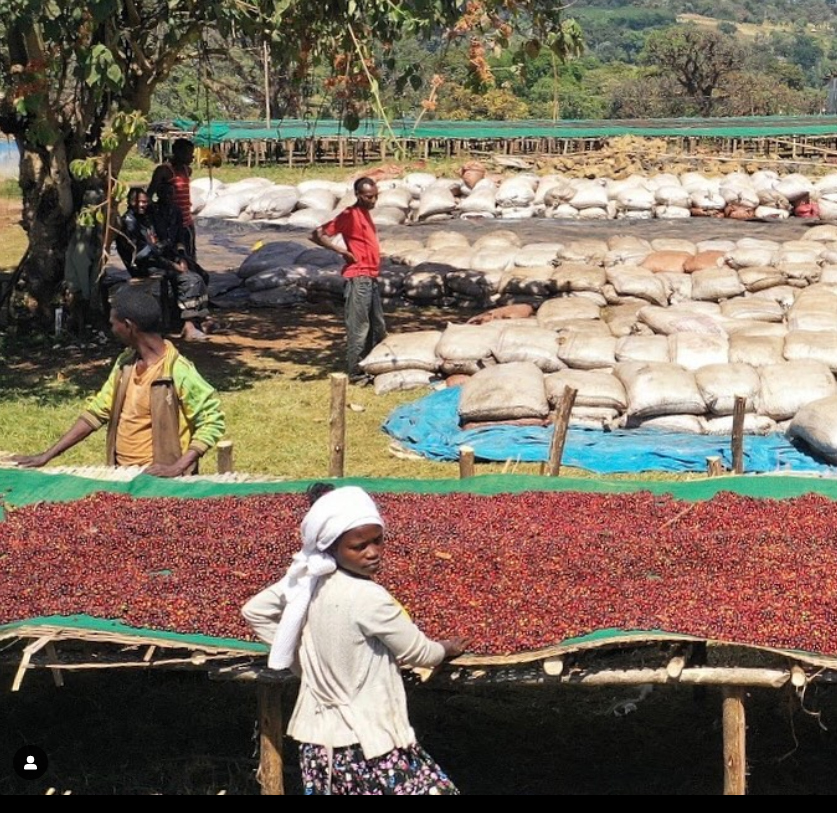
In Ethiopia, in recent years, besides native heirloom varieties, other varieties have become increasingly common, such as the 74 series, Wush Wush, and Dega. Among them, Wush Wush stands out as particularly appealing in both appearance and pronunciation. Although it is not commonly seen on the market, whenever it appears on a bean list, it seems to always attract the attention of many coffee lovers. That being said, today Front Street will give you a detailed introduction to this variety.
Like the renowned Geisha, Wush Wush is also an heirloom coffee originating from Ethiopia. It was discovered in a small village called Wush Wush, about a few kilometers from the Kafa Biosphere Reserve, located within Gimbo town. Wush Wush village is known for its fertile highlands, which not only preserve the variety that has become popular in the coffee world today but also produce a同名 premium tea that is widely celebrated.
In 1970, a severe coffee anthracnose epidemic swept across Ethiopia; this disease had once caused Kenya's coffee industry to reduce production by over 70%. To combat anthracnose, Ethiopia's renowned Jimma Agricultural Research Center (JARC) sought to select and breed varieties from wild coffee trees that could naturally resist anthracnose.
To this end, JARC explored areas of western Ethiopia covered by primary forests, including Bishari, Gera, Wasi, and Wush Wush. Since this is the center of origin for Arabica, with high genetic complexity, researchers selected hundreds of coffee plants and brought them back to the laboratory.
After years of research and cultivation, in 1978, JARC selected a total of 13 anthracnose-resistant varieties and began promoting their cultivation throughout Ethiopia. Based on the year of selection, these varieties were given corresponding "74***" or "75***" numbers. At this point, friends who enjoy Ethiopian coffee should have realized that these are the origins of the now-famous 74110 and 74158.
Around 2002, JARC again focused on 25 anthracnose-resistant coffee varieties selected from Wush Wush village, continuing to cultivate and purify them, and found that they were not only disease-resistant but also had excellent flavor. In 2006, JARC officially released the purified Wush Wush variety, which requires planting at high altitudes of 1700–2100 meters, thus giving rise to the currently sought-after coffee.
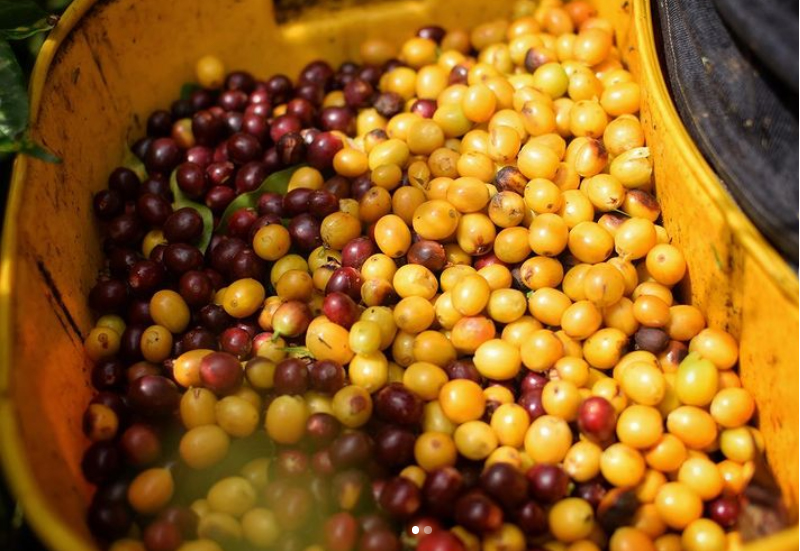
However, Front Street has found that compared to Ethiopia, most Wush Wush sold on the market comes from a country on another continent—Colombia. In terms of production, Colombia's Wush Wush has long surpassed Ethiopia's, becoming the variety's second home. So why did a variety originating from a small Ethiopian town end up in Colombia?
In the late 1970s, Colombia's National Coffee Research Center, Cenicafé, brought Wush Wush coffee seedlings back from Ethiopia for cultivation and research. After selection and cultivation by researchers, the seedlings were distributed to representative estates in various regions of Colombia around 1980–1990 for the first trial plantings. Thus, Wush Wush not only settled in Colombia but, through differences in terroir, climate, soil, and cultivation methods across farms, gradually developed stronger adaptability.
Today, this variety is found throughout Colombia's Santander, Tolima, Huila, and other provinces, and different flavors and mouthfeels have emerged due to each location's terroir, climate, and cultivation management. To taste this "niche" coffee variety, Front Street recently acquired a Colombian Wush Wush from the historic Finca Betulia in the Huila region, processed using the natural method.
Front Street Coffee: Colombia · Finca Betulia Wush Wush
Region: Colombia, Huila
Farm: Finca Betulia
Altitude: 1450–1550 meters
Variety: Wush Wush
Processing: Natural
Flavor: Smoked plum, black plum, lemon, dried blueberry
Finca Betulia is located in Acevedo, Huila. Luis Anibal Calderón is a second-generation coffee farmer who began working in the coffee fields with his father from the age of 12. At 15, his father gave him a small plot of land, and from then on, Luis was able to earn income from it each year, which cultivated his interest in coffee farming. In 2005, Luis finally saved enough to buy a 20-hectare plot of land and established Finca Betulia.
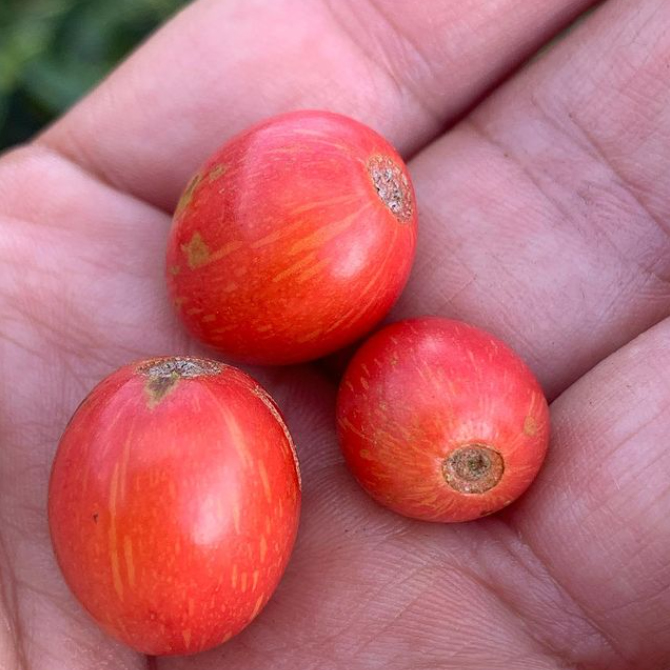
In 2012, to escape financial difficulties, Luis began experimenting with growing the Geisha variety, cultivating about 5,000 seedlings, which accounted for 5% of all coffee trees at the time. By 2015, these Geisha plants flowered and fruited as expected, bringing Luis a good financial return, which convinced him that growing rare, superior varieties was the only good way forward. So he introduced many rare varieties available on the market, such as Pink Bourbon, Striped Bourbon, Sidra, Java, Papayo, and the Wush Wush that Front Street is introducing today.
For Finca Betulia's natural Wush Wush, Front Street observed that the green beans of this variety are generally small and round. To highlight its fruity acidity, Front Street uses a medium-light roast and tastes it in a cupping format.
In the dry aroma, this Wush Wush has a rich berry fragrance after grinding, with a slight raisin note, reminiscent of preserved plum. As hot water is poured, the coffee begins to emit a brown sugar sweetness. When slurping, the coffee enters with a mellow acidity; the flavor is dominated by dark berries, plum, and grape, along with a smoked plum-like aroma and a hint of spice in the finish, with a round and solid mouthfeel.
Front Street Coffee Barista Brewing Recommendations
Considering that the Wush Wush Front Street acquired this time has rich fruity acidity, to present a full flavor layering in the coffee, Front Street will use a V60 dripper. The V60 dripper's body has spiral ribs connecting the top and bottom and a large central hole that speeds up water flow, while the spiral-shaped vent design lengthens the water path, increasing the contact time between coffee grounds and hot water. Each stream of water converges along the grooves toward the center of the dripper, concentrating the pressure on the coffee grounds, resulting in a more layered extraction.
Finca Betulia Wush Wush brewing parameters are:
Dripper: V60
Water temperature: 91–92°C
Coffee dose: 15g
Coffee-to-water ratio: 1:15
Grind size: fine granulated sugar (78–80% passing through a No. 20 standard sieve)
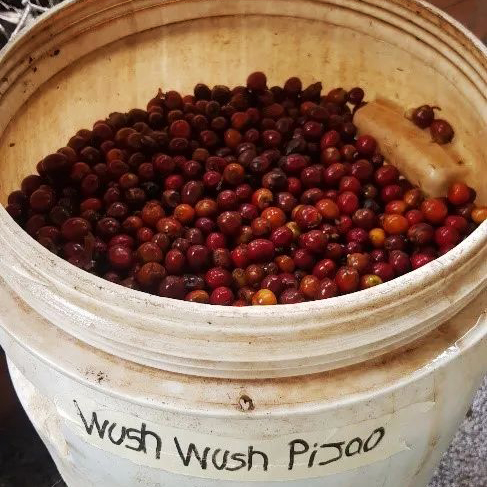
Three-pour extraction: First, pour 15g of coffee grounds into the dripper and tare the scale. For the first pour, add 30g of water for a 30-second bloom, starting the timer at the same time. Use a slow, small stream from the center outward in a circular motion, making sure to wet the entire coffee bed.
For the second pour, use a slightly larger stream to add 120g of water, aiming to raise the entire coffee bed. The stream should be poured vertically and evenly. At this point, the scale should read 150g, and the pour should be completed in about 55 seconds.
When the liquid level drops to about halfway, begin the third pour with a slow, small stream in a small circular motion to add 90g. Try to control the stream from becoming too large, as it can disturb the coffee bed and cause under-extraction. The total water added is 240g, and the drip should finish in about 2 minutes 10 seconds. Remove the dripper, swirl the coffee in the server to mix evenly, and it's ready to taste.
The above content is compiled by CoffeeHunters, a coffee news website.


