







How Does Mesh Size Affect Coffee Particles in Brewing?
A 400-mesh metal pour-over filter has a nominal pore size of about 38 microns, fine enough that few coffee particles pass through the mesh. That is much finer than older metal filters but still coarser than paper, so some fine particles and most coffee lipids reach the cup, which changes both mouthfeel and clarity.
In coffee brewing, the trade-off is straightforward. Retained lipids carry oil-soluble aromas and add body, while a faster flow rate compared with paper filters calls for a slower, more controlled pour. The double-layer design, a 400-mesh inner screen with a support layer outside, holds its shape and can be rinsed and reused, recouping its cost in roughly three months of daily use.
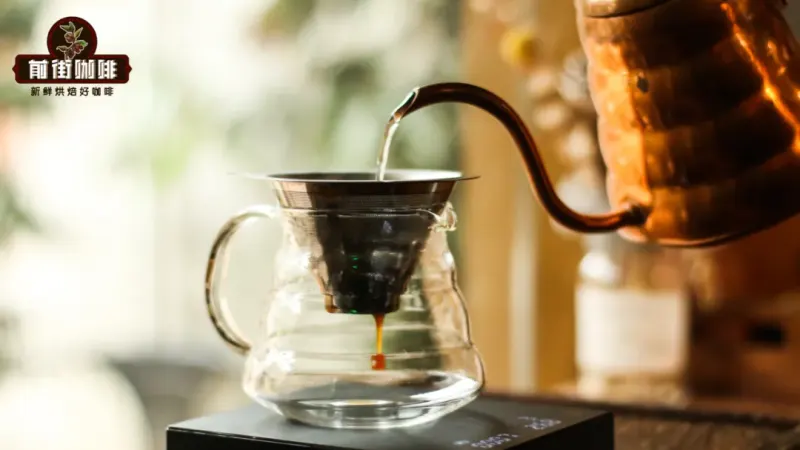
In coffee brewing, the choice of filter directly affects the flavor profile. Metal filters, with their unique pore size, retain coffee lipids and aromas while offering eco-friendly and cost-saving benefits, but the issue of fine particles passing through cannot be ignored. In this article, Front Street will focus on a 400-mesh metal filter (corresponding to 38 microns), analyzing its pros and cons and demonstrating actual brewing to explain how to maximize its strengths and minimize its weaknesses. Compared to paper filters, metal filters have a faster flow rate, requiring adjustments in pouring technique; when brewing Yirgacheffe Gidingding, the lipids bring a richer mouthfeel and longer aftertaste. If you also want to try brewing with a metal filter, why not follow Front Street's steps and explore it for yourself.
Filter tools made of various materials each have their own characteristics. To brew a good cup of coffee with them, you first need to understand these tools' features. There has been much discussion about flannel cloth, so today Front Street will focus on metal filters and talk about how to make a satisfying cup of coffee with them.
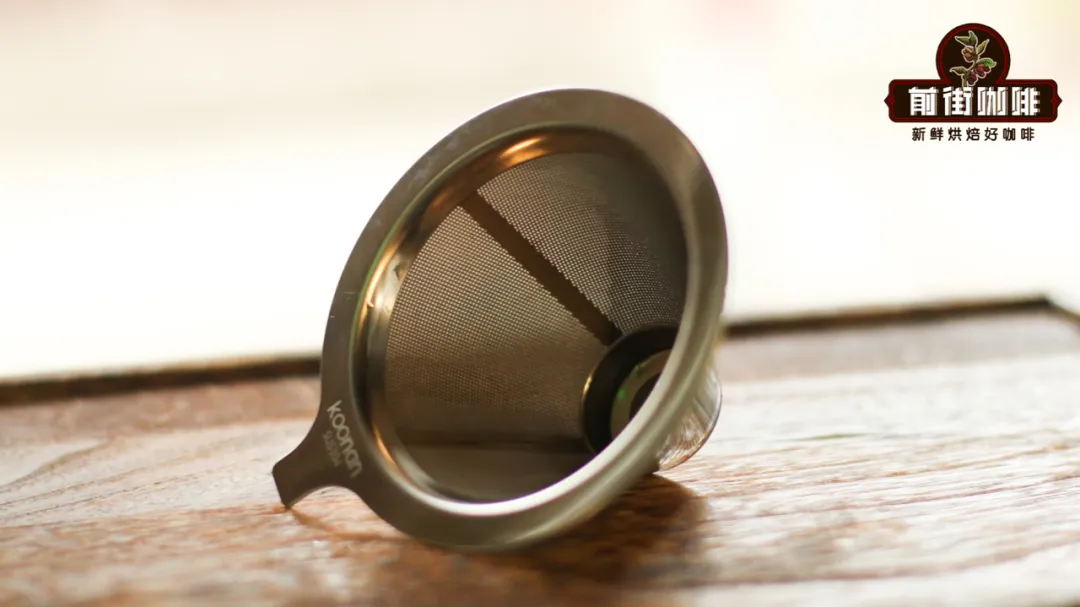
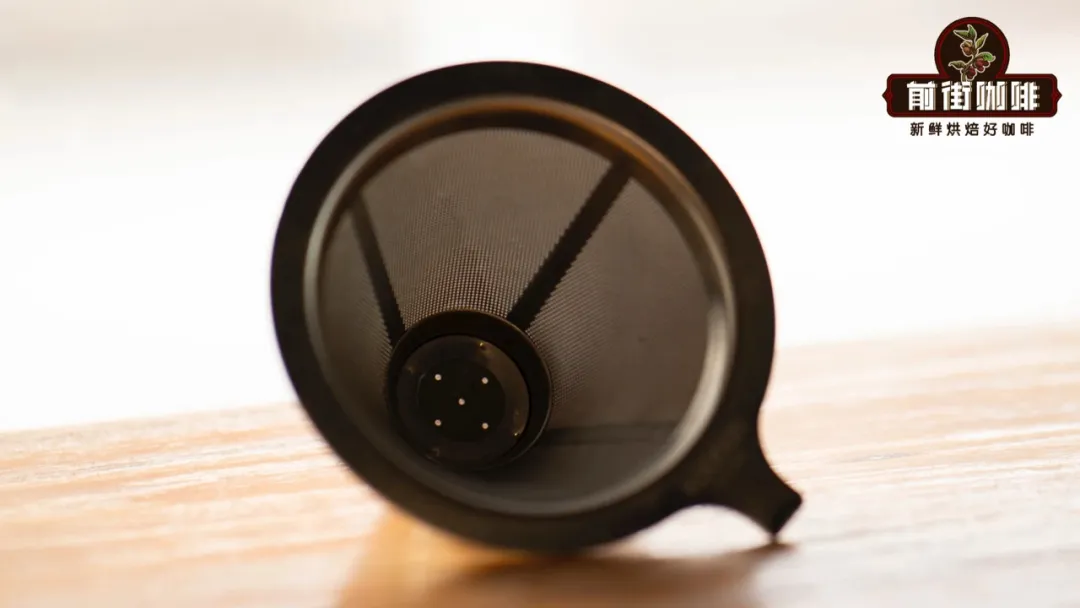
Pros and Cons of Metal Filters The metal filter Front Street has on hand was casually purchased online, with a nominal pore size of 400 mesh, and its shape is a flat-bottomed inverted cone. It uses a double-layer structure—the inner layer is a 400-mesh filtering metal mesh, and the outer layer is only for support and shaping.
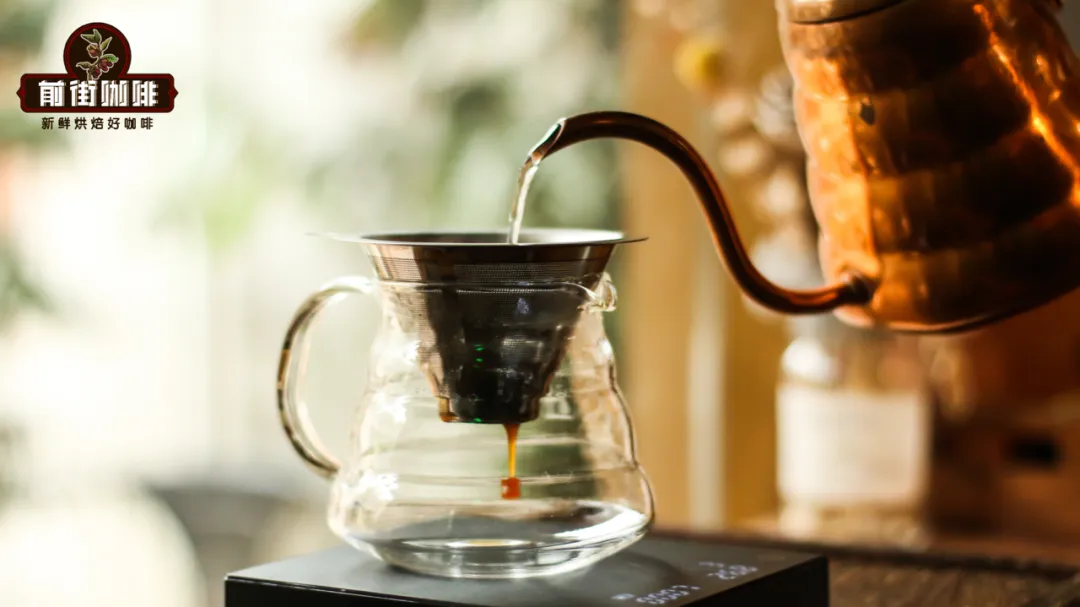
400 mesh translates to a particle size of about 38 microns, which is quite fine, so even after pouring in coffee grounds and gently shaking, very little powder leaks through the mesh. However, compared to the pore size of paper filters, it is still larger, which leads to a major advantage of metal filters: like flannel, they retain the coffee's lipids, which is a significant plus for coffee quality.
The lipids in coffee carry oil-soluble aromatic components, and these substances add aromatic layers to the coffee. At the same time, lipids can enhance the mouthfeel, elevating the coffee's body. This is precisely what paper filters cannot achieve, because their filtration is too strong and traps the oils as well.
Metal filters have another benefit: they are eco-friendly and economical. They can be reused, just like flannel cloth—after use, rinse clean, dry, and they are ready to go again. Counting one cup per day, you can recoup the cost of buying the filter in about three months, offering excellent value for money.
Now that the advantages are covered, let's look at the disadvantages. The shortcomings of metal filters share the same source as their strengths—the mesh holes. Although they allow lipids through, enhancing aroma and mouthfeel, they also let fine coffee particles pass. Particles smaller than 38 microns are everywhere, and they can easily slip through the mesh, affecting the coffee's texture and flavor.
If the grinder you have produces average grind quality and you plan to use a metal filter for brewing, it's best to sift out some fine particles with a sieve before brewing. Otherwise, the negative effects of excessive fines should not be underestimated.
That's roughly it. Next, Front Street will actually brew a cup using a metal filter and mention the details to note during the process.
Brewing Sharing Before starting, Front Street reminds you of one thing: the flow rate of a metal filter increases as the water level rises. In other words, the higher the water level, the faster the water flows down.
Front Street's tests found that at high water levels, the metal filter's flow rate is much faster than a V60. Too fast a flow shortens the contact time between water and coffee grounds, easily leading to under-extraction. So during brewing, control the pouring rate and don't let the coffee bed and water level rise too high; otherwise, the rapid flow will result in a thin and bland taste.
This time, Front Street chose a washed Yirgacheffe bean—Gidingding—with extraction parameters consistent with using a paper filter: Dose: 15g Grind size: Ek43 setting 10, 80% passing a No. 20 sieve, about the consistency of fine granulated sugar Coffee-to-water ratio: 1:15 (15g coffee to 225ml hot water) Water temperature: 92°C Pouring method: three-stage
The first step, as usual, is blooming, using twice the coffee's weight in water, blooming for 30 seconds.
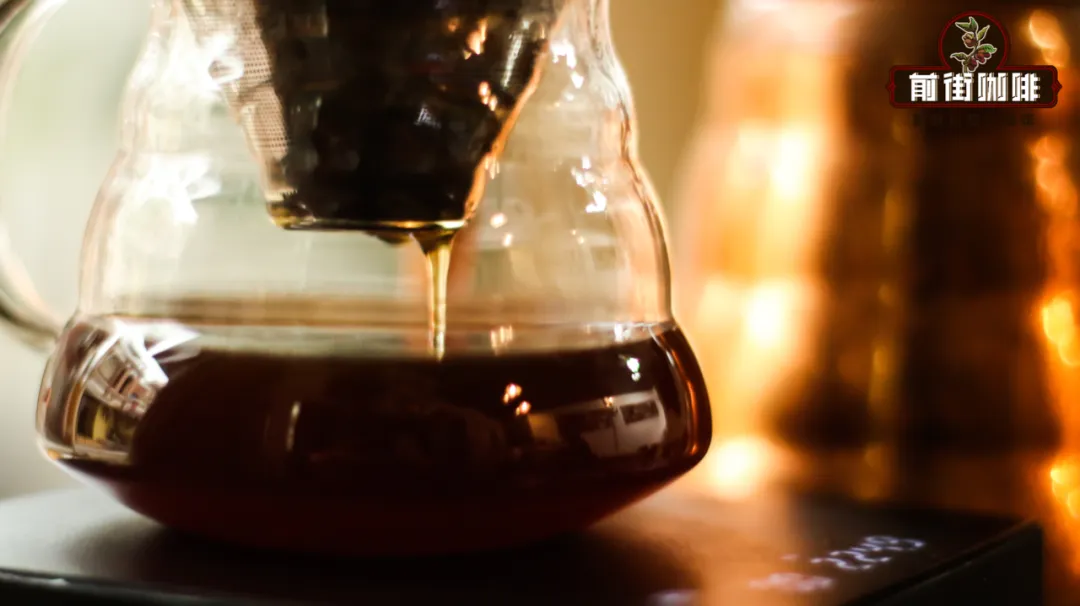
After blooming, pour the second stage of hot water (in a wide circular motion), totaling 120ml. To prevent the water level from rising too high, use a small stream at this point. When circling, be careful not to let the stream hit the edge of the filter, or it will cause bypass water.
Once the coffee liquid has fully drained, continue with a small stream to pour the third stage of hot water, totaling 75ml. The extraction focus of this stage is on the bottom layer of coffee grounds, so reduce the circling amplitude and concentrate on extracting the bottom grounds in the center area.
After all the coffee liquid has drained, remove the dripper, and extraction is complete. Total time was 2 minutes 5 seconds, about 10 seconds faster than brewing Gidingding with a paper filter. The flavor performance was excellent: delicate white floral notes, a fresh lemon sensation, and a clean green tea finish in the aftertaste—very authentic Yirgacheffe flavors. In terms of mouthfeel, due to the presence of lipids, this cup of Gidingding has a more prominent body and a longer aftertaste, which is quite good.
- END -
The above content is compiled by CoffeeHunters, a coffee news website.


