







How Long Does Roasting Green Coffee Beans in a Pan Take?
Roasting green coffee beans in a frying pan on a stovetop takes roughly the time needed to reach first crack, and Front Street Coffee ran three home experiments to hear that sound firsthand. The batches used natural Santa Vini and washed Kafa Forest at different heat levels, with the lowest setting tried first. Time points were recorded for color change, silver skin shedding, and the first cracking sounds.
Because no professional coffee roaster or measuring tools were used, heat adjustment and the moment to pull the beans relied on sight and sound. The results ranged from underdeveloped to possibly burnt, which is expected in a simplified setup. Cupping afterward showed how the flavors differed, giving home roasters a practical sense of timing and heat control when working without a roaster.
How long does it actually take for green coffee beans to go from the pan to being roasted? In order to hear the sound of "first crack" with his own ears, Front Street deliberately used a frying pan and an open flame on a stovetop to conduct three home-roasting experiments, separately testing the performance of natural Santa Vini and washed Kafa Forest under different heat levels. The article records the time points for each batch of beans' color change, silver skin shedding, and the appearance of cracking sounds, as well as the final cupping flavor differences, while also sharing practical experience on how to judge heat and the timing for taking the beans out when there is no professional coffee roaster.
While browsing books related to coffee roasting, Front Street once came across an interesting description: "The roasting process can sometimes seem dull and lengthy, but the moment first crack sounds always lifts one's spirits."
For many coffee enthusiasts, the term "first crack" may look familiar yet be hard to explain clearly. It actually marks the point when coffee beans begin to truly "mature." It often appears in Front Street's daily articles, helping us understand the state of beans at different roasting stages and the origins of various flavor formations. So what kind of sound is first crack exactly?
In order to verify the sound of first crack with his own ears, Front Street prepared plenty of green coffee beans, dug out a frying pan at home, and, using the open flame of the stovetop, planned to "roast" coffee like stir-frying vegetables. At the same time, he would also complete a small experiment titled "How to roast coffee at home without a roaster?" killing two birds with one stone.
(Note in advance: this is a simplified home operation, with neither precise data records nor professional measuring tools, and the entire process relies on actual conditions to judge heat adjustment and ending timing. So the final product may be underdeveloped, may be burnt, or may be half-cooked. Let's wait and see how the results turn out.)
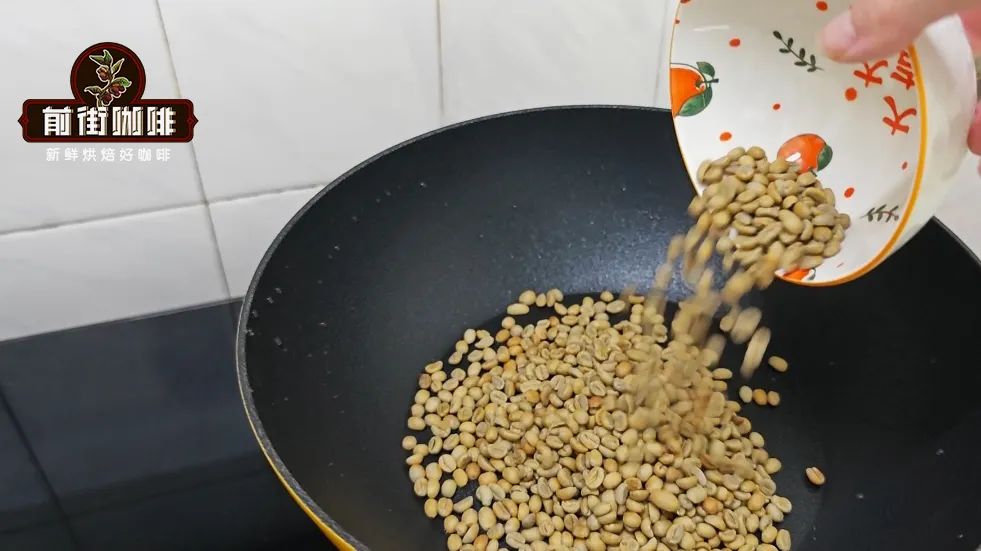
For the first batch, Front Street chose a naturally processed Ethiopian Santa Vini. As a first attempt, to be safe, Front Street turned the heat to the lowest setting, then poured in half a bowl of green beans and started timing. While watching the beans' color changes, he kept tossing the pan and stirring to try to let every bean heat evenly.
At about 5 to 6 minutes, some beans began to turn slightly yellow; by around the 7th minute, more than half of the beans had clearly changed color, and the silver skin gradually fell off. After blowing away the silver skin, he continued stirring.
However, the heat was really too low, and the beans absorbed heat too slowly, so the sound of first crack was slow to appear. Front Street had no choice but to temporarily turn the heat up a bit and continue stir-frying. At about 20 minutes, only a few beans began to turn brown, and it was not until the 22nd minute that the first coffee bean finally gave a "pop" cracking sound. Immediately afterward, smoke began rising from the frying pan, and "pop, pop, pop" sounds followed continuously.
Because this bean was an Ethiopian heirloom variety with uneven bean sizes, if it was not stirred promptly enough, it was very easy for heating to be uneven. By the 24th minute, Front Street found that about half of the beans had already passed first crack, with their color continuing to deepen from brown, while the other half were still at yellow-brown and had not yet entered first crack. To avoid burning, he finally decided to take them out at the 26th minute. After turning off the heat, he quickly poured the beans into a stainless steel container to cool, preventing residual heat from continuing to cook them.
For the second batch, Front Street switched to washed Kafa Forest, with the goal of a medium roast. These beans were relatively uniform in size and easier to control during heating.
Learning from the previous batch's lesson, this time he first heated the frying pan over medium heat, and when his hand placed above the pan could feel the heat, he immediately poured in the green beans, then lowered the heat to low. (You can also drop a small drop of water into the pan; if it quickly boils and evaporates, that means the pan temperature is ready.)
Keeping it on low heat and stirring continuously, the beans began to turn yellow at about 4 to 5 minutes. At 10 minutes, some individual beans turned light brown and gave off the aroma of popcorn. At 12 minutes, first crack appeared, and Front Street immediately turned the stove to very low heat. As the cracking sounds became denser, the smoke gradually increased. At about 14 to 15 minutes, the beans in the pan no longer made sound and their color had completely turned dark brown. At 16 minutes, roasting ended.
Since we were already at it, after hearing first crack, naturally we also had to hear the sound of second crack. So when roasting the third batch, Front Street set the goal at a medium-dark roast, and still chose natural Santa Vini for the beans.
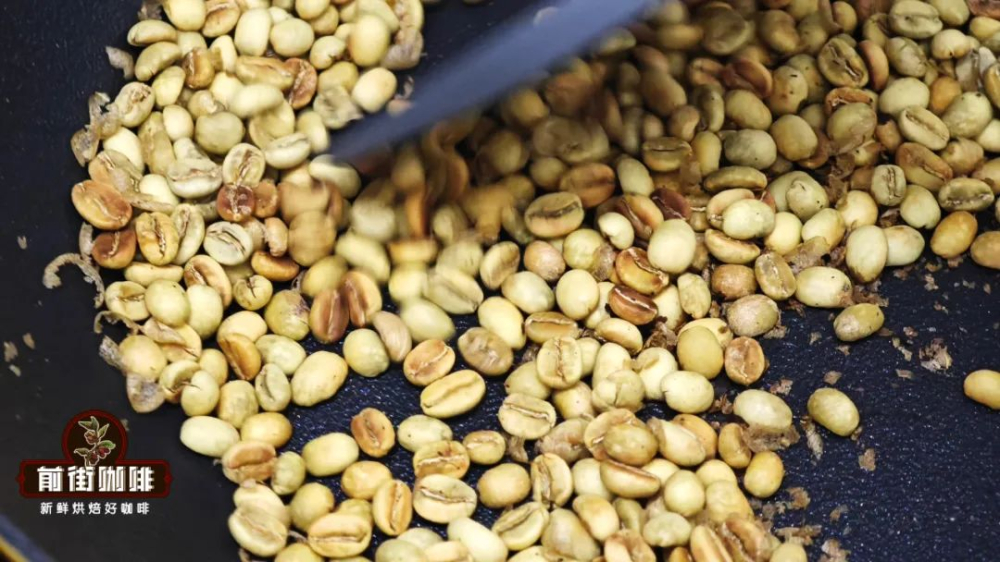
With the experience from the second batch, this time he still first heated over medium heat, and after pouring in the green beans, steadily stir-fried over low heat. At about 4 to 5 minutes, they began to turn yellow; at around 8 minutes, the beans turned yellow-brown, a large amount of silver skin fell off, and a faint nutty aroma wafted from the pan. By the 9th minute, the smaller beans were the first to enter first crack, while also producing smoke.
The heat was adjusted again to very low, and stir-frying continued. When the time reached about 13 to 14 minutes, most of the beans had finished first crack. After 1 to 2 minutes of quiet, a faint cracking sound could be heard, indicating that the beans were beginning to enter the medium-dark roasting stage. After about 10 more seconds of stir-frying, they were taken out to cool.
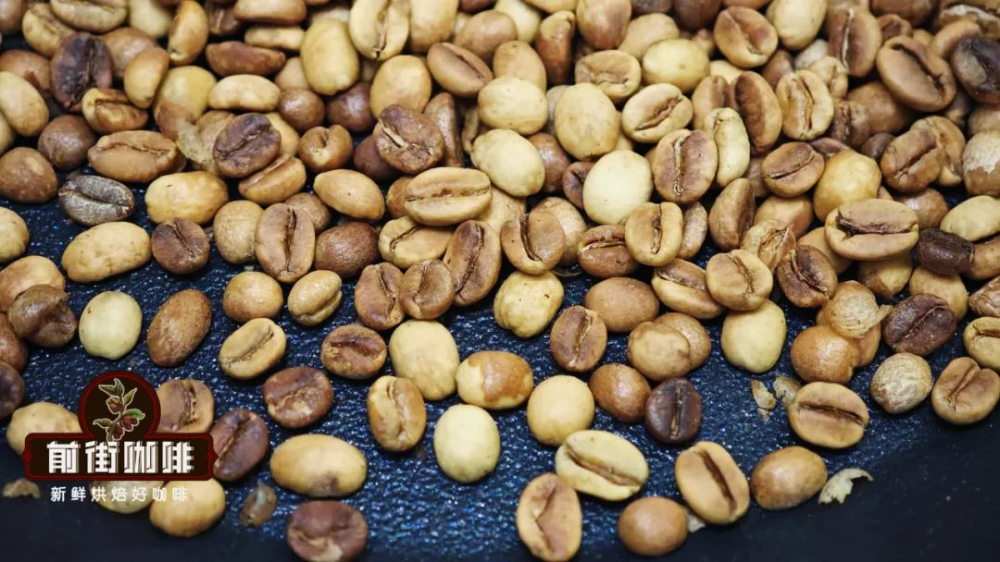
Comparing the three batches, it can be seen that: the first batch was in a half-cooked state, with many beans still yellowish and clearly underdeveloped; the second batch had a relatively uniform color value, close to a medium roast; the third batch was overall medium-dark, with some individual beans showing local scorching and charring marks that needed to be manually picked out.
(Underdeveloped and scorched/charred)
After a few days of resting period, Front Street picked out the obviously underdeveloped and burnt beans, and brewed one pot from each of the three batches to try.
The first pot was the half-cooked Santa Vini: the ground coffee powder had the aroma of popcorn and roasted peanuts, the brewed coffee liquid was lighter in color, and on the palate there was only a little berry acidity and black tea sensation, with almost no noticeable "coffee taste," obviously because too many beans were underdeveloped, leading to insufficient extraction.
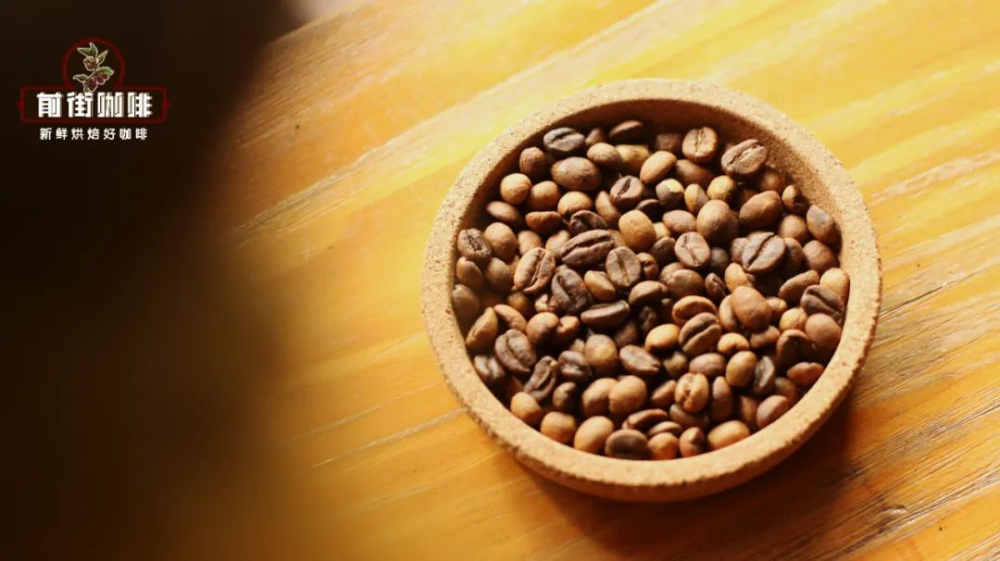
The second pot was the "medium roast" Kafa Forest: after grinding, it smelled of sweet toasted bread and roasted nuts. On the palate, the coffee liquid first showed the sweet fragrance of chocolate, cane sugar, and hazelnut, with a slight tipsy feeling. As the temperature dropped a little, citrus-like fruit acidity could be felt. Overall it was relatively soft, with weak flavor intensity.
The third pot was the "medium-dark roast" Santa Vini: after grinding, the aroma of lemon and cream cookies could be smelled. The coffee liquid was the darkest in color, and drinking it revealed flavors such as dried fruit, roasted hazelnut, and caramel. The aroma was sweet and mellow without being bitter, and the acidity was not obvious, but the body was on the low side, and the finish was not very long-lasting.
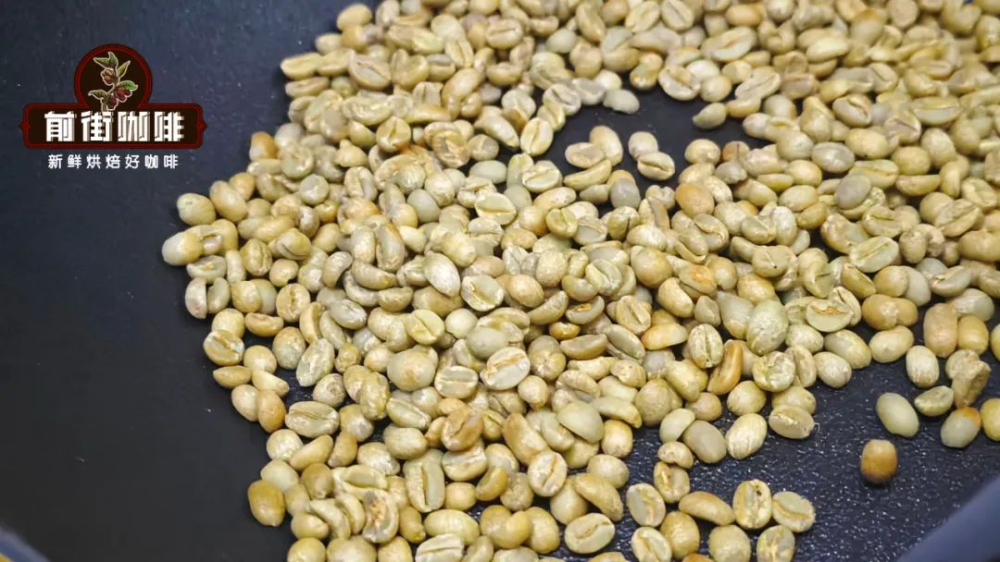
Good news: a frying pan really can "roast" coffee beans!!
Bad news: the floor is covered in silver skin, and now I have to sweep again...
- END -
The above content is compiled by CoffeeHunters, a coffee news website.


