







What Happens When You Boil Coffee Grounds in a Pot?
Coffee grounds can be boiled directly in a pot, but the result differs from standard brewing. Front Street Coffee tested this with a medium-roast Brazil Red Bourbon and a light-roast Peru washed Geisha, three rounds in total, adding grounds only after the water reached a boil. Holding the grounds at 100°C releases soluble compounds far faster than pour-over, so grind size, ratio, and boiling time all matter.
For the first trial, the grind was set at a coarse-salt level to limit over-extraction, and the article tracks how different coffee-to-water ratios and boiling times shift flavor, TDS values, and mouthfeel. It also covers ways to filter out the grounds afterward. Anyone weighing how to use a coffee pot this way should note that pot boiling sits closer to steeping than to a controlled pour-over.
Can coffee grounds be thrown straight into a pot like instant noodles? Front Street Coffee put this question to a round of hands-on testing. This article fully documents the steps and parameters of pot-brewed coffee, starting with a medium-roast Brazil Red Bourbon bean and moving on to a light-roast attempt with a Peru washed Geisha, for three rounds of experiments in total. The article compares how different coffee-to-water ratios, grind sizes, and boiling times affect flavor, and also presents changes in TDS values, mouthfeel descriptions, and methods of filtering out the grounds. If you want to know whether coffee grounds can really be boiled and drunk, this hands-on record from Front Street Coffee will give you a straightforward answer.
In the kitchen context, "boiling" refers to the operation of putting ingredients into a water-filled vessel and heating them continuously to cook them through, a practice that is very common across all kinds of dishes.
Back in the realm of coffee, although Front Street Coffee always talks about "brewing," what truly counts as "boiling" — apart from Turkish coffee, which has an extremely heavy flavor — is not what most extraction methods in China do. Most of them are just letting coffee grounds and hot water meet briefly to bring out the soluble compounds, which in essence is closer to "pouring" or "steeping."
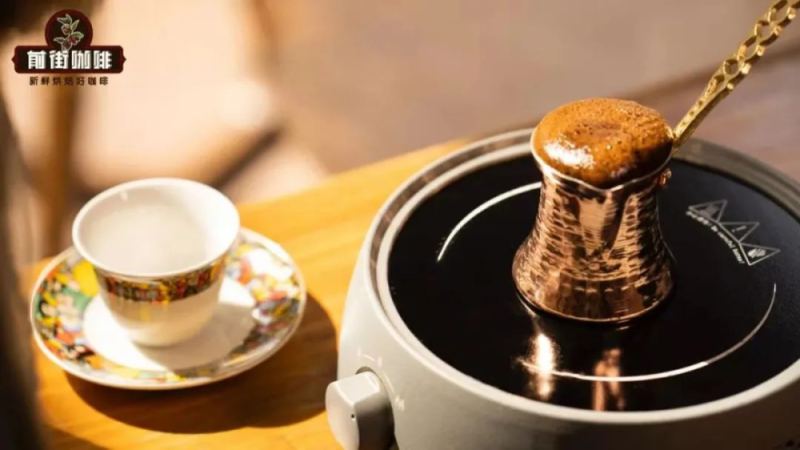
Since coffee is classified as food and also has to deal with hot water, then naturally it can be boiled too. If we were to "prepare" coffee using the same thinking as boiling instant noodles, what result would we get? To figure this out, Front Street Coffee had someone borrow a cooking pot, brought out the electric ceramic stove kept in the shop, and got right to it.
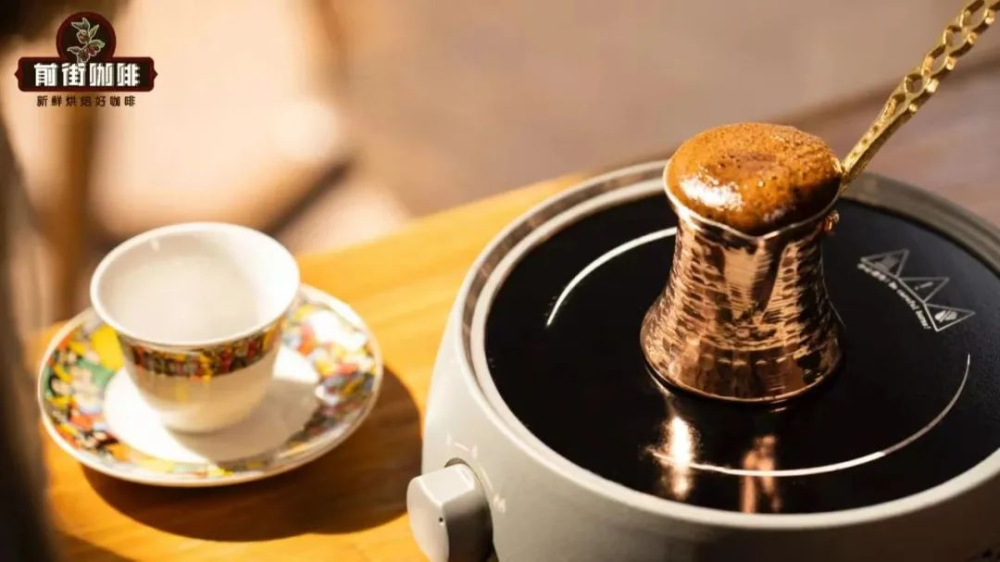
For the first trial, Front Street Coffee chose a medium-roast Brazil Red Bourbon. Under pour-over, this bean often shows baking-style notes like butter cookie, roasted peanut, and caramel, with a nice fullness, so it also suits various extraction paths such as moka pot, French press, and siphon.
In terms of parameter settings, because the coffee grounds are added only after the water boils and are kept at 100°C the whole time, the soluble compounds are released much faster than with conventional methods. To prevent over-extraction from being too severe, Front Street Coffee set the grind size at the coarse-salt level for the first round, corresponding to 12 on the shop's EK43s scale, with a passing rate of about 60–65% through a Chinese No. 20 sieve.
The rest of the details were arranged along the same lines. To bring the final concentration into a palatable range, Front Street Coffee capped the time at 1 minute and set the coffee-to-water ratio at 1:18. The parameters for the first round of pot-brewed coffee were as follows:
Coffee bean: Brazil Red Bourbon
Dose: 18g
Coffee-to-water ratio: 1:18
Grind size: EK43s-12
Planned time: 1 minute
Step one: pour 324g of room-temperature water into the pot, turn the heat to the highest setting and heat until small bubbles appear, then as soon as the temperature reaches 96°C, immediately pour in the ground coffee and start timing.
Once the coffee liquid comes to a full boil, immediately turn the electric ceramic stove to its lowest setting, and use a small spoon to stir up and down or left and right so that the raised bed of grounds comes into contact with the hot water as fully as possible.
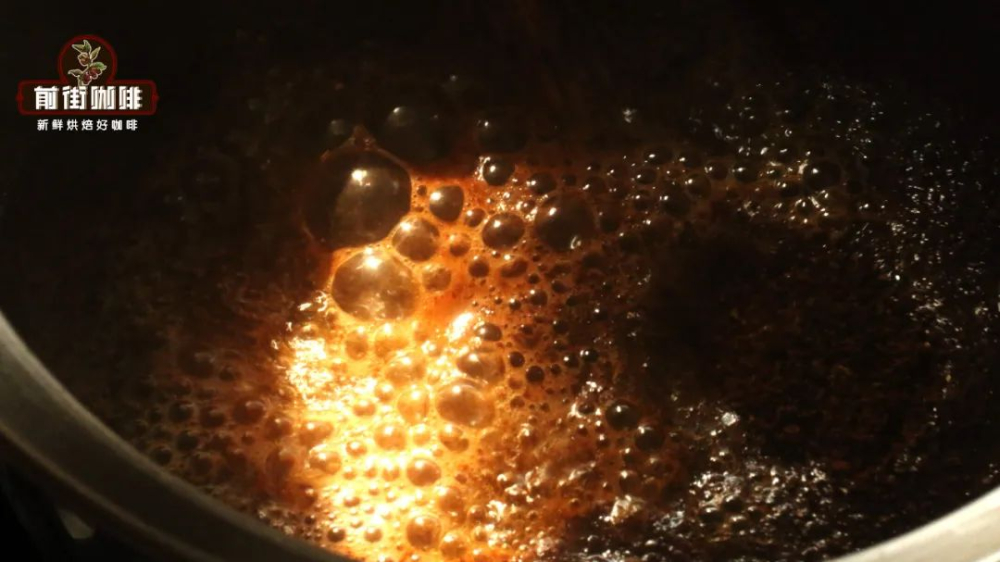
Unfortunately, just before the one-minute mark, a customer came into the shop, and Front Street Coffee had to go serve coffee first, so the total boiling time ended up far longer than planned. We quickly removed the pot from the heat source, then used a stainless steel filter to strain out the coffee grounds, and tasted it while hot.
Before drinking, we measured it, and the TDS of the whole pot of coffee was 1.53%. Visually, this cup of boiled coffee was quite cloudy, and because the metal filter Front Street Coffee used had relatively large holes, some of the foam brought out during boiling also remained on the surface. On entry, the mouthfeel was rather heavy and low, dominated by a scorched-rice burnt aroma, with almost no flavor layering, plus a bit of gritty grounds texture; the bitterness was also strong, and the overall impression was messy and heavy — clearly severely over-extracted.
Although both the flavor and mouthfeel were less than ideal, this round of practice at least gave Front Street Coffee some experience, and at least we were no longer timid for fear of it tasting bad — after all, the worst-tasting cup had already gone down.
For the second round, Front Street Coffee wanted to make a pot-brewed coffee with a rich mouthfeel, so it tried changing other parameters: first, lowering the coffee-to-water ratio to increase concentration, adding clockwise stirring during boiling to further speed up the release of flavor compounds, and most crucially, precisely controlling the 1-minute boiling time. The second-round parameters were as follows:
Coffee bean: Brazil Red Bourbon
Dose: 18g
Coffee-to-water ratio: 1:16
Grind size: EK43s-12
Time: 1 minute
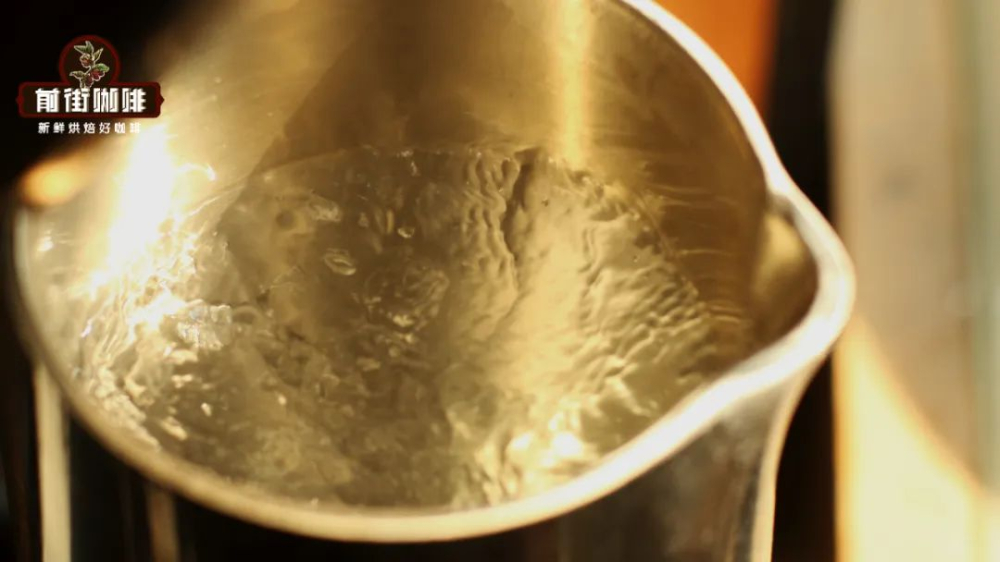
Finally, to make the boiled coffee taste cleaner, Front Street Coffee switched to a dripper paired with a denser non-woven cloth to filter out the grounds, gave it a swirl to even it out, and tasted it while hot.
The adjusted pot-brewed coffee liquid was clearly clearer than the first pot, with no foam on top, and measured a TDS of 1.35%. On entry there were clear notes of roasted peanut, dark chocolate, and cookie, with a rich, solid mouthfeel, a slight bitterness accompanied by a bit of returning sweetness, relatively high body, and a clean finish — a pretty good cup of black coffee, all things considered.
If medium-dark roast coffee grounds can still show decent flavor after boiling, with no obvious over-extraction, then Front Street Coffee can be bolder in bean selection and turn its attention to light roasts. Just these past two days we happened to get a washed Geisha from a Peruvian growing region; in cupping it showed rich jasmine floral aromas and grape juice notes, with a fresh flavor and prominent juiciness, so it should surely suit other extraction methods too.
High-altitude coffee beans are themselves on the harder side, and this Geisha is also a medium-light roast. To coordinate the extraction of flavor compounds, Front Street Coffee adjusted the grind half a notch finer, with the other parameters unchanged. Without further ado, let's start boiling:
Coffee bean: Peru washed Geisha
Dose: 18g
Coffee-to-water ratio: 1:16
Grind size: EK43s-11.5
Time: 1 minute
In the end, this pot of boiled Geisha had a TDS of 0.94%, and to the naked eye it was the clearest of the three pots. I had expected it to be under-extracted, but unexpectedly the aroma on entry was rich: first a delicate floral note and grape juice character, followed by black tea and prune notes, with a round, sweet mouthfeel. Although the body was on the weaker side, the overall elegance was quite refined, and the layering was no inferior to pour-over.
- END -
The above content is compiled by CoffeeHunters, a coffee news website.


