







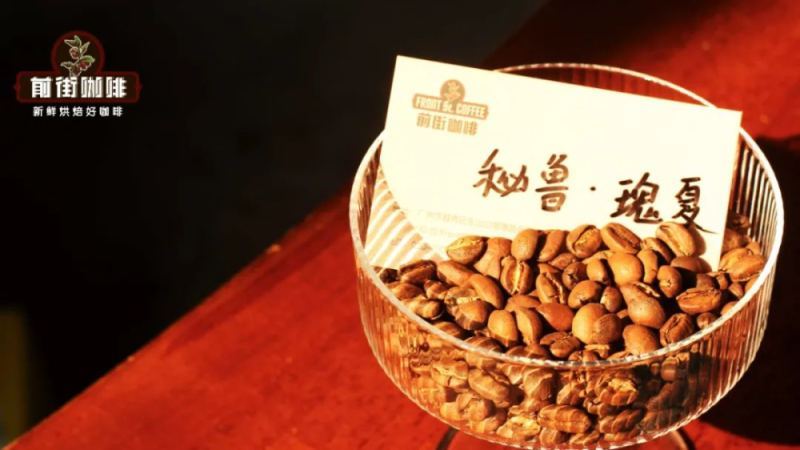
What Does Washed Geisha Coffee From Cajamarca Taste Like?
A washed Geisha grown in Peru's northern Cajamarca region cups with white florals, prunes, citrus, and black tea. Peruvian coffee has risen in the specialty market on complex flavor, a mild, balanced body, and high cleanliness, even though it stays less known than Colombian or Brazilian lots. The country is a leading producer of organic coffee and its coffee industry has moved from colonial estates to cooperatives.
Peru's coffee belt sits in the Andes at roughly 1,200 to 2,000 meters, across a country that holds plateaus, mountains, deserts, and coastline. Those conditions, with abundant rainfall, support the coffee farms behind lots like this Cajamarca Geisha. The national grading system and washed processing methods shape the clean, layered cup that sets Peruvian coffee apart from other South American origins.
Although Peruvian coffee is not as renowned as that of Colombia or Brazil, it has rapidly risen in the international specialty market thanks to its complex flavors, mild and balanced taste, and extremely high cleanliness. As the world's number one producer of organic coffee, Peru's coffee industry has gone through a tortuous journey from colonial introduction and the large estate model to the revival of cooperatives. In this article, Front Street will take you deep into Peru's coffee-growing regions, grading system, and processing methods, with a focus on the northern specialty region of Cajamarca. Through a cupping experience of a washed Geisha, we will analyze its flavor profile of white florals, prunes, citrus, and black tea.
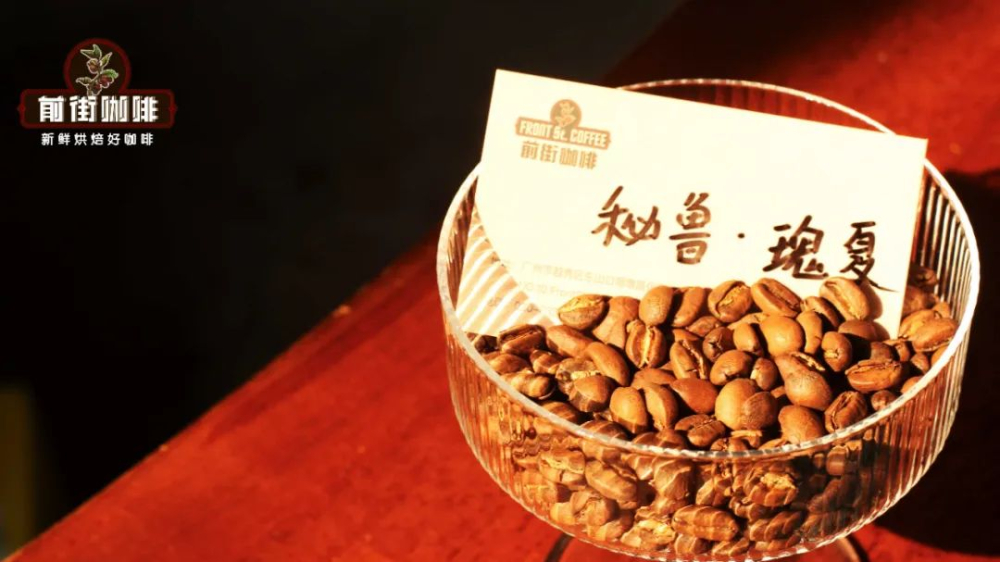
When it comes to Peruvian coffee, many coffee enthusiasts may find it somewhat unfamiliar. Compared with those mainstream regions with extremely high exposure, Peru does indeed seem rather niche. However, low visibility does not mean mediocre quality—it is simply accustomed to maintaining a "low-key" stance.
Rich layers of flavor and a soft, balanced mouthfeel are the distinctive hallmarks that set Peruvian coffee apart from other South American regions, but its charm goes far beyond that. Especially in recent years, Peruvian coffee has won countless fans with its outstanding cleanliness, rapidly gaining ground in the international market and becoming a rising star in the coffee world. Today, Front Street wants to talk about exactly this emerging star—Peruvian coffee.
In the ancient Inca language, Peru means "land of abundance" or "granary of grain," which is not unrelated to its flourishing agriculture. Peru is located on the western edge of South America, bordering five countries: Brazil to the east, Chile to the south, Colombia and Ecuador to the north, Bolivia to the southeast, and the Pacific Ocean to the west, with a coastline of about 2,414 kilometers.
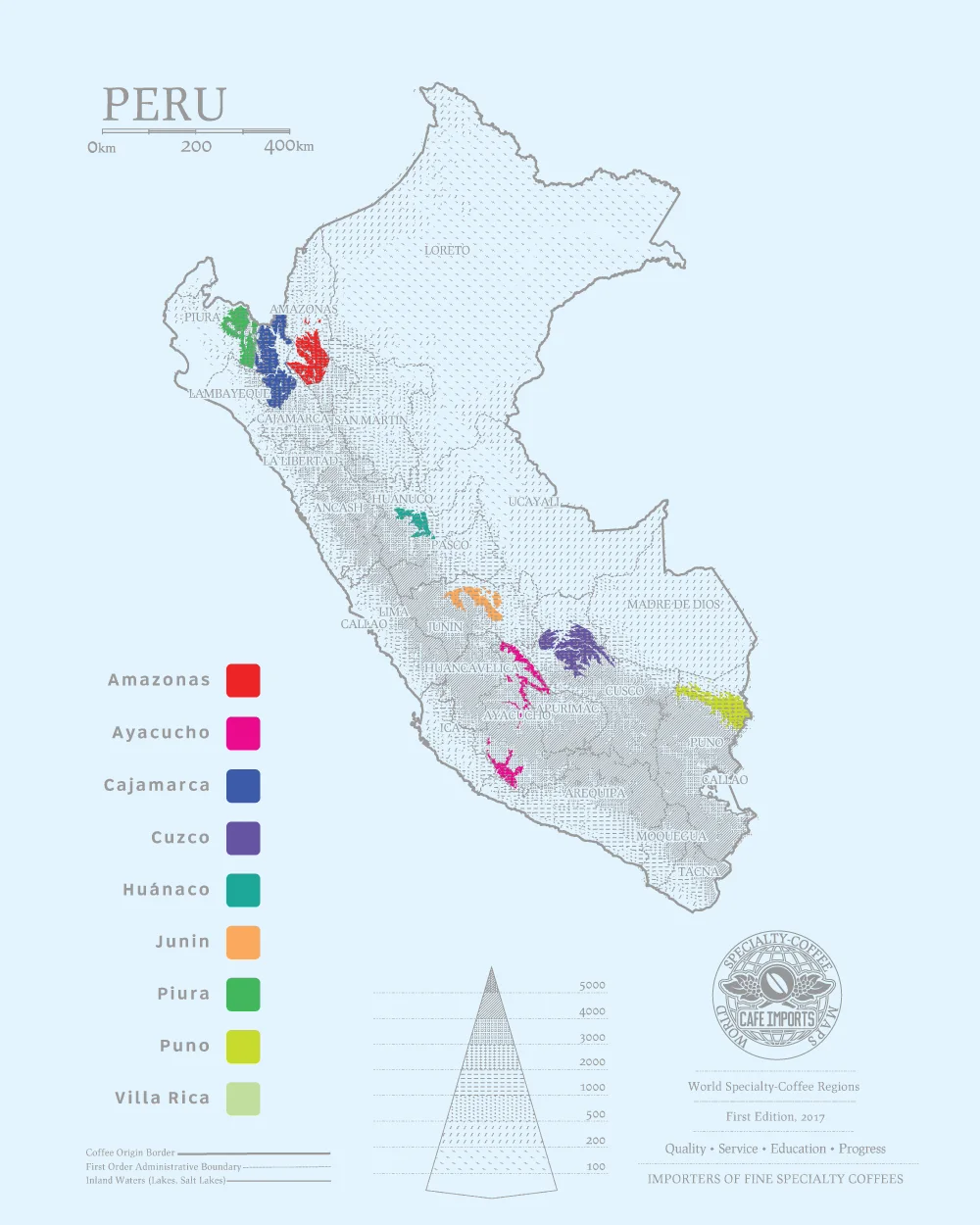
Peru's territory is not particularly vast, yet it encompasses plateaus, mountains, deserts, and coastlines. Its rich natural resources and diverse climatic conditions make Peru, like Colombia, an ideal place for growing coffee. Peru's coffee-growing belt is mainly concentrated in the high-altitude areas of the Andes Mountains, which run the length of the country from north to south, with coffee farms at an average altitude of between 1,200 and 2,000 meters. Abundant rainfall, significant temperature differences between day and night, and fertile volcanic soil together provide a solid foundation for the growth of high-quality coffee.
The northern region of Peru accounts for 43% of the country's coffee-growing area, with an average altitude of 1,250 to 1,950 meters; the central region accounts for 34% of national production, with an average altitude of 1,200 to 2,000 meters; and the southern region accounts for 23% of national production, with an average altitude of 900 to 2,050 meters.
Coffee is Peru's second-largest agricultural export (after asparagus), playing an important role in the national economy and rural society. According to data from the Peruvian Coffee Chamber (Junta Nacional del Café), Peru's coffee exports reached 220,000 tons in 2024, ranking ninth in the world in total production, while organic coffee production ranks first globally, with an output value of approximately 1.103 billion USD. Related reports show that Peru's main coffee export destinations include the United States, Germany, and other Nordic countries.
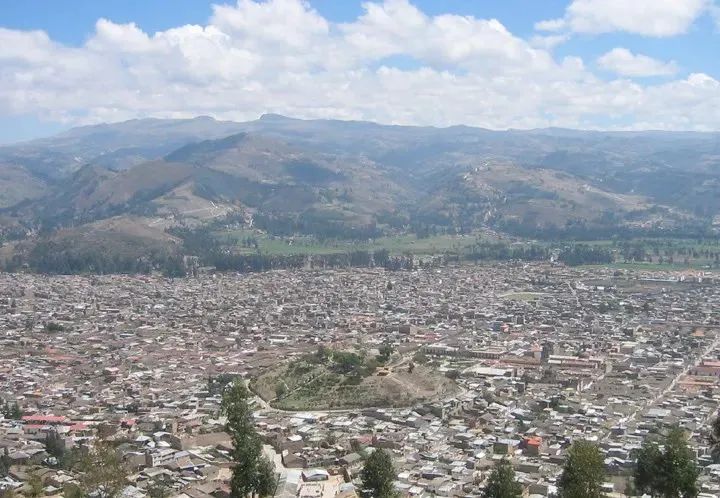
However, the rise of Peru's coffee industry has not been smooth sailing; its development trajectory is closely intertwined with colonial history, land reform, international market price fluctuations, and ecological conservation movements. Next, Front Street will briefly outline the development history of Peruvian coffee.
In the late 18th century, Spanish colonists brought coffee to Peru, initially cultivating it merely as an ornamental plant in courtyards. After Peru gained independence in 1821, the government began encouraging the cultivation of cash crops to fill the gap left by the decline of the silver mining industry. By 1850, influenced by Brazil's coffee boom and the devastation of leaf rust in overseas producing regions, European immigrants established coffee plantations in the Cajamarca region of central and northern Peru. These immigrants brought advanced cultivation techniques, while labor relied mainly on indigenous people and indentured Chinese workers. From that moment, the wheel of fate for Peruvian coffee began to turn.
Moving forward to the late 19th century, Peru's coffee production model was dominated by large estates (interested readers can refer to Front Street's previous articles). Historians' research found that around 1890, nearly 80% of Peru's coffee production came from large estates. This structure carried a hidden danger: Peru's coffee economy was highly dependent on the international market. Therefore, when the Great Depression hit in 1929, coffee prices plummeted by 60%, triggering severe social unrest.
Similar to most farmers in Africa, Peru's small-scale coffee farmers cultivate an average area of about 2 hectares. Although this shift improved social equity, it also made the dissemination of technology more difficult. With a large number of farmers scattered across wide areas, centralized training was nearly impossible to achieve, and production efficiency consequently declined.
It was not until 1980, with the support of the German church organization (MISEREOR) and fair trade institutions, that coffee cooperatives were established in northern Peru, finally breaking the deadlock of industrial stagnation. Cooperatives helped farmers reduce production costs through centralized procurement of agricultural materials and shared processing equipment. After the signing of the North American Free Trade Agreement in 1994, this model was further strengthened, and Peruvian coffee began entering high-end markets under labels such as "organic farming" and "Rainforest Alliance Certified."
(Front Street notes briefly here: the core of organic farming lies in not using chemical fertilizers and pesticides; the Rainforest Alliance is an international non-profit organization working at the intersection of agriculture, forestry, and business, and only farms that meet organic farming standards can obtain its authoritative third-party certification. What Front Street often calls "frog beans" refers to coffee beans that have obtained Rainforest Alliance certification. For details, please refer to this article → "Portal")
In 2003, as mentioned earlier, Peru became the world's largest producer of organic coffee, with organic certified area reaching as high as 110,000 hectares. This achievement would not have been possible without the unique geographical conditions of the Andean region (high altitude, fewer pests) and the technical support provided by non-governmental organizations. At this point, Peru's coffee industry finally saw the dawn, becoming recognized by more and more coffee enthusiasts in the specialty market.
Like most South American countries, Peru's main cultivated variety is Arabica. But what sets it apart is that Peru's coffee grading system is primarily based on altitude/hardness grading, with other methods as supplements.
Due to the abundant local water resources, Peru's coffee processing is mainly washed. The first step of traditional washed processing is to pour the harvested coffee cherries into water for flotation, removing the bad cherries floating on the surface; then use a depulper to remove the skin and pulp; next, place the parchment beans with mucilage into a fermentation tank to break down the mucilage; afterward, transfer the processed parchment beans to a drying yard for drying; finally, send the dried parchment beans into a huller to remove the parchment, and the entire processing flow is complete.
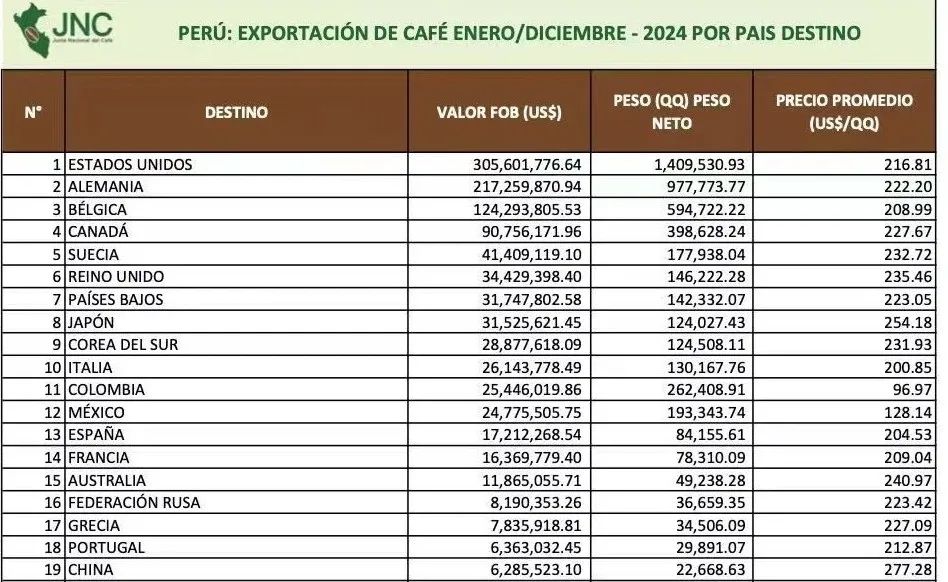
Speaking of this, Front Street couldn't resist wanting to taste Peruvian coffee, so we specially acquired a washed Geisha. This bean comes from Cajamarca, the most important specialty coffee region in northern Peru.
After a long period of development, coffee has gradually become an important part of Cajamarca's local economy and culture. Because local smallholders possess experience and technology ahead of other regions, the coffee quality in this region is more outstanding, making it a hot commodity in the current specialty coffee scene.
Flavor: white florals, prunes, citrus, juicy mouthfeel, black tea
During the cupping, Front Street found that the dry aroma of this Peruvian Geisha was very intense, with clearly detectable aromas of white florals, berries, preserved plums, and citrus. After pouring in hot water, sweet aromas resembling peach and caramel could also be detected.
The above content is compiled by CoffeeHunters, a coffee news website.


