








Why are coffee beans roasted and why do bags swell afterward?
Roasted coffee beans keep releasing carbon dioxide, so a swollen bag is usually normal degassing rather than spoilage. Within 72 hours after roasting, this release peaks. A bag only signals a real problem when it also carries a musty or sour-rotten smell, which points to mold or bacteria from poor storage conditions rather than the roasting process itself.
During roasting, Maillard reactions and caramelization break down and recombine organic compounds inside the beans, producing carbon dioxide and other volatile gases. Most producers pack beans in bags with one-way degassing valves, which let gas escape while blocking external oxygen. Dark-roasted beans degas more actively, so their packaging is more likely to bulge during transport.
The bag of coffee beans you bought back is bulging—is it spoiled or is this normal? Many coffee lovers have encountered this question. In fact, a swollen coffee bag doesn't necessarily mean the beans have gone bad—roasted coffee beans continuously release carbon dioxide, and this is the main cause of packaging expansion. However, not all swollen bags are harmless; if there's a musty or sour odor accompanying it, that's a different story. This article will walk through the chemistry of coffee bean degassing, the mechanism of one-way degassing valves, and why dark-roasted beans are more likely to make packaging bulge, helping you accurately judge whether the coffee beans in your hands are still safe to enjoy.

When encountering swollen packaging on food, people's first reaction is often to suspect mold or bacteria growing inside—after all, gas produced by microbial activity is indeed a common cause of food spoilage. Coffee beans stored under poor conditions can also develop this kind of spoilage problem, and it is usually accompanied by a pungent musty or sour-rotten smell. But if the coffee beans in your hands don't give off these off-odors, then the swollen bag is most likely just the result of "degassing" after roasting—a normal physiological process.
The Degassing Phenomenon of Coffee Beans
During the roasting process, Maillard reactions and caramelization reactions continue inside the coffee beans, and these chemical changes cause organic substances in the beans to continuously decompose and recombine. When organic matter decomposes, it releases a large amount of carbon dioxide and other volatile gases, and these gases continue to escape from inside the beans even after roasting ends. Especially within 72 hours after roasting is completed, degassing activity reaches its peak—these gases are the direct force making coffee bags bulge.
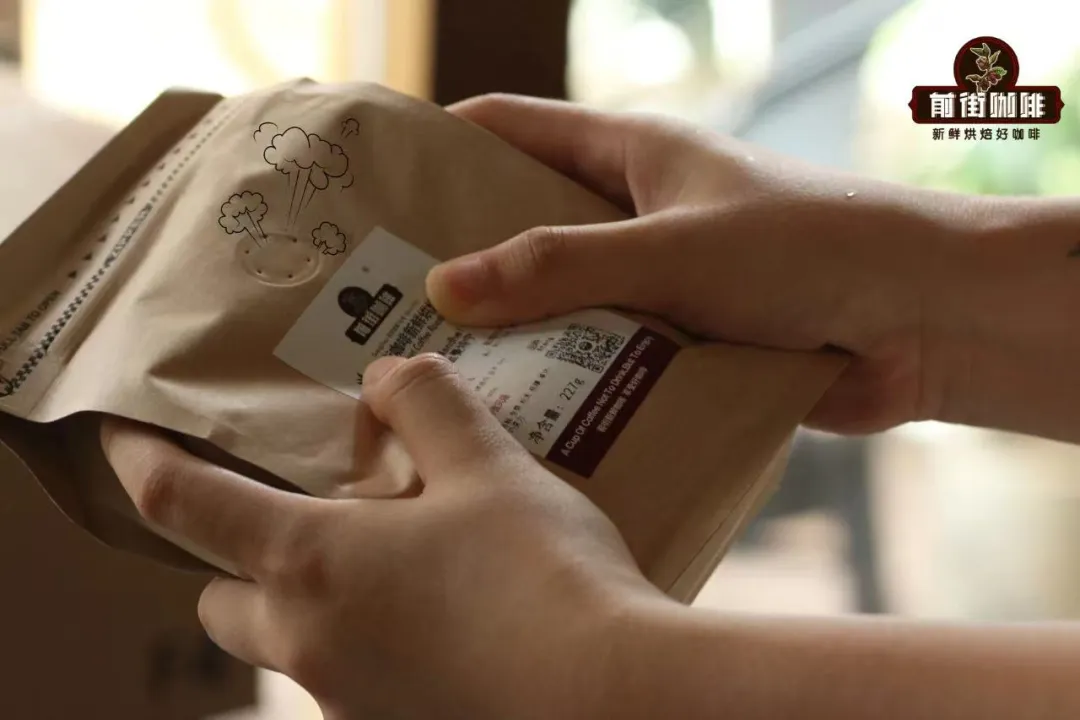
However, making a coffee bag visibly expand is actually not easy. Most producers choose packaging bags with one-way degassing valves to prevent the bag from bursting due to gas accumulation during transport. Front Street Coffee has published several articles specifically explaining one-way degassing valves, so here we'll only give a brief explanation. Their working principle is like a one-way street: they only allow gas inside the bag to escape outward, while preventing external oxygen from entering. In this way, the coffee bag will not be burst by carbon dioxide, and the coffee beans will not accelerate oxidation due to excessive exposure to oxygen.
For this reason, coffee bean bags usually do not easily bulge. For example, among the dozens of coffee beans displayed on Front Street Coffee's shelves, the vast majority show no signs of bulging. So why do some packages still bulge? The reason is simple: the rate at which coffee beans release gas in a short period far exceeds the discharge capacity of the one-way valve, so the bag gets inflated. This situation is mostly seen in extremely dark-roasted coffee beans—for example, the friend mentioned at the beginning of the Front Street Coffee article was looking at dark-roasted Golden Mandheling.
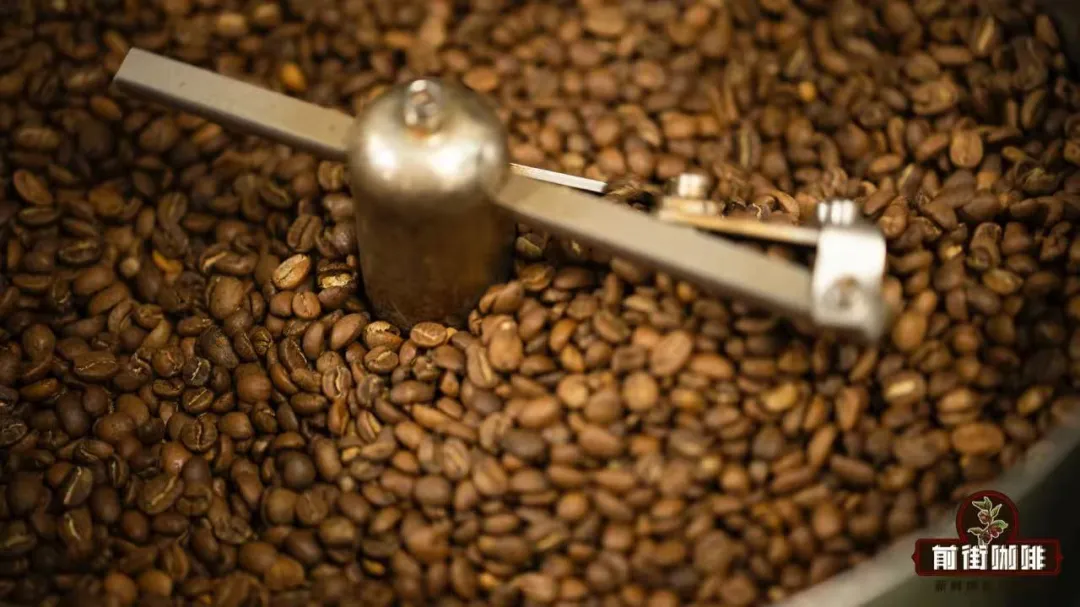
The amount of carbon dioxide produced inside coffee beans is affected by the degree of roasting. The darker the roast, the more fully the Maillard reactions and caramelization reactions proceed, and the more carbon dioxide is naturally produced. At the same time, dark roasting also causes the cell structure of the coffee beans to undergo more severe expansion and rupture, making it easier for gas to escape from the inside. The combination of these two factors causes dark-roasted beans to release a large amount of gas in a short time, ultimately leading to a swollen bag. (The sealed one on the left is freshly roasted dark-roasted beans; the sealed one on the right is freshly roasted light-roasted beans.)
Overall, a swollen coffee bean package is a normal phenomenon. It does not mean the beans are spoiled or not fresh (although this possibility exists, the probability is very low). Instead, swollen bags are more likely to occur when the coffee beans are roasted darker, or when the packaging bag is not equipped with a one-way degassing valve.
- END -
The above content is compiled by CoffeeHunters, a coffee news website.


