







How Do You Make Americano That Is Less Bitter?
Hot Americano tastes bitter mainly because high temperatures sharpen the tongue's perception of bitterness, and a stronger concentration pushes those flavors forward. Temperature and strength only amplify what is already there. The real ceiling on bitterness comes from bean selection and the extraction plan, not from switching to iced.
To make americano smoother, start with the roast level: darker roasts carry more roast-driven bitterness, while lighter roasts keep more acidity. Then adjust extraction rate and grind so fine particles do not over-extract. A balanced recipe with weighed doses and controlled water temperature keeps the cup easy to drink at home or in a shop.
Hot Americano is often joked about for having a bitter taste like "Chinese herbal medicine" or "herbal tea," so many people switch to iced Americano. But when the weather is cold, a warm cup of coffee is still a necessity. Why is hot Americano more bitter than iced Americano? The key lies in how high temperatures amplify the taste buds' perception of bitterness, while higher concentration makes the flavors more concentrated. However, temperature and concentration are just amplifiers; what truly determines the upper limit of bitterness is the coffee beans and the extraction plan. This article systematically explains how to make hot Americano smoother, from coffee bean roast level and extraction rate adjustments to fine particle handling, and includes recommendations for several Front Street Coffee beans to help you make a balanced, easy-to-drink Americano at home or in a shop.
Hot Americano has long been labeled with tags like "Chinese herbal medicine" or "Cantonese herbal tea," because its bitterness on the palate is often more pronounced than other coffees. For this reason, many people prefer to order an iced Americano.
But even if iced Americano has a more appealing flavor and a refreshing mouthfeel, few dare to challenge it in the cold winter; most people still want to hold a cup of hot coffee that warms them to the heart. So the question arises: is there a way to make hot Americano less bitter and easier to drink?
Of course there is. As long as you understand where the "bitterness" of hot Americano comes from, you can find the direction for adjustment. Many friends' first reaction is to think of temperature and concentration, because Front Street Coffee once mentioned in "Why Is Hot Americano More Bitter Than Iced Americano?" that hot Americano is more bitter than iced Americano mainly due to sensory changes brought by different physical characteristics and differences in concentration levels.
Unfortunately, these two are not the main targets for adjustment. They only explain why hot Americano is more bitter than iced Americano, not the root cause of hot Americano's bitterness. However, we can find clues from them about what to adjust.
Hot Americano is more bitter than iced Americano mainly because high temperatures increase the taste buds' sensitivity to bitterness, while higher concentration makes the flavors more concentrated, making the bitterness more prominent. In other words, they amplify the flavor of the espresso itself, which makes hot Americano taste more bitter than iced Americano. If the coffee itself didn't have so much bitterness, would it still make a hot Americano that tastes like "herbal decoction"?
At this point, Front Street Coffee believes everyone already understands that what really needs to be adjusted is the coffee beans and the extraction plan itself. Most people, in order to also make milk coffee, choose darker roasted beans and adopt a plan with a higher extraction rate. If you only make Americano, then the choices for coffee beans and extraction plan are much broader, and you no longer have to be limited.

Coffee Bean Selection
Americano is simply espresso diluted with water, so the coffee's flavor won't be interfered with, and what you taste is mainly the coffee's original flavor. Therefore, if you don't want the coffee to be too bitter, you should first choose a bean with a not-too-dark roast level.
Overall, the direction for bean selection is clear: if you want the hot Americano's bitterness not to be prominent while the acidity is also not obvious, you can choose medium-dark roasted coffee beans.
If you like nutty notes, you can buy Front Street Coffee Black Cocoa Basic Blend; if you like fruity flavors, you can buy Front Street Coffee Florals SOE Espresso Blend, which has low acidity and is affordable, and the Americano it makes won't have overwhelming bitterness while also being suitable for milk coffee.
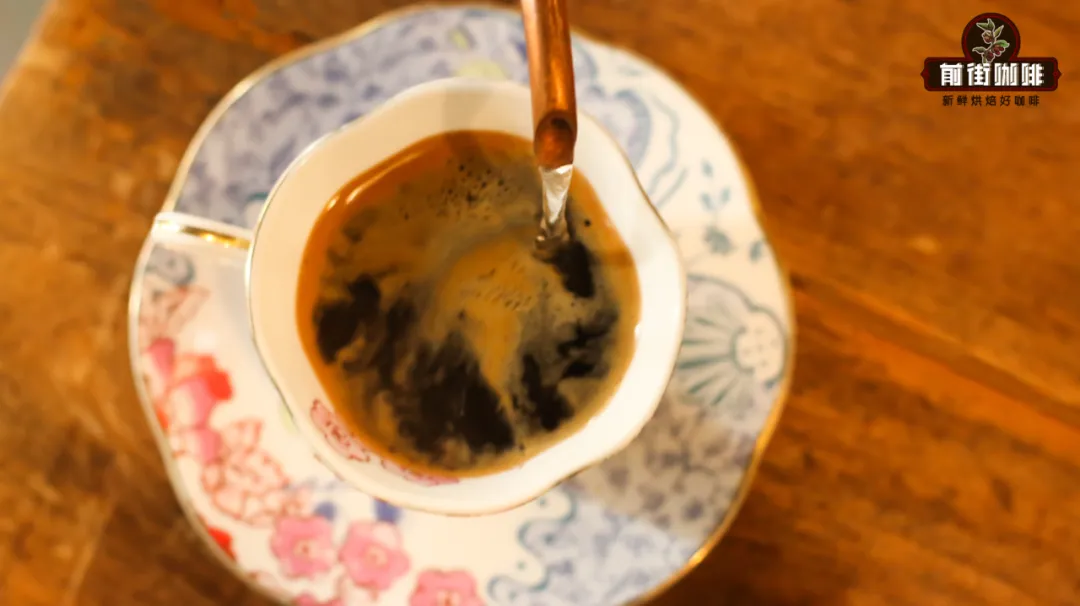
Of course, you can also choose specialty blend beans like Front Street Coffee Strawberry Candy Espresso that achieve balance through blending. With a medium roast, it has balanced acidity, sweetness, and bitterness, with distinct layers, and can also be used to make milk coffee.
If you want the Americano to show weak bitterness and fuller acidity and sweetness, the best direction for bean selection is medium-light to medium roasted coffee beans from regions such as Ethiopia, Panama, and Colombia. Beans from these regions usually have obvious floral and fruity aromas, though the price will be relatively higher.
Adjustment of the Extraction Plan
After choosing the beans, the next step is to adjust the extraction plan. Most of the time, in order to keep the espresso's flavor from being covered by milk, we deliberately increase the extraction rate to obtain more bitter substances to compete with the milk (because the cup size in coffee shops is already fixed and hard to change, so we can only adjust the extraction).
If you don't need to make milk coffee, then naturally you don't need such a high extraction rate and so many bitter substances. So as Front Street Coffee says, the extraction plan can be more flexible. For example, a Ristretto with high concentration and low extraction is very suitable for espresso, taking only the front and middle segments, avoiding the bitter substances in the tail segment, to make a sweeter espresso, and then using it to make Americano, the bitterness naturally won't be too prominent.
It is worth mentioning that Americano is espresso diluted with water, using water to reduce the coffee's concentration. So when extracting espresso, you don't need to consider the concentration of the espresso itself. Whether it's 18g of grounds extracted into 36ml of coffee liquid, or 90ml of coffee liquid, it! doesn't! matter!
Because the final coffee will be diluted anyway, it doesn't matter how much you extract, as long as you ensure that this cup of coffee has a relatively complete extraction rate.
III. Keeping or Removing Fine Particles
Front Street Coffee has mentioned many times in previous articles that because the holes in espresso filter baskets are not fine enough, some extremely fine coffee particles will also be carried out of the basket by the crema during extraction. They are initially mixed in the crema, and as the crema dissipates, they gradually sink and blend into the coffee.
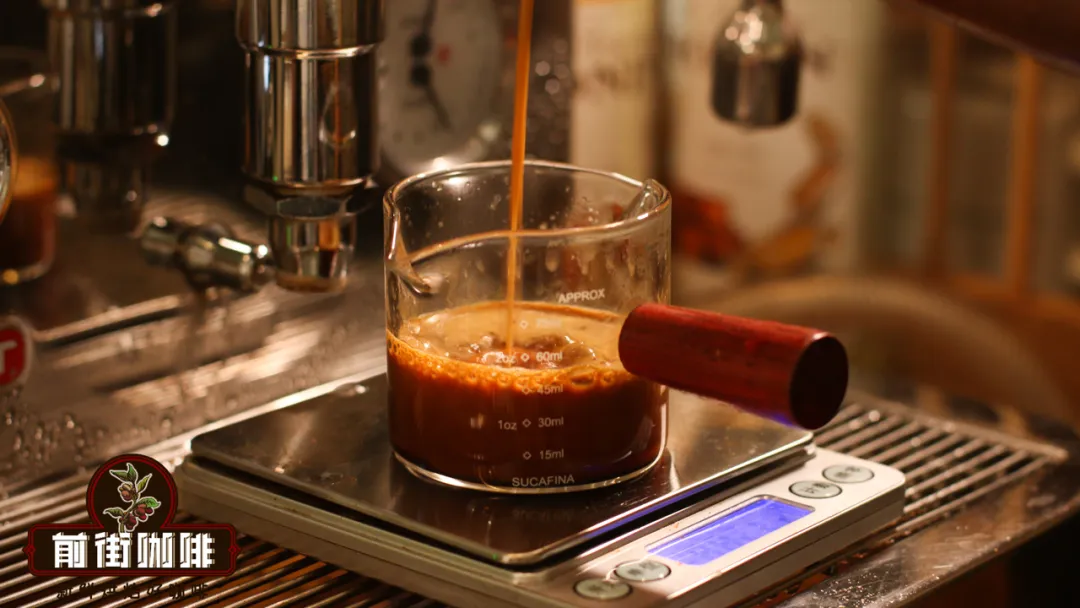
Fine particles can enhance the coffee's mouthfeel, but they are also contributors to bitterness. If you don't want to taste too much bitterness in your Americano, you might place 1~2 circular filter papers at the bottom of the filter basket, which can reduce the number of fine particles in the cup and thus lower the coffee's bitterness (to a small extent).
Of course, you can also filter out the crema and fine particles with filter paper after the coffee liquid extraction is complete, but the operation will be more cumbersome and will make the coffee lack a certain finish. As the saying goes, you can't have your cake and eat it too; how to choose is still up to you.
The above content is compiled by CoffeeHunters, a coffee news website.


