







Panama Geisha Apple Pour-Over Coffee: A Practical Guide
Using apple-infused water instead of regular drinking water to brew coffee has recently attracted considerable attention in the coffee community. Front Street Coffee conducted multiple rounds of practical testing on this, breaking down the feasibility and flavor performance of this approach one by one, from bean selection and apple water boiling time to pouring technique. This article fully documents Front Street's brewing process and tasting results using three beans: Sidamo Santa Vini, washed Yirgacheffe, and Panama Geisha, and compares them with versions brewed using Nongfu Spring water, analyzing the effect of apple water's mild acidity on coffee flavor release, providing coffee enthusiasts with a reproducible operational reference.
As a native of Guangdong, when faced with a mountain of apples piling up at home, Front Street's first instinct has always been to make soup with them. But recently a friend proposed a novel idea: using water that has been boiled with apples to replace the plain water normally used for brewing coffee, claiming the flavor is incredibly good. Really? Front Street looked into it, and this practice hasn't been around long — it only spread through coffee circles in the past month or two. Everyone's approach is roughly the same — cut or slice apples, boil them in water for a few minutes, strain, then complete the extraction following a regular pour-over process. Although everyone uses different beans and brewing methods, the feedback has been generally positive. Is the effect really that good?
Using apple-infused water instead of regular drinking water to brew coffee has recently attracted considerable attention in the coffee community. Front Street Coffee conducted multiple rounds of practical testing on this, breaking down the feasibility and flavor performance of this approach one by one, from bean selection and apple water boiling time to pouring technique. This article fully documents Front Street's brewing process and tasting results using three beans: Sidamo Santa Vini, washed Yirgacheffe, and Panama Geisha, and compares them with versions brewed using Nongfu Spring water, analyzing the effect of apple water's mild acidity on coffee flavor release, providing coffee enthusiasts with a reproducible operational reference.
As a native of Guangdong, when faced with a mountain of apples piling up at home, Front Street's first instinct has always been to make soup with them. But recently a friend proposed a novel idea: using water that has been boiled with apples to replace the plain water normally used for brewing coffee, claiming the flavor is incredibly good. Really?
Front Street looked into it, and this practice hasn't been around long — it only spread through coffee circles in the past month or two. Everyone's approach is roughly the same — cut or slice apples, boil them in water for a few minutes, strain, then complete the extraction following a regular pour-over process. Although everyone uses different beans and brewing methods, the feedback has been generally positive. Is the effect really that good?
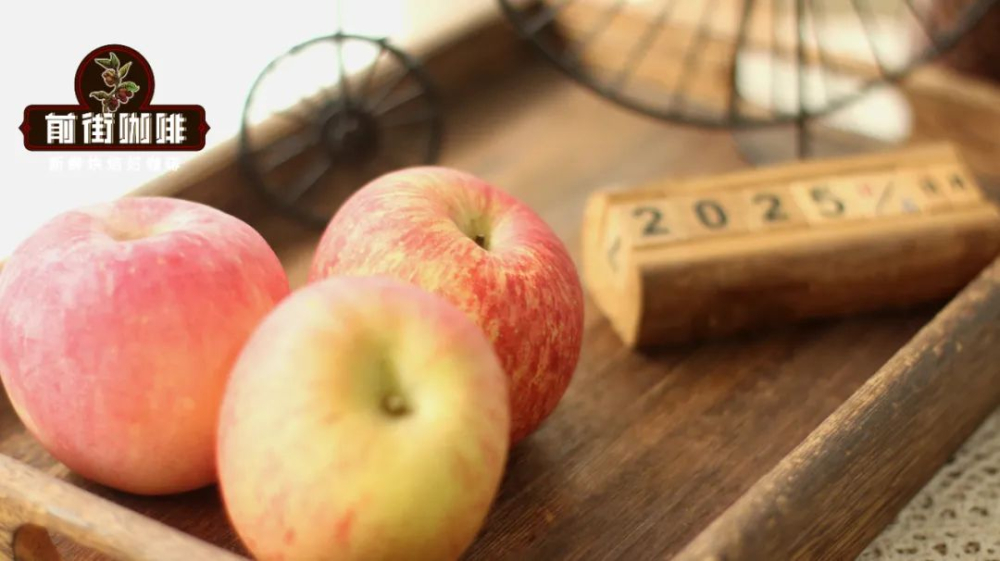
Apples themselves are a light-aroma fruit, and the water boiled from them is mildly sour with a hint of sweetness, with an overall light body. If you want to preserve the delicate mouthfeel of the coffee, choosing beans with a lighter roast level would be more suitable: on one hand, the fruity aroma won't be easily suppressed, and on the other hand, the acidity of the apple water can blend more harmoniously with the coffee liquid, making the extraction result more ideal.
This time Front Street selected Ethiopia's Sidamo Santa Vini, medium-light roast, which brews with tropical fruit notes of guava, dried mango, and citrus.
Materials needed: 1 apple, 300ml drinking water, a health pot (cooking pot with heating stove), and 15 grams of Santa Vini coffee beans. The pour-over parameters are as follows:
Coffee beans: 15g Coffee-to-water ratio: 1:15 Water temperature: 90℃ Grind size: EK43s grinder 10 setting Dripper: V60
Pouring technique: three-stage
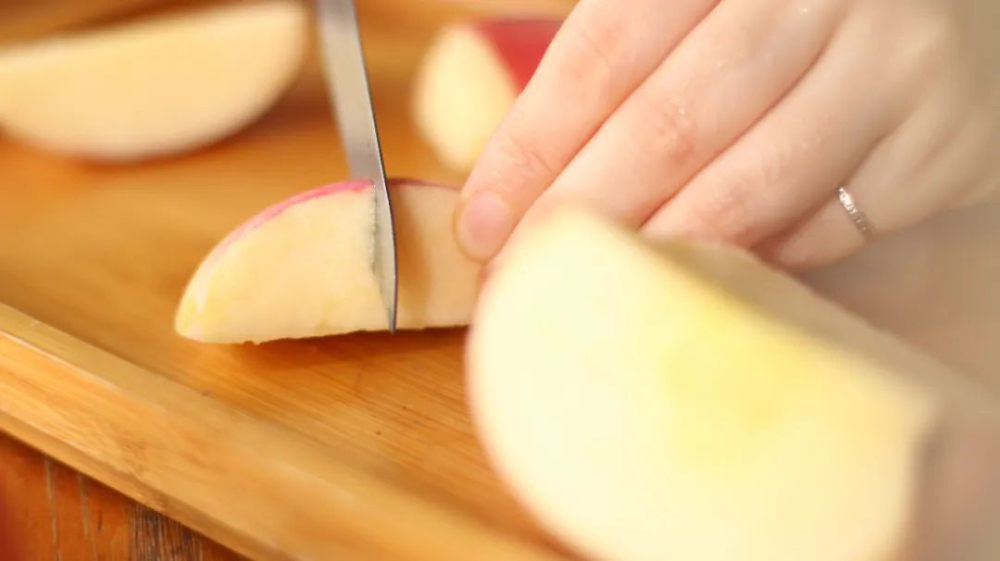
Step one: cut the apple into small pieces, add 300ml of room-temperature water and begin heating. After the water boils, continue boiling for 5 minutes. Since the apple flesh will absorb water during boiling, Front Street suggests preparing a slightly larger amount of water.
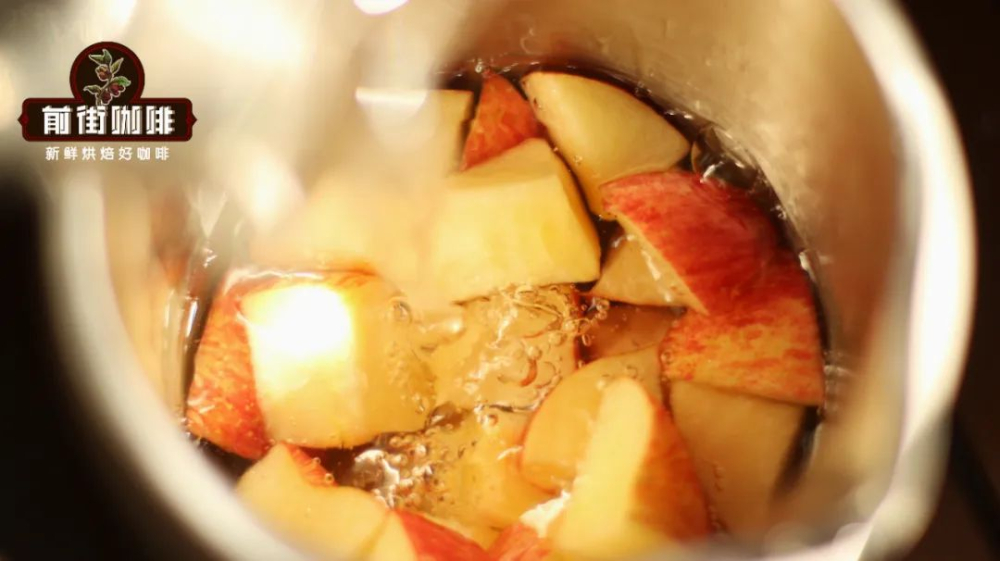
Step two: while waiting for the apple water to finish boiling, first weigh the coffee beans and grind them into powder, then pour into a filter paper that has been pre-wetted with hot water.
Step three: immediately pour the boiled apple water into the pour-over kettle, and once the temperature drops to 90℃, you can start timing and pouring.
Step four: first pour 30g of water in a circular motion and let it bloom for 30 seconds; for the second stage, maintain a medium and vertical stream, pouring 100g of apple water in a large circular motion (the timing scale shows 130g), trying to raise the coffee bed as much as possible. When the coffee liquid is about to drain and the time is around 1 minute 10 to 15 seconds, switch to a small stream in a small circular motion to pour the third stage of 95g hot water, keeping the liquid level even with the coffee bed. Total time: 2 minutes 05 seconds.
For comparison, Front Street brewed another pot using the same coffee beans and Nongfu Spring water — the store's daily standard — with identical parameters.
After comparison, it was found that the Santa Vini brewed with apple water appeared slightly cloudy, with the fresh aroma of apple peel and a faint sucrose sweetness; while the Nongfu Spring version was noticeably clearer, darker in color, and gave off aromas of caramel, flowers, and sweet orange.
Nongfu Spring version: on the palate, flavors of lemon, blueberry, guava, and fruit wine — rich in fruity notes, moderate in body with a fermented quality. As the temperature drops, the acidity becomes bright like lemon, accompanied by nutty aromas, with very rich layers.
Apple water version: on the palate, first comes the sweet-and-sour sensation from apple juice, with a strong juicy quality, followed by passion fruit, mango, and a hint of fermented wine aroma spreading in the mouth, but none of the concentrations are high — the overall profile is still dominated by apple flavor. As the temperature decreases, the acidity becomes more pronounced, the coffee's own aromas fail to fully express themselves, and the richness is somewhat lacking.
About 98% of a cup of coffee is water, and the pH of the water determines to some extent how flavors are presented. Compared to regular Nongfu Spring water, apple water is mildly acidic, which weakens the release of certain flavor compounds in the coffee. The mid-to-late stage aromas of the Santa Vini that Front Street selected were diminished, causing the coffee flavors to be overpowered by the apple flavor.
To achieve a better drinking experience, in the second round Front Street switched to a light-roast washed Yirgacheffe from this bean category, which typically brews with white floral notes, a tea-like quality, and distinct lemon-citrus tones.
Since the first round's apple water was too concentrated and covered up the coffee flavors — presumably mainly because the boiling time was too long — this time it was adjusted to maintain a rolling boil for 3 minutes. Additionally, to let the Yirgacheffe's flavors fully express themselves, Front Street split the original three-stage pour into four stages of water volume (30g+65g+65g+65g) poured sequentially.
The second round's brewing parameters are as follows: Coffee beans: Ethiopia washed Yirgacheffe Dose: 15g Coffee-to-water ratio: 1:15 Grind size: EK43s setting 10.5 Water temperature: 91℃
Pouring technique: four-stage
First pour 30g of apple water and bloom for 30 seconds — during the degassing you can simultaneously smell the fresh aroma of apple and citrus. After 30 seconds, use a slightly larger straight stream to pour the second stage of 65g water while raising the entire coffee bed, finishing the pour in about 45 seconds, then wait for the coffee liquid to filter through. When the liquid level is about to drop to near dry, begin pouring the third stage of 65g, and so on, until all 225g of total water has been poured.
The Yirgacheffe brewed with apple water was noticeably more harmonious in taste than the Santa Vini version. On the palate, the fresh apple aroma blends with the orange, blueberry, nutty, and green tea flavors from the coffee — moderate in concentration, bright and balanced in acidity and sweetness, like drinking a glass of mixed fruit juice.
To make the most of the session, Front Street finally tried an iced pour-over using Panama Boquete Geisha paired with apple water, with parameters following the store's standard: 15g coffee beans, coffee-to-water-to-ice ratio 1:10:5, water temperature 91℃, EK43s grinder setting 9.5, three-stage pouring.
Finally, Front Street tasted this "special Geisha" and found that the iced brew with apple water worked quite well too — the apple's sweetness was especially prominent, tasting like sugar was added on the first sip. With the help of the ice cubes, the Geisha's citrus acidity and faint floral notes emerged, making the whole thing refreshing and juicy. It must be said, it was indeed a very unique experience.
- END -
The above content is compiled by CoffeeHunters, a coffee news website.


