







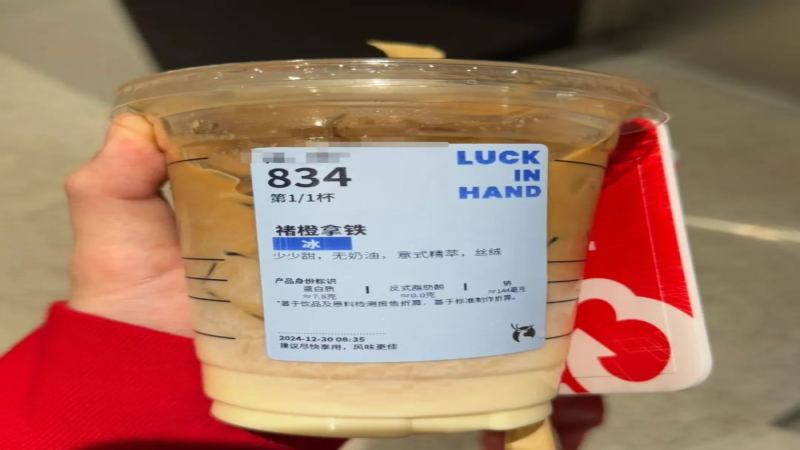
What does the coffee industry additive exposé mean for chain drinks?
A Luckin employee post claiming that flavored lattes made with syrup are full of additives has set off a debate inside the chain and among consumers. The worker reportedly smelled artificial flavoring and coloring in red wine syrup used for a hot red wine Americano, and advised health-conscious customers to skip syrup-based drinks. Other staff agreed, and buyers began rechecking what goes into their cups.
The episode follows a wider shift in which younger customers study recipes and calorie counts before ordering, pushing brands to print caffeine and calorie labels on cups. Luckin joined that trend with cup stickers, but the employee exposé raised questions about modified milks and syrups whose ingredient lists are long. The chain has not publicly detailed its syrup sourcing or formulas in the account.
Nowadays, more and more young consumers carefully study drink recipes and calorie data before placing an order, and brands have followed suit by launching health labels that indicate caffeine, calories, and other information. Luckin recently joined this trend, but what seemed like a thoughtful move sparked a huge controversy after an internal employee's exposé. The employee pointed directly at flavored lattes containing syrup, saying they are full of additives, and even advised health-conscious customers to avoid such products as much as possible. Once the post went up, many Luckin workers chimed in in agreement, and consumers began to re-examine the cup of flavored coffee in their hands. What industry truth is hidden behind this? Should we be wary of chain brands' syrups and modified milks?
▲
Click to follow | Daily specialty coffee culture magazine Coffee Workshop
Today, many young people check the recipe and calculate the calories before buying a drink, striving to find an afternoon tea option that suits their taste and meets their health requirements, and some even repurchase it repeatedly. Faced with this consumption trend, many brands have successively launched health labels, clearly listing the calories and caffeine content that consumers care about.
Not long ago, Luckin also followed this trend of health labels, trying to mark calories and other data on cup stickers. Many users praised this highly, believing it was a warm gesture that allowed people to see the composition of a drink at a glance.
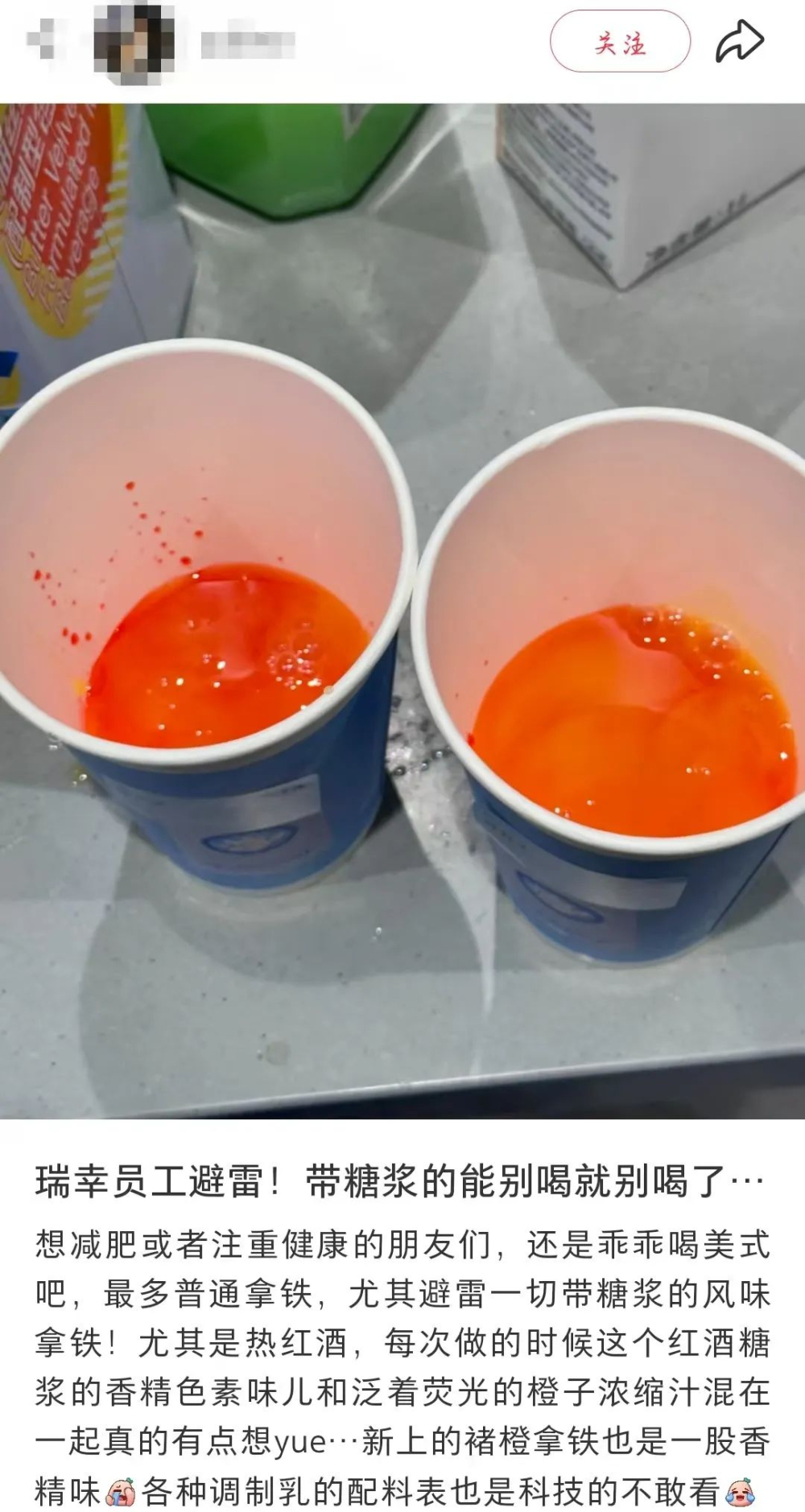
However, just recently, a Luckin employee posted on social media with the headline "If it has syrup, don't drink it if you can avoid it...", advising those who want to control their weight or care about health to stay away from all flavored lattes with added syrup.
In the post, this staff member revealed that when making Luckin's hot red wine Americano some time ago, they frequently smelled the artificial flavoring and coloring in the red wine syrup, and that "mixed with that fluorescent-looking orange concentrate, it really made me a bit nauseous." In addition, the employee also said that the various modified milks currently used by Luckin have ingredient lists full of "technological flair," and advised customers to think twice before buying.
After the post was published, it quickly attracted a large number of onlookers and discussions, and many Luckin employees also spoke up to confirm the poster's claims. Some commented, "The Chu orange latte that just launched yesterday also smells strongly of artificial flavoring," while others said, "As a Luckin employee, let me say this: apart from milk and Americano, the additive lists for other ingredients are frighteningly long, and matcha and tea series are no exception." Another part-time employee bluntly said, "Drinking sugar-free Americano and latte is the healthiest."
This exposé shocked some loyal customers, who asked in the comments whether the fruity Americanos, flavored lattes, and light milk teas they had repurchased many times should also be blacklisted. The employees' replies made these fans cry out that "the sky has fallen," and some lamented, "Those who like hot red wine are quietly heartbroken."
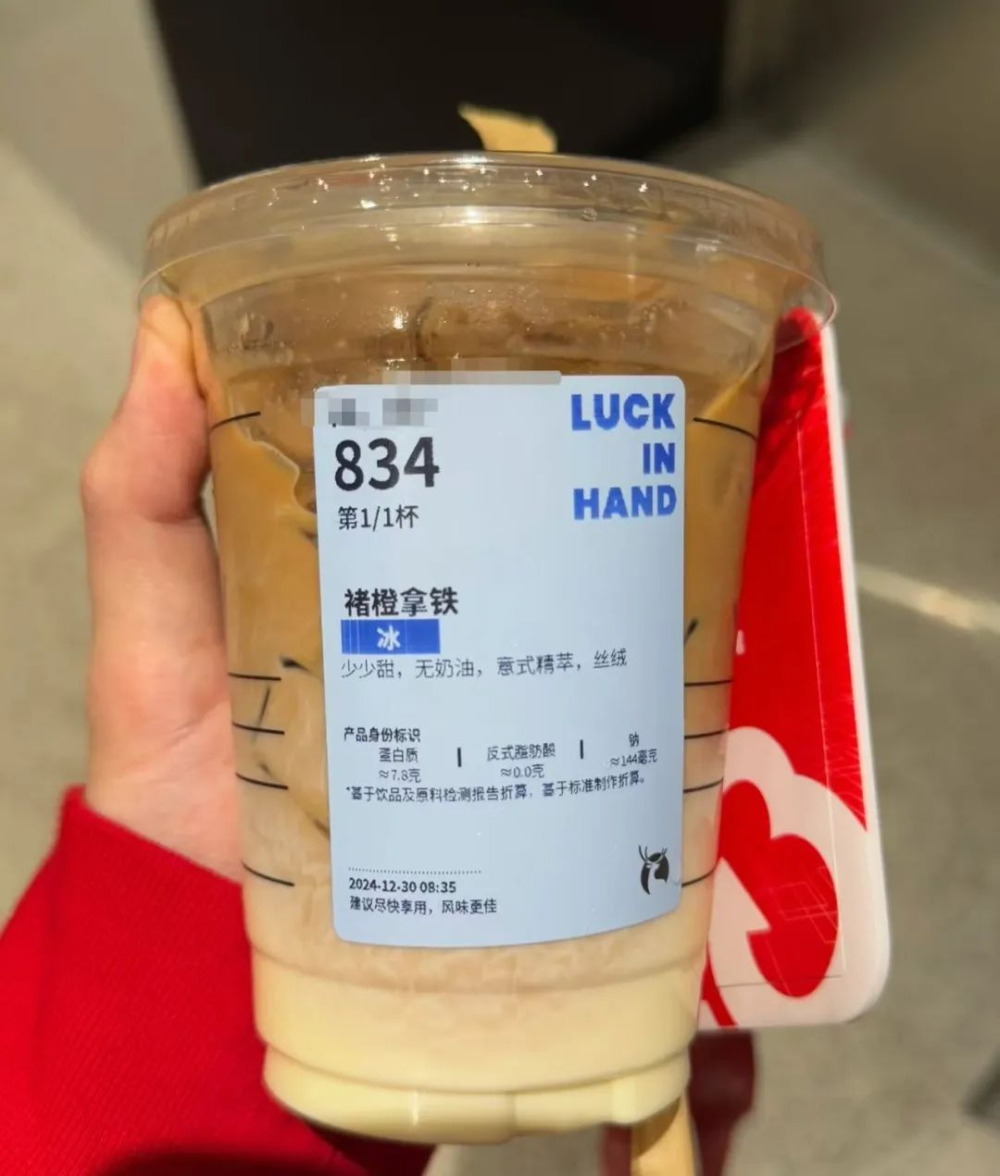
However, in the eyes of coffee industry professionals, Luckin is by no means the only one adding all kinds of "black technology" to drinks. They point out that common flavored lattes on the market basically rely on adding different syrups to present flavors such as toffee and hazelnut. Fruity Americanos are flavored by adding concentrated fruit juice, jam, and the like, giving people notes of orange, apple, and other fruit aromas.
Many consumers say that after standing in front of the bar and watching the staff pour jam and syrup into the cup with their own eyes, they keep their distance from these brightly colored, sweet-tasting flavored coffees and no longer repurchase them, instead buying equipment and ingredients to make them at home. Some Luckin staff also admit that after joining the company, they stopped touching drinks with modified milk and syrup, and honestly drink Americano or latte instead.
But some people hold a different view, believing that chain brands such as Starbucks, Luckin, and Manner use jam and syrup because, on the one hand, they can make coffee's bitterness more acceptable to more people, and on the other hand, these ingredients can be used to develop novel drinks that cater to consumer preferences, making store menus richer.
They say that if it is for health reasons, consumers can try to buy fewer flavored coffees and choose regular products such as plain Americano and latte to meet their daily caffeine needs. But if they value the taste experience more, then ordering a cup to try is no big deal either: "Whether it's technological or not doesn't matter, the main thing is not to make yourself suffer."
After all, in the long ingredient lists that the public sees, the additive content basically complies with relevant standards, and occasional intake will not cause serious harm to health.
Image source: Xiaohongshu
Disclaimer: Some images in this article come from the internet. For some content on the website, such as images, we will respect the original author's copyright and indicate the source, but due to the large quantity, a few images and texts may not have been credited in time. Please understand. If the original author has any dispute, they can contact the website for handling, and once verified, we will correct it immediately. Compiled and edited by "Coffee Workshop." Please indicate the source when reposting. If there is infringement, please inform us for deletion. Thank you~!
The above content is compiled by CoffeeHunters, a coffee news website.


