







How does bypass water work in coffee extraction?
Bypass means adding water to the carafe after the pour-over finishes, or setting part of the brewing water aside and mixing it back in. Baristas use it to keep the main pour concentrated, then dilute to a target strength. It can also rescue a stalled brew, an overly strong cup, or a slightly over-extracted one, and works for Americano and iced pour-over too.
The technique sits inside normal coffee brewing rather than replacing it. Water temperature and pouring speed matter: hot bypass water keeps the cup warm and dissolves quickly, while cooler water suits iced drinks. The article notes that dilution treats the symptom, so checking grind size, pour technique and the root cause of the brewing problem comes first.
When brewing pour-over coffee, many people have seen a barista pour more water into the carafe after brewing. This is actually called "by pass." From the perspective of Front Street Coffee, this article systematically explains the principles of by pass, common application scenarios, and emergency remediation methods, including by pass approaches for Americano and iced pour-over, as well as how to use a small amount of by pass water to rescue situations such as late-stage water accumulation, overly high concentration, or over-extraction. It will also explain the temperature selection and addition techniques for by pass water, helping you understand the logic behind this technique, and point out that rather than relying on post-brew dilution, it is better to find the root cause of the brewing problem.
Friends who often visit cafes to explore may have encountered this scene: when a barista brews pour-over, they first pour water in normal circular motions, and when the coffee liquid in the carafe has mostly dripped through, instead of immediately removing the carafe, they lift the kettle again and add some water. Seeing this, we easily wonder: is this cup of coffee brewed badly, requiring dilution to cover up or reduce unpleasant flavors?
Today, Front Street Coffee will talk with everyone about what this practice of adding extra water after brewing coffee is really about, and what the intention behind it is.
Why add water to already-brewed coffee?
Actually, this operation that seems a bit like a "folk remedy" has a formal name in the industry called "by pass."
Simply put, pouring brewing water directly onto coffee grounds to dissolve soluble substances and obtain a cup of rich-flavored coffee is the most common daily pour-over method, which we can regard as the "main path."
As the saying goes, all roads lead to Rome. In coffee extraction, to get a delicious cup of coffee, besides the main path, we often appropriately introduce some by pass for adjustment. Whether main path or by pass, the goal is only one—to make delicious coffee.
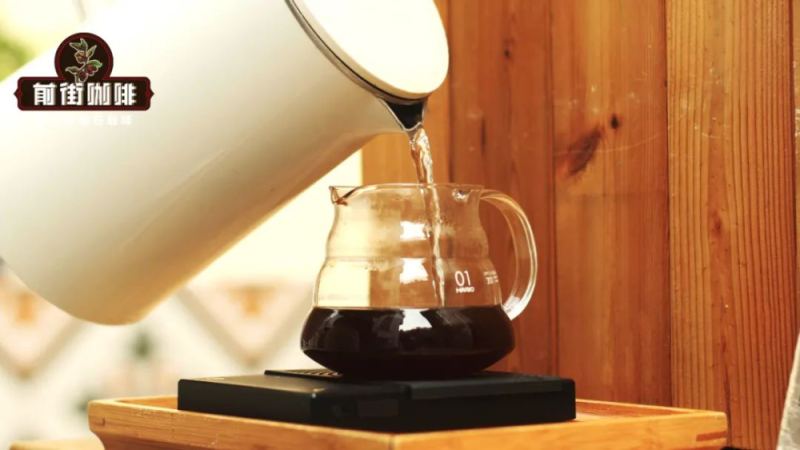
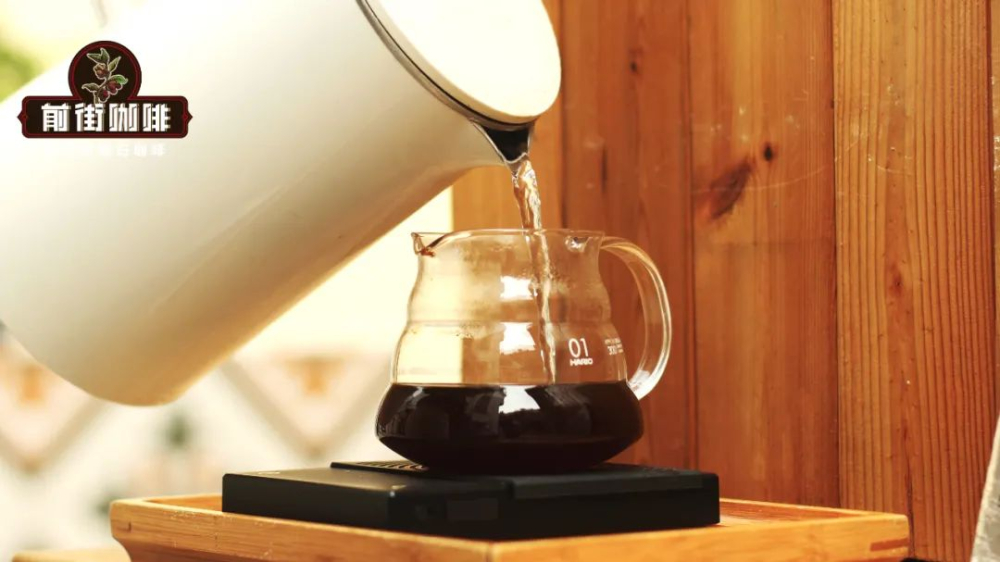
For example, in the scenario mentioned at the beginning, the barista actually sets aside a portion of the planned water separately, first uses the remaining water to extract a cup of coffee with higher concentration, then mixes the two parts evenly to finally obtain a cup with moderate concentration and pleasing taste. It can be seen that the hot water added afterward did not participate in extraction, but directly entered the cup to play a diluting role. This portion of hot water that did not take the "main path" we call "by pass water."
What is by pass used for?
As an auxiliary means, by pass is actually quite commonly applied in coffee extraction systems, and the combination of "main path + by pass" also frequently appears in the coffee we encounter daily.
Taking the most common Americano as an example, the espresso extracted by the coffee machine is the "main path," which is too strong and bitter to drink directly and highly stimulating, so a certain proportion of hot water must be added, or room-temperature water with ice used to dilute it, so that the coffee retains positive aromas while also providing the drinker with a palatable concentration. Obviously, the purpose of by pass (adding water) here is to adjust coffee concentration, and the by pass water also needs to be prepared in advance based on the flavor characteristics of the coffee beans.
The same idea is also reflected in iced pour-over: first use hot water to extract a carafe of high-concentration coffee, then use ice cubes to cool and dilute it, which is also a very typical by pass practice. Taking Front Street Coffee's daily output of 1–2 servings with 15g coffee grounds as an example, the coffee-to-water ratio for hot pour-over is 1:15, while iced pour-over uses the formula of "coffee grounds (fine grind) + 10 times hot water + 5 times ice cubes" to brew. So the ice cubes placed in the carafe in advance are actually the "by pass" that did not participate in extraction.
Besides adjusting concentration, many baristas also use by pass in "high concentration, low extraction" brewing schemes, with the purpose of suppressing the dry, bitter, and miscellaneous substances that coffee grounds easily release in the late stage. During operation, the barista will intentionally reduce the amount of water poured to lower the extraction rate, thereby reducing the precipitation of negative flavors, and finally dilute to an appropriate concentration by adding water, making the coffee flavor clearer and more comfortable to drink.
What other problems can by pass "rescue"?
Unlike the three planned scenarios above, by pass is also often used to deal with emergencies that arise at the last moment, such as late-stage water accumulation or coffee brewed too strong.
During the process of water washing through coffee grounds, small-molecule acidic substances dissolve first, then sweet substances, and finally the larger-volume bitter substances and the miscellaneous flavor components that are harder to dissolve in water. When there are too many fines, they easily fall onto the filter paper with the water flow and agitation, blocking the drainage gaps and causing the late-stage flow rate to slow down. If we just wait for all the hot water to drip through, first the extraction time will be forced to extend, and second the finer coffee particles are prone to over-extraction, producing bitter, woody, and other miscellaneous flavors.
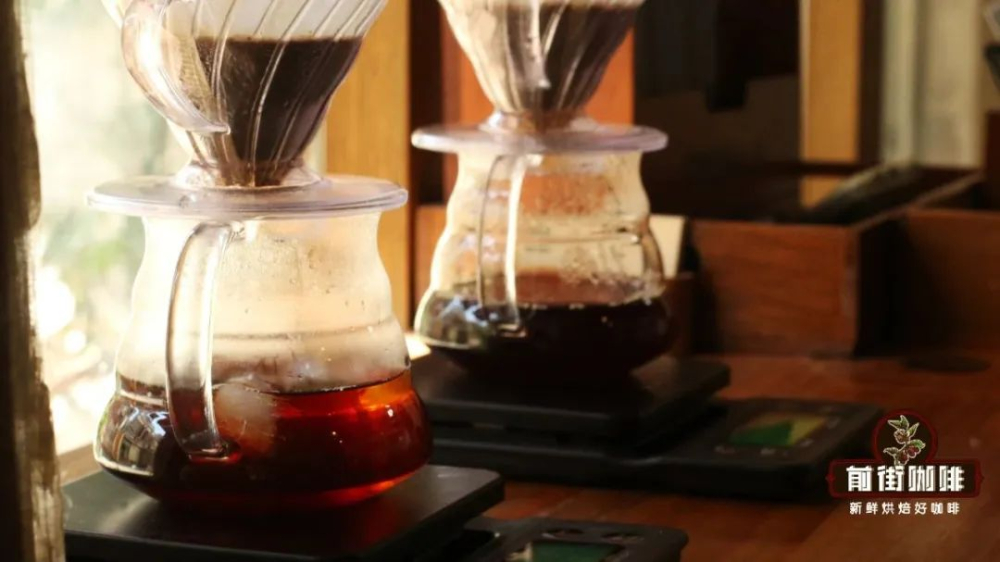
If our coffee brewing often exceeds 2 minutes 10 seconds, and the taste always lacks aroma, or the finish is not clean, then it is most likely caused by soaking too long. At this time, we might try removing the dripper when it exceeds 2 minutes, discarding the coffee liquid that won't come down even after ages, and then using by pass to "rescue" it.
Another situation is that we extract according to the original framework, but the brewed coffee overall feels very heavy, deep, and even somewhat muddled—in short, the flavors are hard to distinguish and lack layering. The reason may be that the flow rate was not well controlled during staged pouring, and the circular pouring range (amplitude) was too small, causing the coffee bed to all accumulate at the bottom, resulting in high coffee concentration, thick mouthfeel, and masking the lighter-textured aroma substances, such as some floral and fruity notes. At this time, we can add a little "by pass water" to help spread out the entire flavor spectrum, so we can better perceive the flavors.
It should be noted that since the by pass water in the above two emergency situations is not part of the extraction plan, it is best to take a sip of the brewed coffee first to see how the concentration is. If the taste is too strong, you can first add 5–10g of 75–80°C hot water to the carafe, shake well, and then taste. Remember to add in multiple small amounts until it suits your taste.
Finally, one more situation: if we find that the brewed coffee not only tastes strong but even has obvious bitterness, astringency, throat-catching, or other discomfort after swallowing, then this carafe of coffee is most likely already over-extracted. At this time, you can also follow the steps above to add a small amount of by pass water, trying to weaken some negative flavors.
However, in Front Street Coffee's view, this approach ultimately treats the symptoms but not the root cause. To brew delicious coffee, rather than relying on last-minute "dilution" to rescue it every time, it is better to carefully find the problem and correct it, so that learning will yield twice the result with half the effort.
- END -
The above content is compiled by CoffeeHunters, a coffee news website.


