







How Do Coffee Stages Improve Pour-Over Extraction?
Staged pouring splits the brew water into several pours after the bloom instead of adding it all at once. The reason is practical: multiple pours raise extraction efficiency and give the brewer more control over the finished cup. A one-pour flow after blooming is simpler but limits how much the brewer can adjust time and concentration during the pour.
Coffee extraction depends on contact time and on the concentration difference between the water and the coffee bed. Each new pour refreshes the water in contact with the grounds, which keeps that difference larger for longer. Competing methods such as the 4:6 approach rely on the same logic, and staged pouring also tolerates small mistakes better than a single continuous pour.
In the world of pour-over coffee, the choice of pouring method often determines the final flavor direction. Although brewing techniques emerge endlessly, multi-stage pouring has always remained mainstream—whether on professional competition stages, in café offerings, or in enthusiasts' daily practice, its presence can be seen. Many friends who are just getting into pour-over coffee ask Front Street Coffee: why must the water always be divided into several pours? Behind this actually involves two key factors: the improvement of extraction efficiency and the controllability of the brewing process. This article will unfold around the differences between one-pour flow and staged pouring such as the three-stage method, analyzing the advantages of multi-stage pouring from perspectives such as extraction time and concentration differences, while also answering why immersion extraction has a higher fault tolerance rate, helping everyone understand the essence of the pouring logic in pour-over coffee.
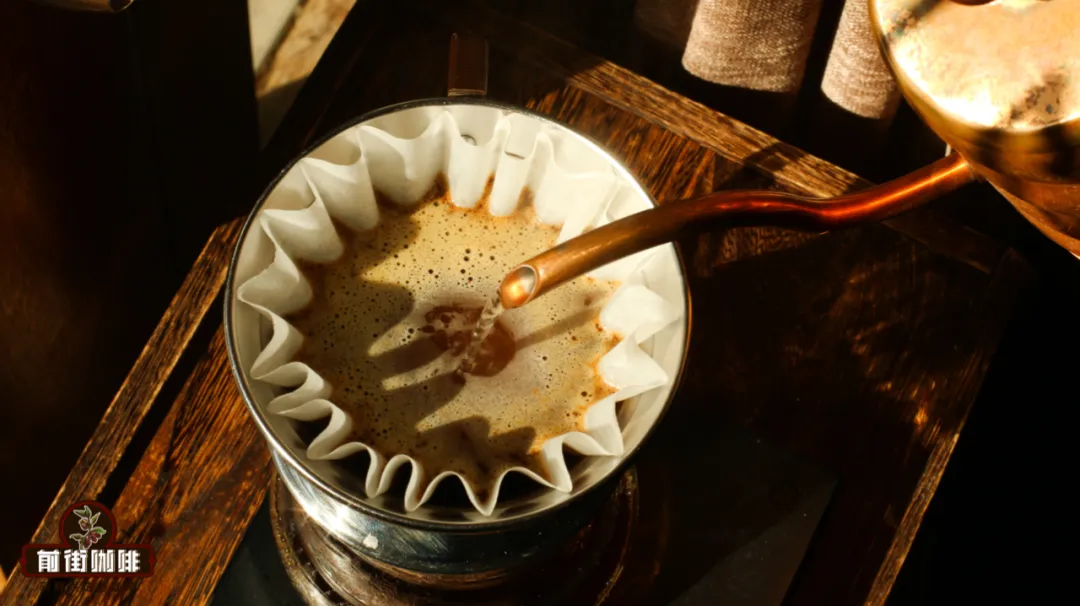
Although brewing methods are diverse, multi-stage brewing has always been more favored. Whether at competition venues, in café offerings, or in personal daily brewing, its presence is commonly seen. Therefore, many friends who are just starting out curiously ask Front Street Coffee: "Why must pour-over coffee pouring always be divided into several stages?"
So-called "staged pouring" means splitting the total amount of water needed for brewing into multiple pours. Since the pre-step of blooming has become generally accepted, when we discuss stages, we mainly focus on whether, after the blooming pour, the remaining water is poured all at once or divided into two or more stages of multiple pours.
Pouring all the remaining water in one go after blooming ends is one-pour flow brewing; while dividing it into two or more pours belongs to the three-stage method, the 4:6 method, or other brewing methods.
It is not hard to see that the question at the beginning is actually asking: why, compared with the "bold stroke" of one-pour flow, do people prefer multiple pours of two or more stages?
The answer is actually very simple. Two reasons lead people to favor multi-stage pouring: first, multi-stage pouring can improve extraction efficiency; second, multi-stage pouring offers greater controllability during brewing.
Advantage one of multi-stage pouring: improving extraction rate
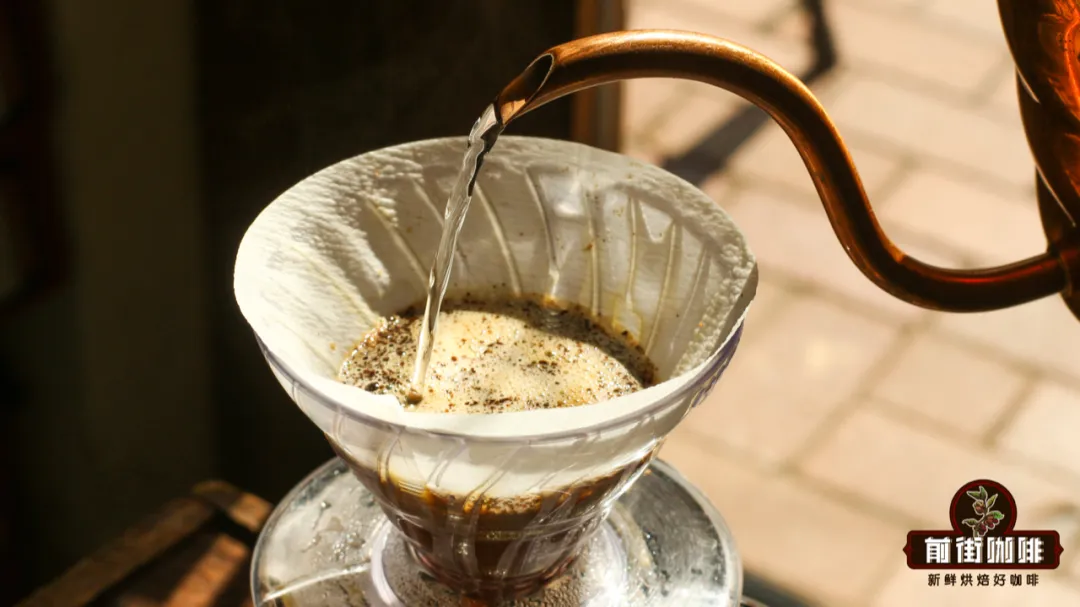
Compared with one-time pouring, the advantage of multi-stage pouring lies in its ability to improve the extraction rate, which involves two influencing factors. The first is extraction time. The most intuitive difference between multi-stage pouring and one-time pouring is that the extraction time is longer, because staged pouring adds several waiting periods, and one must wait for the hot water from the previous pour to finish flowing through before beginning the next pour.
Therefore, the more stages there are, the more waiting time accumulates, and the longer the total extraction time becomes.
Extraction time is the duration of contact between water and coffee grounds. The longer the contact, the naturally higher the coffee extraction rate. Under the same parameters, multi-stage pouring has a higher extraction rate than single-stage pouring.
Another reason is the concentration difference. We all know that extracting coffee uses water as a solvent to extract substances from coffee grounds, and this mainly relies on concentration differences. Under the same parameters, the lower the coffee concentration in the water, the faster the rate of dissolving substances; the higher the coffee concentration in the water, the lower the dissolution rate.
Speaking of this, Front Street Coffee would like everyone to think about a question: why can immersion extraction methods such as the French press and the Clever Cup steep for ten minutes without necessarily over-extracting, while drip-style pour-over coffee can produce an over-extracted cup in just 2–3 minutes?

Have you thought of the answer? One key reason is the concentration difference. The reason immersion extraction can steep for a long time without over-extracting is that the concentration of the liquid around the coffee grounds is continuously rising, and the extraction efficiency is becoming lower and lower.
Suppose the coffee liquid concentration in the water is initially 0; at that time the dissolution rate must be extremely fast. But as more coffee substances are dissolved, the coffee concentration in the water gradually rises, and the extraction efficiency declines accordingly, because the concentration inside and outside the coffee grounds tends to become consistent, making it naturally difficult to extract more substances.
In pour-over coffee, however, because "fresh" hot water is continuously poured in, the liquid concentration is constantly being "refreshed." This is also why people often say immersion extraction has a higher fault tolerance rate than drip extraction and is less prone to over-extraction.
This may be a bit far afield, but applying the principle to pour-over pouring follows the same logic. If all the hot water is poured in at once during pour-over, the hot water in the dripper will cause the extraction rate to become lower and lower as the coffee concentration rises, since the water will not flow through very quickly; if divided into multiple stages, the water concentration can be continuously refreshed, allowing the extraction efficiency to be maintained. Therefore, under the same parameters, multi-stage pouring has a higher extraction rate than one-time pouring. In addition, there are relatively minor factors such as rinsing efficiency, which Front Street Coffee will not expand on too much here.
Advantage two of multi-stage pouring: greater controllability
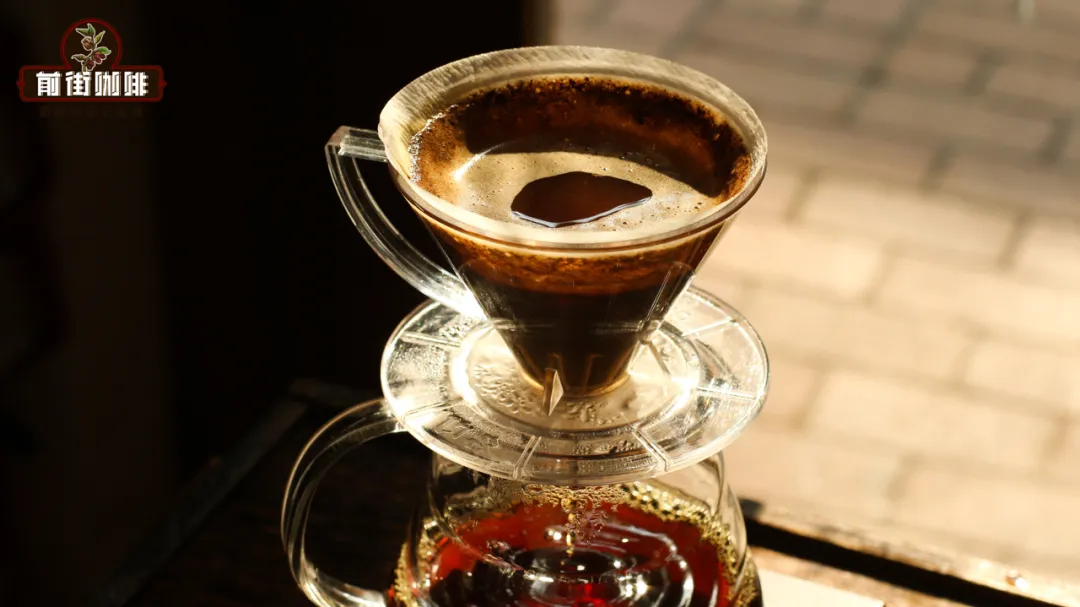
Another advantage is the ability to better control extraction time. When pouring is divided into two or more stages, it becomes easier to keep the extraction time within the ideal range.

The above content is compiled by CoffeeHunters, a coffee news website.


