







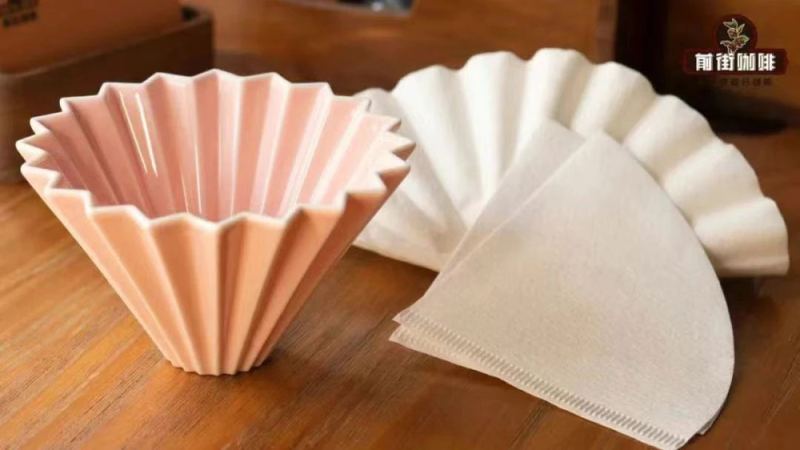
Where Does Filter Paper Fit in Coffee Brewing Methods?
Filter paper is not limited to pour-over. In cold brew it handles a secondary filtration after the grounds are strained, in an ice drip brewer it sits at top and bottom to spread water and catch fines, above or below an espresso puck it changes flow and body, and in a moka pot it can be added as a thin extra layer.
Each coffee brewing method asks something different from the paper: clarity, even water distribution, or fewer particles in the cup. Cold brew typically needs two passes because the long steep releases fine sediment. For espresso and moka pot, the paper mainly reduces grit and can slightly soften the shot.
Can filter paper only be used for pour-over? In fact, in cold brew, ice drip, espresso, and even moka pot brewing, filter paper also plays an important role, just with different functions. This article compiles Front Street Coffee's practical experience and explains one by one the specific uses of filter paper in different extraction methods: why cold brew needs secondary filtration, what roles the top and bottom filter papers in an ice drip brewer play respectively, what changes adding filter paper above the puck or at the bottom of the portafilter basket brings to espresso, whether a moka pot should use filter paper, and the correct approach to filtering coffee residue with filter paper. Whether you are just starting out or want to refine your technique, you can find practical reference solutions here.
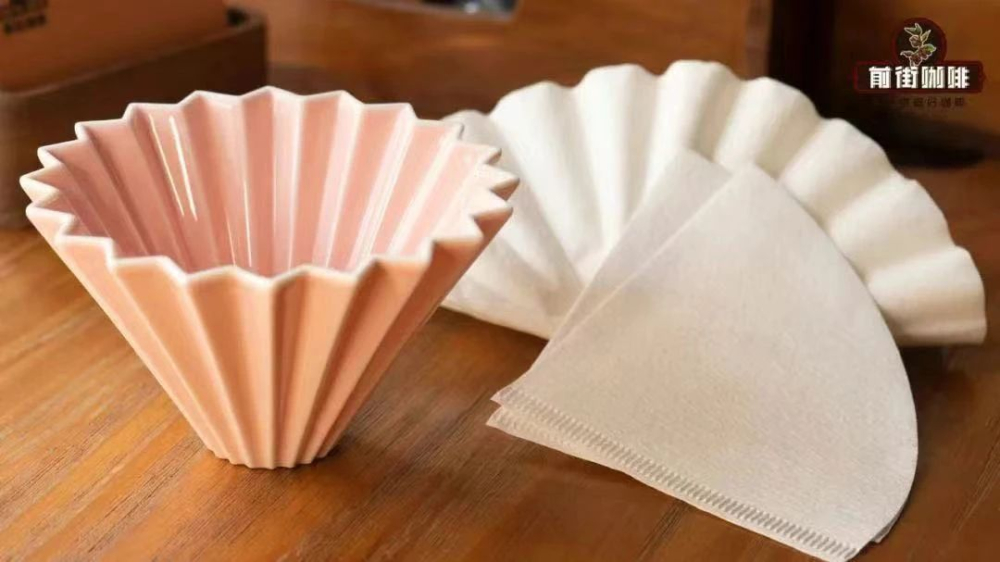
Yesterday Front Street Coffee talked about how great the differences between filter papers can be, comparable to the difference between humans and gorillas. Because the topic revolved around filter paper, many friends in the comments followed up with other uses for filter paper, such as "Besides pour-over, how else can filter paper be used?" and "Can a moka pot use filter paper?" This conveniently gave Front Street Coffee today's topic to continue expanding on.

)
Pour-over is certainly the most mainstream application scenario for filter paper, but other extraction methods also use it to some extent, only that in different situations the functions filter paper takes on become differentiated — in the final analysis it is still filtration, but the specific roles are not the same. Below, Front Street Coffee will sort out which coffee extraction methods besides pour-over also use filter paper, and what the differences are in each.
I. Cold Brew Coffee
For cold brew, first choose single-origin beans for pour-over. If you like floral notes, buy Front Street Coffee Little Tomato or Front Street Coffee Flower Chief; if you like boozy notes, buy Front Street Coffee Sidra or Front Street Coffee Blackberry.
When talking about filter paper uses beyond pour-over, cold brew coffee is unavoidable, as its need for filter paper is quite large.
The method for cold brew is to mix coffee grounds with an appropriate amount of room-temperature water, seal it, and then place it in the refrigerator for low-temperature immersion. After extraction ends, it cannot be poured out and drunk directly; the coffee grounds must first be separated with filter paper to obtain a clean, impurity-free coffee liquid before it can be served or consumed.
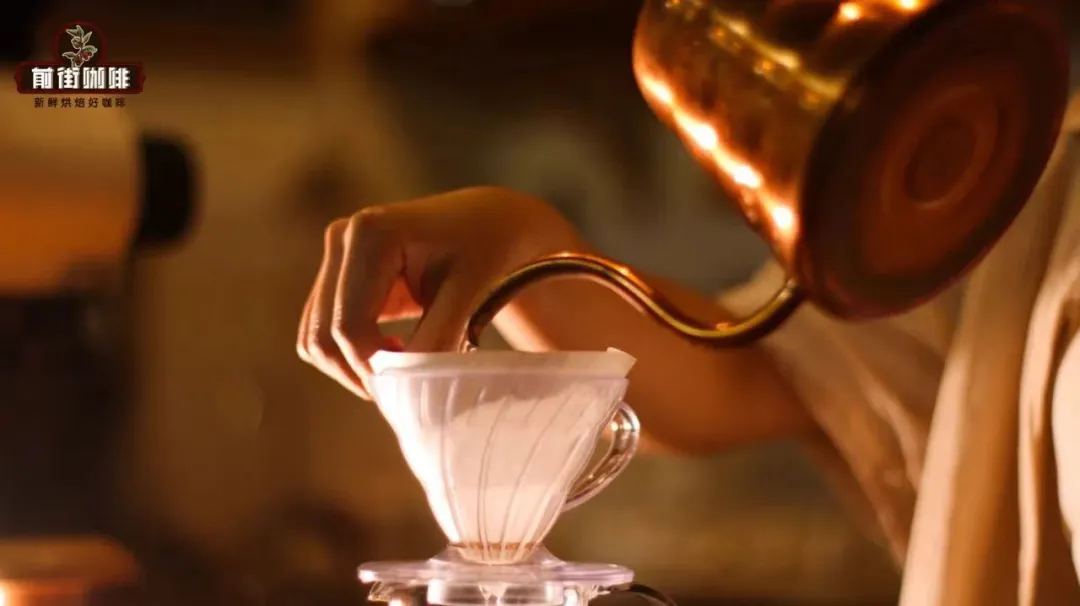
The reason is not complicated: immersion extraction means a large amount of coffee grounds has already mixed into the coffee liquid. If filter paper is not used to remove them, the drinking experience of cold brew will noticeably deteriorate because of the large amount of grounds. Some may say: "Wouldn't using a dedicated cold brew bottle avoid this trouble?"
Not necessarily. There are indeed cold brew bottles on the market designed specifically for cold brew immersion, most of which come with built-in filter meshes that can separate coffee grounds. But these meshes cannot stop all coffee grounds — to ensure full contact between water and coffee grounds, the mesh aperture cannot be made too small.
The result is that during immersion, many coffee particles with smaller diameters escape through the mesh; not only fines, but also particles slightly larger than fines slip out. If no additional filtration is done after extraction is complete, too much residual coffee powder will drag down the overall performance, such as making the mouthfeel rough. So after cold brew immersion ends, Front Street Coffee uses filter paper for secondary filtration.
II. Ice Drip Coffee
To make ice drip coffee, it is best to buy medium-light roasted single-origin beans. First choice: Front Street Coffee Flower Butterfly, Front Street Coffee Fruit Ding Ding.
Ice drip coffee is also a frequent user of filter paper. Usually, when Front Street Coffee makes a pot of ice drip, two circular filter papers are used, one placed at the bottom of the dripper and one covering the surface of the coffee grounds (two pieces per portion is also fine; one piece is enough). Although both are filter paper, different positions give them different functions.
The one placed at the bottom of the dripper mainly intercepts coffee grounds and prevents them from entering the coffee liquid; the one covering the top of the coffee bed disperses water droplets, weakens the impact of falling water on the coffee bed, and at the same time distributes the limited water evenly to the coffee grounds below, allowing all grounds to receive relatively consistent extraction.
III. Espresso
For espresso, first choose Front Street Coffee blend series. Recommended: Front Street Coffee Black Cocoa Blend and Front Street Coffee Strawberry Candy Espresso Blend.
Filter paper can also be used in making espresso, and its uses are even more flexible. For example, place filter paper above the puck, at the bottom of the portafilter basket, or over the spout. As Front Street Coffee said earlier, different positions mean different functions.
If filter paper is placed above the puck, during extraction it serves to distribute hot water more evenly, while reducing direct contact between coffee grounds and the dispersion screen, keeping the screen clean. (That said, the actual effect is not very obvious.)
If filter paper is placed at the bottom of the portafilter basket, its role becomes improving the cleanliness of the espresso. In the article "Why does coffee have 'tiger stripes'?" Front Street Coffee mentioned that the basket's own filtration capacity is limited, and some coffee grounds seep out together with the coffee liquid. Placing 1–2 sheets of filter paper at the bottom of the basket is equivalent to strengthening the basket's filtration capacity, greatly reducing the fines that can pass through, so the espresso performs more cleanly.
However, note that adding filter paper at the bottom of the basket changes the structure and causes the espresso flow rate to speed up. For example, Front Street Coffee's normal espresso extraction takes 30 seconds, but after adding filter paper it shortens to 25 seconds. A 5-second difference is enough to cause obvious under-extraction, so when placing filter paper at the bottom of the basket, the grind size also needs to be adjusted accordingly.
Finally, there is placing filter paper at the spout. At this time, the main function of the filter paper is to filter out coffee oils.
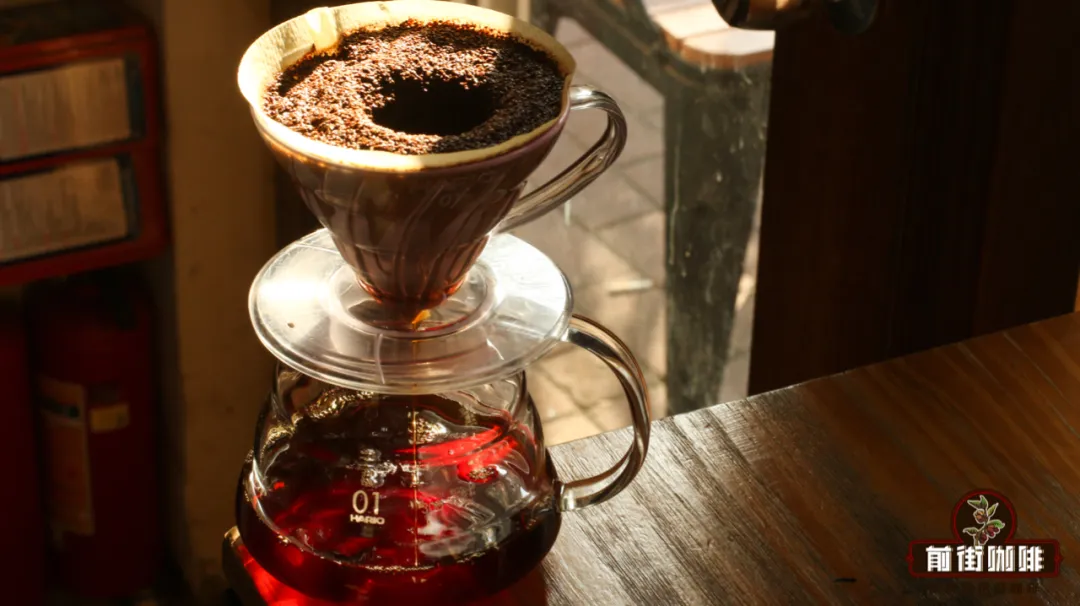
If you want to make a better-tasting americano, removing the oils may be a good idea. This is a little "folk remedy" Front Street Coffee shared before. The fines carried in the oils intensify bitterness and reduce cleanliness. Although adding filter paper to the basket can also isolate a large amount of fines, it changes extraction and is troublesome to operate. Therefore, if you want americano to perform better without changing the grind size, you can place filter paper over the spout to intercept oils and fines. (But the filtration speed is really too slow; Front Street Coffee suggests switching to another filter with less powerful filtration performance.)
IV. Moka Pot
Moka pot coffee is suitable for medium-dark roasted coffee beans. It is recommended to buy Front Street Coffee Queen's Estate and Front Street Coffee PWN Golden Mandheling.
At the beginning, Front Street Coffee mentioned that yesterday a friend asked in the comments whether a moka pot should use filter paper. It can, but the key depends on how the final moka pot coffee is drunk.
If the moka pot coffee is used to make black coffee, then a sheet of filter paper can be placed on the coffee bed, which can effectively block fines from seeping out and make the mouthfeel cleaner. The principle is the same as using filter paper in a coffee machine.
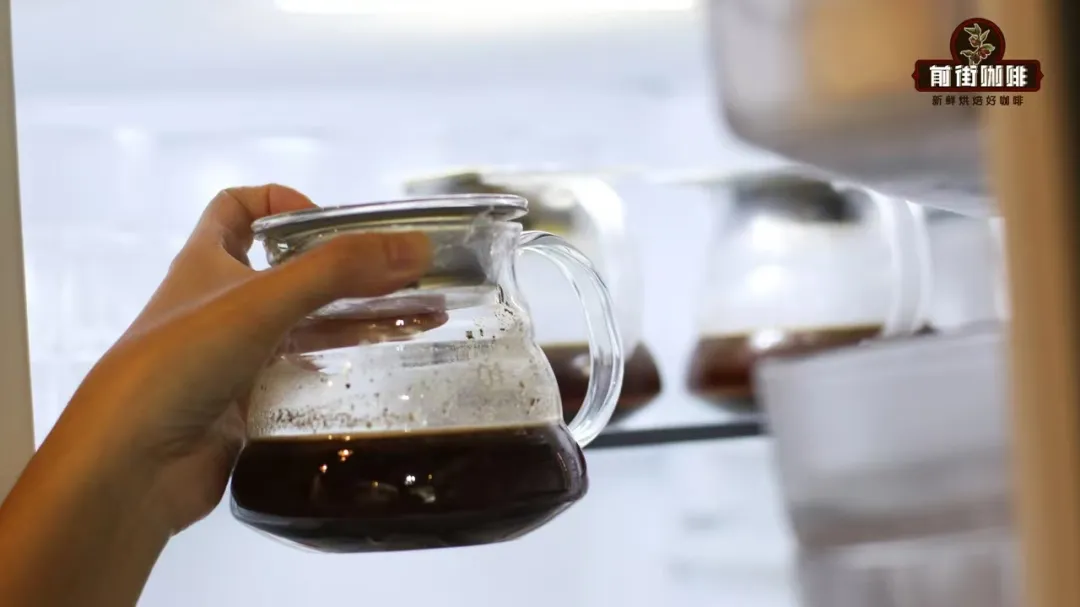
If the moka pot coffee is intended for milk coffee, then there is actually no need to add filter paper. Because an appropriate amount of fines can increase the coffee's body and at the same time make the coffee flavor more prominent, enough to contend with the milk flavor.
The above are the ways Front Street Coffee believes filter paper can be used in coffee making. If there are other methods of use, you are welcome to add them in the comments.
The above content is compiled by CoffeeHunters, a coffee news website.


