Latte is just one member of the milk coffee family—from Roman cappuccino to Melbourne's flat white, from Spanish cortado to Vietnamese egg coffee, "coffee with milk" has evolved into a vast family worldwide. Each milk coffee is a local culture's unique solution to the milk-fat ratio, and behind each solution lies a preferred bean character. This tour explores this family and touches on what beans pair with each.
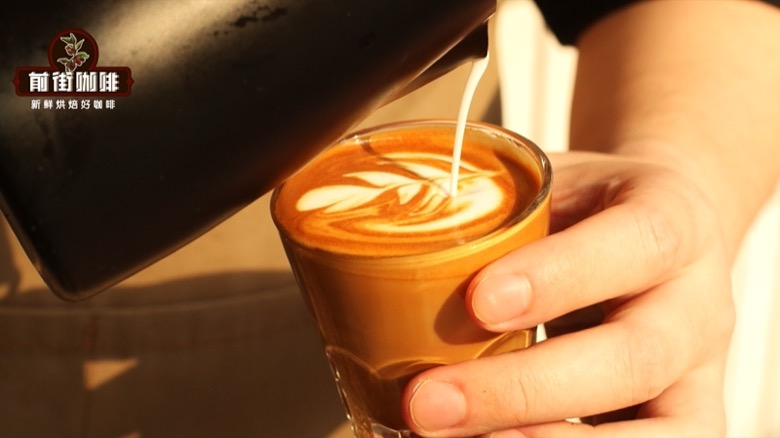
Cappuccino: The Italian morning classic. An equal-part structure (espresso, hot milk, milk foam each one-third) topped with thick milk foam is the standard setup on Italian breakfast tables. The dialogue between thick foam and strong coffee demands beans that are "bold enough": Front Street Coffee's Classic Blend Mantebar recipe is a specialty-grade rendition of the same approach—the intensity of the dark roast remains clear beneath the thick foam, and its full-bodied backbone supports this classic structure.
Latte: The Americanized mainstream of milk coffee. With a large volume of milk and thin foam, latte turns milk coffee from a "morning ritual" into an "everyday drink." The dilution from the large milk volume demands beans with solid sweetness: Front Street Coffee's Specialty Blend (Brazil Cerrado plus Colombia Huila) retains its nutty caramel sweetness even in two hundred milliliters of milk, making it the standard profile for latte beans.
Flat White: The refined style of Australia and New Zealand. A double ristretto (short-extracted espresso) with a thin layer of milk, around one hundred sixty milliliters per cup—small yet strong, thin milk yet well integrated. The concentrated sweetness of the ristretto, with restrained acidity and bitterness, pairs perfectly with thin milk. Bean pairing: a medium-dark roasted balanced bean has just the right flavor density, and a single-origin ristretto (Front Street Coffee's Brazil Queen's Estate ristretto version) is an advanced play.
Cortado: The Spanish philosophy of the small cup. Equal parts espresso and hot milk, a sixty-milliliter small cup, no milk foam—pursuing "milk rounds off the edges of the coffee, but the strong coffee still leads." This structure suits beans with character: a medium-roast specialty bean retains its regional personality in a cortado, and Front Street Coffee's Dark Cocoa Blend version is "an espresso chocolate finished in three sips."

Café au Lait: The French home-style approach. Drip coffee directly mixed with hot milk, one-to-one ratio—the traditional French family morning. A light base with milk demands beans that are "cleanliness first": a medium-roast single-origin bean (Front Street Coffee's Yunnan Typica) shows a gentle malt sweetness in milk, making it the comfortable solution for this structure.
Vietnamese Coffee: The heavy-flavor school of condensed milk. Dark-roasted Robusta drip coffee with condensed milk, a collision of sweet and bitter, intensely distinctive in its own right. Recreating it with Arabica: dark-roasted Front Street Coffee Mandheling with condensed milk, where the bitterness of herbal dark chocolate is wrapped by the sweetness of condensed milk—a specialty-grade version of "heavy-flavor milk coffee."
The takeaway from this tour is a bean-selection perspective: the more "milk-heavy" the structure, the more solid the bean's sweetness must be (latte); the more "espresso-heavy" the structure, the more the bean's flavor personality must stand firm (cortado, Vietnamese-style). Choosing beans by structure allows every cup of "coffee with milk" to capture the authentic taste of its local version.
The above content is compiled by CoffeeHunters, a coffee news website.