








Does blooming help cold brew, and how does it compare to hand brew coffee?
Blooming cold brew with hot water before the cold soak does not change the flavor profile much, but it raises concentration. In a controlled test, two pots of cold brew used identical parameters except for water temperature: one mixed with room-temperature water, the other bloomed with 92°C water for 30 seconds before the cold water was added.
Both batches used Sidamo Floral Queen 8.0 at 25g, a 1:12 ratio, Ek43 setting 10 and an 8-hour soak, then were filtered and tasted. The bloomed version came out stronger, and the article explains the difference comes from the hot water and the parameter changes used to bloom, not the bloom step itself.
Cold brew coffee has always been made by soaking at low temperatures throughout the entire process, but if the coffee grounds are first bloomed with hot water before soaking, will the final product taste better? Front Street conducted a controlled experiment using Sidamo Floral Queen 8.0: apart from the water temperature treatment, the two pots of cold brew had completely identical parameters—one pot was mixed directly with room-temperature water and refrigerated, while the other was first bloomed with 92°C hot water for 30 seconds before adding room-temperature water. After 8 hours, they were filtered and tasted, revealing that the flavor profiles of the two were similar, but the bloomed version had a higher concentration. The article then explains that the real source of this difference is not the blooming action itself, but rather the hot water and parameter changes introduced to complete the blooming, and combines the principle of hand-brew blooming degassing to explain its applicability in the cold brew scenario.

The conventional method for cold brew coffee has always been to let water and coffee grounds contact for a long time in a low-temperature environment to complete extraction. Operationally, it's simply mixing the two, sealing, and putting it in the refrigerator to soak. If you add a hot water blooming step before soaking, it does sound quite different from the traditional cold brew approach. So can this method actually make cold brew taste better? Front Street decided to conduct a comparative experiment and let the results speak for themselves.
Extraction Experiment
To make the difference between the two pots of cold brew easier to identify, Front Street selected a bean with a conventional processing method and a relatively fresh flavor profile—Sidamo Floral Queen 8.0. Apart from the different water temperature treatment, all other extraction conditions were completely identical. The specific parameters are as follows:
Coffee dose: 25g Grind size: Ek43 setting 10, 80% passing rate on a No. 20 sieve, consistent with hot hand brew Coffee-to-water ratio: 1:12 Soak time: 8h
The regular pot of cold brew was not difficult to make. Following the familiar process, the coffee grounds and the corresponding proportion of room-temperature water were poured into the same container, stirred evenly, sealed, and placed in the refrigerator.
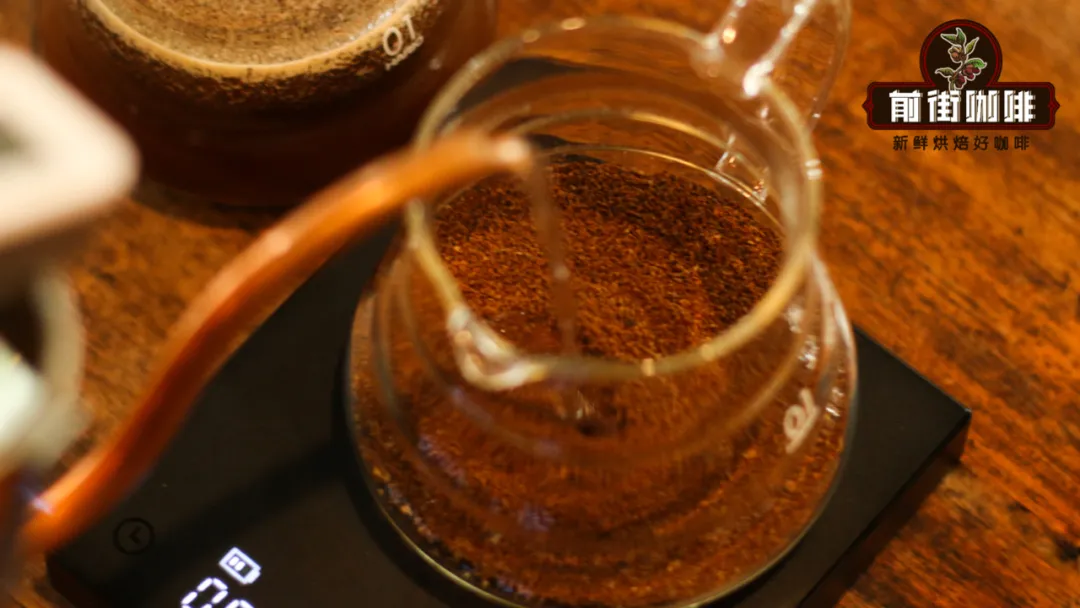
Next, the cold brew with the blooming step was made. First, 40ml of 92°C hot water was used to fully saturate the coffee grounds, and the blooming lasted for thirty seconds.
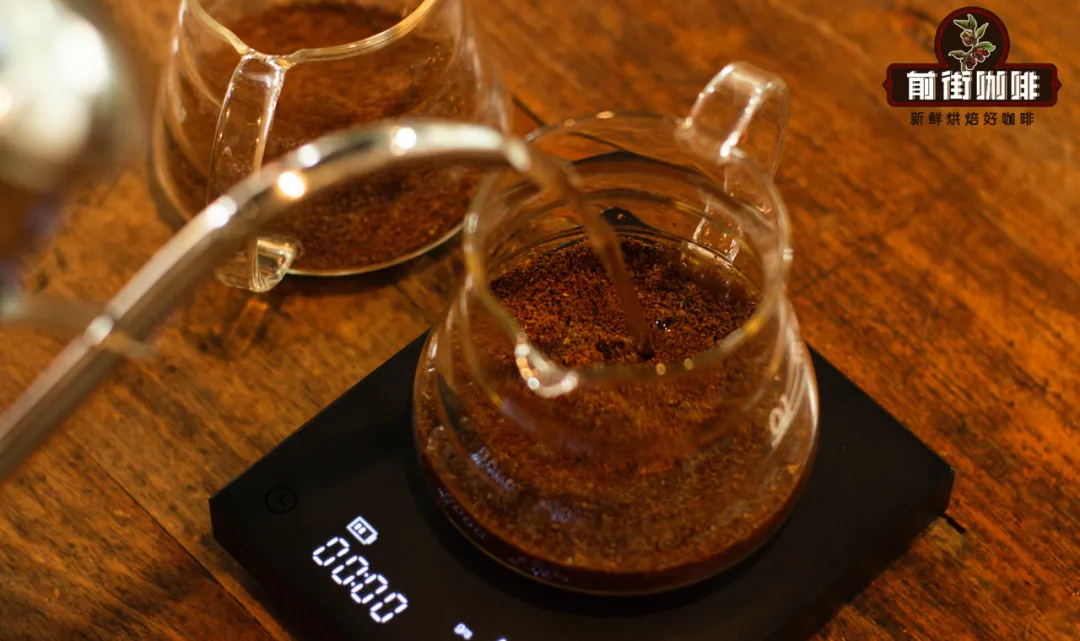
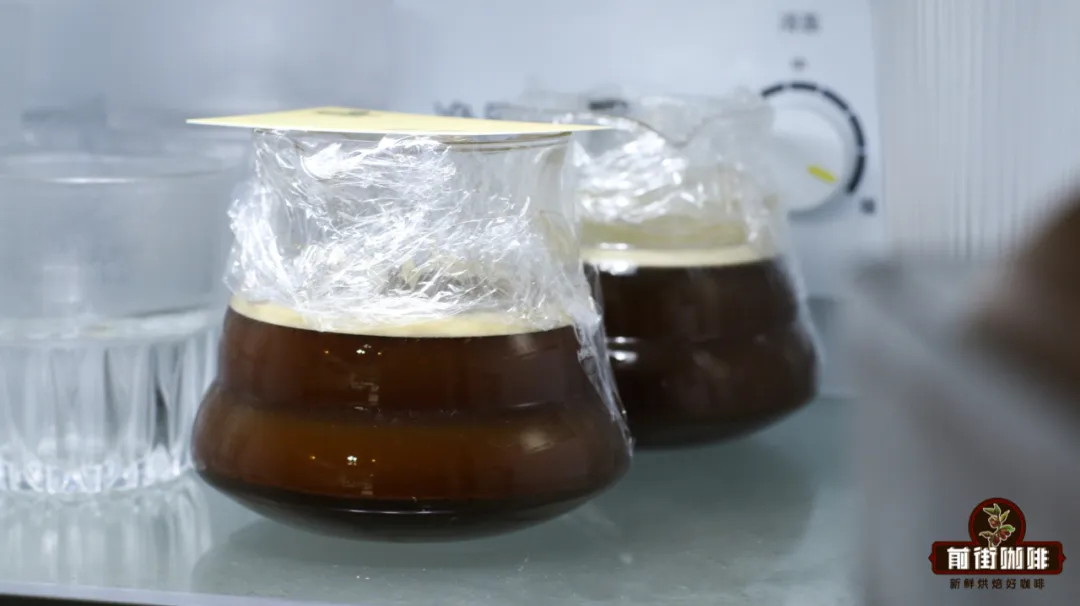
After thirty seconds, the remaining 260ml of room-temperature water was poured in, stirred evenly, sealed, and placed in the refrigerator to soak.
Eight hours later, the two pots of coffee were taken out of the refrigerator, the grounds were filtered out, and they were tasted separately.
There was indeed a difference between the two. The conventionally made pot of cold brew Floral Queen presented flavors of strawberry, citrus, honey, and melon, with prominent sweetness and a refreshing entry. The pot that was bloomed before cold brewing showed no significant difference in flavor expression, but had a relatively higher concentration.
Why is there such a difference?
Cold brew coffee did indeed change in concentration due to the extra blooming step, but note that the key factor affecting the cold brew result is not the "blooming" action itself, but the parameters used to complete this action. It's not complicated to understand—just recall what blooming normally does for coffee.
The purpose of blooming in daily brewing is to release the carbon dioxide trapped in the coffee grounds. Hand brew is a drip extraction method, where water and coffee grounds do not stay immersed together the whole time, and we need to extract flavor compounds in a relatively short time, so blooming is used to release the carbon dioxide that would interfere with stable extraction.
The above content is compiled by CoffeeHunters, a coffee news website.


