







How Does Colombia Grade Green Coffee Beans?
Colombia grades green coffee beans by defect rate and screen size, not altitude alone. The National Federation of Coffee Growers export standard is Excelso, the top grade for Colombian green beans, marked on jute bags as Excelso-Café de Colombia and supplied with a quality certificate. Beans must sit above 14 mesh, with at least 50 percent larger than 15 mesh.
Under the coffee grading system, no more than 5 percent may fall between 12 and 14 mesh, moisture must not exceed 12.5 percent, and beans must be free of insect damage and off-flavors. A 500-gram sample is scored for primary and secondary defects, capped at 24 points, since full, even, large beans are treated as fully mature and better able to develop aroma.
Colombia's coffee grading system is more complex than that of most Central American producing countries. It not only considers altitude, but also establishes a set of export standards based on defect rate and screen size. The Excelso grade adopted by the FNC is the highest export grade for Colombian green beans. The jute bags will be marked with "Excelso-Café de Colombia" and accompanied by a quality certificate. This article explains the grading logic, screen size requirements, and defect deduction rules, then covers the three most common export grades. Using a washed Caturra from the Huila region as an example, it illustrates green bean traceability and cupping flavor performance, helping coffee enthusiasts understand the meaning behind Colombian green coffee labels.
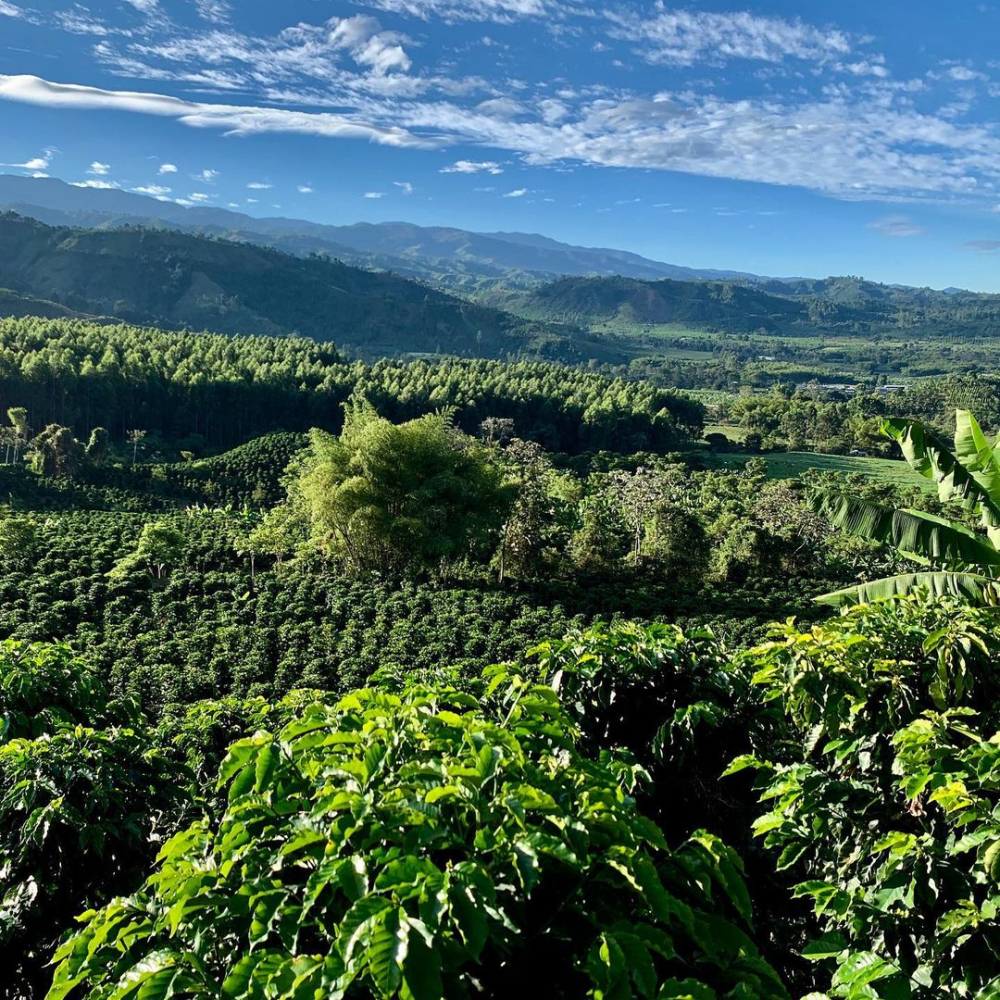
The grading methods of coffee-producing countries in Central America are generally not complex, with most using growing altitude as the basis for classification. But when it comes to South America, the situation becomes more detailed. Taking Colombia as an example, its grading considers both defect rate and screen size, with the aim of keeping the quality of exported coffee at a stable level.
Excelso is the export standard grade adopted by the National Federation of Coffee Growers of Colombia (FNC), and it is also the highest grade for Colombian green beans. In Colombia, as long as green coffee beans reach the export grade, the jute bag packaging will be marked with "Excelso-Café de Colombia," and a Quality Certificate issued by the FNC can also be obtained.
According to the requirements, the size of the coffee beans needs to be above 14 mesh. Overall, at least 50% of the green coffee beans must be larger than 15 mesh, and no more than 5% of the green coffee beans may be between 12 mesh and 14 mesh. They must also be free of insect damage, uniform in color, free of off-flavors, clean in flavor, and have a moisture content not exceeding 12.5%.
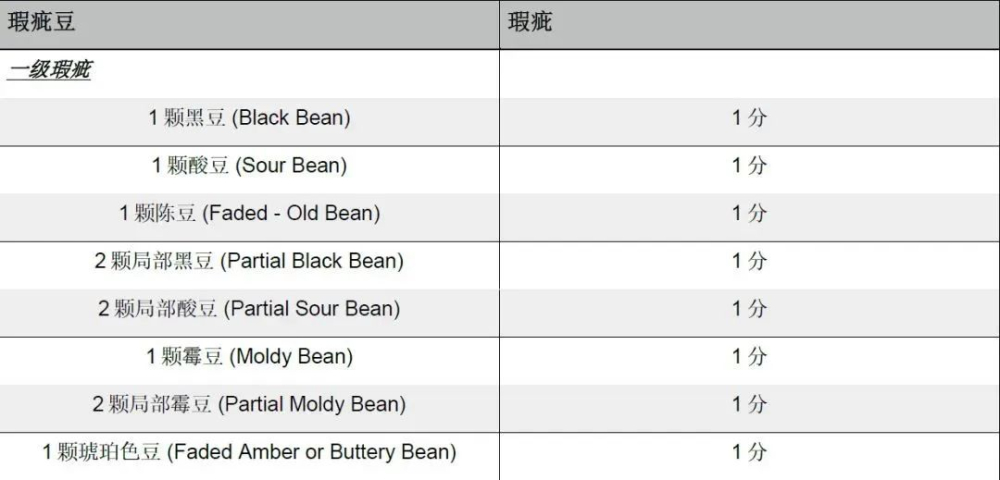
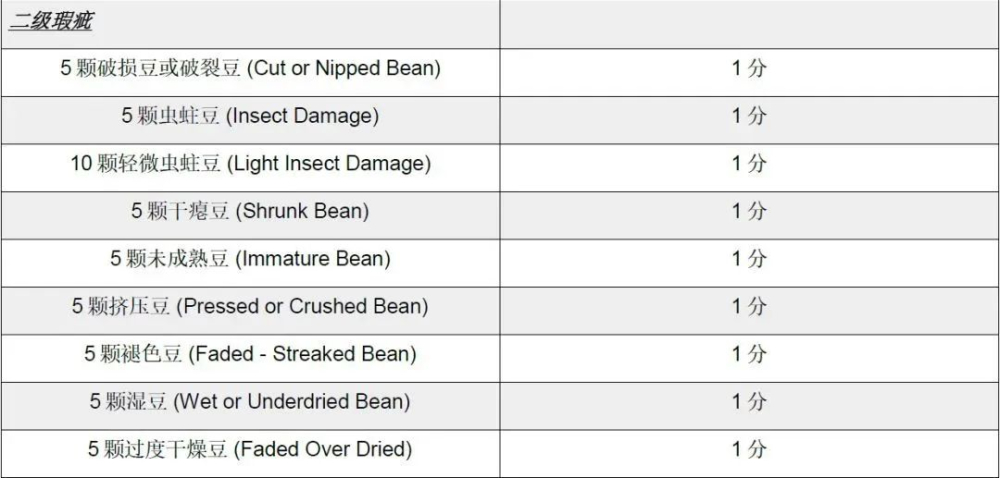
In addition, a 500-gram sample of green coffee beans needs to be taken for defect classification. Green bean defects are divided into primary defects and secondary defects. This 500-gram sample will be assessed by a scoring method for defect points, but it must not exceed the defect limit of 24 points.
In Colombia's understanding, full, neat, and large coffee beans mean that the green beans have reached a fully mature state, can develop richer aroma types, and are also conducive to even roasting, thereby forming a consistent flavor. Therefore, screen size is also used as an important basis for grading.
Currently, the three most commonly used grades in Colombia are Excelso UGQ12*60 (1.5%), Excelso EP12*60 (10%), and Excelso Supremo12*60 (5%).
Specifically, in Excelso UGQ12*60 (1.5%), UGQ stands for Usual Good Quality. The green bean size is above 14 mesh, and 1.5% of green beans may be allowed between 12 mesh and 14 mesh, but they must be above 12 mesh, and more than 50% must be larger than 15 mesh.
In Excelso EP12*60 (10%), EP stands for European Preparation. The green bean size is above 15 mesh, and 10% of green beans may be allowed to be smaller than 15 mesh, but they must be above 12 mesh.
Excelso Supremo12*60 (5%) has the largest screen size. The green bean size is above 17 mesh, and 5% of green beans may be allowed to be smaller than 17 mesh, but they must be above 14 mesh.
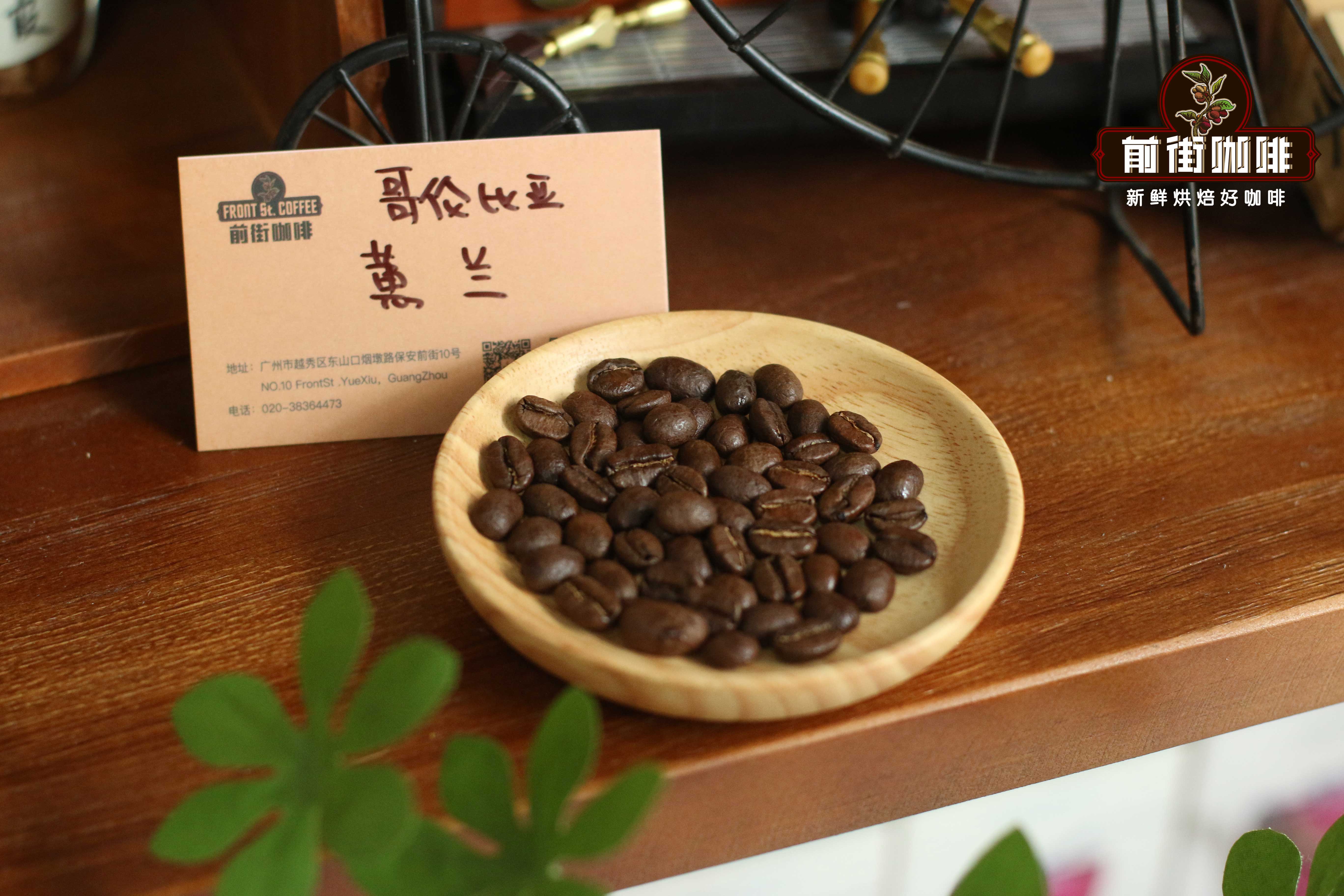
In addition, for Supremo 12*60 (5%), the most commonly exported type in Colombia, the later 12*60 also refers to the "tolerance rate," indicating that in a 500-gram sample of beans, a maximum of 12 primary defect beans and 60 secondary defect beans are allowed. Several Colombian coffee beans listed on our bean list, including Front Street Rose Valley, Front Street Sidra, Front Street Ombligon, and Front Street Finca La Esperanza Geisha, all belong to the Supremo grade.
Moreover, coffee farmers in Colombia will enter numbers and green bean information to facilitate future green bean traceability. Usually, the country, region, grade, and screen size are used as the name of the green coffee beans. Take the entry-level daily coffee bean Colombia Huila launched by Front Street as an example. On the jute bag of the green beans, you can see the words "Colombia Huila Supremo SC17/18 FNC."
Through cupping, it was found that this coffee bean has Colombia's traditional rich aromas of nuts and chocolate, along with soft fruit acidity and sweetness, and is clean and balanced overall, so a medium roast is chosen. After brewing, the entry has soft fruit acidity, nutty and chocolate flavors, and a caramel-like sweetness, making it soft and balanced overall.
The above content is compiled by CoffeeHunters, a coffee news website.


