







What Does This Milk Tea Mix-Up Say About Coffee Culture?
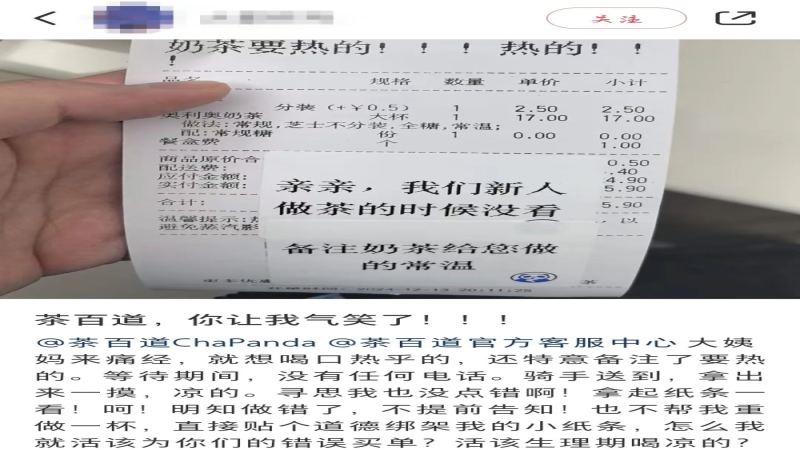
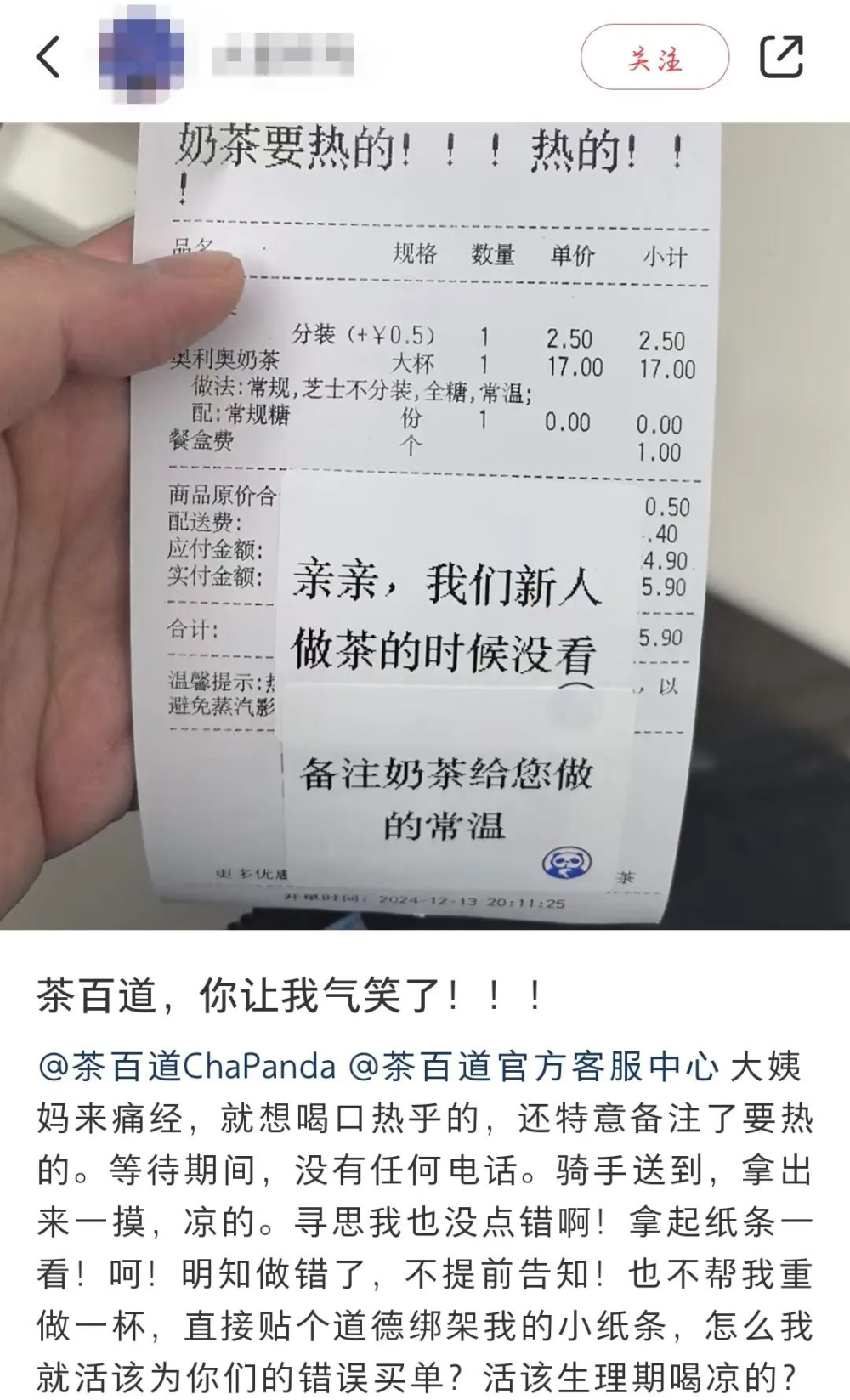
A customer at a ChaPanda store wrote in her order remarks that her milk tea should be made hot, after confirming with the store that this was possible. The drink arrived at room temperature, with a note saying new staff had not checked the remarks. The case drew online discussion about why the customer should bear the store's mistake.
Practitioners in the restaurant industry say that when an order is made incorrectly, the store should absorb the loss and remake it rather than pushing the wrong item onto the consumer. The drink in question had no hot option in the ordering system, only room temperature. The incident touches on service standards that matter in coffee culture and specialty coffee retail.
As the weather turns colder, many consumers specifically request hot drinks when ordering coffee or milk tea. However, recently a customer at a ChaPanda store clearly noted "heated" in her order remarks, yet received a room-temperature drink. What angered her even more was that the staff had already noticed the mistake when handing out the order, but still packed the drink and sent it out, along with a note explaining. This incident sparked heated discussion online: why should the customer pay for the store's mistake? Restaurant industry practitioners point out that when an order is found to be made incorrectly, the store should bear the loss and remake it, rather than forcing the wrong item on the consumer.
▲
Click to follow | Daily specialty coffee culture magazine Coffee Workshop
As temperatures gradually drop, many people want to drink something hot when buying coffee or milk tea, so they often specifically note when ordering, asking the shop to make it a hot drink.
Recently, there was such a consumer. After communicating with a ChaPanda store in advance, she wrote in the order remarks that her milk tea should be made hot. However, when the delivery rider handed the drink to her, she found that the milk tea was at room temperature.
Facing this situation, the customer initially thought it might just be a mistake caused by the staff being too busy, and she could understand that. But when she saw the two labels attached to the order, which read, "We didn't check the remarks when our new staff made the tea, so the milk tea was made at room temperature for you," such an explanation left her both angry and amused.
It is understood that the Oreo milk tea this customer purchased originally had no hot drink option in the ordering system, and only room temperature could be selected. But the original poster had previously confirmed with the store that this drink could be made hot according to customer needs, as long as it was noted in the order remarks, so she attached a note every time she ordered, asking the store to heat the drink.
Unexpectedly, a drink she had bought many times before "failed" this time. The customer said that judging from the explanation on the label, the staff likely already realized the drink was made incorrectly when packing the order, but without informing the consumer in advance, they still sent out this room-temperature milk tea. In the customer's view, this was no different from paying for the employee's mistake herself, and she felt both confused and angry about the store's approach.
In response, some speculated that perhaps it was because making the wrong drink would result in a fine, or perhaps to avoid wasting the milk tea already made, that the staff, knowing the order was wrong, still packed this room-temperature milk tea and sent it out with a small note explaining the reason.
However, this explanation is not acceptable to consumers or most onlookers online. They believe that after discovering the drink was made incorrectly, the shop should have remade a cup of milk tea that met the customer's requirements, rather than making one mistake after another, arbitrarily forcing a drink the customer did not want into her hands, and then using a far-fetched explanation to try to make the consumer forgive their work error.
"They had time to stick a note but no time to remake a cup," "The merchant made a mistake and discovered it, and had time to write a note but no time to remake it for the customer?" "Isn't this forced buying and selling?" "Their own mistake, the customer pays for it..." "Knowing it was made wrong and still not pouring it out to remake it, this store really is something."
Some restaurant industry practitioners said that usually, if staff discover before serving that a customer's order was made incorrectly, the store should bear the loss for this work error and remake it for the customer before sending the drink out. Even if it is to avoid wasting the milk tea already made, they should still communicate with the other party and only give the wrong order after obtaining the user's consent.
In their view, the behavior of this store's employee may have allowed them to avoid being held accountable by the person in charge for making the wrong drink, but it will leave an impression of insincerity in consumers' minds, thereby bringing negative reviews to the store and the brand.
Image source: Xiaohongshu
Disclaimer: Some images in this article are from the internet. For some content on the website, such as images, we will respect the original author's copyright and indicate the source. However, due to the large quantity, there may be individual images or texts that have not yet been credited. Please understand. If the original author has any disputes, they may contact the website for handling. Once verified, we will correct it immediately. Compiled and edited by "Coffee Workshop." Please indicate the source when reposting. If there is infringement, please inform us for deletion. Thank you~!
The above content is compiled by CoffeeHunters, a coffee news website.


