







How Do Coffee Bean Grades Differ in Producing Countries?
Kenya grades its coffee by bean size, shape, color and density, with eight grades including AA, AB, PB, C, E, TT, T and MH/ML. AA beans measure 17 to 18 mesh and carry good density, while AB falls between 16 and 17 mesh. AA TOP is not an official grade but a secondary label set by exporters themselves.
About 40% of Kenyan coffee is AB grade, which is more affordable and popular in the market, even though its quality is not as high as AA. Common varieties include SL28, SL34, Batian, K7 and Ruiru11, known for relatively large beans. Kenya coffee beans taste bright and juicy, as shown by the AA-washed Asalia K72 from Thika, using SL28 and SL34.
Kenyan coffee is famous for its bright, juicy acidity, and in China, labels such as AA, AB, and AA TOP are commonly seen. How exactly are these grades divided? Is there a substantial difference between AA and AA TOP? This article will start with Kenya's official grading system to explain the criteria for grades such as AA, AB, PB, and E, and clarify the meanings of secondary grades like TOP, Plus, and FAQ set by exporters themselves. It will also introduce the K72 washed coffee beans from the Asalia processing plant in the Thika region, which use SL28 and SL34 varieties, are AA grade, and are light-roasted by Front Street Coffee to present flavors of cherry tomato and smoked plum.
When it comes to coffee with prominent acidity, many people's first thought is Kenya. Coffee from this origin is renowned for its clean, transparent, solid, and full-bodied acidity with a juicy feel. In the domestic market, the words "AA" and "AB" from Kenya are very common, and some packaging additionally marks "AA TOP." What exactly do these labels represent? And how big is the gap between them?
To understand the meaning of these letters, one must first realize that coffee beans are essentially agricultural products, and their quality is inevitably uneven. Therefore, each coffee-producing country establishes a grading system aimed at dividing coffee beans into homogeneous commercial lots according to established quality standards, facilitating a fair pricing mechanism.
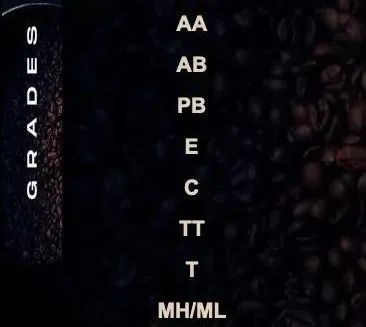
Kenya is the same. Locally, grades are currently assessed based on the size, shape, color, and density of coffee beans, usually using bean size and quality as indicators, and are divided into eight grades: AA, AB, PB, C, E, TT, T, and MH/ML. "AA" and "AB" are two of them and are also the most common grades in China.
The main varieties grown in Kenya include SL28, SL34, Batian, K7, and Ruiru11, and they share a common characteristic—relatively large beans. Therefore, theoretically, the larger the coffee bean, the better the quality tends to be.
AA-grade coffee beans have a screen size of 17 to 18 mesh, with good density, and are regarded locally as representing high quality with elegant flavor. AB grade falls between 16 and 17 mesh; although its quality is not as good as AA, its price is more affordable, and since it has the largest output, about 40% of Kenyan coffee is AB grade, so it is quite popular in the market.
In addition, Kenya has two special grades distinguished by bean appearance. One is Peaberry (PB), where only one round bean grows inside the coffee fruit instead of the usual two flat beans. The other is Elephant (E grade), formed when two coffee beans intertwine during development into one giant bean, with a screen size of 21 mesh or above. Both are abnormal development beans; peaberries account for only about 5% of Kenyan coffee, and elephant beans are even rarer, seldom seen in the market and relatively expensive.
C-grade coffee beans are between 12 and 14 mesh and are relatively small. TT grade consists of lightweight beans separated from E, AA, and AB grades by an air separator. T grade consists of defective beans selected from C grade. Neither falls within the specialty coffee category. MH/ML is regarded as low-quality beans, often mixed with unripe and overripe beans, so it is not exported and is sold only within Kenya.
However, bean size cannot directly determine flavor quality. Therefore, some Kenyan exporters or green coffee traders create their own grading method, conducting a secondary assessment of exported coffee, mainly divided by cupping score into "TOP," "Plus (+)," and "FAQ." This grading is not officially certified by Kenya, and standards vary among merchants, so it can only be used as a reference; ultimately, one still has to look at the actual performance of the coffee beans.
In addition, Kenyan coffee was first introduced during the British colonial period. During colonial times, Britain vigorously developed the coffee economy, making Kenya's entire industry system偏向 refined management, and at that time it was ahead of many coffee-producing countries in variety selection, grading, and processing methods. Therefore, generally speaking, reaching AA and AB grades is already recognized locally as having excellent taste and flavor.
Front Street Coffee currently has only one Kenyan coffee, from the Asalia processing plant in the Thika region. It is a K72 washed coffee bean, using the common Kenyan SL28 and SL34 varieties, AA grade. These beans are plump and round. To highlight the solid and bright fruit acidity of Kenyan coffee, Front Street Coffee uses a light roast, and after brewing it presents flavors of cherry tomato and smoked plum, with acidity like juice and a refreshing, soft mouthfeel.
The above content is compiled by CoffeeHunters, a coffee news website.


