







What Makes Blue Mountain Coffee Taste So Full-Bodied?
Jamaican Blue Mountain coffee is known for rich aroma, balanced flavor, and a full-bodied taste. The richness comes from mineral-rich volcanic soil in Jamaica's Blue Mountains, large day-night temperature differences at high altitude, the ancient Typica variety, and JACRA's strict rules on growing regions and grading standards.
The profile centers on dark chocolate, nuts, caramel, and creamy smoothness, as shown by Blue Mountain No. 1 from Clifton Mount Estate in the St. Andrew growing region. Typica suits high altitudes but is delicate, prone to leaf rust, nematodes, and berry disease. Blue mountain coffee taste reflects that environment, variety, and grading discipline together.
Jamaican Blue Mountain coffee is renowned worldwide for its rich aroma, balanced flavor, and full-bodied taste, and has long been known as the "Emperor of Coffee." Where exactly does this distinctive full-bodied richness come from? The answer lies in the mineral-rich soil of Jamaica's volcanic mountains, the large day-night temperature differences at high altitude, the ancient Typica variety, and JACRA's strict regulations on growing regions and grading standards. This article breaks down the secret of Blue Mountain coffee's richness layer by layer—from growing environment, variety characteristics, harvesting and processing, to barrel packaging—and focuses on Blue Mountain No. 1 from Clifton Estate in the St. Andrew growing region, combining Front Street Coffee's cupping and roasting practices to present its complete flavor profile of dark chocolate, nuts, caramel, and creamy smoothness.
Jamaican Blue Mountain coffee conquered the world as early as the last century with its solid, full aroma, harmonious and balanced flavor, and heavy, smooth mouthfeel, and was once hailed as the "Emperor of Coffee." So where exactly does this rich, full-bodied taste of Front Street Blue Mountain coffee come from?
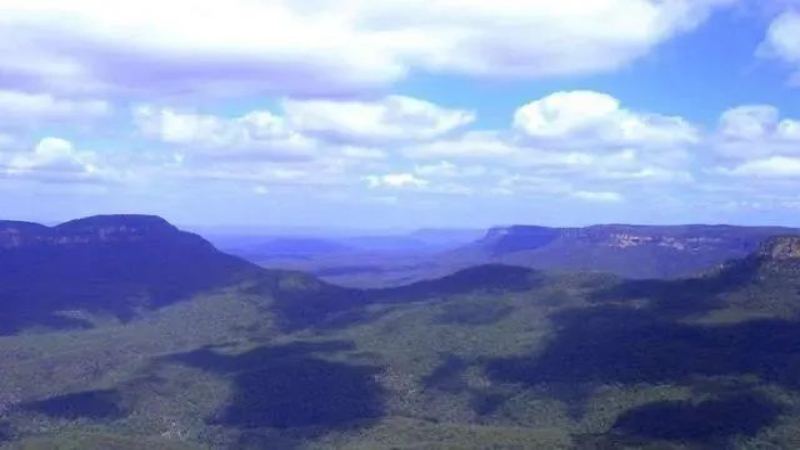
This starts with Jamaica's unique island growing conditions. Jamaica is located in the Caribbean Sea, an island nation sitting on the Pacific Ring of Fire. Coffee trees are mainly grown in the famous Blue Mountains—a range that is itself volcanic, and eruptions in ancient times left behind volcanic soil rich in minerals.
At the same time, the Blue Mountains are the highest peak in the Caribbean region. The air here is clean and humidity is abundant, with frequent fog and rain year-round, providing nearly ideal growing conditions for coffee. The significant day-night temperature difference brought by high altitude allows coffee cherries a longer development cycle to accumulate flavor compounds, so the Front Street Jamaican Blue Mountain coffee produced here has a rich aroma, full body, and balanced flavor.
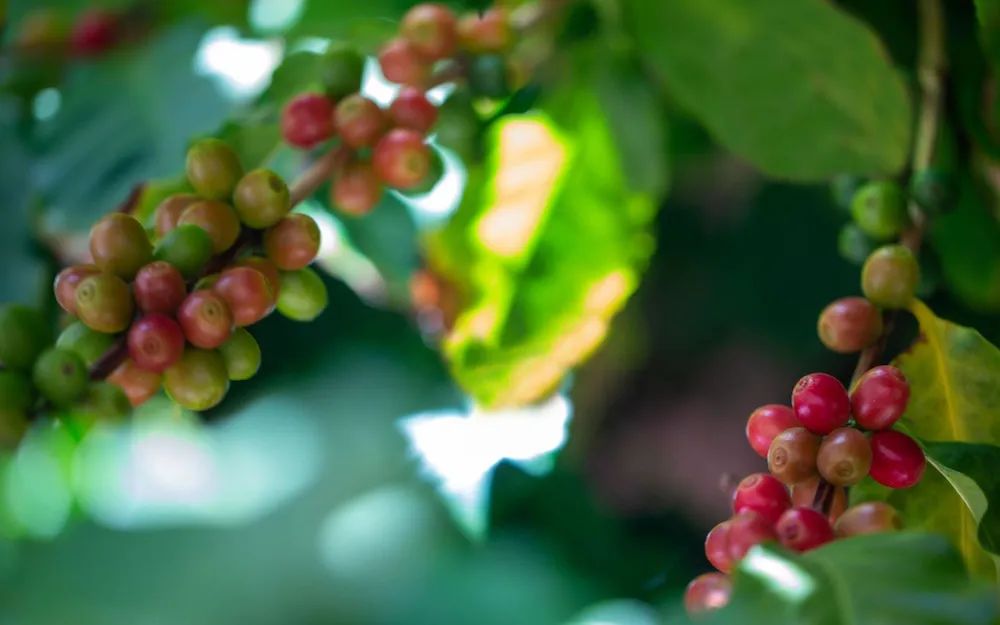
The coffee variety grown in Jamaica is mainly Typica, one of the oldest existing coffee varieties. It is very well suited to being planted at high altitudes and can display outstanding flavor and quality in such an environment. However, this variety is also rather delicate, highly susceptible to leaf rust, vulnerable to nematodes and berry disease, and has relatively low yields per unit.
In addition to superior natural conditions, meticulous management and cultivation are also needed to fully release Typica's fine flavors. It is precisely because of Jamaica's persistence and careful tending over many years that Typica in the Blue Mountain region can adapt well to the local climate and soil, not only delivering outstanding flavor but also gradually developing better disease resistance.
In addition, in the past coffee farmers often placed more emphasis on yield, but Jamaica's land area is limited, making large-scale or extensive planting difficult, so the country could only take the path of improving coffee quality and expanding market share.
To this end, Jamaica introduced a series of strict standards. According to the regulations of the Jamaica Agricultural Commodities Regulatory Authority (JACRA), only Typica coffee grown in the four regions of St. Andrew, St. Thomas, Portland, and St. Mary, at altitudes between 915 meters and 1,700 meters, is eligible to be named Jamaica Blue Mountain coffee. Coffee produced in other areas can only be exported under the name Jamaica High Mountain Coffee or Jamaica Supreme Coffee.
Because of the higher altitude, cultivation management and harvesting also become more difficult. Picking is almost entirely done by experienced local women workers, who select only coffee cherries at just the right ripeness. After picking, the cherries are sent to a processing station for washed processing, during which dedicated personnel oversee quality; washed processing preserves the coffee beans' own aroma to the greatest extent and showcases their basic flavor.
JACRA also grades the coffee based on green bean specifications, defect rate, cup profile, and other indicators. Jamaican Blue Mountain coffee is divided into four grades: No. 1, No. 2, No. 3, and the hand-selected PB. All export products must pass JACRA's quality inspection. Among them, the highest grade, Jamaican Blue Mountain No. 1 coffee, requires bean size between 17 and 18 mesh, a defect rate below 2%, a moisture content of about 10% to 12.5%, and a cup profile that meets the standard.
To ensure quality and isolate coffee beans from the risk of contamination by light and off-flavors during transport, Jamaica has always insisted on using traditional wooden barrels for packaging and shipping premium Blue Mountain coffee, thereby maintaining its original flavor.
Therefore, when receiving Front Street Jamaican Blue Mountain No. 1 green coffee beans, the beans are uniform, plump, and consistent in size. Through cupping, Front Street found that Front Street Blue Mountain coffee has chocolate and nut flavors, with an overall balanced flavor and a full, silky mouthfeel; to highlight these characteristics of Blue Mountain coffee, a medium-dark roast is used. Front Street Jamaican Blue Mountain coffee comes from Clifton Estate in the St. Andrew growing region. After brewing, it presents dark chocolate, nut, and caramel flavors, a creamy smooth mouthfeel, moderate body, a clean sweet finish, and overall balance.
To learn more about coffee origin information, please scan the QR code to follow: Coffee Review
Long-press the QR code to follow:
The above content is compiled by CoffeeHunters, a coffee news website.


