







How much caffeine sits in a cup of arabica coffee?
Caffeine in a cup can be estimated from two things: the coffee bean variety and the dose of ground coffee used. Robusta holds roughly 2% to 4% of its weight in caffeine, while Arabica holds about half that, around 0.9% to 1.4%, which is why beans and doses change the total so much from shop to shop.
To find the answer, first identify what is an arabica bean or a robusta bean in the bag, then weigh the ground coffee. Extraction releases only part of the caffeine, so any figure is an estimate. Makers of pour-over and espresso can then compare their result with the 400 mg daily intake guideline and set a drinking rhythm.
Many coffee lovers care about how much caffeine is actually in a cup of coffee and how many cups they can drink in a day. Front Street Coffee has previously shared the caffeine content of different coffees, but because bean varieties, doses, and brewing methods vary so much, it is hard to generalize. Today Front Street Coffee brings you a practical caffeine calculation formula so you can estimate the caffeine content of your own pour-over or espresso. The article will break things down from the perspectives of coffee bean variety, roast level, and extraction yield, give specific calculation examples for a single pour-over and espresso, and finally combine them with the daily intake recommendation of 400 mg to help you plan your coffee-drinking rhythm.
Front Street Coffee has talked with you before about the approximate caffeine content in different coffee drinks, but every shop and every person uses different beans and doses, so there is no unified answer. So why not take a different approach - today Front Street Coffee will teach you a caffeine calculation formula. Once you learn it, you can roughly calculate how much caffeine is in the coffee you make yourself.
But before we start calculating, there is one premise to explain: how much caffeine is released during extraction is not something we can precisely control, so the number calculated can only be an estimate, not absolutely accurate. To estimate the caffeine in a cup of coffee, we need two key pieces of information: the variety of coffee beans, and the amount of coffee beans used. How do you calculate the caffeine content of a cup of coffee?
The caffeine in coffee comes from the coffee beans themselves, and the caffeine content of the beans is influenced by both genes and the growing environment, with genes playing the decisive role. Therefore, the first step is to figure out the variety of the coffee beans.
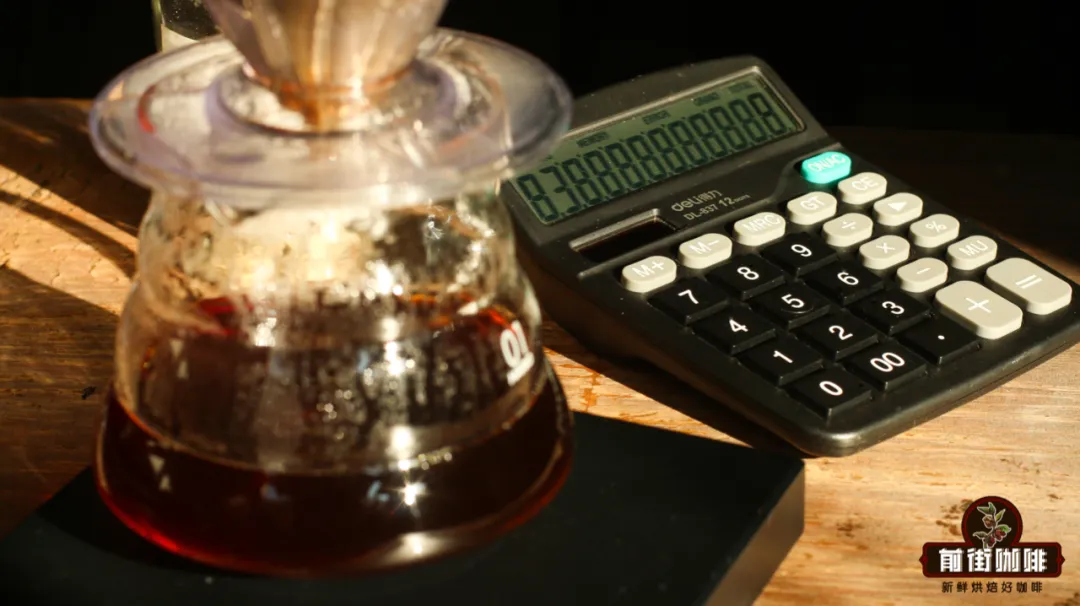
(Left in the photo is Arabica, right is Robusta)
The two most common varieties on the market are Arabica and Robusta. Robusta's caffeine content is about 2% to 4% of its own weight, while Arabica's caffeine content is only about half of Robusta's, roughly between 0.9% and 1.4%. However, the vast majority of freshly ground coffee on the market uses Arabica, because the flavor is more appealing. Very few shops use all Robusta to make coffee, since the taste is not good enough; Robusta is mostly used as a supplement to produce crema.
There has long been a saying online that "dark-roasted coffee has more caffeine than light-roasted coffee," and many people have doubts about this. If this statement means that the same bean after different roast levels will have a changed caffeine content, then that is incorrect. Under normal roasting conditions, the caffeine content of the beans basically does not change. But if understood from the brewing level - with the same weight of beans, brewing dark roast and light roast separately, dark-roasted coffee may indeed have higher caffeine, then the statement has some truth to it.
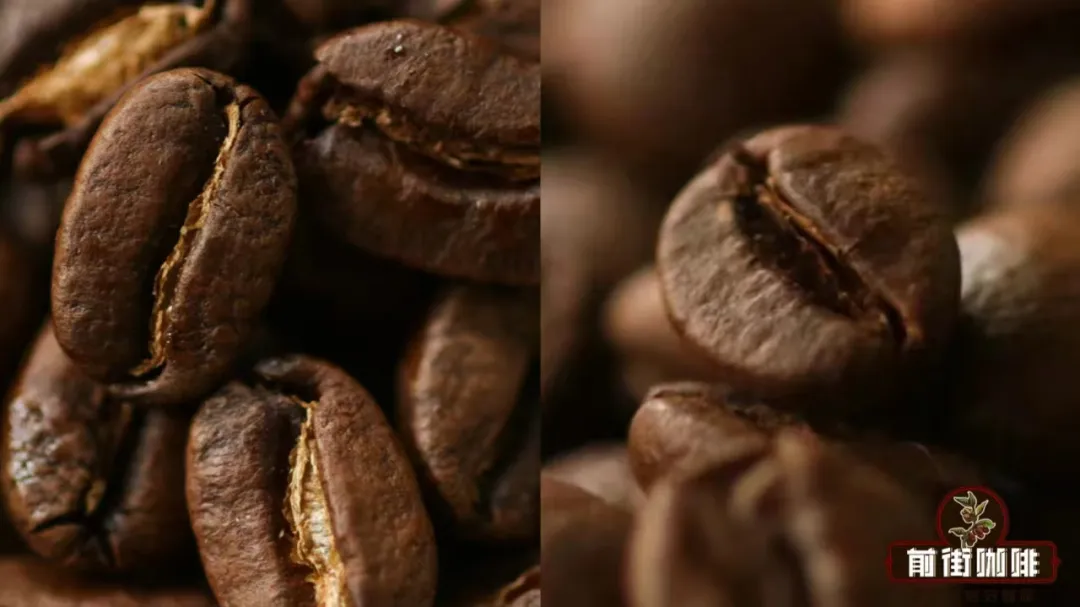
The reason is that dark-roasted beans have a higher weight loss rate. When we make coffee, we measure by grams, not by the number of beans. So at the same weight, dark-roasted beans may have more individual particles, and naturally more caffeine as well. However, this difference is only obvious between beans whose roast levels differ greatly; if the roast levels are close, the difference is actually very small. So the basic formula for calculating the caffeine in a cup of coffee is: grams of coffee beans multiplied by the caffeine content of that variety (taking the average). But it is not that simple, because what this formula calculates is the theoretical maximum if all the caffeine were dissolved out, while in reality we do not extract all the caffeine - the reason is simple: that would taste bad.
No matter what extraction method is used, to get a cup of coffee that the general public accepts as good, the extraction yield and concentration must be well controlled. Soluble substances in coffee beans make up only about 30%, and if too much of some of them dissolves, it brings negative flavors such as bitterness, muddiness, and astringency. So the extraction yield is usually controlled between 18% and 22%. In addition, these soluble substances have different molecular sizes and dissolve at different speeds. Small-molecule substances responsible for acidity and sweetness dissolve quickly and are released in large amounts at the beginning of extraction; caffeine, however, is a large molecule, and although it also begins dissolving at the start, its speed is very slow. Therefore, it is impossible for all the caffeine in coffee beans to be extracted, and it will not dissolve in excessive amounts either.
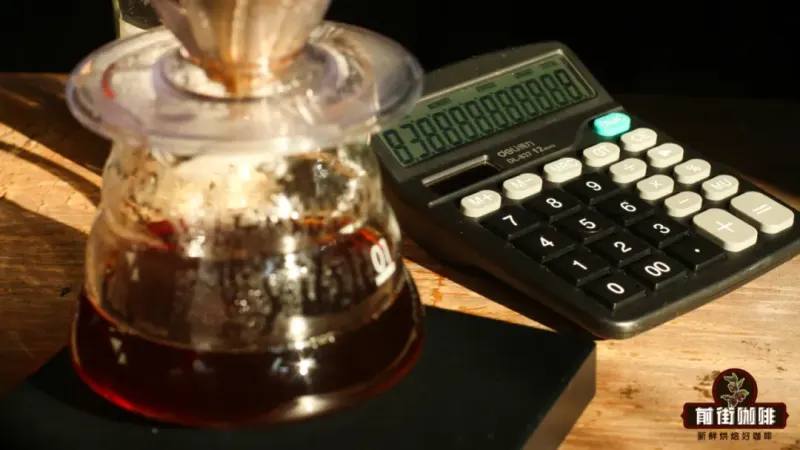
To be conservative, we can only calculate based on half of the caffeine. The formula then becomes: grams of coffee beans x caffeine content of the variety (average) ÷ 2. Take pour-over coffee as an example. A single serving uses 15 g of beans. Plugging it into the formula: 15 (bean weight) x 1.3% (Arabica average) ÷ 2 (assuming only half is extracted), the caffeine in this cup is about 97.5 mg. If 20 g of grounds is used, then 20 x 1.3% ÷ 2, about 130 mg. (Extraction time also affects the amount of caffeine dissolved. When the extraction time is too long, you can appropriately increase the estimated caffeine content.)
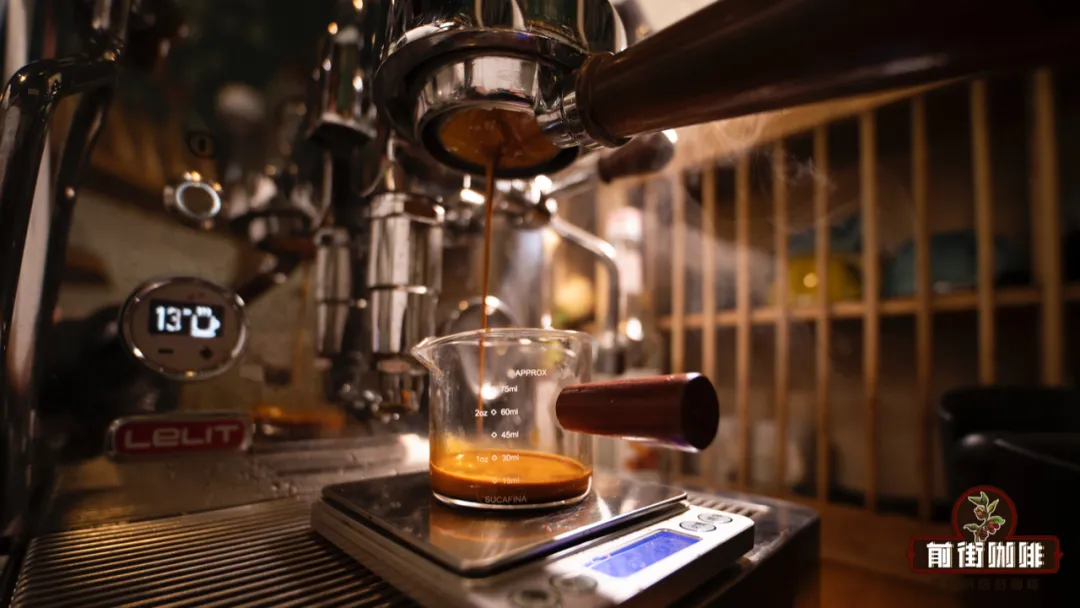
The same applies to espresso. Because only an approximate value can be obtained, the calculation method is exactly the same. In addition, almost all espresso drinks use one shot of espresso, so whether it is an Americano or a latte with a lot of milk added, the caffeine content is the same. At this point, you can calculate for yourself how you should drink coffee under the daily intake limit of 400 mg.
The above content is compiled by CoffeeHunters, a coffee news website.


