







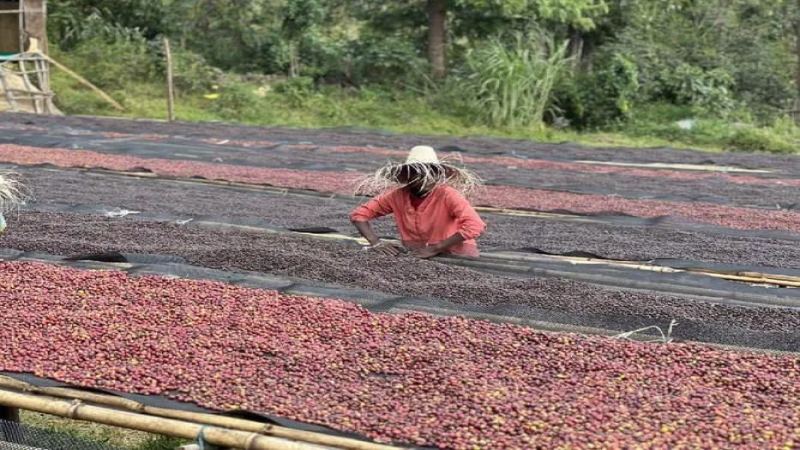
Why Are Ethiopia Coffee Exports Rising So Fast This Season
Ethiopia's coffee export revenue rose 66% year-on-year in October to $155.53 million, with shipments exceeding 35,170 tonnes, according to the Ethiopian Coffee and Tea Authority. That result far exceeded the authority's own target of just over 20,000 tonnes and $108.05 million, reaching 176% of the volume target and 144% of the value target for the month.
Higher international coffee prices and increased coffee production drove the gain. Cumulative exports from July to October reached 150,346 tonnes, up 71% year-on-year, with revenue up 51% to $674.55 million, keeping the country on pace to top last fiscal year's $1.43 billion. Fighting in Amhara and Red Sea shipping disruptions are still raising transport costs.
Ethiopia's coffee industry delivered a standout performance in October: export revenue surged 66% year-on-year to $155.53 million, with export volumes exceeding 35,000 tonnes. High global coffee prices combined with increased production drove this growth, with cumulative exports from July to October rising 71% year-on-year. However, the ongoing conflict in Amhara and disruptions to Red Sea shipping are putting pressure on this East African coffee powerhouse in the form of rising prices and escalating transport costs. This article reviews the latest data, conflict developments, and potential impacts on the coffee industry.
According to the latest monitoring data from the Ethiopian Coffee and Tea Authority (ECTA), the country's coffee export revenue in October soared 66% year-on-year, surpassing $155.1 million. ECTA noted that this performance far exceeded its target — it had originally planned to export just over 20,000 tonnes of coffee and generate $108.05 million in revenue.
That month, Ethiopia shipped over 35,170 tonnes of coffee to overseas markets, generating $155.53 million in revenue. Driven by rising international coffee prices, revenue jumped by $62.8 million compared to the same period last year; shipment volumes also rose accordingly, up 15,078 tonnes year-on-year.
ECTA revealed that the coffee sector achieved 176% and 144% of its monthly targets for export volume and export value, respectively. Since the 2024/25 fiscal year began in July, Ethiopia's coffee supply to global markets has shown significant expansion. From July to October, the country exported a cumulative 150,346 tonnes of coffee, a year-on-year increase of 71%; revenue grew 51% to $674.55 million.
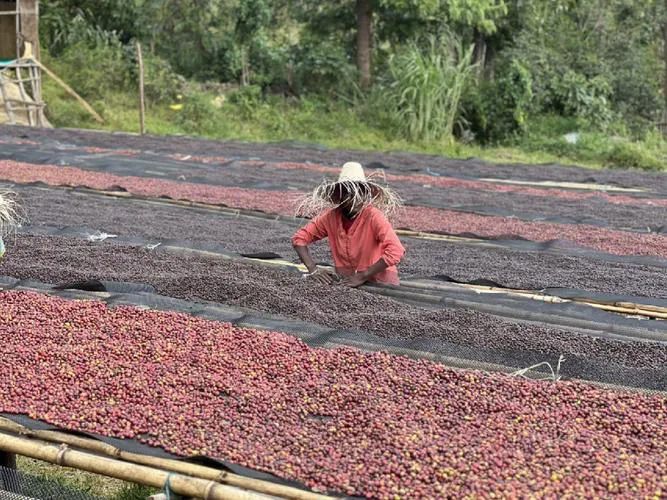
In the previous fiscal year, Ethiopia's coffee export revenue was $1.43 billion, and this fiscal year is expected to set a new record. This is mainly due to recently stabilized weather conditions, increased coffee production, and currently high international coffee prices, which together have stimulated exports.
Nevertheless, Ethiopia still faces many challenges, the most prominent being the long-standing internal conflict. For over a year, government forces and Fano militants have been engaged in continuous fighting in Amhara State.
Despite deploying heavy equipment including drones and combat helicopters, government forces have been unable to suppress Fano's operations; the latter has instead continued to grow, reportedly now possessing nearly 500,000 fighters and long controlling most rural areas and the local economy in Amhara State.
Ethiopian media recently reported that Fano militants launched ambushes against government forces in areas including Wollo and Shewa, with one attack site located in the city of Debre Berhan, 120 kilometers north of the capital Addis Ababa. Specific casualty figures have not been released, but reports say government forces suffered heavy losses.
According to reports, the Commander-in-Chief of the Ethiopian National Defense Force and other senior officers, after meeting with Amhara regional officials, stated plans to "completely defeat" Fano forces by the end of December to end the conflict in the region, otherwise the defense force would withdraw. However, outsiders widely doubt whether the defense force can achieve this goal, though a withdrawal might reduce regional conflict.
Although Ethiopia's coffee-growing regions are mainly in the south and not directly affected by the conflict, Amhara State is an important food supply area for the country. These areas are currently under blockade, keeping domestic prices high and increasing production costs for coffee farmers.
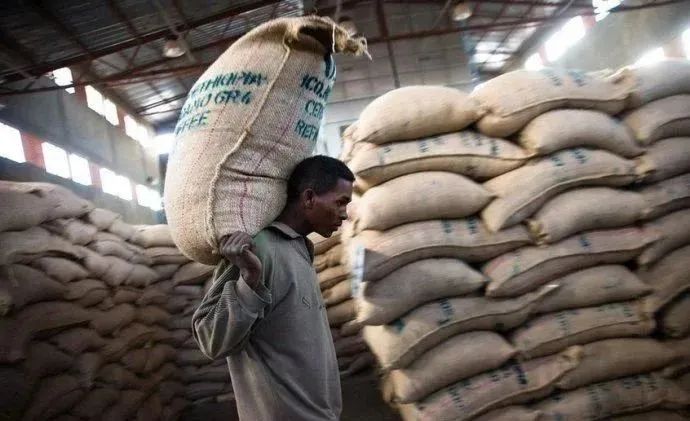
Meanwhile, the Red Sea issue continues to plague Ethiopia's goods exports. The country still relies on Djibouti's port for foreign trade, and ships in the Red Sea are vulnerable to Houthi attacks, leading to a reduced number of vessels at Djibouti port and higher prices for imported food, daily necessities, and fertilizer. On the export side, it faces problems such as extended transit times and rising freight costs. The combination of multiple factors has kept Ethiopian coffee prices elevated recently.
To learn more about coffee origin news and information, please scan the QR code to follow: Coffeepin
Long-press the QR code to follow:
TRANSLATE with
x
English
Arabic Hebrew Polish Bulgarian Hindi Portuguese Catalan Hmong Daw Romanian Chinese Simplified Hungarian Russian Chinese Traditional Indonesian Slovak Czech Italian Slovenian Danish Japanese Spanish Dutch Klingon Swedish English Korean Thai Estonian Latvian Turkish Finnish Lithuanian Ukrainian French Malay Urdu German Maltese Vietnamese Greek Norwegian Welsh Haitian Creole Persian
TRANSLATE with
COPY THE URL BELOW
Back
EMBED THE SNIPPET BELOW IN YOUR SITE Bing Webmaster Portal
Back
The above content is compiled by CoffeeHunters, a coffee news website.


