







How Does Kilimanjaro Coffee Get Its Distinctive Flavor
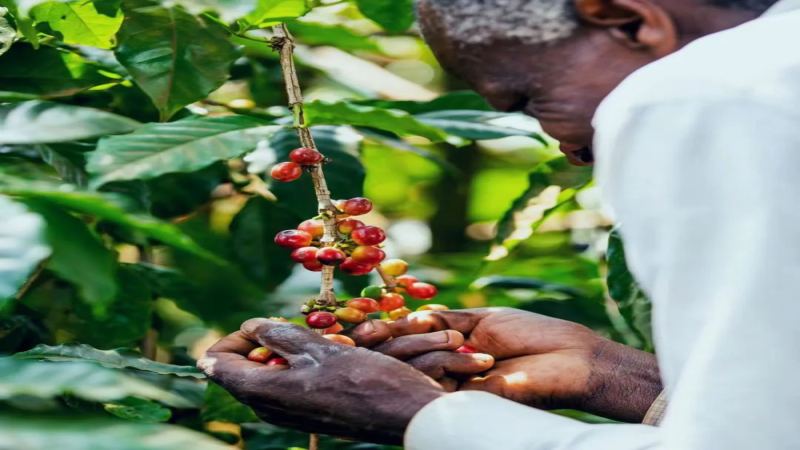
Kilimanjaro coffee comes from Tanzania's largest producing region, on the slopes of Africa's highest volcanic mountain. Coffee has been cultivated there since 1893, and farms sit between 1,050 and 2,500 meters above sea level, where volcanic ash soil, altitude, and snowmelt water shape a washed Typica profile that European buyers once called the coffee gentleman.
More than ninety percent of Tanzania's output comes from smallholder farmers, with the Kilimanjaro Cooperative Union playing a central role. Moshi, at the foot of the southern slopes, serves as the country's main coffee trading and processing hub, where harvest lots are collected and prepared before export to specialty coffee buyers.
When it comes to African coffee, Ethiopia and Kenya are usually the first that come to mind, while Tanzania, which also ranks among the "African Big Three," keeps a much lower profile. This East African country is home to Kilimanjaro, Africa's highest volcano, and its volcanic ash soil and high-altitude environment produce coffee beans of exceptional quality. As early as the colonial period, it earned the reputation of "coffee gentleman" among Europeans. Today, more than ninety percent of Tanzania's output comes from smallholder farmers, with the Kilimanjaro Cooperative Union playing a key role. This article will walk you through Tanzania's coffee-growing conditions, variety composition, and flavor characteristics, and introduce a Kilimanjaro washed Typica currently on sale at Front Street Coffee.
On the African continent, the three most renowned coffee-producing countries are known as the "African Coffee Big Three"—Ethiopia, Kenya, and Tanzania. Each occupies a place on the global coffee map and has developed its own highly distinctive flavor profile. When it comes to market exposure, however, the first two clearly appear more often in consumers' view. So what exactly does Tanzanian coffee rely on to hold its ground?
Tanzania, like Ethiopia and Kenya, is located in East Africa, where the climate and geographical conditions are quite favorable for coffee cultivation, and the beans produced are of impressive quality. In fact, Tanzanian coffee was recognized by the European market very early on and was even given the elegant title of "coffee gentleman."
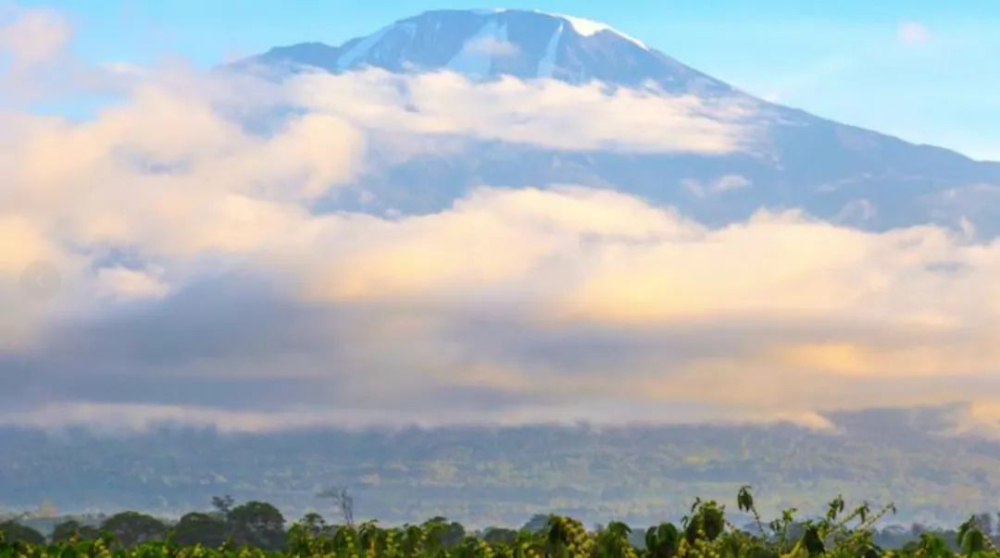
When people think of Tanzania, Kilimanjaro coffee is often the first thing that comes to mind. Mount Kilimanjaro sits in the northeast of the country and is the highest volcanic mountain range on the African continent, its peak covered in snow year-round, and this area is also Tanzania's largest coffee-producing region.
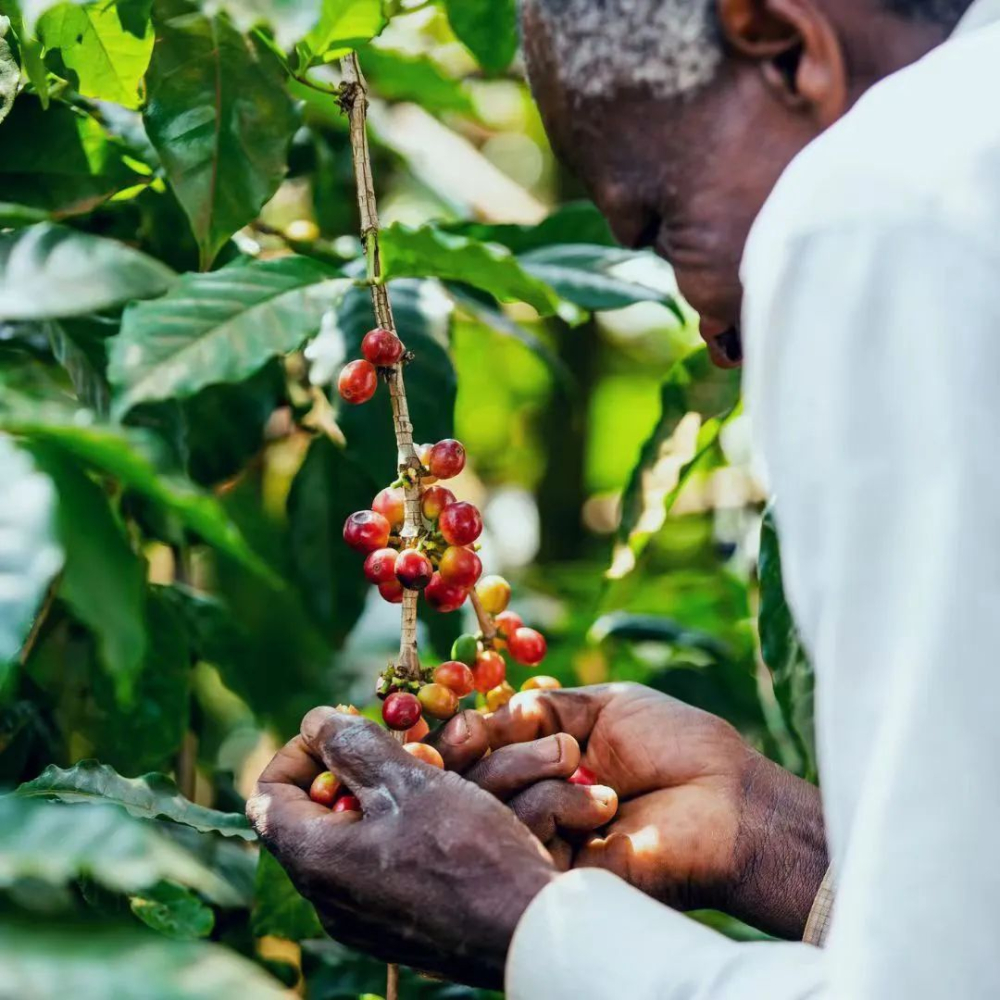
The history of coffee cultivation in the Kilimanjaro region dates back to 1893. Local coffee farms are distributed between 1,050 and 2,500 meters above sea level. The high altitude, fertile soil formed by volcanic ash deposits, and pure snowmelt water together provide ideal growing conditions for coffee trees.
At the foot of Kilimanjaro's southern slopes lies Moshi, the capital of the region and also Tanzania's largest coffee trading and processing hub. Every harvest season, after coffee farmers finish picking, they send the cherries to processing stations at the foot of the mountain for processing and export.
During the colonial period, Tanzania's coffee industry was dominated by estate-style cultivation. After the country gained independence, to promote the spread of coffee planting, land was divided into small plots and allocated to individual farmers. This change continues to this day: currently more than 90% of the country's coffee is produced by smallholder farmers, with large estates accounting for only about 10%. Smallholders usually join together to form cooperatives, among which the Kilimanjaro Cooperative Union (KNCU) is the most influential locally and bears the important responsibility of controlling coffee quality.
Tanzania cultivates both Arabica and Robusta varieties. The high-yield nature of Robusta keeps Tanzania firmly in third place among Africa's coffee-producing countries, behind only Ethiopia and Uganda, with annual output approaching 90,000 tons.
On the Arabica side, Tanzania mainly grows three varieties: Bourbon, Typica, and Kent. Front Street Coffee currently offers a coffee bean from Kilimanjaro, of the Typica variety, processed by the washed method. Once brewed, the acidity is gentle, with layers of citrus, berry, honey, and nut notes, a soft mouthfeel leaning toward tea-like character, and an overall balanced performance.
Tanzania, together with Ethiopia and Kenya, is known as one of the African Coffee Big Three, and its quality is excellent. Compared with Kenya and Ethiopia, however, Tanzanian coffee's acidity is a little less bright and sharp, its mouthfeel is softer and gentler, and it carries an extra note of sweet aroma and a red-wine-like texture.
To learn more about coffee origins and related information, please scan the QR code to follow: Coffee Review
Long-press the QR code to follow:
The above content is compiled by CoffeeHunters, a coffee news website.


