








Why do green coffee beans carry tropical fruit aromas?
Tropical fruit notes such as mango, passion fruit and pineapple appear in coffee because the coffee cherry is itself a tropical fruit grown between the Tropic of Cancer and the Tropic of Capricorn. Aromatic compounds present in green coffee beans survive processing and then transform during roasting, creating the fruity descriptors printed on bags.
Terroir matters: high heat, humidity and abundant sunshine in producing regions shape the precursors that become fruit aromas. Delicate notes like papaya and lychee are harder to capture because they depend on precise roast development. Roasters use tropical fruit as a general descriptor when no single fruit fits, and where are coffee beans from often explains the profile in the cup.
Have you ever seen "tropical fruit aroma" on a coffee bean bag but weren't sure how to interpret it? What exactly are the signature characteristics of tropical fruits, and why do these flavors appear in coffee? This article will start with the definition of tropical fruits, outline representative fruit aromas such as mango, passion fruit, and pineapple, explain the aromatic compounds in green coffee beans and the aroma transformation during roasting, and, drawing on Front Street's cupping experience, list coffee beans that commonly exhibit tropical fruit flavors. It will also explain why delicate fruit aromas like papaya and lychee are harder to capture, and when it is appropriate to use "tropical fruit" as a general descriptor.
A friend once posed a question to Front Street: "What exactly is this 'tropical fruit aroma' written here? If it refers to the taste of a specific fruit, why not just name it directly instead of using 'tropical fruit' to describe it?"

What are the signature characteristics of tropical fruits?
Tropical fruits, as the name suggests, are fruit varieties that grow primarily in tropical regions—generally produced between the Tropic of Cancer and the Tropic of Capricorn. In China, provinces like Yunnan, Hainan, and Guangdong are representative areas known for producing tropical fruits. These places have high temperatures and humidity year-round, with less distinct seasonal boundaries and abundant sunshine throughout the year, giving fruits grown there a unique aroma.
As a Cantonese native, Front Street frequently encounters tropical fruits such as mango, pineapple, jackfruit, lychee, coconut, passion fruit, banana, star fruit, papaya, and guava... If you look closely at their characteristics, you'll find that when these fruits ripen, they tend to carry a vibrant, distinctive aroma. Beyond their colorful appearance, some display alluring honey-like sweetness, some are juicy on the palate, and some are rich with fruity fragrance—just smelling them starts your brain producing dopamine.
Why do tropical fruit flavors appear in coffee?
Coffee is a fruit—everyone knows that. But to be more precise, coffee is also a tropical fruit, so it can not only be eaten directly but should theoretically also possess the tropical fruit characteristics mentioned above by Front Street. Yet when we pick a fully ripe coffee cherry on-site, whether we smell it or eat it, it cannot deliver the aromatic notes described on the bean bag. Why is that?
In fact, regardless of the variety, ripe coffee fruit mostly has thin skin and little flesh. Clever humans discovered that rather than eating it directly, obtaining the seed inside provides greater usable value.
The reason coffee smells (and tastes) like "fruit" ultimately comes down to the many aromatic compounds it contains that resemble fruit aromas—mostly esters, ketones, and alcohols. For example, fatty acids, terpenes, and amino acids are all sources of fruity aroma components, stored in a stable form within the green beans.
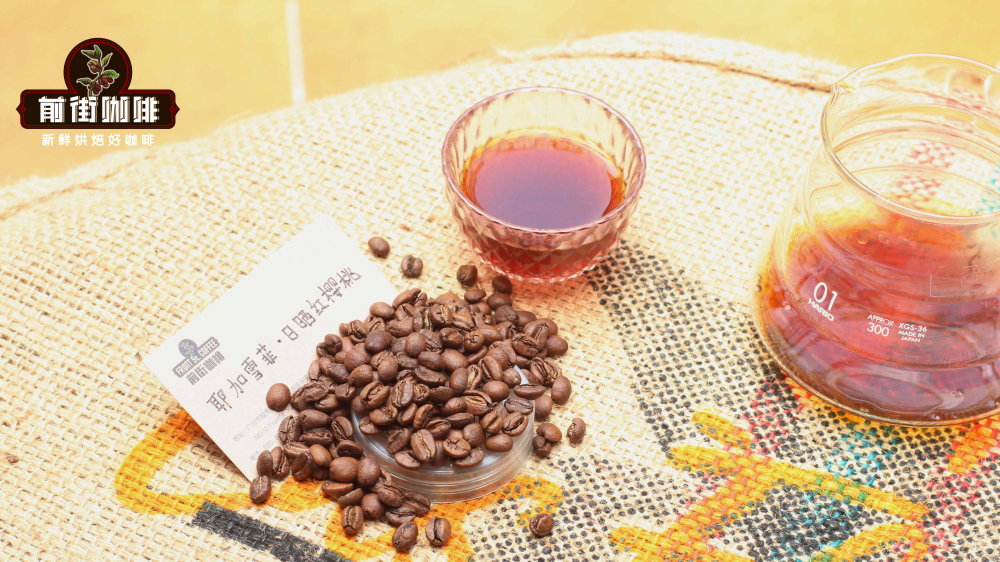
What actually releases the fruity aroma in coffee is the roasting stage. As green beans are heated, Maillard reactions and caramelization reactions continuously occur, generating various volatile aromatic compounds. When certain compounds reach a certain concentration, they present a rich fruity aroma—whether vibrant, warm, colorful, or sweet—which in turn evokes our memory of tropical fruits.
Which coffee beans are more likely to exhibit tropical fruit flavors?
Based on Front Street's cupping experience, the tropical fruits most commonly appearing individually in coffee flavors are passion fruit, mango, pineapple, guava, and jackfruit, because their aromas are quite distinctive—anyone who has eaten them retains a strong impression, making them easier to identify once they appear in coffee.
These fruit flavors are not limited to specific producing regions or varieties. Many high-altitude washed or natural coffees from Africa and Central and South America frequently emit such complex fruity characteristics.
Front Street's ALO from the Sidamo region of Ethiopia delivers a rich, ripe mango aroma;
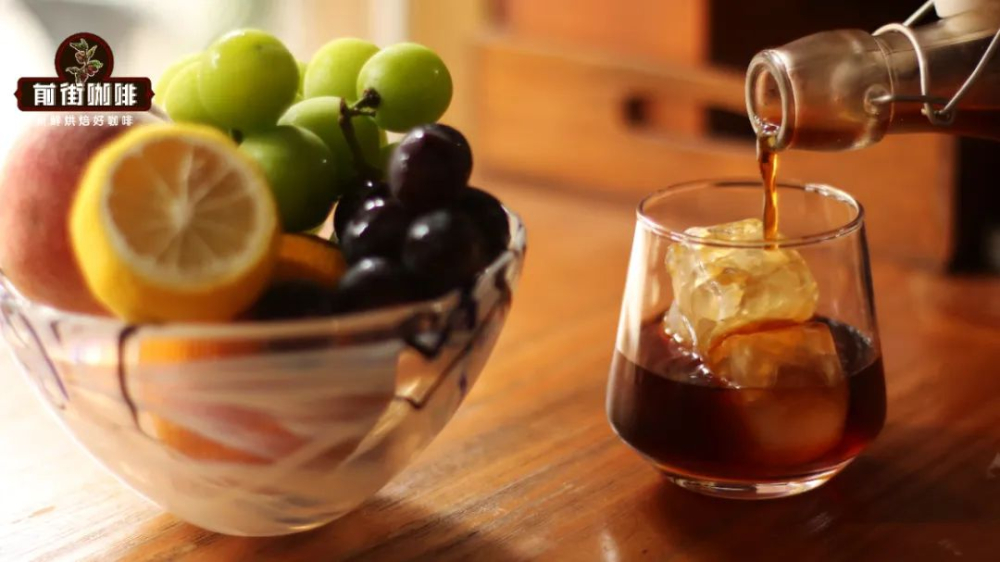
when grinding Front Street's Papayo coffee beans and Front Street's Ombligon coffee beans from Colombia, you can smell a complex passion fruit note;
and in the Costa Rica region, Front Street's Mozart and Front Street's Blackberry exhibit clear aromas of pineapple and raisin that leave a lasting impression.
In contrast, fruits like papaya, star fruit, and lychee, although equally possessing refreshing and unique fragrances, tend toward a lighter, more delicate style overall. When interwoven with roasted flavors like chocolate, caramel, and nuts, they are not as easily detected or identified, so they appear less frequently.
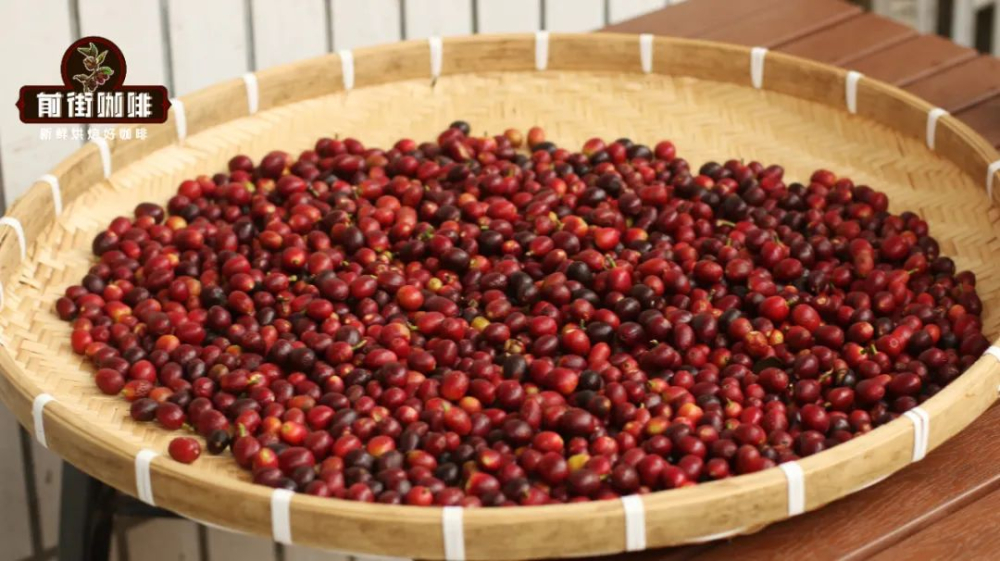
And if we do perceive a warm tropical fruit tone in coffee but cannot pinpoint exactly which type it is, we use a broad category term to describe them generically. For instance, when Front Street routinely introduces beans like Front Street's Huakui or Front Street's Elida Catuai to customers and finds it difficult to summarize the taste as a single fruit, we habitually use "tropical fruit aroma" to convey that impression.
The above content is compiled by CoffeeHunters, a coffee news website.


