







How does coffee extraction change at different temperatures?
Variable-temperature brewing means using clearly different water temperatures within the same brew, not a two or three degree tweak. Hot water early in the pour dissolves flavor compounds quickly, while cooler water later slows the release, so the brewer controls the rhythm of extraction. The method became widely known after Wu Zelin won the 2016 World Barista Championship using it.
It is most useful when over-extraction comes from too many fines rather than from parameters that are easy to dial back. Sifting out fines is one fix; switching to a high-to-low temperature profile is another. Cold water can be added to bring the kettle down between stages, and Katsuya Tetsu's Devil Brewing Method applies the same high-to-low logic in a practical sequence.
In pour-over coffee, when the extraction parameters are too high, they can usually be adjusted back down, but if over-extraction is caused by too many fines from the grinder, simply adjusting the parameters often cannot solve the problem. In this case, sifting out the fines or using variable-temperature brewing are both approaches recognized by Front Street Coffee. This article will focus on variable-temperature brewing: it is not a fine-tuning of 2~3°C, but rather segmented extraction with a large temperature difference, controlling the dissolution rhythm of flavor compounds through high-temperature quick extraction and low-temperature slow release. The article will trace the origins of this method, analyze the championship cases of Wu Zelin and Emi, explain how to use cold water to adjust temperature and achieve variable-temperature operation with a high-to-low profile, and share in detail the practical process of Katsuya Tetsu's "Devil Brewing Method" that Front Street Coffee favors.
When the extraction parameters are on the high side, we can lower the extraction yield by adjusting them back down. But if the over-extraction is due to too many fines produced by the grinder, then it is very difficult to solve by adjusting parameters.
However, this does not mean there is nothing to be done. Front Street Coffee believes that sifting out the fines or adopting variable-temperature brewing are both good approaches. As for the pros and cons of sifting out fines, Front Street Coffee has discussed this many times, so today we will not elaborate on it and will focus on variable-temperature brewing.
What is variable-temperature brewing?
Variable-temperature brewing, as the name suggests, means using different water temperatures when brewing the same pot of coffee. This method mainly changes the temperature of the extraction water, while the other parameters can basically remain the same. But it must be made clear that the different temperatures mentioned here are not a difference of 2~3°C, but a relatively large temperature difference.
The earliest person to use this method was Mr. Wu Zelin from Taiwan, China. In 2016, he won the World Barista Championship with this technique, and variable-temperature brewing became widely known because of it.
The higher the water temperature, the higher the extraction efficiency of the water, and the easier it is for the flavor compounds in the coffee to be dissolved out; the lower the water temperature, the lower the extraction efficiency, and the dissolution rate of flavor compounds naturally slows down. Variable-temperature brewing makes use of this principle by splitting the hot water needed for one pot of coffee into two temperatures (or possibly more), thereby controlling the amount of substances released by the coffee grounds at different stages.
Therefore, the specific timing of the temperature changes can be flexibly arranged according to needs.
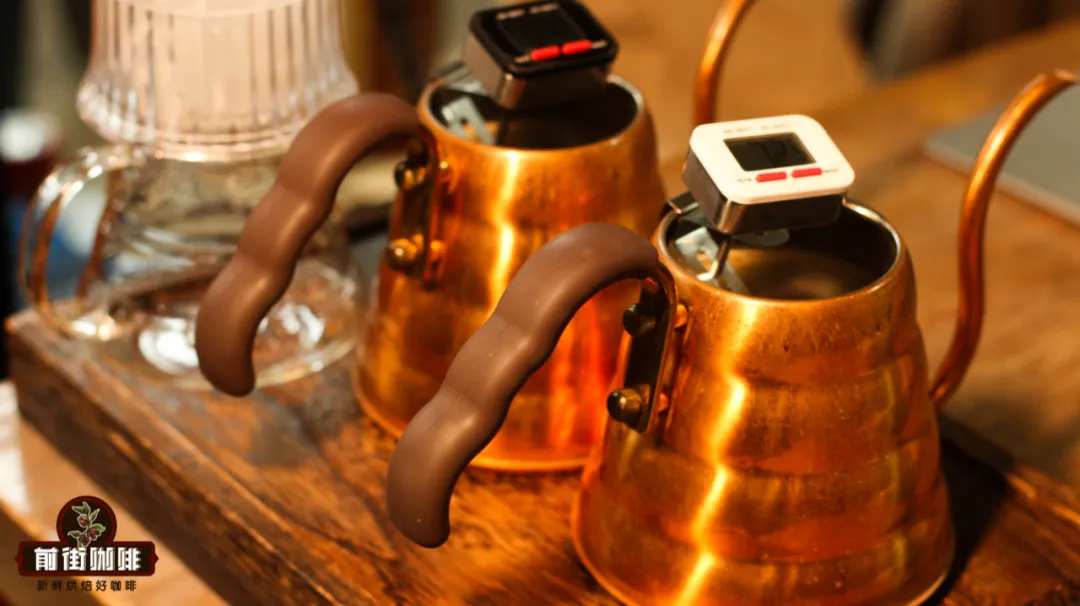
For example, Mr. Wu Zelin's variable-temperature brewing divides pouring into four stages (16g coffee, 1:15 coffee-to-water ratio, with stage water amounts of 40, 80, 80, and 40 respectively). The first two stages use 94°C hot water, while the latter two stages use 90°C and 80°C respectively, with the water temperature decreasing in steps. The benefit of doing this is that the sour and sweet compounds are extracted in a concentrated way in the earlier stages, and by the later stages, when bitter compounds are about to be released in large amounts, relatively low-temperature water slows their dissolution rate. Because the release of bitterness is suppressed, the coffee's sour and sweet performance becomes more prominent.
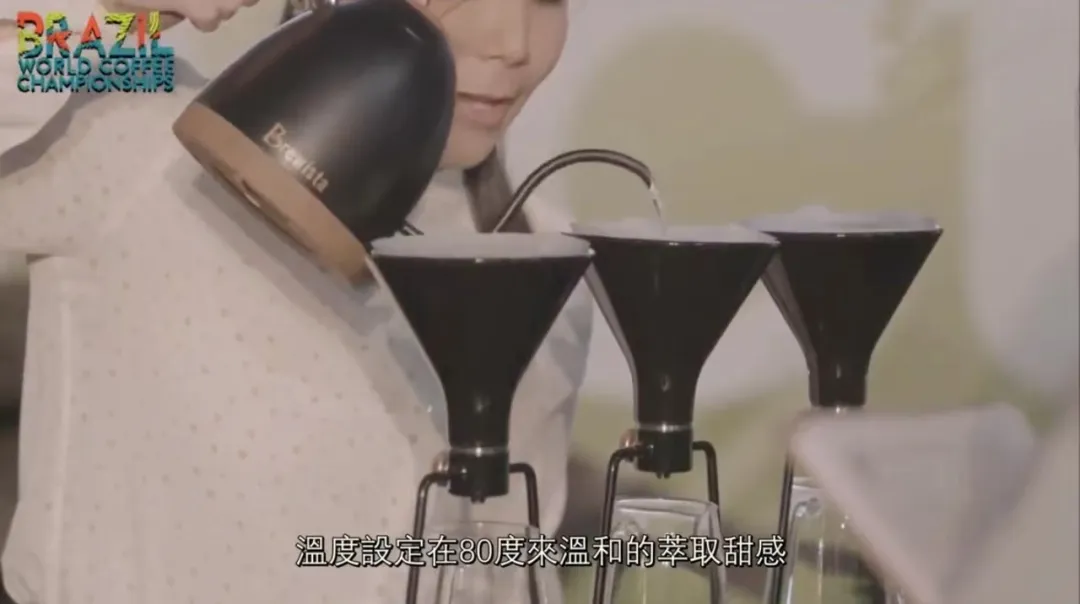
Emi, the 2018 WBrC champion, paired variable-temperature brewing with a clever dripper and a three-stage method: first a low-temperature bloom-and-steep (80°C), then high-temperature drip extraction (95°C), and finally a low-temperature steep (80°C), then opening the valve to finish. The purpose of this is to reduce the release of sour compounds, making the whole cup softer and sweeter.
How should variable-temperature brewing be carried out?
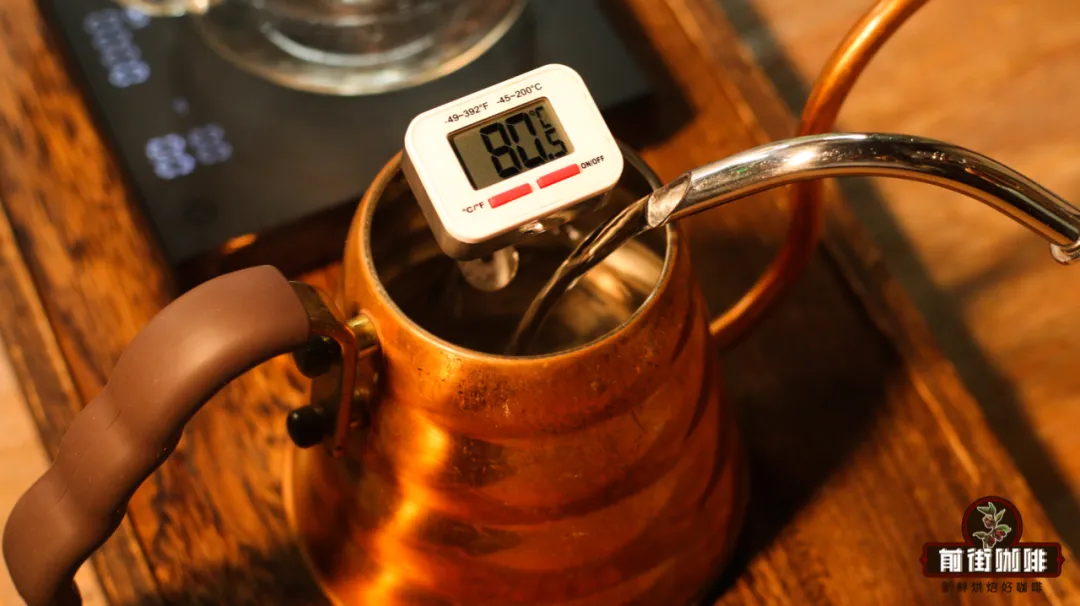
Although it is also possible, like competition baristas, to use multiple temperature-controlled kettles to prepare hot water at different temperatures at the same time, this method is obviously too extravagant, since it requires being equipped with multiple brewing kettles. Therefore, Front Street Coffee more recommends adjusting the temperature with cold water during the brewing process, so that variable-temperature extraction can be achieved with just one kettle.
This method has only one drawback: it is only suitable for variable-temperature brewing with a high-to-low water temperature profile.
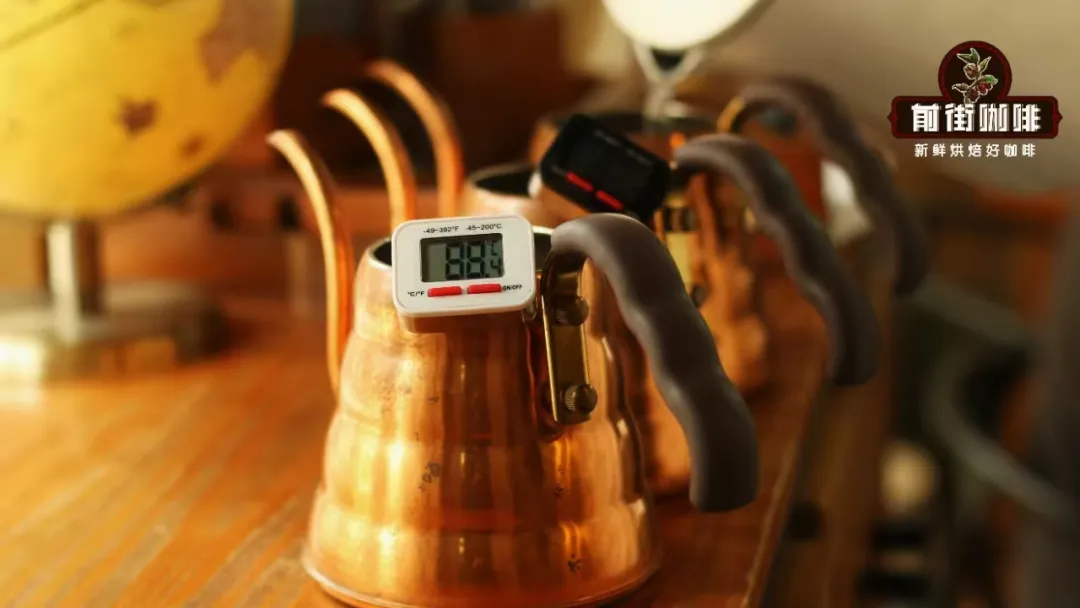
Among the many variable-temperature brewing methods, Front Street Coffee especially likes the advanced version of Mr. Katsuya Tetsu's 4:6 method—the "Devil Brewing Method." For details, you can click the blue text to read directly. The general process is to split coffee extraction into three stages: the first two stages use 92°C high-temperature water for drip extraction, and the last stage uses 70°C low-temperature water combined with immersion extraction. Because the water temperature in the latter stage is very low (relatively speaking), this method has a very high margin for error and makes it easy to brew a cup of coffee that is high in sweetness and not bitter.
The reason for liking it is simple: since we are already using such an extreme method as variable-temperature brewing, if we do not play around with it a bit more, how can we justify all the trouble we have gone to? So in this brewing session, Front Street Coffee will use the "Devil Brewing Method" to share with everyone.
The bean chosen is the newly arrived natural ALO. Under regular brewing, it has rich notes of magnolia, citrus, and pineapple. The extraction parameters are as follows: Dose: 15g Coffee-to-water ratio: 1:15 Grind size: Ek43 setting 9, 85% pass-through rate on a No. 20 sieve Brewing method: Devil Brewing Method Dripper used: hero variable-speed dripper Brewing water temperature: 92°C, 70°C
So first, we pour in 30ml of hot water to bloom, also for thirty seconds, keeping the dripper valve open.

The above content is compiled by CoffeeHunters, a coffee news website.


