







Where does Mandheling coffee come from in Sumatra?
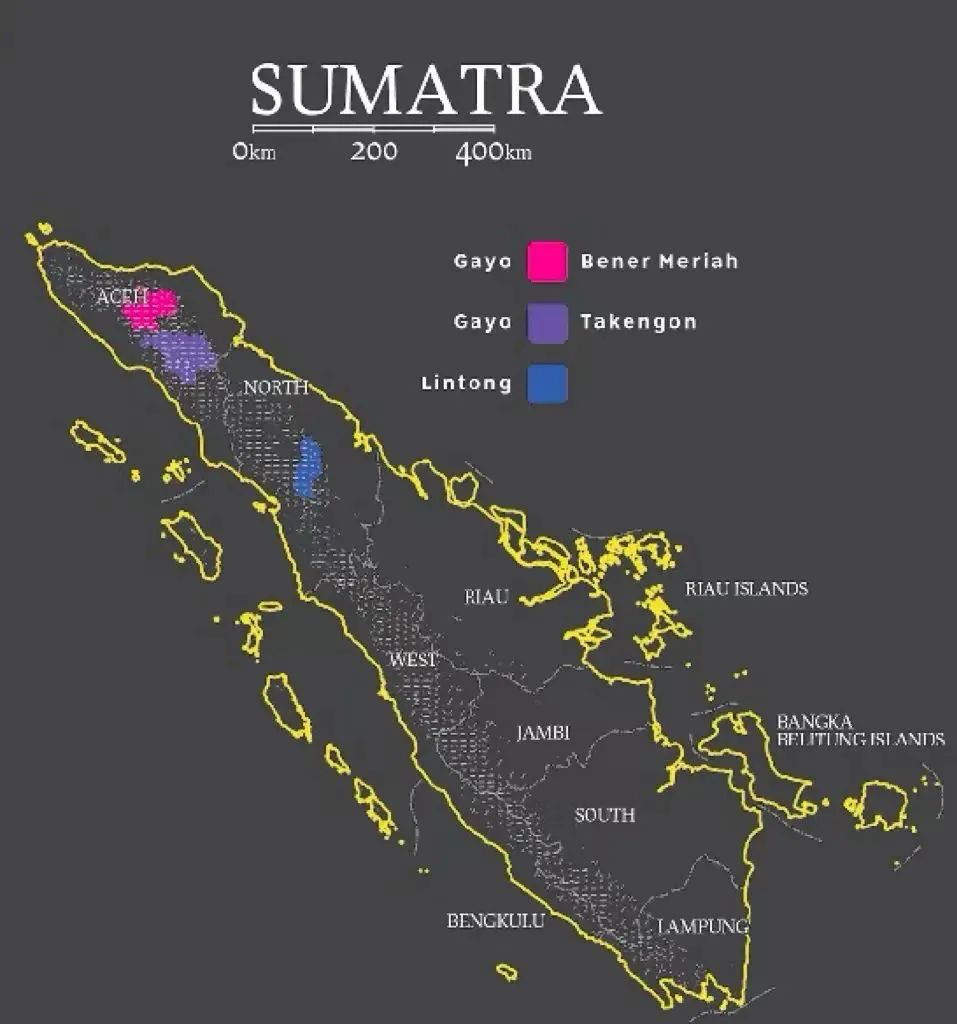
Mandheling is grown along the Barisan Mountains on the western side of Sumatra, mainly in two areas: Gayo in the Special Region of Aceh and Lintong in North Sumatra. Arabica trees sit on hillsides at roughly 1,400 to 1,800 meters around Lake Toba, where volcanic soil supplies minerals. The lowland southeast of the island is largely planted with Robusta instead.
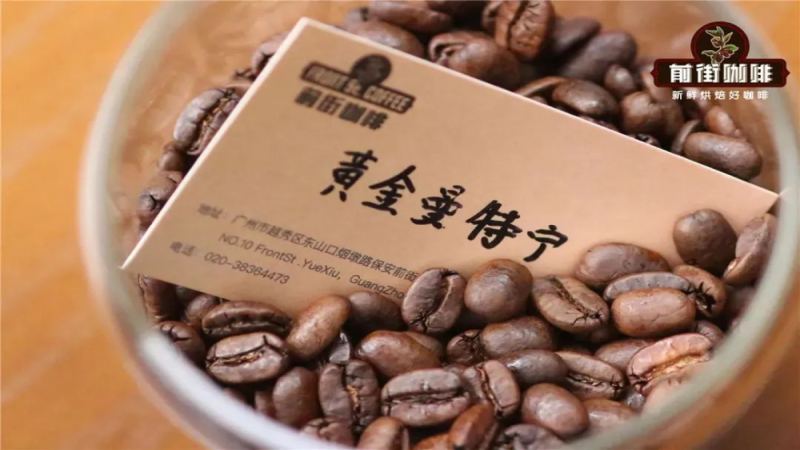
The two regions produce noticeably different cups. Lintong Mandheling tends toward herbal and dark chocolate notes, while Gayo coffees are often described as heavier and more intense. The Indonesian name Ateng, frequently attached to these plants, is simply the local term for the Catimor variety. Golden Mandheling coffee, including the PWN label, is a wet-hulled Sumatra lot sorted for uniform, intact beans.
Mandheling coffee is one of Indonesia's most iconic coffees, known for its full-bodied, rich taste. But do you know which areas of Sumatra it is mainly grown in? And what exactly is the often-mentioned Ateng variety? This article will take you into the Barisan Mountains of Sumatra to learn in detail about the geographical features and flavor differences of two core producing regions—Gayo in Aceh and Lintong in North Sumatra—while also revealing the true identity of the Ateng variety: it is actually the local Indonesian name for the Catimor variety. The article will also introduce Front Street Coffee's currently best-selling Lintong Mandheling and PWN Golden Mandheling, helping you gain a more comprehensive understanding of Indonesian coffee.
Among the coffees produced in Indonesia, the most famous is undoubtedly Mandheling, which has won the favor of many enthusiasts with its thick, full, intense, and powerful taste. Front Street Coffee currently offers two related products: the Lintong Mandheling from the entry-level selected series, and the well-known Front Street PWN Golden Mandheling. Both are selling quite well.
Mandheling has another name: "Sumatra coffee." Sumatra is the largest island in Indonesia, and its terrain can be roughly divided into two major parts: the Barisan Mountains on the west side and the lowland plains on the east side. Arabica is mainly distributed along the Barisan Mountains in the northwestern part of the island, specifically concentrated in the Gayo producing region of the Gayo Mountains in the Special Region of Aceh, as well as the Lintong producing region in North Sumatra Province. The Barisan Mountains bring numerous volcanoes and lakes, creating ideal conditions for cultivating Arabica; while the low-altitude areas in the southeastern part of the island are mostly used for growing Robusta.
The Lintong producing region is located south of Medan, the capital of Sumatra Province. This area is home to Lake Toba, the largest volcanic lake in the world, with many high mountains distributed around the lake. Due to the influence of historical volcanic eruptions, the soil in this land is rich in minerals. Coffee trees are mainly planted on the hillsides around the lake at altitudes of 1,400 to 1,800 meters. Front Street's entry-level selected Lintong Mandheling comes from here. After brewing, you can perceive herbal and dark chocolate notes, with a caramel-like rich body, obvious sweetness, and a prominent sweet finish.

The Gayo producing region takes its name from the local Gayo people. This producing region is located in the mountainous area of Aceh Province at an altitude of 1,300 to 1,600 meters, surrounded by several volcanoes and volcanic lakes, among which the most well-known coffee-growing location is Lake Laut Tawar. Front Street's PWN Golden Mandheling comes from the Gayo producing region. After brewing, you can taste flavors of toasted bread, pine, caramel, and cocoa. The body is fragrant, rich, and full, with rich layered changes, intense yet balanced, and a lingering caramel sweetness in the finish.
Both Mandheling coffees mentioned above come from the Sumatra producing region of Indonesia, and both use the Ateng variety. Some people may mistakenly think this is a brand-new coffee variety, but that is not the case—Ateng is actually the Catimor variety.
Only Catimor grown in Sumatra and Indonesia's native islands is eligible to be called Ateng. Catimor is the first-generation F1 hybrid group produced by crossing Timor and Caturra. Catimor's code is T-8667, but it still requires selection and breeding before it can be finalized, so Catimor cannot be considered a single variety, but rather a collection of varieties with similar lineage.
Among them, the Timor variety originates from Timor Hybrid that appeared on the island of East Timor. This is a natural hybrid of Arabica and Robusta. It belongs to the Arabica coffee plant, yet carries Robusta disease-resistance genes. For this reason, Catimor, obtained by crossing Timor with Caturra, also has the ability to resist leaf rust.
In addition, Caturra is a natural mutation of the Bourbon variety. Due to a single-gene mutation in Caturra, the plant grows more slowly and is smaller in size. Catimor also inherits this characteristic from Caturra, with an overall shorter plant that can be planted at higher density, resulting in relatively higher yields, and it can be cultivated in lower-altitude areas, which fits very well with Indonesia's local island-type producing environments. However, the Catimor variety is susceptible to attack and impact from the fungal disease Ojo de Gallo, coffee berries, and nematodes.
In fact, in Indonesian, Ateng means "small," so Ateng is the local Indonesian colloquial name for the Catimor variety. In addition, the Timor variety mentioned earlier is locally called Tim Tim in Indonesia. At present, the main coffee varieties grown in Indonesia include Typica, Ateng, Tim Tim, and USDA, among others.
To learn more information about coffee producing regions, please scan the QR code to follow: Coffee Review
Long-press the QR code to follow:
The above content is compiled by CoffeeHunters, a coffee news website.


