







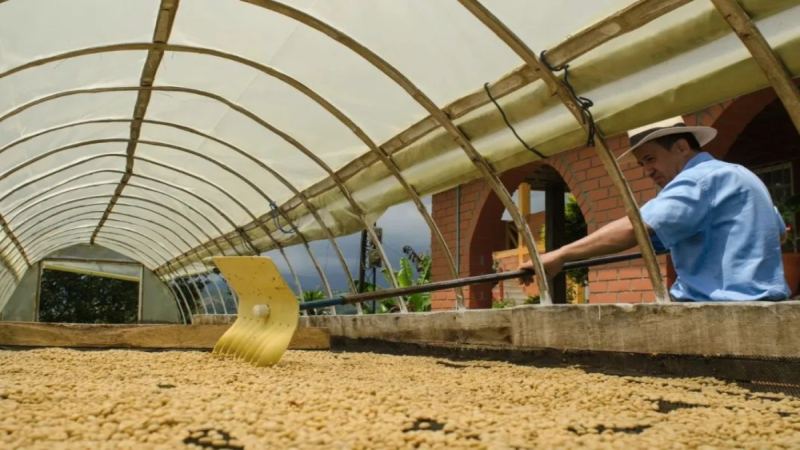
What is driving Colombia coffee production growth and risk?
Colombia, the third-largest coffee producer in the world, is expecting 12.53 million bags in the 2023/24 harvest, an 18% rise year over year, with the 2024/25 season forecast above 13 million bags. Banco de Colombia also reported 10.2% agricultural output growth in the second quarter and will invest 22 billion Colombian pesos in agricultural development.
Agriculture supports more than 31% of the population, yet about 23% of climate disaster losses each year hit farming. Drought since January, forest fires, rising cultivation costs, internal conflict, and a possible La Niña leave the coffee industry exposed, even after three consecutive years of declining production.
Colombia, as the world's third-largest coffee producer, has recently received a series of positive news: a bank report shows significant growth in agricultural output and announces an investment of 22 billion Colombian pesos to support agricultural development. Meanwhile, the country's coffee production is expected to reach 12.53 million bags in the 2023/24 harvest year, a year-on-year increase of 18%, and is expected to exceed 13 million bags in the 2024/25 harvest year. However, drought, forest fires, rising cultivation costs, internal conflict, and the possible arrival of La Niña still bring many uncertainties to the coffee industry. This article will review the latest developments and potential risks in Colombia's coffee industry.
According to recent reports, a report recently released by Banco de Colombia pointed out that in the second quarter of this year, the country's total agricultural production achieved growth of 10.2%, with an overall increase of 8% in the first half of the year. In terms of exports, the export value of agricultural products such as beans, citrus, flowers, and cocoa increased by 11.6% compared with the same period last year. However, extreme weather remains a major challenge facing the country's agriculture, and for this reason the bank will invest 22 billion Colombian pesos to support agricultural development.
Colombia occupies an important position in global exports of products such as coffee, bananas, and palm oil, and agriculture is also one of the country's pillar industries, with more than 31% of the population relying on agriculture for their livelihood. However, about 23% of climate disaster losses each year are related to agriculture, resulting in a lack of stability in agricultural production and farmers' incomes. Taking the coffee industry as an example, over the past two years, El Niño and La Niña have alternated, and Colombia has experienced coffee production declines for three consecutive years.
Although production began to recover slightly in 2023 and is expected to return to a growth level of 15% in 2024, since January this year Colombia has encountered drought weather, with scarce rainfall, and water levels in many reservoirs and rivers have dropped sharply, even requiring restrictions on hydropower generation at one point, which dealt a severe blow to the coffee industry. Under drought conditions, irrigation should have been strengthened, but water shortages led to restrictions on water use, leaving coffee farmers in a dilemma: reducing water use would hinder coffee growth and lower production, while increasing water use could exceed water quotas and lead to fines and rising costs.
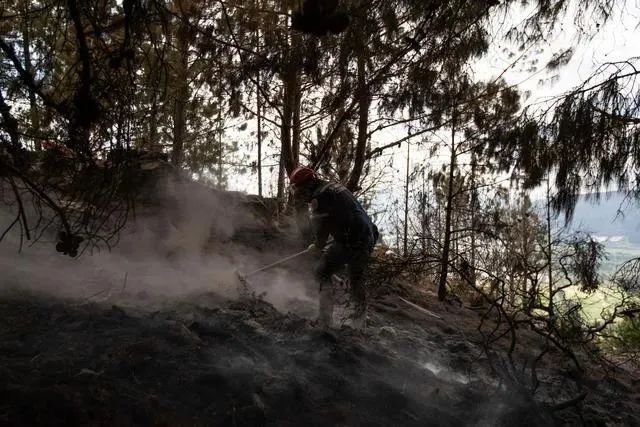
Fortunately, rainfall gradually recovered in May, partially alleviating the impact of the drought. However, the drought state has not been completely lifted, and September entered the dry season again, with forest fires breaking out in many places across Colombia. Dry and windy weather caused the fire area to continue expanding. According to reports, nearly 11,000 hectares of land have now been burned by the fires, including coffee and sugarcane plantations.
To this end, the Colombian government recently joined with the Latin American Development Bank to launch the "Smart Initiative for Promoting Sustainable Development of Agricultural, Livestock, and Fisheries Production Systems and Responding to Climate Change." The initiative is planned to launch in 2025 and is expected to invest 99.9 million US dollars over five years to enhance the agricultural sector's ability to respond to extreme weather and climate change. In addition, the Banco de Colombia Foundation announced that it will invest 22 billion Colombian pesos to support agricultural development, focusing on 11 specific projects including agricultural product processing, food technology, and rural tourism.
This news is undoubtedly good for Colombia's coffee industry. According to data from the National Federation of Coffee Growers of Colombia (FNC), the country's coffee production in the 2023/24 harvest year can reach 12.53 million bags, an increase of 18% over the previous harvest year, and it is expected to exceed 13 million bags in the 2024/25 harvest year. Currently, because coffee-producing countries such as Brazil and Vietnam have all reported production declines, international coffee prices continue to run at high levels and keep rising. As the world's third-largest coffee producer and exporter, an increase in Colombia's coffee production is expected to push international coffee prices down.
However, Colombia's coffee industry still faces many challenges, mainly concentrated in rising cultivation costs, internal conflict, and the upcoming La Niña phenomenon. In terms of cultivation costs, the latest forecast from the World Bank shows that, affected by the escalation of conflict in the Middle East, global fertilizer production costs may climb in 2025.
In addition, the security situation in some coffee-producing regions of Colombia remains severe, especially in the southwestern departments of Nariño, Cauca, and Valle del Cauca. These areas are the main areas of activity for the Central General Staff, the largest branch of the country's largest anti-government armed group, the Revolutionary Armed Forces of Colombia, and recent exchanges of fire with government forces have affected local security and the economy.
At the same time, the US Climate Prediction Center has issued a warning that the probability of La Niña occurring between September and November 2024 is 71%. Once it occurs, it will bring severe weather to many coffee-producing regions, including Colombia, disrupting coffee planting and production activities and thereby affecting final output. Therefore, people in Colombia's coffee industry hope that the new initiative launched by the government can effectively help address these difficulties.
To learn more about coffee origin news and information, please scan the QR code to follow: Coffee Review
Long-press the QR code to follow:
The above content is compiled by CoffeeHunters, a coffee news website.


